Tāmaki Paenga Hira Auckland War Memorial Museum: What to Expect Before You Go
One of New Zealand's most significant cultural institutions, Tāmaki Paenga Hira Auckland War Memorial Museum sits at the top of the Auckland Domain in Parnell, housing world-class Māori taonga, natural history collections, and moving war memorials under a grand Greek Revival facade. It rewards several hours of careful exploration, and rewards repeat visitors too.
Quick Facts
- Location
- Auckland Domain, Parnell, Auckland
- Getting There
- Bus routes serve nearby stops on Parnell Road and park edges; check Auckland Transport journey planner for current routes
- Time Needed
- 2–4 hours (half-day for thorough visitors)
- Cost
- Paid admission for visitors; Auckland residents with MyMuseum card get free general admission. Check aucklandmuseum.com for current prices before visiting.
- Best for
- History enthusiasts, families, Māori culture, first-time Auckland visitors
- Official website
- www.aucklandmuseum.com
What the Museum Actually Is
Tāmaki Paenga Hira Auckland War Memorial Museum is not a single-topic institution. It operates simultaneously as a war memorial, a natural history museum, and one of the Pacific's foremost repositories of Māori and Polynesian taonga (treasures). That breadth is what sets it apart from most regional museums, and it also means you need to pace yourself.
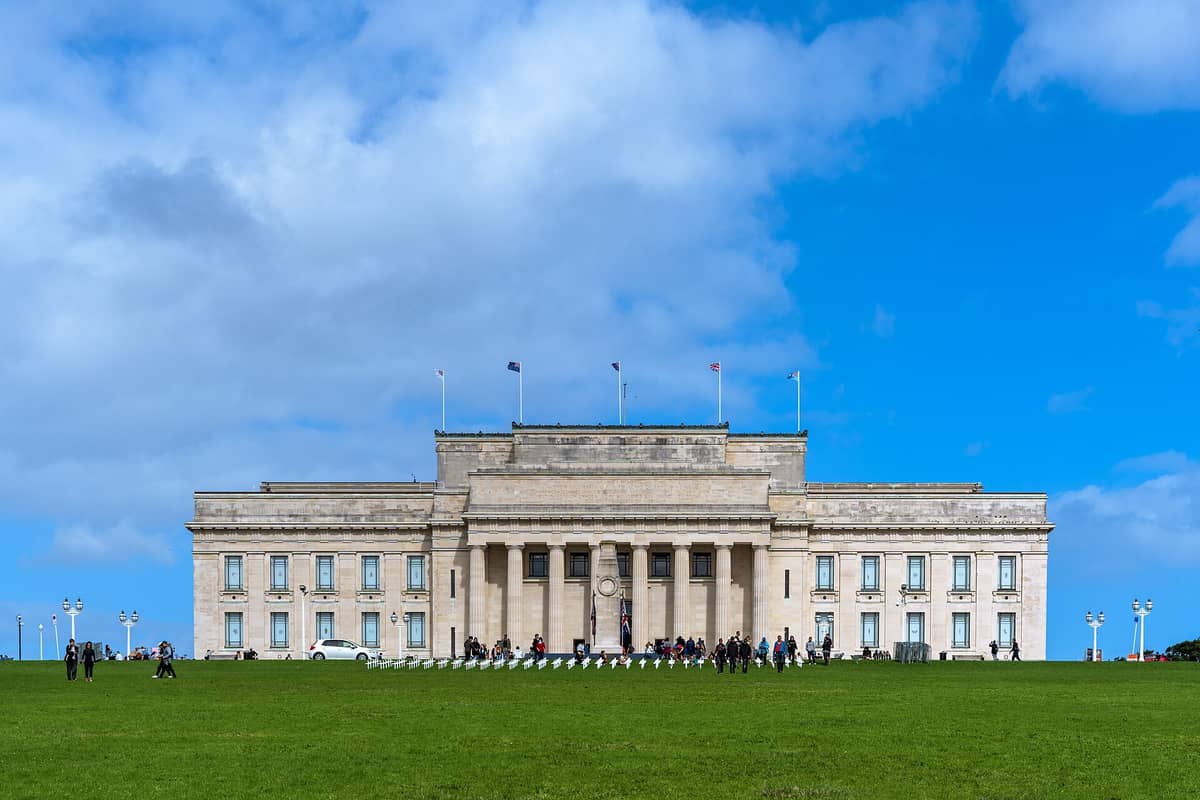
The building itself makes an impression before you step inside. Its Greek Revival facade, with a colonnaded portico and dome, was designed by Grierson, Aimer and Draffin, and the foundation stone was laid on 1 August 1925. The museum opened formally on 28 November 1929, with the design deliberately evoking civic permanence and the weight of commemoration. Standing at the top of the Auckland Domain, it occupies one of the city's oldest public parks, a volcanic scoria field that has shaped the landscape beneath visitors' feet for centuries.
ℹ️ Good to know
Opening hours and admission prices are not published in a fixed schedule here because they can change seasonally or due to special exhibitions. Always verify at aucklandmuseum.com/visit before making it the centrepiece of your day.
The Māori Galleries: The Reason to Come
If you only have two hours, spend the majority of them on the ground floor's Māori collection. The centrepiece is a full-sized wharenui (meeting house), one of the finest surviving examples of traditional Māori architecture in the world. The air inside feels cooler and quieter than the galleries around it, and most visitors instinctively lower their voices.
Adjacent to the wharenui, a carved waka taua (war canoe) named Te Toki a Tapiri stretches 25 metres across its gallery. Carved around 1836, it is one of the great surviving Māori war canoes. Its scale does not fully register from photographs. Standing at one end and looking along its length is one of those moments where a museum object stops being an exhibit and starts being a presence.
The broader Pacific collection surrounding these centrepieces is substantial, covering material culture from across Polynesia, Melanesia, and Micronesia. For context on how Māori culture continues to shape Auckland today, the Auckland Māori culture guide provides useful background before or after your visit.
Tickets & tours
Live prices and dates from our booking partner. If you book, we may earn a commission at no extra cost to you.
War Galleries and the Memorial Function
The upper floors carry the museum's formal memorial role. The Hall of Memories, lined with the names of New Zealand's war dead, is the emotional core of the building. It is designed to be walked through slowly, and it works. The galleries covering World War One, World War Two, and subsequent conflicts are methodical rather than dramatic, using personal artefacts, letters, uniforms, and photographs to keep individual human experience at the centre of a very large story.
These galleries are not harrowing in the way some contemporary war museums aim to be. They are factual and respectful. Families with older children generally find them appropriate. If you are accompanying young children who find prolonged reading and sombre atmospheres difficult, plan to move through these sections more quickly and spend longer in the natural history areas downstairs.
💡 Local tip
The Anzac Day dawn service held at the museum each 25 April draws large crowds and is one of Auckland's most significant commemorative events. If visiting around that date, check the museum's website for adjusted access and programming.
Natural History and Volcanic Auckland
The natural history collections span New Zealand's geological formation, native flora and fauna, and the volcanic landscape on which Auckland sits. The museum sits on Pukekawa, the remnant of an extinct volcano. Exhibits explain this clearly, and for a city that many visitors assume is simply built on ordinary ground, the information is genuinely interesting rather than alarming.
The extinct bird displays, particularly the moa skeletons, are popular with children and adults alike. New Zealand's isolation produced an extraordinary range of species found nowhere else on Earth, and the specimens here illustrate that story in physical form. If the volcanic landscape of Auckland interests you beyond the museum walls, the Auckland volcanic cones guide covers the major cones you can walk and explore across the city.
How the Experience Changes by Time of Day
Morning, particularly from opening until around 11 a.m., is the quietest window for most galleries. School groups typically arrive mid-morning and peak around late morning, which adds considerable noise to the ground floor. If you are visiting with children, that energy works in your favour. If you are travelling alone or as a couple and want to absorb the wharenui or Hall of Memories without interruption, arrive at opening.
Afternoon light through the museum's upper windows is worth noticing in the main atrium. The building was designed before artificial lighting dominated, and the natural light at certain angles gives the stone interior a quality that photographs rarely capture. Late afternoon, around an hour before closing, tends to thin out visitors again.
The Auckland Domain surrounding the museum is pleasant before or after your visit. The Auckland Domain covers 75 hectares and includes the Wintergardens glasshouses a short walk from the museum entrance, which make a good addition to a morning visit.
Getting There and Practical Logistics
The museum's main entrance faces north toward the Waitematā Harbour. Car parking is available within the Domain, but spaces fill on weekends and during peak periods. Arriving by bus avoids this entirely. Auckland Transport serves stops on Parnell Road and at the Domain edges; use the AT journey planner to identify the best current route from your accommodation, as routes and timetables are subject to change.
The museum is accessible by wheelchair and mobility scooter. The institution provides a dedicated accessibility virtual tour on its website that maps ground-floor routes from the car park and public transport drop-off points, and locates lifts, ramps, and accessible toilet facilities. Checking this before arrival is worthwhile if you have specific requirements, as the building is large and orientation takes time.
Parnell as a neighbourhood is worth incorporating into your wider itinerary. Heritage buildings, galleries, and cafés are clustered along Parnell Road and the surrounding streets, making it straightforward to combine a museum visit with lunch nearby. The Parnell neighbourhood guide covers what is within walking distance.
⚠️ What to skip
Auckland residents: bring proof of residency or your MyMuseum card to access free general admission. Visitors from outside Auckland pay the standard admission fee, so check current prices on the official website before you go.
Photography and What to Bring
Photography for personal use is generally permitted in the main galleries, but rules around specific Māori taonga and sacred objects should be observed carefully. Some items carry cultural restrictions on photography; signage indicates where these apply, and staff will clarify if you are uncertain. Asking is always the right move.
The building is climate-controlled year-round, so clothing layers are useful regardless of season. Auckland's weather is changeable, and arriving rain-drenched is not uncommon in winter months. A light bag for personal items is practical. The museum has a café and a shop; the shop stocks books, prints, and Māori design objects at a range of price points and is worth browsing at the end of a visit.
If your broader Auckland itinerary is still taking shape, the Auckland Art Gallery in the CBD is the most natural companion to a museum visit if you have a second cultural half-day available.
Insider Tips
- The museum's Māori cultural performance programme runs at scheduled times inside the building. Check the current performance timetable on the official website before your visit, as these sessions add substantial context to the taonga on display and are included with general admission.
- The atrium café has a terrace that overlooks the Domain. It is a decent spot for a mid-visit break, and on clear days you can see down toward the Auckland harbour. Food quality is standard museum café fare, but the setting earns it.
- If you are doing the Domain loop on foot, enter the museum from the eastern steps for the full architectural effect of the portico, but exit via the rear and walk down through the Wintergardens on your way out. The two glass houses are free to enter and take about 20 minutes.
- The museum's research library holds an extensive collection of New Zealand and Pacific historical records. It operates under separate access arrangements and is aimed at researchers, but the staff can point general visitors toward published resources on specific topics.
- Large temporary exhibitions often require a separate ticket supplement. Check what is showing during your travel dates and factor in budget accordingly if there is a major exhibition you want to see.
Who Is Auckland War Memorial Museum For?
- First-time visitors to New Zealand wanting a grounding in Māori culture and Pacific history
- History and military history readers who want thoughtful rather than sensationalist presentation
- Families with children aged 7 and upward, particularly for the natural history and moa displays
- Travellers with limited time who want a single attraction covering multiple dimensions of New Zealand's story
- Anyone with an interest in New Zealand's geological and ecological distinctiveness
Nearby Attractions
Other things to see while in Parnell:
- Auckland Domain
Occupying the remnant of an ancient volcano in Parnell, Auckland Domain is the city's oldest public park — 75 hectares of open lawns, formal gardens, and native bush. Entry is free, and it rewards visitors who give it more than a passing glance.
- Holy Trinity Cathedral
Holy Trinity Cathedral on Parnell Road is one of Auckland's most architecturally significant religious buildings, a Gothic Revival complex that has been taking shape for over a century. Entry is free, the atmosphere is genuinely calm, and the site tells a layered story about the city's Anglican heritage and its ongoing relationship with craft and faith.
Planning a trip? Discover personalized activities with the Nomado app.