Karekare Beach: Auckland's Most Dramatic Black-Sand Shore
Karekare Beach sits inside the Waitākere Ranges Regional Park, about an hour's drive from central Auckland. This narrow, black-sand beach backed by forest-covered cliffs is free to visit, demands a little effort to reach, and rewards those who make the trip with one of the most striking coastal settings in the Auckland region.
Quick Facts
- Location
- Karekare Road, Waitākere Ranges Regional Park, Auckland
- Getting There
- Car only — drive west from Auckland toward Piha, then turn onto Karekare Road. No confirmed public transport route serves the beach directly.
- Time Needed
- 2–4 hours, including the short walk from the car park to the beach
- Cost
- Free entry. No admission fee is charged by Auckland Council.
- Best for
- Photography, coastal walks, surf watching, nature immersion, film location sightseeing
What Karekare Beach Actually Looks Like
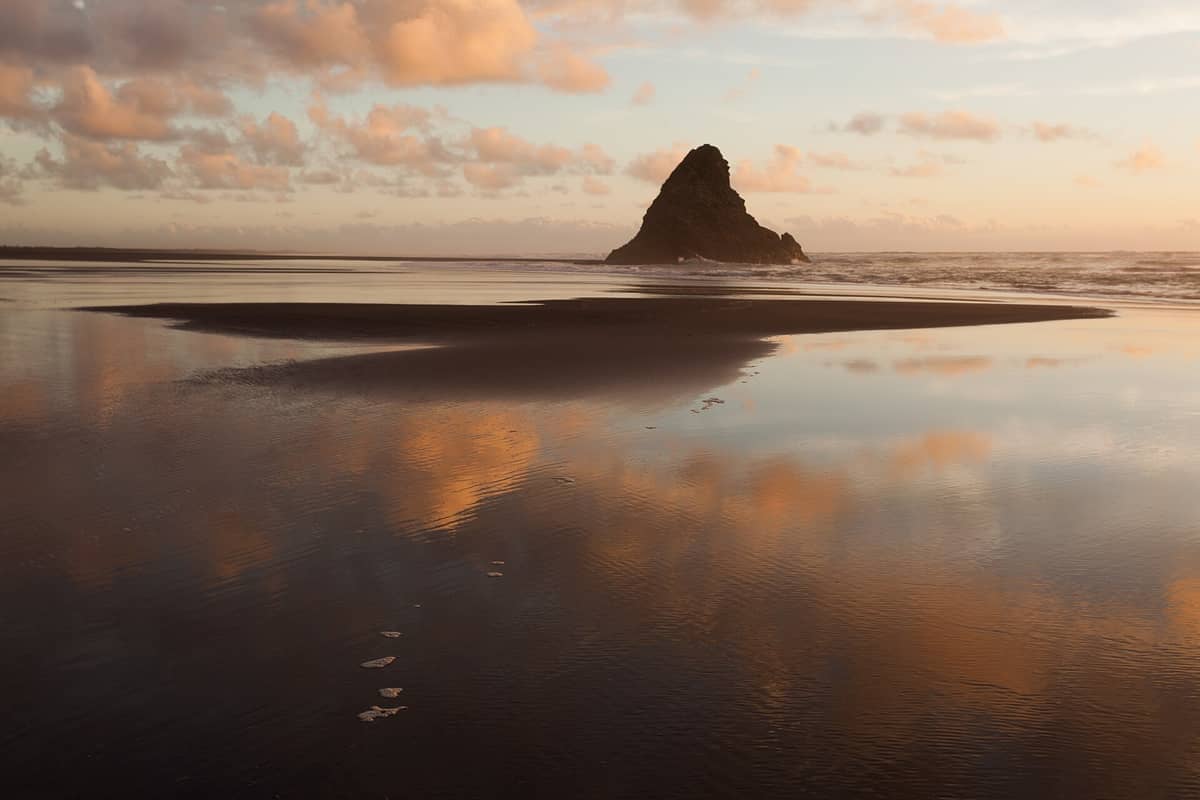
Karekare Beach is the kind of place that stops you mid-step. The sand is black, volcanic, and fine enough to pack together underfoot. The Tasman Sea arrives with force here, pushing long, heavy swells onto the shore rather than gentle tourist-friendly laps. Cliffs and forested ridges press in from both sides, and the Karekare Stream crosses the southern end of the beach before draining into the sea. That combination — dark sand, green bush, white surf — is visually unlike almost anywhere else near Auckland.
The beach is narrow compared to neighbouring Piha, which makes it feel contained and deliberately scaled. On a clear day, the scale of the Waitākere Ranges behind you is impressive. The bush smells of damp earth and pohutukawa resin, especially after rain. In summer, those same pohutukawa trees flower in crimson along the clifftops, a detail that photographers often miss if they are focused solely on the waterline.
ℹ️ Good to know
Karekare Beach is famous internationally as a filming location for Jane Campion's 1993 film 'The Piano'. The atmosphere on screen accurately reflects conditions: moody, remote, and changeable.
How the Beach Changes Through the Day
Arriving early, before 9am, gives you the best chance of having the beach to yourself. The morning light comes over the ridgeline from the east in a single shaft, warming the cliff faces while the lower beach stays in partial shade. The sea often looks its most dramatic at this hour, particularly if there is any residual swell from overnight weather.
By midday in summer, the car park fills and the beach sees its most regular foot traffic, though 'busy' at Karekare is relative. On a typical summer weekend, you might share the sand with a few dozen people. By contrast, weekday mornings outside January can be genuinely quiet. Late afternoon brings a westerly light that turns the black sand almost silver and the surf backlit, which is when the beach is at its most photogenic. Sunset timing matters: the cliffs to the west cut off direct sun before the horizon does, so do not expect a clean ocean sunset.
In winter, the beach shifts character entirely. The surf is bigger, the sky more likely to be overcast, and the stream at the southern end runs deeper. Visitor numbers drop sharply. The trade-off is that the forest surrounding the beach turns intensely green and the falls that feed into the area run at full strength.
Tickets & tours
Live prices and dates from our booking partner. If you book, we may earn a commission at no extra cost to you.
Luggage Storage in Auckland
From 5 €Instant confirmationFree cancellationNew Zealand West Coast discovery tour
From 100 €Instant confirmationFree cancellation13,000ft skydiving experience in Auckland
From 195 €Instant confirmationFree cancellationDiscover Auckland City Tour
From 88 €Instant confirmationFree cancellation
Getting There: What You Need to Know Before You Drive
Karekare Road branches off the route to Piha and descends steeply through native forest before reaching a small car park. The road is sealed but narrow in places, with single-lane sections requiring care. Vehicle access is constrained, as Auckland Council notes officially, meaning the car park reaches capacity on busy summer days. Arriving before 10am on weekends significantly improves your chances of finding a space. No confirmed direct public transport route serves the beach, so this is effectively a self-drive destination.
Auckland Council advises checking current access notices before visiting, as road conditions in the Waitākere Ranges can be affected by weather and maintenance. For current gate hours and any temporary closures, check the Auckland Council website directly before you set out.
⚠️ What to skip
Kauri dieback disease (Phytophthora agathidicida) is present in the Waitākere Ranges. Auckland Council operates cleaning stations at park entry points. Clean all footwear, gear, and tyres thoroughly before entering the area and again when leaving. This is not optional etiquette — it is a genuine conservation emergency for the kauri forests here.
The drive to Karekare is part of exploring the broader West Auckland coastal landscape. If you are making a day of it, the Piha Beach area is only a short detour away, and the two beaches together give a full picture of the Waitākere coast's scale and character.
Swimming and Surf: Read This Before You Enter the Water
Karekare is a patrolled beach during summer weekends and public holidays, but patrol times and frequency are subject to change. The surf here is powerful and the currents can be unpredictable. Rip currents form along the stream mouth and the cliff edges. Swimming between the flags, when they are present, is the only safe option. Outside patrol hours, entering the water carries real risk regardless of how conditions appear from shore.
Many visitors come here specifically not to swim. The beach is worth the trip for the scenery, the walk, the photography, and the experience of standing at the edge of a landscape that feels genuinely unmanaged. If your goal is a safe, comfortable swim, nearby beaches with more consistent patrol coverage may be a better fit.
⚠️ What to skip
Do not swim at Karekare outside of patrolled hours. Surf conditions at this beach can be dangerous even on apparently calm days. Check Surf Life Saving New Zealand's beach status before visiting.
Walks and Exploration Around Karekare
The beach itself is relatively short, but the surrounding park offers genuine walking options. The Karekare Stream walk follows the waterway into the bush from the south end of the beach and gives a sense of how the Waitākere landscape works inland. Nikau palms, tree ferns, and dense podocarp canopy appear within minutes of leaving the sand.
Karekare sits within the broader Waitākere Ranges Regional Park, one of Auckland's most ecologically significant areas. The park connects multiple tracks and beaches across the West Coast, and Karekare acts as a quieter entry point compared to the more visited Piha Valley trails. Walkers comfortable with moderate terrain can extend their visit into the ranges, though the kauri dieback protocols apply throughout.
The walk from the car park down to the beach is short. Check conditions if there has been significant rainfall before your visit.
Photography at Karekare: Practical Notes
The black sand photographs differently than light-coloured beaches. It absorbs light rather than reflecting it, which means midday sun tends to flatten the scene. Golden hour, both morning and late afternoon, brings out the tonal contrast between the sand, the surf foam, and the green bush. Wide-angle compositions work well from the northern end of the beach, where the cliffs curve into the frame.
Wind is a consistent factor. Sand moves. Protect camera gear from spray, particularly near the stream mouth. The stream itself, where it fans across the beach before meeting the sea, creates reflective pools at low tide that are worth timing your visit around. Check tide tables before you go.
For context on other West Auckland coastal photography spots, the Auckland West Coast beaches guide covers the full stretch from Muriwai to Whatipu with comparable practical detail.
Who Might Not Enjoy Karekare Beach
Karekare is not a resort beach. There are no cafés, no changing facilities beyond basic amenities, and no reliable mobile phone coverage. Visitors expecting flat, easy walking, warm water, and a coffee cart will leave disappointed. Families with very young children should be aware that the surf and stream make supervised access to the waterline important at all times.
Travellers on very tight schedules who are also planning to visit Piha, explore the Waitākere Ranges, and return to the city in a single afternoon may find the logistics tight. The Waitākere roads take longer to drive than the distances suggest, and the narrow sections require more concentration than a typical highway. Build in more time than you think you need.
If you are working out how to fit Karekare into a wider Auckland itinerary, the 3-day Auckland itinerary breaks down the West Coast as a self-contained day trip, which is the most practical way to approach it.
Insider Tips
- Arrive before 9am on summer weekends. The car park is small, fills quickly, and there is no overflow parking nearby. Early arrival also gets you the beach in the best light before the sea breeze picks up.
- Check the Karekare Stream depth before crossing on foot. After significant rain, the stream spreads wide and deepens. The footbridge is the safe crossing point; do not attempt to ford the stream mouth.
- Bring everything you need. There are no food or coffee options at Karekare.Bring everything you need. There are no food or coffee options at Karekare.
- Look up as well as along the beach. The clifftops have pohutukawa trees that flower crimson in December and January — easy to miss when you are focused on the surf.
- Tide timing affects the beach width and the appearance of the stream reflective pools. Low tide opens up more sand and better compositional options for photography. Free tide-table apps cover the West Auckland coast accurately.
Who Is Karekare Beach For?
- Photographers seeking dramatic coastal light and volcanic black-sand compositions
- Hikers looking for a beach-to-bush experience within the Waitākere Ranges
- Film and culture enthusiasts familiar with 'The Piano' (1993)
- Travellers wanting to experience the West Coast without Piha's weekend crowds
- Nature-focused visitors interested in the Waitākere Ranges ecology and kauri forest
Nearby Attractions
Other things to see while in Piha:
- Kitekite Falls
Kitekite Falls drops 40 metres into a rock pool at the edge of the Waitākere Ranges, just inland from Piha Beach. entry is free. Combine it with a beach visit for one of the most rewarding half-days on Auckland's West Coast.
- Piha Beach
Piha Beach sits on Auckland's Waitākere coast, about 40 minutes from the city, where black ironsand meets the Tasman Sea with relentless force. Dominated by the 101-metre volcanic monolith Lion Rock, it is the kind of place that makes you feel small. Free to visit, dramatic in any weather, and deeply connected to Māori history, Piha is unlike anything else within reach of a major New Zealand city.
- Waitākere Ranges Regional Park
Stretching west of Auckland city, Waitākere Ranges Regional Park protects 16,000 hectares of native rainforest. Known in te reo Māori as Te Wao Nui a Tiriwa, the Great Forest of Tiriwa, this park combines dramatic ridge-top views, ancient kauri remnants, and wild black-sand surf beaches within 40 minutes of the CBD.
Planning a trip? Discover personalized activities with the Nomado app.