Piha Beach: Auckland's Wild West Coast Surf Beach
Piha Beach sits on Auckland's Waitākere coast, about 40 minutes from the city, where black ironsand meets the Tasman Sea with relentless force. Dominated by the 101-metre volcanic monolith Lion Rock, it is the kind of place that makes you feel small. Free to visit, dramatic in any weather, and deeply connected to Māori history, Piha is unlike anything else within reach of a major New Zealand city.
Quick Facts
- Location
- Marine Parade South, Piha, Auckland 0772 — Waitākere Ranges coast, approx. 40–45 min drive from central Auckland
- Getting There
- Private car or tour only — no regular direct public bus. Drive via SH16, Scenic Drive, and Piha Road
- Time Needed
- 2–4 hours for the beach; half-day if you add surrounding tracks (the Lion Rock summit is closed)
- Cost
- Free to access. Paid guided tours available from Auckland
- Best for
- Surfers, nature lovers, photographers, anyone wanting raw coastal scenery near Auckland
What Makes Piha Beach Different
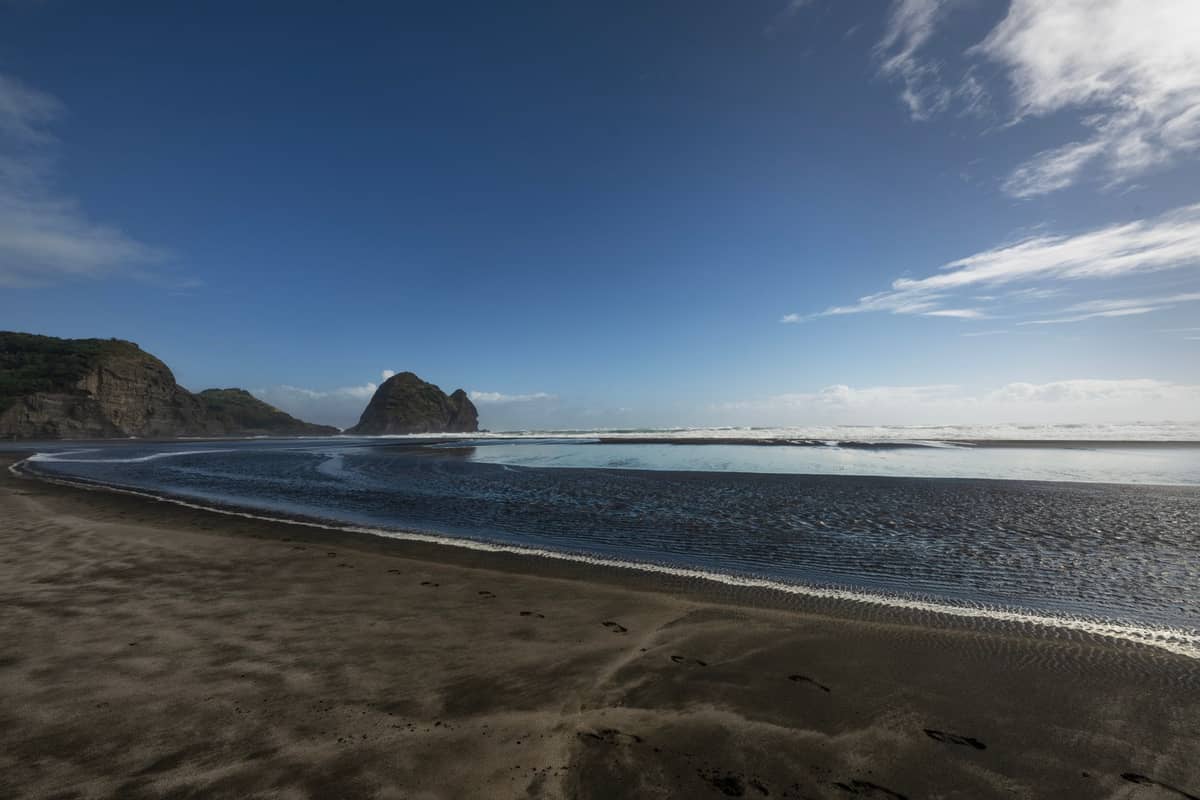
Piha Beach is not a comfortable beach. The sand is dark grey-black ironsand, the surf is unrelenting, and the ocean temperature rarely climbs above 20°C even in mid-summer. None of that is a criticism. It is precisely this combination of elemental power and raw landscape that draws visitors across the Waitākere Ranges from Auckland in numbers that would surprise anyone who expects a polished resort experience on the other side.
The beach sits inside the Waitākere Ranges Regional Parkland, a landscape of dense native bush, steep headlands, and waterfalls that drops sharply to the Tasman Sea. Arriving via Piha Road means winding through tunnels of pūriri and kauri before the sea suddenly appears far below you. That descent is part of the experience.
Piha is also one of the anchor points for understanding Auckland's west coast beach culture, which is distinct from the calmer, sandier beaches of the east. If you have been to Mission Bay or Takapuna and want to see the other side of this city's geography, Piha makes the contrast impossible to miss.
Lion Rock and the History Behind the Headland
The defining feature of Piha Beach is Lion Rock, known in te reo Māori as Te Piha. The rock itself rises 101 metres and is a remnant of ancient volcanic activity. From a distance, particularly at low tide when the beach widens, it does bear a resemblance to a crouching lion, though the silhouette is clearest from the south end of the beach.
Lion Rock is not merely a geological curiosity. A pā (fortified Māori settlement) once stood on its summit, and the site carries deep significance for local iwi. Lion Rock is not merely a geological curiosity. A pā (fortified Māori settlement) once stood on its summit, and the site carries deep significance for local iwi. The summit is closed to visitors; respect the site and do not cross barriers.
The Lion Rock summit track has been closed since storm damage in 2023. Do not climb it. You can still walk around the base of the rock on the beach and photograph it from North or South Piha.
⚠️ What to skip
Lion Rock climb warning: The summit track remains closed after 2023 storm damage. Do not cross barriers or attempt the climb. Photograph the rock from the beach instead.
Tickets & tours
Live prices and dates from our booking partner. If you book, we may earn a commission at no extra cost to you.
Luggage Storage in Auckland
From 5 €Instant confirmationFree cancellationNew Zealand West Coast discovery tour
From 100 €Instant confirmationFree cancellation13,000ft skydiving experience in Auckland
From 195 €Instant confirmationFree cancellationDiscover Auckland City Tour
From 88 €Instant confirmationFree cancellation
The Surf and Water Safety
Piha Beach has a serious reputation as one of New Zealand's most hazardous swimming beaches. Strong rip currents form regularly, the wave sets can arrive without much warning, and the black sand makes depth harder to judge visually. The beach sees a significant number of rescues each year, and a disproportionate number involve visitors who underestimate the surf.
Surf Life Saving New Zealand maintains lifeguard patrols at Piha Surf Life Saving New Zealand maintains lifeguard patrols at Piha generally on weekends and public holidays during summer and throughout statutory school holiday periods, though patrol schedules can vary. The patrol area is clearly marked with red and yellow flags. If you want to swim, swim between the flags, without exception. If you are a confident surfer, Piha's left-hand break is well-regarded and draws experienced surfers regularly; beginners should take a lesson before entering the water here., though patrol schedules can vary. The patrol area is clearly marked with red and yellow flags. If you want to swim, swim between the flags, without exception. If you are a confident surfer, Piha's left-hand break is well-regarded and draws experienced surfers regularly; beginners should take a lesson before entering the water here.
⚠️ What to skip
Outside lifeguard patrol hours (generally weekends and public holidays during summer and statutory school holiday periods, times variable), swimming at Piha carries a significantly higher risk. Do not enter the water unpatrolled unless you are an experienced ocean swimmer with local knowledge.
For those who want to experience the beach without swimming, walking along the waterline at low tide is perfectly manageable and genuinely spectacular. The surf sound is loud here, a constant low roar rather than gentle lapping, and the spray carries far up the beach on windy days. Wear shoes you do not mind getting wet.
How the Beach Changes Through the Day
Early morning at Piha, particularly on weekdays, the beach is often close to empty. The light at this hour catches the ironsand in a way that makes it look almost silver rather than black, and the mist that frequently sits over the Tasman in the morning gives the headlands a layered quality. Surfers are usually the first to arrive, reading the breaks before the wind picks up.
By mid-morning on summer weekends, the car park fills quickly and the beach becomes significantly more active. Families cluster near the flags, surfers spread north and south of the main swimming area, and the closed Lion Rock summit track still draws people to photograph the rock from the beach. Peak crowds tend to arrive between 11am and 2pm. The car park at Piha is finite, and on hot summer days it reaches capacity early. Arriving before 9am or after 3pm makes a real difference.
Late afternoon brings a different quality of light onto the cliffs, and the beach often quietens again as day-trippers head back to Auckland before the peak of the rush hour traffic. Sunset at Piha, when conditions are clear, turns the cliffs orange-red and makes Lion Rock genuinely dramatic. The drive back through the Waitākere Ranges in fading light is slow and requires full attention on the winding road.
💡 Local tip
Photography tip: The best light for capturing Lion Rock falls in the hour after sunrise and the 45 minutes before sunset. Position yourself at the south end of the beach to get the full profile of the rock against the sky.
Getting to Piha and What to Know Before You Go
The drive from central Auckland takes approximately 40 to 45 minutes under normal conditions, heading west on State Highway 16 before turning onto Scenic Drive through the Waitākere Ranges and descending Piha Road. The road is narrow and winding in sections; it is not suitable for large campervans or vehicles with trailers. Allow extra time on weekends when traffic builds on Scenic Drive.
There is no regular direct public bus service to Piha. Visitors without a car should look at guided tour options departing from Auckland, which typically combine Piha with other stops on the west coast. The getting around Auckland guide covers your transport options in more detail, including car hire and tour operators.
Facilities at Piha include public toilets near the main car park, a small café, and a surf shop where you can rent boards or arrange lessons. There is no ATM at Piha; carry cash or pay by card at the café. Mobile coverage is patchy in the valley, so download offline maps before you leave Auckland.
Accessibility at Piha is limited. The beach involves crossing soft, uneven ironsand, and there is no formal accessible beach access reported at the site. The car park and basic facilities near the road are reachable, but the beach itself poses significant challenges for wheelchair users or visitors with mobility difficulties.
Beyond the Main Beach: Walks and Surrounding Area
Piha is surrounded by the Waitākere Ranges Regional Parkland, which offers an extensive network of tracks through native bush. Several walkable options start from the Piha valley itself, ranging from short 20-minute strolls to multi-hour hikes along cliff-top tracks.
The track to Kitekite Falls is one of the most popular additions to a Piha visit. The return walk takes around an hour and passes through regenerating bush to the waterfall. The track starts at 105 Glen Esk Road and includes stream crossings; check current track conditions before setting out.
A short drive south brings you to Karekare Beach, which is even more remote and sees far fewer visitors. Karekare was the filming location for the opening sequence of Jane Campion's film The Piano and has a distinctive amphitheatre of cliffs that feels completely separate from the wider Auckland region. The two beaches make a natural pairing for a full-day west coast trip.
Honest Assessment: Who Will Love It and Who Will Not
Piha delivers exactly what it promises: a dramatic, raw, and at times physically demanding beach experience. If you want calm water for paddling with young children, this is not the right beach. The surf is powerful, the undertows are real, and the facilities are basic. Visitors expecting a polished tourist experience will find Piha underwhelming in terms of infrastructure.
For anyone drawn to wild coastline, geological history, surf culture, or serious hiking, Piha is close to irreplaceable within the Auckland region. The fact that this landscape sits 40 minutes from a city of over 1.6 million people is genuinely remarkable. It is not overhyped in the sense that it always delivers its core promise: scale, power, and a landscape that puts the city firmly in its place.
If you are building an Auckland itinerary and want to understand the full range of what this city has to offer beyond its waterfront and urban attractions, a trip to Piha is worth the drive. See how it fits into a broader plan in our 3-day Auckland itinerary.
Insider Tips
- Arrive before 9am on summer weekends or the car park will be full by late morning. There is no overflow parking and no shuttle from nearby areas.
- The south end of the beach, beyond Lion Rock at low tide, is significantly quieter than the main swimming area and offers views of the rock's profile.
- Bring a wind layer even on warm days. The Tasman wind picks up significantly by early afternoon and the temperature at the beach can feel 5 to 8 degrees cooler than inland Auckland.
- Check the New Zealand surf forecast apps (Metservice and Surf-Forecast.com are both used locally) before visiting. Swell size directly affects how much of the beach is accessible and how safe conditions are.
- The café in the Piha valley serves reliable coffee and basic food but limited hot meal options. For a proper meal before or after, Titirangi village on the way back toward Auckland has several café and restaurant options.
Who Is Piha Beach For?
- Experienced surfers looking for a quality left-hand break close to Auckland
- Photographers and landscape enthusiasts after dramatic coastal scenery
- Hikers who want to combine a beach visit with native bush tracks to Kitekite Falls
- Travellers wanting to understand the contrast between Auckland's east and west coastlines
- Anyone interested in Māori history and the cultural significance of volcanic landforms
Nearby Attractions
Other things to see while in Piha:
- Karekare Beach
Karekare Beach sits inside the Waitākere Ranges Regional Park, about an hour's drive from central Auckland. This narrow, black-sand beach backed by forest-covered cliffs is free to visit, demands a little effort to reach, and rewards those who make the trip with one of the most striking coastal settings in the Auckland region.
- Kitekite Falls
Kitekite Falls drops 40 metres into a rock pool at the edge of the Waitākere Ranges, just inland from Piha Beach. entry is free. Combine it with a beach visit for one of the most rewarding half-days on Auckland's West Coast.
- Waitākere Ranges Regional Park
Stretching west of Auckland city, Waitākere Ranges Regional Park protects 16,000 hectares of native rainforest. Known in te reo Māori as Te Wao Nui a Tiriwa, the Great Forest of Tiriwa, this park combines dramatic ridge-top views, ancient kauri remnants, and wild black-sand surf beaches within 40 minutes of the CBD.
Planning a trip? Discover personalized activities with the Nomado app.