Point Loma is a hilly peninsula stretching into San Diego Bay, combining residential calm with some of the city's most striking coastal scenery. From the tidepools at Cabrillo National Monument to the restaurants and galleries of Liberty Station, it rewards visitors who make the effort to get here.
Point Loma is where San Diego meets the open Pacific at its most dramatic: a rugged peninsula of sandstone cliffs, sweeping bay views, and military history that stretches from the city's northern edge all the way to one of California's oldest lighthouse sites. It moves at a slower pace than downtown, with a strong sense of place shaped by generations of Navy families, working fishermen, and longtime locals who chose this peninsula precisely because it feels removed from the rest of the city.
Orientation
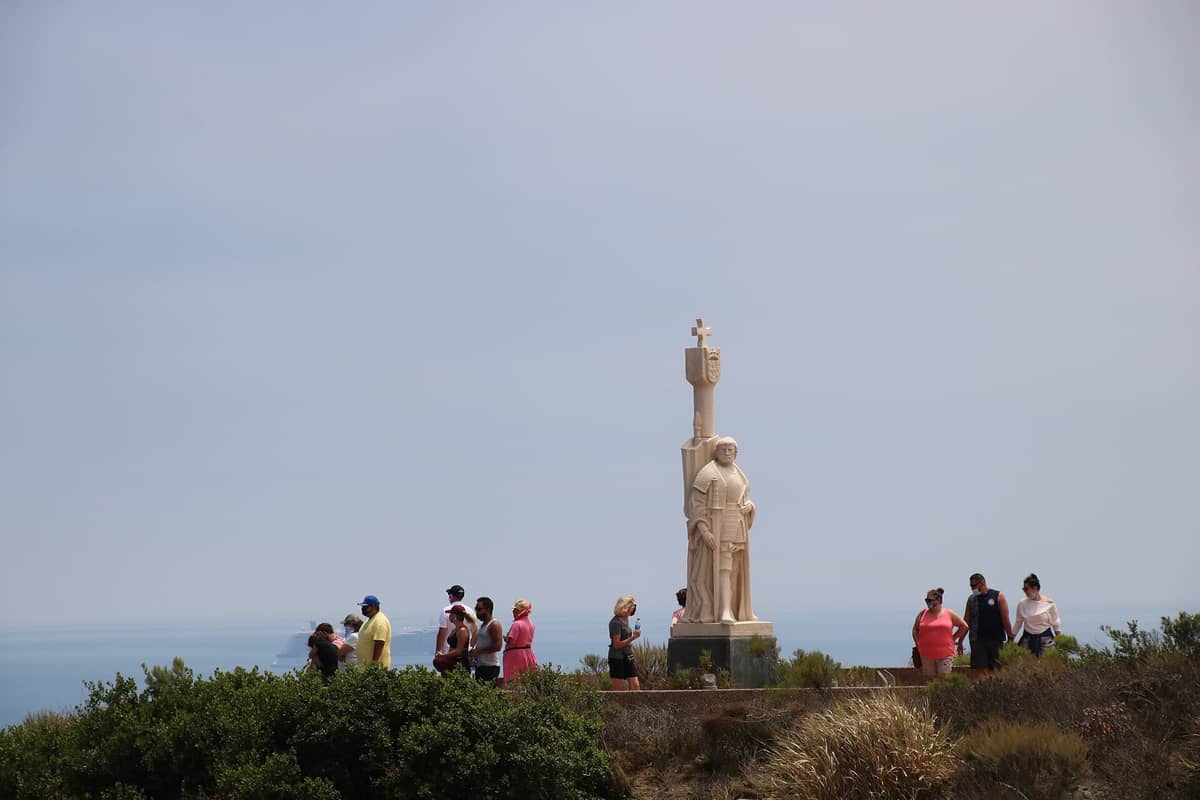
Point Loma occupies a long, narrow peninsula on the western edge of San Diego, flanked by the Pacific Ocean to the west and San Diego Bay to the east. At its northern end, it connects to the Midway District near the junction of Midway Drive and the San Diego River. At its southern tip, about seven miles from downtown, Cabrillo National Monument marks the spot where Juan Rodriguez Cabrillo became the first European to set foot on the West Coast of the present-day United States, in 1542.
The peninsula's backbone is Rosecrans Street, which runs roughly north-south and serves as the main commercial corridor and primary route through the neighborhood. Nimitz Boulevard traces the eastern edge along the bay side, while Sunset Cliffs Boulevard hugs the dramatic ocean-facing western cliffs. Most of the residential blocks sit on elevated terrain between these two edges, giving even ordinary side streets unexpected views of either the bay or the ocean.
Point Loma borders several distinct San Diego areas. To the north, the Midway District connects it to Mission Valley and the Sports Arena area. Old Town San Diego sits just to the northeast across Interstate 8. To the south and east across the bay lies Coronado. Liberty Station, the redeveloped former Naval Training Center near the northern end of the peninsula, acts as the neighborhood's commercial anchor for dining, shopping, and the arts. Shelter Island and Harbor Island, two narrow bayside strips popular with boaters and marina visitors, extend from the eastern shore of the peninsula.
ℹ️ Good to know
Point Loma is larger than it appears on a map. Budget at least half a day if you want to cover both Liberty Station in the north and Cabrillo National Monument at the southern tip. Without a car, moving between these two ends requires careful planning.
Character and Atmosphere
The first thing most people notice about Point Loma is how quickly the city noise drops away. Cross Nimitz Boulevard heading west and the density thins out almost immediately. Streets lined with bungalows, well-kept gardens, and the occasional historic craftsman home replace the commercial sprawl. The neighborhood has a self-contained quality that comes from its geography: you can only enter and exit by a handful of roads, which keeps traffic and foot traffic selective.
Mornings in Point Loma have a particular clarity. The marine layer that blankets much of coastal San Diego during the May-to-June period the locals call 'June Gloom' rolls in overnight, and the peninsula sits right in its path. By mid-morning on summer days, the fog retreats and the light turns sharp and coastal, catching the whitewashed walls of Cabrillo National Monument and the rigging of boats at Shelter Island. The air carries a persistent saltwater note, sharper on the western cliffs above the ocean than on the calmer bay side.
Afternoons bring the visitor traffic to the monument and the cliffs, particularly on weekends. Sunset Cliffs Natural Park draws a small crowd most evenings, with people staking out spots along the sandstone rim as early as an hour before golden hour. On weekday afternoons, the residential streets are genuinely quiet, broken mainly by dog walkers and the distant sound of military aircraft from the nearby bases. The neighborhood has a significant active-duty and veteran population, which gives it a different texture from beach communities like Pacific Beach or Ocean Beach to the north.
Liberty Station introduces a different energy at the northern end, particularly on weekends when its courtyard restaurants and weekend markets draw visitors from across the city. It never gets truly chaotic, but it is the most conventionally tourist-friendly part of Point Loma, and the contrast with the quiet residential streets further south is pronounced.
What to See and Do
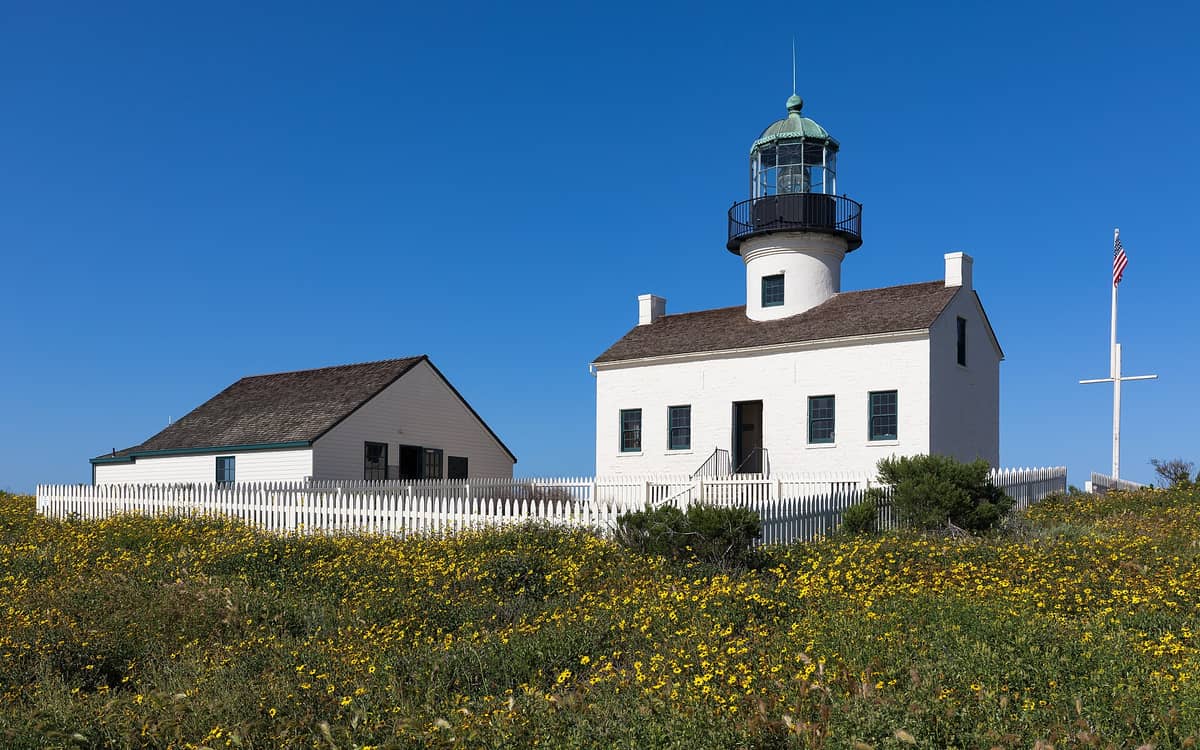
The non-negotiable destination at the southern end of the peninsula is Cabrillo National Monument, managed by the National Park Service. The site includes the restored Old Point Loma Lighthouse, built in 1855 and one of the oldest on the West Coast, along with panoramic viewpoints that take in the entire San Diego Bay, downtown skyline, and on clear days, the mountains east of the city. The tidepools on the rocky Pacific side of the monument are exceptional, exposed at low tide and home to sea stars, anemones, and hermit crabs. Check tide charts before visiting, and stay on marked paths as the rocks are genuinely slick.
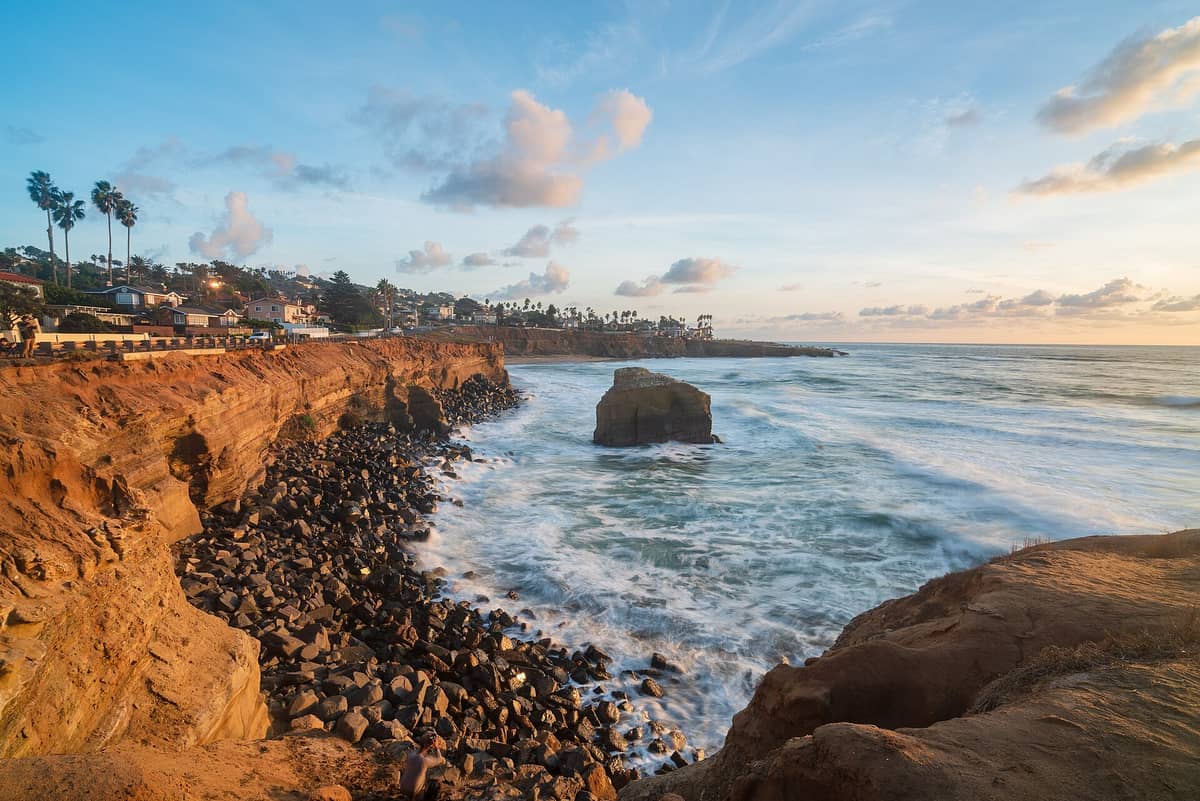
Sunset Cliffs Natural ParkSunset Cliffs Natural Park runs along the western edge of the peninsula south of Ocean Beach, a stretch of eroded sandstone bluffs above the Pacific. There are no amenities and few guardrails, which is part of the appeal and part of the risk. The cliffs are beautiful at any time but particularly so in the late afternoon when the light hits the rock at an angle and the sea turns from grey-green to deep blue. Several natural sea caves and arches are visible from the cliff tops, though the paths down to the water are steep and unofficial.
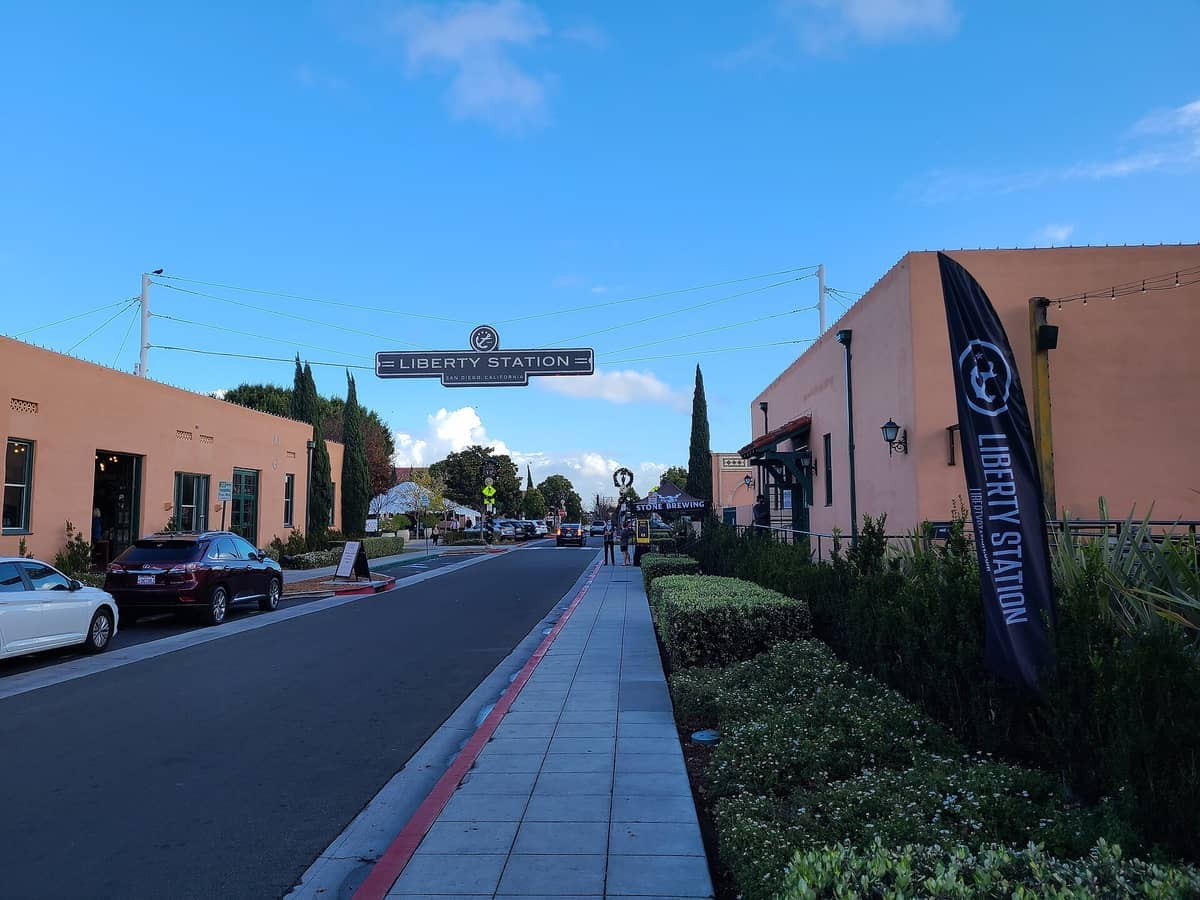
Liberty StationLiberty Station occupies the site of the former Naval Training Center on the bay side of the peninsula's northern end. The Spanish Colonial Revival buildings have been preserved and converted into a mixed-use district with restaurants, boutique shops, art galleries, and performance spaces. The NTC Arts District within Liberty Station is home to working artists' studios and several small museums. The open-air promenade along the bay waterfront here is one of the more pleasant walking spots in western San Diego.
Old Point Loma Lighthouse and Cabrillo National Monument visitors center: allow 2-3 hours
Sunset Cliffs Natural Park: best visited in the late afternoon or at sunset
Liberty Station Arts District and NTC Promenade: good for a morning or midday visit
Shelter Island shoreline park: an easy, flat walk with bay views and marina atmosphere
Point Loma Nazarene University grounds: the western-facing campus has dramatic ocean views accessible to the public in most areas
⚠️ What to skip
At Sunset Cliffs, several people are injured each year falling from the eroded cliff edges. Many areas have no barriers. Keep well back from the edge, especially if the ground looks cracked or undermined, and do not attempt to climb down to the water on unofficial paths.
Eating and Drinking
Point Loma's dining scene is strongest at Liberty Station, where the old Naval Training Center buildings have been converted into a genuine food destination. The area has attracted an eclectic mix of restaurants across multiple price points, from casual sandwich shops and coffee roasters to sit-down seafood and farm-to-table restaurants. On weekends, Liberty Station draws a broad cross-section of San Diego residents, and the outdoor seating areas in the central courtyard fill up by midday.
Along Rosecrans Street, the commercial strip running the spine of the peninsula, you'll find the neighborhood's more everyday eating: grocery stores, a handful of long-standing local diners, coffee shops, and quick-service spots aimed at the local residential population rather than visitors. This stretch has a lived-in, unpretentious quality that reflects the neighborhood's military-family character. Prices are generally more moderate here than at Liberty Station.
Seafood is a natural strength given the area's fishing heritage. The waters off Point Loma are productive tuna and yellowtail fishing grounds, and several operations in the area have direct connections to commercial fishing. For a broader survey of San Diego's food culture, the what to eat in San Diego guide covers local specialties including fish tacos, which you'll find at multiple spots along the peninsula.
Point Loma is also a reasonable base for exploring San Diego's craft beer scene, with a handful of local taprooms on or near Rosecrans Street and additional options a short drive north in the Midway District and Mission Hills neighborhoods.
Getting There and Around
Point Loma is most comfortably reached and explored by car. The peninsula's layout, with key attractions spread across nearly seven miles from Liberty Station in the north to Cabrillo National Monument at the southern tip, makes it difficult to cover on foot in a single trip. Rosecrans Street is the primary route, and parking in the residential areas is generally available, though the lots at Cabrillo National Monument and Liberty Station fill on busy weekends.
San Diego MTS operates bus routes along Rosecrans Street and Nimitz Boulevard, connecting the peninsula to downtown, Old Town Transit Center, and the Midway District. Old Town Transit Center is the nearest trolley hub, served by the MTS Blue and Green lines, and several bus routes connect it to points along the peninsula. From downtown, the drive to Liberty Station takes around 10-15 minutes depending on traffic; reaching Cabrillo National Monument by car adds another 15-20 minutes. Always verify current route numbers and schedules with MTS directly, as these change periodically.
Uber and Lyft both operate throughout Point Loma and are a practical option for reaching the monument if you are not renting a car. The ride from downtown to Cabrillo National Monument takes approximately 20-25 minutes. For a broader overview of navigating San Diego's neighborhoods and transit options, the getting around San Diego guide is a useful reference.
💡 Local tip
If you plan to visit Cabrillo National Monument, the National Park Service charges an entry fee per vehicle. America the Beautiful annual passes are accepted. Arrive before 10 a.m. on weekends to avoid peak parking congestion at the monument lot.
Where to Stay
Point Loma is not a major hotel district, and that is largely by design. The neighborhood's residential character means most accommodation options are on its margins: along Harbor Island and Shelter Island, which sit just off the peninsula's eastern shore, you'll find a concentration of mid-range and upper-mid-range hotels with bay-facing views and marina settings. These are particularly popular with people arriving by boat or seeking a quieter base than downtown.
Staying on the peninsula itself gives you easy access to Cabrillo National Monument and Sunset Cliffs but puts you further from downtown's restaurants and nightlife, the Gaslamp Quarter, and attractions like the USS Midway Museum on the Embarcadero. The drive from Harbor Island hotels to the city center takes about 10 minutes without traffic. For a comprehensive overview of lodging across all of San Diego's neighborhoods, the where to stay in San Diego guide compares the options.
Point Loma suits travelers who want coastal scenery and a low-key atmosphere, and who are comfortable driving or taking rideshares to reach the wider city. It is a poor fit for anyone expecting walkable nightlife or easy access to downtown on foot. Families, military visitors, and couples looking for a quieter, view-heavy base tend to find it most rewarding.
Practical Tips and Honest Drawbacks
Point Loma rewards those who plan. Without a car, you will be limited to the bus routes along Rosecrans Street and Nimitz Boulevard, which means the monument at the southern tip is inconvenient, and the distance between Liberty Station in the north and Sunset Cliffs in the south becomes a genuine obstacle. The neighborhood is not walkable in the way that downtown or Little Italy are: it is a collection of distinct destinations connected by roads rather than a compact walkable district.
The military presence is heavy, and several roads lead to restricted access areas. Navigation apps will route you correctly, but it is easy to make a wrong turn near Naval Base Point Loma toward the peninsula's midsection and find yourself at a security checkpoint. Stick to Rosecrans Street as your main north-south artery. For broader context on San Diego's outdoor and coastal experiences, including tips on timing beach visits during the foggy early-summer season, the best beaches in San Diego guide and the best views in San Diego guide provide useful regional perspective.
For safety, Point Loma's residential areas are generally calm, but Sunset Cliffs requires real attention. The cliffs are actively eroding, with sections of overhang collapsing periodically. The area has no lifeguard service, and the rocky shoreline below is dangerous in heavy surf. These are not abstract warnings: approach the edge with genuine caution, particularly at night when the terrain is harder to read.
TL;DR
Point Loma is best for travelers who want dramatic coastal scenery, historic sites, and a residential neighborhood feel rather than nightlife or urban density.
Cabrillo National Monument and Sunset Cliffs Natural Park are the standout attractions: both require a car or rideshare to reach comfortably.
Liberty Station at the northern end is the most accessible and visitor-friendly part of the peninsula, with strong dining and arts options in a converted Naval complex.
A car is strongly recommended; transit connections exist but make it difficult to reach the southern tip efficiently.
Not the right choice for travelers prioritizing walkable nightlife, proximity to downtown, or easy access to the city's main transit corridors.
Three days is enough to hit San Diego's best neighborhoods, beaches, and cultural landmarks without feeling rushed. This itinerary is built around logical geography, real logistics, and practical notes on what's worth your time and money.
San Diego County's coastline stretches for roughly 70 miles, offering everything from calm family-friendly coves to dramatic cliff-backed surf breaks. This guide covers the best beaches by type, with practical details on what to expect at each one.
San Diego's Mediterranean climate means hiking is possible year-round, and the range of terrain is remarkable. Coastal bluffs, chaparral canyons, pine-forested ridges, and Sonoran Desert all sit within an hour or two of downtown. These are the trails worth lacing up for.
San Diego punches well above its weight as a museum city. Balboa Park alone holds more than a dozen institutions, while the Embarcadero and La Jolla add world-class maritime and ocean science destinations. This guide covers the top 18 museums worth your time and money.
San Diego's Mediterranean climate means it's genuinely good to visit any time of year, but the right season depends on what you want to do. This guide breaks down weather patterns, crowd levels, and key events for every month so you can pick the trip that actually fits your goals.
San Diego rewards those who look up, out, and across. From the windswept cliffs of Point Loma to La Jolla's hilltop memorial, these are the city's finest viewpoints, with panoramas spanning the Pacific, San Diego Bay, and the mountains beyond.
San Diego Comic-Con is one of the largest pop culture conventions in the world, drawing over 130,000 attendees to downtown San Diego each July. This guide covers badge access, hotel booking strategy, transportation logistics, and how to make the most of the event even without a badge.
San Diego has more craft breweries per capita than almost any other American city, with taprooms spread across North Park, Miramar, Little Italy, and beyond. This guide breaks down the best neighborhoods, standout breweries, guided tour options, and practical tips to help you drink well without wasting a trip.
San Diego sits at one of the most geographically rich crossroads in North America. Within a few hours you can reach a Mexican border city, a desert national park, a mountain apple-farming town, and downtown Los Angeles. This guide covers the best day trips from San Diego with real logistics and no filler.
San Diego's finest pleasures often cost nothing at all. This guide covers the best free beaches, parks, public art, viewpoints, and cultural experiences across the city, with practical tips on when to go and what to expect.
San Diego spans over 325 square miles of coastline, canyons, and urban neighborhoods, and getting around efficiently requires knowing which transport options actually work for visitors. This guide covers everything from airport arrivals and MTS trolley fares to driving realities, rideshare logistics, and neighborhood-by-neighborhood navigation.
San Diego offers a dense cluster of amusement park options for a coastal city in the U.S. This guide breaks down every major park, with real pricing, crowd patterns, and a clear take on who each park suits best.
The San Diego County Fair is one of California's largest annual events, drawing millions of visitors to the Del Mar Fairgrounds each summer. This guide covers 2026 dates, hours, parking, ticketing, crowd strategy, and what to actually eat and do once you're inside.
San Diego has a legitimate claim to the fish taco's North American popularization, and the scene in 2026 is more varied than ever. This guide breaks down where to eat, what to order, how much to pay, and which spots are actually worth the line.
San Diego's Mediterranean climate, dramatic coastline, and world-class dining make it one of California's top destinations for couples. This guide covers the most romantic experiences in the city, from free sunset walks to splurge-worthy dinner cruises, with practical notes on what's worth your time.
San Diego offers year-round golf across a wide range of public, municipal, and resort courses, headlined by the world-famous Torrey Pines. This guide covers the best courses by budget and skill level, 2026 green fee breakdowns, booking strategies, and seasonal advice to help you plan the right round.
San Diego rewards the curious. Beyond the zoo and the beaches, the city holds a swaying 1912 suspension bridge, a sea cave you reach by climbing down a hand-carved staircase, and a mural park that doubles as a National Historic Landmark. This guide covers the spots that most visitors never find.
Summer in San Diego means warm, dry coastal days, packed beaches, and a full calendar of events. But the season has quirks that catch visitors off guard. This guide covers the weather reality, top activities, crowd patterns, and logistics so you can make the most of your trip.
San Diego in winter is genuinely underrated. Daytime highs hover in the mid-60s°F, hotel rates drop significantly from summer peaks, and January kicks off some of the best whale watching on the West Coast. This guide covers the weather realities, best activities, and what to skip during the off-season.
San Diego's after-dark scene runs deeper than most visitors expect. This guide breaks down the best bars, nightclubs, rooftop lounges, live music venues, and neighborhood nightlife across the city, with practical details on hours, prices, and how to get around.
San Diego has a reputation as an expensive coastal city, but it rewards travelers who know where to look. From always-free beaches and rotating museum days to smart transit choices and shoulder-season savings, this guide covers every practical angle for keeping costs down without missing the best the city has to offer.
San Diego resorts range from iconic oceanfront landmarks to secluded inland spa estates. This guide breaks down the top properties by location and type, explains seasonal pricing, and warns you about resort fees and common booking misconceptions before you commit.
The San Diego to Las Vegas route is one of Southern California's most popular road trips, but driving isn't always the best choice. This guide breaks down every realistic option, from the 5-hour I-15 drive to sub-90-minute flights, with a clear take on cost, convenience, and when each mode makes sense.
The distance from San Diego to San Francisco is about 500 miles via I-5, and how you cover it makes a big difference to your trip. This guide breaks down every realistic option: nonstop flights under two hours, a full-day drive with serious scenic potential, and a leisurely Amtrak journey for those who want to watch California roll by.
San Diego rewards walkers like few other American cities. From Balboa Park's museum corridor to Old Town's adobe ruins and La Jolla's coastal bluffs, these self-guided walking tours cover the city's most compelling neighborhoods with practical route advice, timing tips, and a clear take on what's worth your time.
San Diego's 70 miles of coastline and year-round mild climate make it one of the best places in the country for water sports. This guide covers the best surf breaks, snorkeling spots, kayak launch points, and rental prices so you can get in the water without the guesswork.
Two days in San Diego can cover a surprising amount of ground — beaches, world-class museums, historic neighborhoods, and some of the best tacos in California. This itinerary cuts through the noise with specific timing, current prices, and honest takes on what's worth your time.
San Diego is one of the most family-friendly cities in the United States, with world-class zoos, beach-side parks, hands-on museums, and a climate that cooperates nearly year-round. This guide covers the best things to do in San Diego for kids, honest ticket prices, the smartest times to visit, and practical logistics to help you spend less time planning and more time enjoying it.
Two world-class wildlife parks, one city, and a decision that trips up thousands of visitors every year. This guide breaks down the real differences between the San Diego Zoo and the San Diego Zoo Safari Park — location, animals, experience, tickets, and which one is worth your time based on who you're traveling with.
Sesame Place San Diego is Southern California's only Sesame Street-themed park, combining rides and water attractions in Chula Vista. This guide covers pricing, seasonal schedules, crowd tips, and how it stacks up against other San Diego family attractions so you can decide whether it belongs on your itinerary.
San Diego's shopping scene spans polished coastal malls, historic waterfront villages, and eclectic neighborhood streets worth exploring on foot. This guide breaks down where to shop, what to expect, and what to skip — with parking details, seasonal hours, and neighborhood-by-neighborhood advice.
San Diego packs an extraordinary range of experiences into one city: world-class museums, wild coastline, historic neighborhoods, and a craft beer scene that rivals anywhere in the country. This guide cuts through the noise to tell you what's genuinely worth your time, what to avoid, and how to plan your visit season by season.
San Diego sits just 20 miles from one of the world's busiest international borders, making Tijuana an obvious day trip. This guide covers exactly how to get there, how long it takes, what to expect at the crossings, and how to make the most of your time on both sides of the border.
San Diego offers year-round whale watching with distinct seasons for gray and blue whales. This guide breaks down exactly when to go, which tours are worth the money, what sightings actually look like by month, and how to watch whales for free from shore.
San Diego's food identity runs deeper than tourists expect. Border-influenced Mexican cooking, Pacific seafood, a serious craft beer scene, and year-round farmers' markets combine into something genuinely distinctive. This guide covers the essential dishes, the best neighborhoods to eat in, and the practical details that help you eat well without wasting a meal.
San Diego spreads across a large coastal geography, and where you base yourself shapes your entire trip. This guide breaks down the best neighborhoods to stay in San Diego, with honest price ranges, transit access, and who each area actually suits.