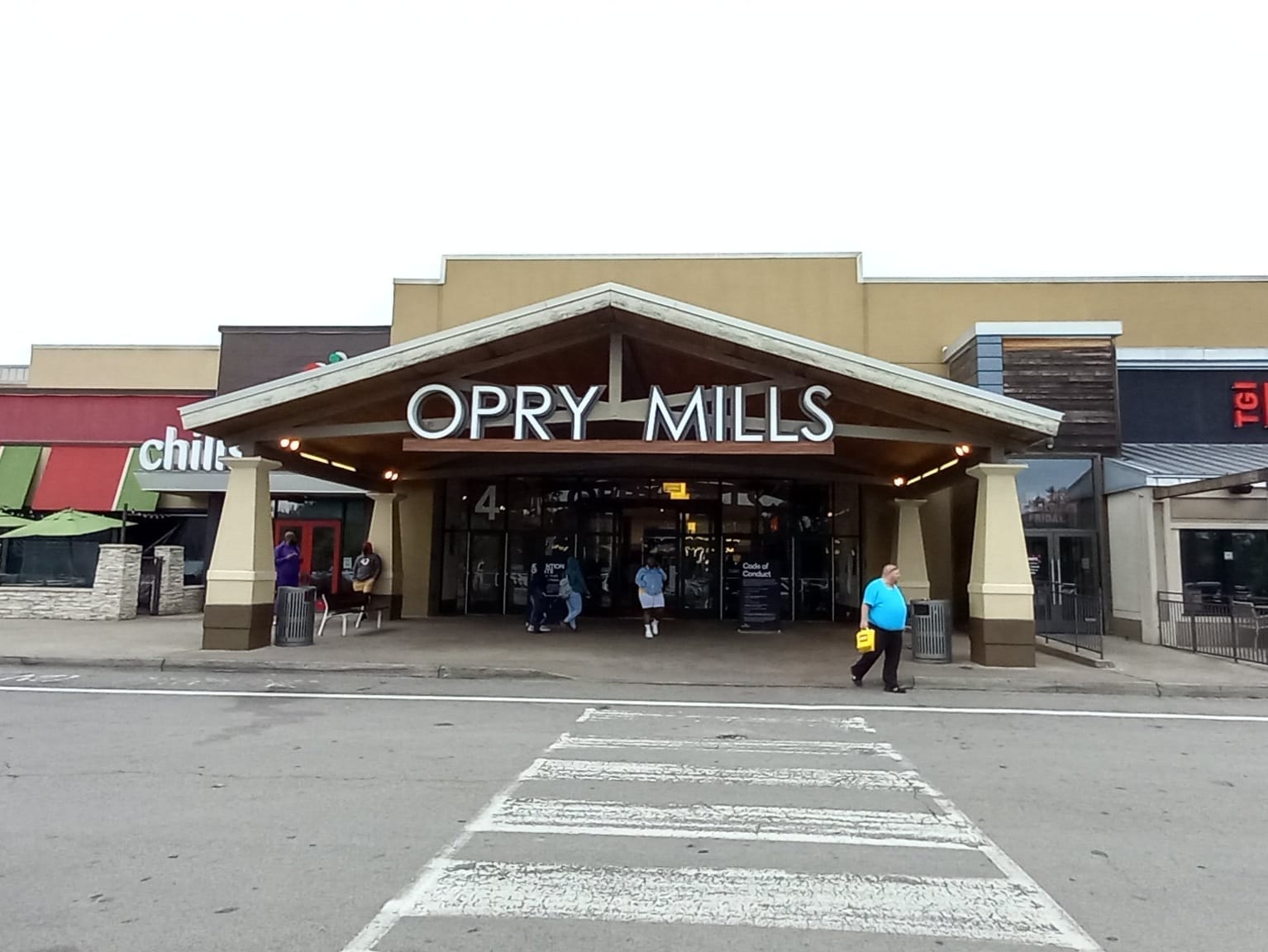
Opryland and Music Valley sit along a bend of the Cumberland River in northeast Nashville, about 10 miles from downtown. This purpose-built entertainment district is anchored by the Grand Ole Opry House, the vast Gaylord Opryland Resort, and Opry Mills mall, making it one of the most visited corners of Tennessee.
Opryland and Music Valley is Nashville's most concentrated country music entertainment district, a stretch of northeast Nashville where the Grand Ole Opry, a convention-scale resort, an outlet mall, and a fleet of music-themed museums occupy a single riverside loop. It is not a neighborhood in the traditional sense, but a destination engineered around one idea: country music as a full-day, full-family experience.
Orientation
Music Valley sits in the Donelson area of northeast Nashville, Davidson County, Tennessee, clustered around McGavock Pike, Music Valley Drive, and Opry Mills Drive. The district curves along a wide horseshoe bend of the Cumberland River, roughly 10 miles east of downtown Nashville and about 8 miles north of Nashville International Airport (BNA). Briley Parkway (Tennessee State Route 155) forms the primary access loop, connecting to both I-40 to the south and I-65 to the west, which is why this area works so well as a drive-to destination from almost anywhere in the metro.
The core footprint is compact but dense: the Grand Ole Opry House, Gaylord Opryland Resort, and Opry Mills mall are effectively adjacent, linked by covered walkways and internal drives. Music Valley Drive itself is a short commercial strip running roughly parallel to Briley Parkway, lined with music-themed museums, souvenir shops, mid-range hotels, and chain restaurants. Two Rivers Campground and several independent lodging properties extend the district further along the Cumberland riverbank.
Unlike downtown Nashville, where you can walk between Broadway, the Ryman, and the Country Music Hall of Fame in under 20 minutes, the Opryland district rewards guests who have a car or are already staying on-site. The distances between attractions are short by driving standards but long on foot, and the roads are designed for vehicle traffic rather than pedestrians.
Character & Atmosphere
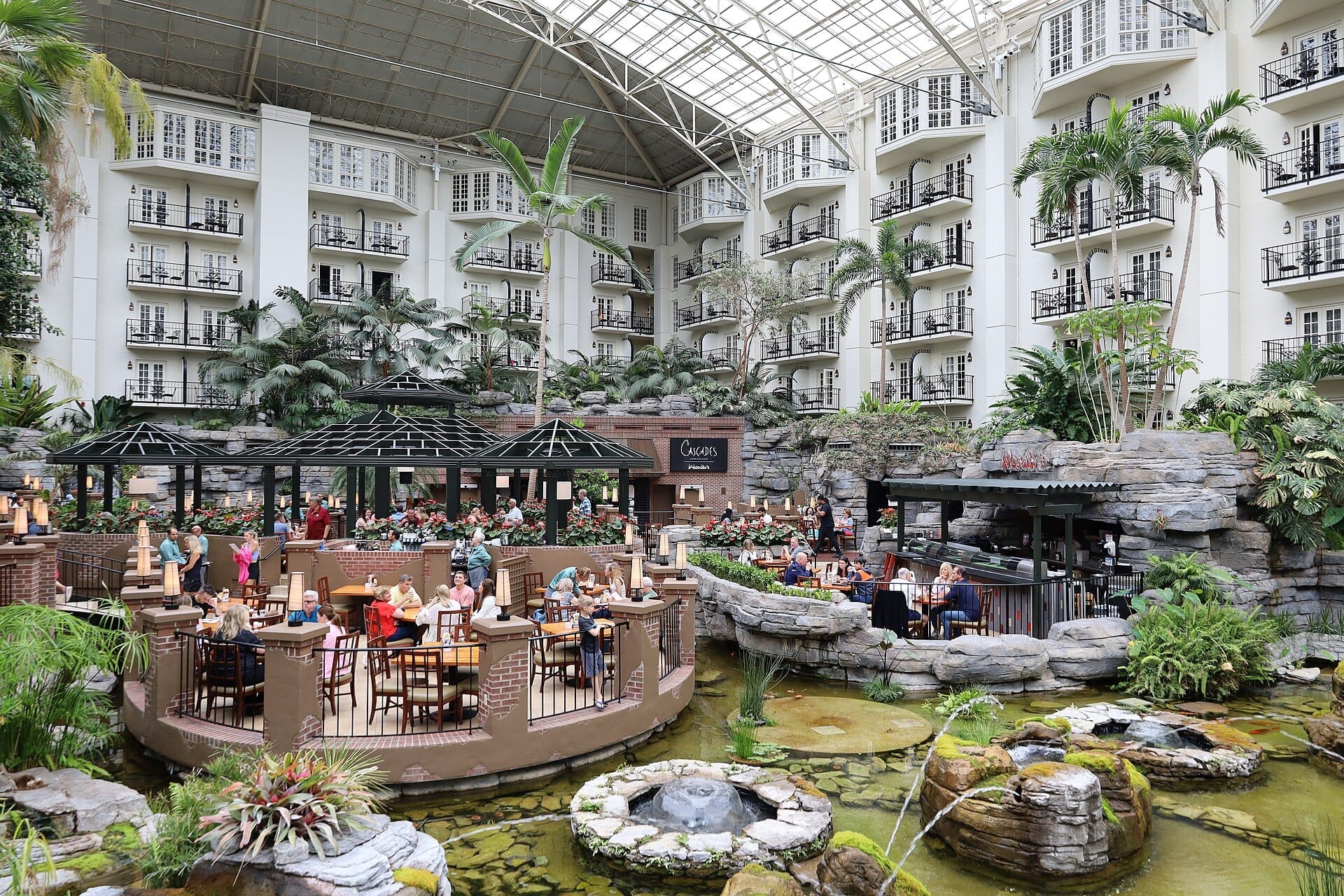
Music Valley has a specific, self-contained energy that sets it apart from every other part of Nashville. In the morning, the area around Gaylord Opryland feels almost like a small city unto itself: hotel guests walk through glass-roofed atriums filled with tropical plants, waterfalls, and the faint sound of country standards piped through indoor speakers. The light filters through the glass canopy in long columns, and the smell of fresh coffee competes with the chlorine drift from the SoundWaves water complex. It is theatrical in an unapologetic way.
By midday, Opry Mills fills with families, tour groups, and outlet shoppers. The parking lots around the mall and the Opry House are busy throughout the afternoon, and Music Valley Drive takes on a strip-mall cadence: tour buses, rental cars, and SUVs cycling through the lots while visitors move between the museum storefronts. The atmosphere is relaxed and commercial rather than edgy or local.
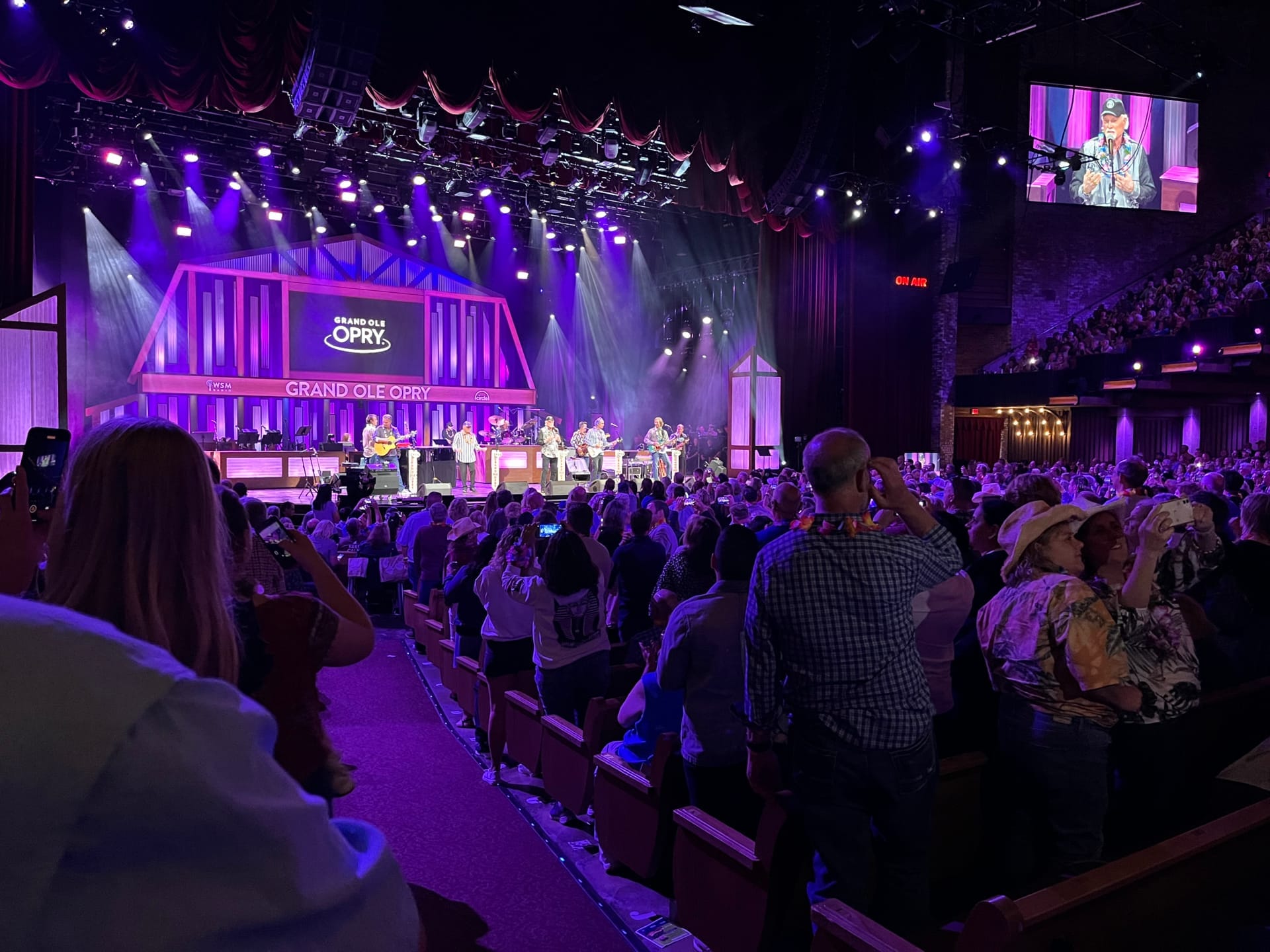
On show nights at the Grand Ole Opry, usually Tuesday, Friday, and Saturday, the character of the district shifts noticeably. The Opry House fills with a crowd that skews older and more devoted than the Broadway bachelorette-party circuit. People arrive early, dressed nicely, often with multi-generational groups in tow. After the show, the parking lots empty quickly and the strip settles back into a quiet hotel-row stillness. There is no bar scene here in the downtown sense; the nightlife is the Opry itself.
ℹ️ Good to know
Music Valley is built around a resort-and-venue model, not a walkable neighborhood grid. Visitors who plan to spend two or more days here should consider staying on-site at Gaylord Opryland or along Music Valley Drive rather than commuting from downtown each day.
What to See & Do
The Grand Ole Opry House is the undisputed anchor of the district. Opened in 1974, this roughly 4,400-seat auditorium became the permanent home of the Grand Ole Opry radio program, which had begun regular broadcasts from the Ryman Auditorium downtown in 1943. A show here is a genuinely different experience from any other Nashville concert: the format mixes established legends with up-and-coming artists across a single evening, with multiple acts sharing the stage in a rotating showcase. The circular oak stage inlay from the original Ryman floor is embedded at center stage as a direct historical link.
If you want context before attending a show, the Opry offers backstage tours during the day that walk visitors through dressing rooms, the green room, and the broadcast booth. For a broader sweep of country music's origins, the Country Music Hall of Fame downtown offers that depth, but the Opry House tour is specific to the Opry's own mythology and worth the time.
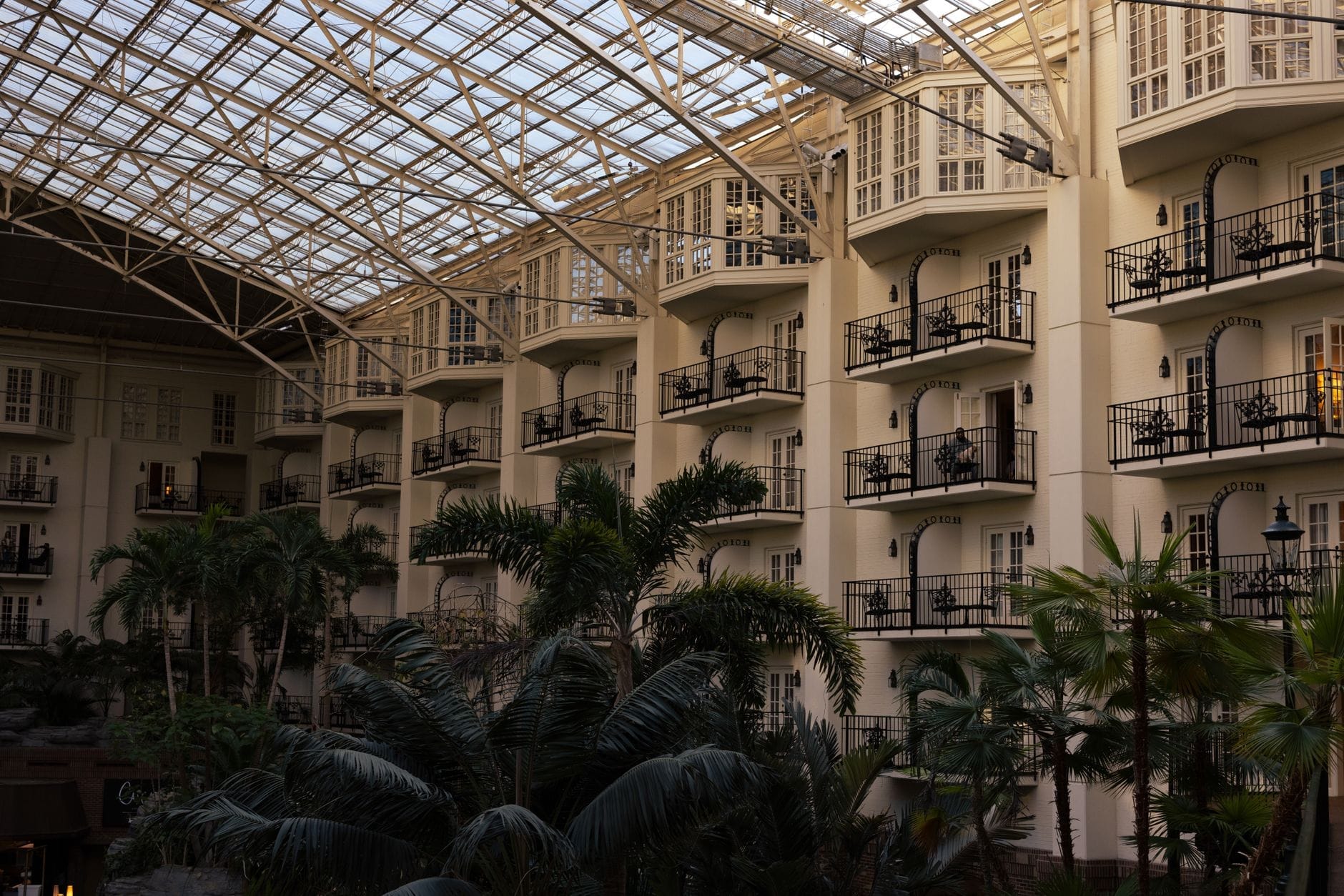
The Gaylord Opryland Resort is a spectacle regardless of whether you are staying there. The resort's three glass-enclosed atriums cover roughly 9 acres of indoor gardens, rivers, and restaurants. Delta Island, the most dramatic of the atriums, has a quarter-mile indoor river where flatboat rides circle a miniature landscape. It is the kind of thing that sounds absurd in description but works impressively in person, especially with children.
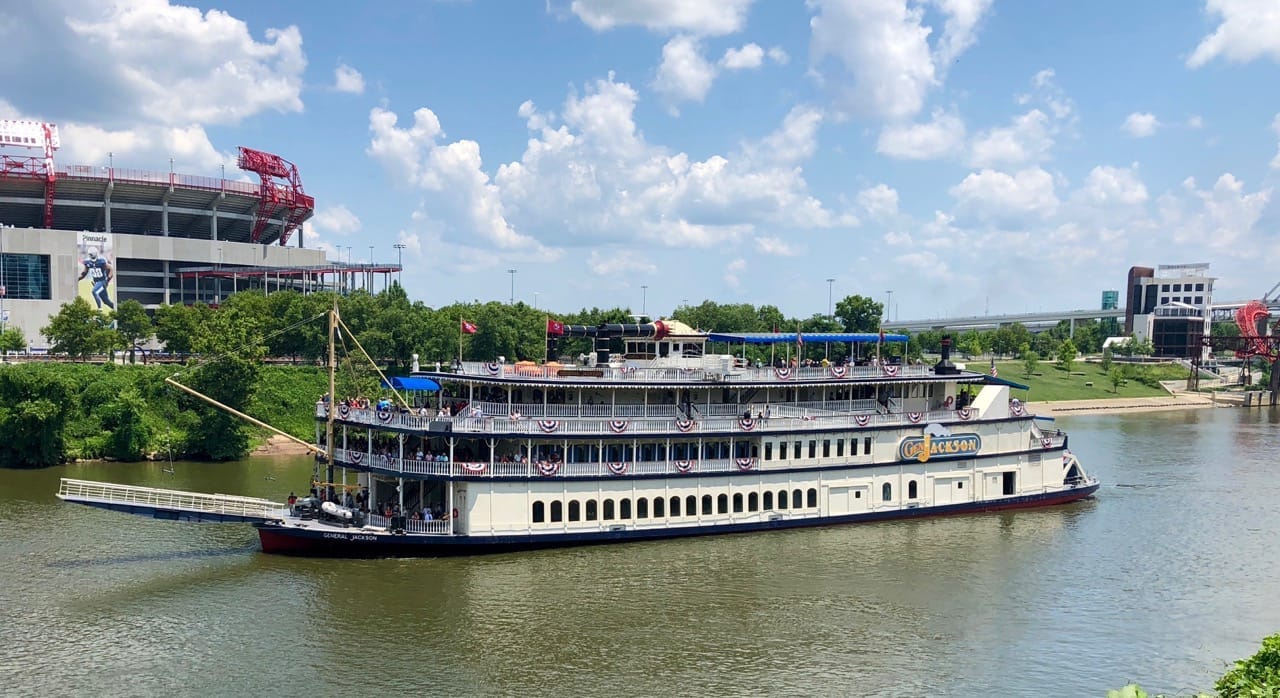
The General Jackson Showboat departs from the Opryland dock on the Cumberland River for lunch and dinner cruises with live country and musical theater performances. It is one of the few ways to see Nashville from the water, and the two-hour format makes it a self-contained afternoon or evening activity. Book ahead on show nights when demand is highest.
Along Music Valley Drive, a cluster of smaller music museums fills the gaps between hotels and restaurants. The Willie Nelson & Friends Museum and General Store is the most established of these, housing memorabilia, guitars, and artifacts tied to Nelson's career alongside a gift shop. The Legends of Country Music Museum offers a broader sweep of the genre's icons. These are not the polished, heavily curated institutions of downtown, but they have a personal, fan-built quality that makes them worth an hour if you have one.
Grand Ole Opry House shows (Tuesday, Friday, Saturday most weeks; verify current schedule)
Backstage tours of the Opry House during daytime hours
Gaylord Opryland Resort atrium walk and Delta Island flatboat ride
General Jackson Showboat lunch or dinner cruise on the Cumberland
Willie Nelson & Friends Museum and General Store on Music Valley Drive
SoundWaves indoor/outdoor water park at Gaylord Opryland (seasonal)
💡 Local tip
Grand Ole Opry tickets sell out weeks in advance for Friday and Saturday shows. Check the official Opry website as soon as you know your dates. The Tuesday shows are often easier to get into and attract equally strong lineups.
Eating & Drinking
The food landscape in Music Valley is almost entirely resort and chain-driven. Gaylord Opryland alone contains a dozen dining options spread across its atriums and convention wings, ranging from casual American buffets to upscale steakhouses. The quality is consistent and the variety covers most needs, but you are eating at a resort complex, and prices reflect that. Delta Steamhouse inside the Delta atrium is one of the more atmospheric options, with views over the indoor river.
Opry Mills and the surrounding stretch of McGavock Pike bring the full range of American chain dining: recognizable names at predictable prices. If you are looking for something beyond the resort and mall ecosystem, the nearby Donelson neighborhood to the southwest has local diner culture and independent restaurants that serve the community rather than tourists, and is reachable by car in under 10 minutes.
For a genuinely different Nashville eating experience, the honest recommendation is to drive the 10 miles into downtown or over to East Nashville for dinner before or after an Opry show. The Nashville food scene is strongest in the urban core, and the Music Valley options, while convenient, do not represent it well.
⚠️ What to skip
If you are staying at Gaylord Opryland, budget carefully for meals on-site. Resort dining prices are significantly above Nashville averages. Grabbing breakfast or lunch at a nearby spot on McGavock Pike before returning for evening activities can help manage costs.
Getting There & Around
The straightforward way to reach Music Valley is by car. From downtown Nashville, take I-40 East to Briley Parkway North (TN-155), then exit onto McGavock Pike toward the Opry House. The drive is approximately 10 miles and takes 15 to 20 minutes in normal traffic. From Nashville International Airport (BNA), the drive north to Music Valley is around 7 miles via Briley Parkway and typically takes 10 to 15 minutes, which makes it one of the easiest airport-to-destination drives in the city.
Parking at Opry Mills and the Grand Ole Opry is plentiful and generally straightforward, though show nights bring heavier demand around the Opry House specifically. Gaylord Opryland has its own structured parking with hotel validation available for guests. Ride-hailing services including Uber and Lyft operate throughout Nashville and will drop off and pick up at the Opry House and Gaylord Opryland without difficulty.
WeGo Public Transit, Nashville's bus network, does serve the broader area, though the district is not designed for pedestrian transit use and walking between bus stops and main attractions requires navigating roads with limited sidewalk coverage. For visitors relying entirely on public transit, getting around Nashville without a car is most practical in and around downtown. Music Valley is best treated as a car or rideshare destination.
Within the district, a free hotel shuttle operates between Gaylord Opryland and the Grand Ole Opry House for resort guests. Walking between the Opry House and Opry Mills is feasible, as the two are effectively connected. Moving between Music Valley Drive and the resort complex on foot is possible but involves stretches of arterial road without dedicated pedestrian infrastructure.
Where to Stay
The Gaylord Opryland Resort is the obvious flagship, with over 2,700 rooms and the most direct access to the Opry House and the General Jackson Showboat dock. It is large enough to feel like a destination in itself, which is the point. Families, convention groups, and country music fans who want full immersion without needing to leave the complex will find it fits that brief very well. Rates are at the higher end of Nashville lodging.
The Inn at Opryland on Music Valley Drive is a smaller, more affordable Gaylord-affiliated property with direct shuttle access to the resort amenities and the Opry House. It suits visitors who want proximity without the full resort price point. A range of independently branded mid-tier hotels lines Music Valley Drive, serving mostly tour groups and budget-conscious Opry visitors.
For travelers who want Nashville's full range of dining, nightlife, and neighborhood character, staying downtown or in Germantown and making a trip out to Music Valley for the Opry is a reasonable approach. The drive is under 25 minutes. The best Nashville neighborhoods for staying depend heavily on whether you prioritize walkability and local culture or proximity to the Opry specifically.
For a genuinely different option, Two Rivers Campground sits within the Music Valley footprint near the Cumberland River and offers RV and tent camping with surprisingly close access to the Opry House. It is popular with visitors who arrive by RV and want to park for several nights while attending multiple shows.
Honest Assessment
Music Valley is not Nashville in miniature. It does not represent the city's food scene, its independent music culture, or its neighborhood character. What it does represent, faithfully and at scale, is the institution of the Grand Ole Opry and the country music industry's relationship with its own history. If attending an Opry show is a priority on your trip, spending at least one night here makes the experience feel complete rather than like a side trip.
Visitors who want to understand why Nashville became Music City should pair the Opry experience with time spent at the Ryman Auditorium downtown, the original home of the Opry from 1943 to 1974. The two venues together tell the full arc of the story. If you only have one day in Nashville, the two-day Nashville itinerary can help you decide how much time Music Valley deserves relative to the rest of the city.
TL;DR
Opryland and Music Valley is a purpose-built entertainment district in northeast Nashville, about 10 miles from downtown, centered on the Grand Ole Opry House, Gaylord Opryland Resort, and Opry Mills mall.
Best for: country music fans attending Grand Ole Opry shows, families wanting a self-contained resort experience, and visitors who prefer staying near the airport with easy highway access.
Not ideal for: travelers seeking walkable streets, independent restaurants, local nightlife, or neighborhood character. The district is car-dependent and commercially oriented.
Key practical note: book Grand Ole Opry tickets well in advance, especially for Friday and Saturday shows. Tuesday shows are often more available.
Honest trade-off: staying here puts you steps from the Opry but 10 miles from downtown Nashville's food, music, and cultural depth. A one-night stay combined with downtown day trips is a solid middle ground.
Two days in Nashville is enough time to hit the music landmarks, eat well, explore distinct neighborhoods, and catch live music at night — if you plan smartly. This guide lays out a realistic, hour-by-hour framework with current prices, crowd warnings, and the honest trade-offs.
Three days is enough time to cover Nashville's best music landmarks, eat your way through the food scene, and catch a live show worth remembering. This itinerary is built around practical logistics, honest recommendations, and enough flexibility to make it your own.
Nashville's music museums go far beyond country. Whether you're tracing Johnny Cash's life through personal artifacts, standing in Elvis's recording booth, or learning how African American musicians shaped every genre we know, these institutions tell the full story of American music. Here are the best.
Nashville rewards visitors year-round, but the best time to visit depends on your priorities: mild weather, major events, budget, or avoiding crowds. This guide breaks down every season with honest assessments so you can plan the perfect trip.
CMA Fest is four days of country music taking over downtown Nashville every June, with free outdoor stages, nightly stadium shows, and thousands of fans from around the world. This guide covers tickets, venues, logistics, what to wear, and how to get the most out of the festival without wasting money or time.
Nashville sits within easy reach of historic small towns, national battlefields, scenic parkways, and legendary distilleries. These are the best day trips from Nashville, organized by distance and theme, so you can plan the perfect escape from the city.
Nashville delivers serious value for budget travelers. Between free world-class museums, no-cover live music on Broadway, scenic parks, and iconic street art, you can fill multiple days in Music City without opening your wallet. Here are the best free things to do in Nashville.
Nashville is a car-friendly city with limited public transit, but visitors have more options than they might expect. This guide covers everything from arriving at BNA to navigating neighborhoods by bus, bike, rideshare, or on foot, with honest advice on what actually works.
The Grand Ole Opry is one of the longest-running live radio shows in American history, and buying tickets is easier than most visitors expect. This guide covers pricing, seating, show formats, and practical logistics so you arrive prepared.
Nashville sits within easy reach of some of Tennessee's finest hiking. Whether you want a quick trail before dinner or a full-day escape into forest and river scenery, these are the best hikes near Nashville for every skill level.
Nashville International Airport (BNA) is the busiest airport in Tennessee, handling 24.7 million passengers in 2024. This guide covers the terminal layout, parking costs, lounge access, ground transportation options, airline routes, and practical tips to help you navigate BNA with confidence.
Nashville has become the undisputed capital of bachelorette weekends in the U.S., and for good reason. From Lower Broadway honky-tonks to Cumberland River party cruises and rooftop pools, this guide covers every activity, neighborhood, and practical detail you need to plan a weekend that actually delivers.
Nashville played a pivotal role in the Civil War as the first Confederate state capital captured by Union forces, and the site of one of the war's most decisive battles. This guide covers every major site, self-guided tour routes, seasonal tips, and the historical context you need to make sense of what you're standing on.
Nashville's craft spirits scene has grown into one of the most exciting in the South, with urban tasting rooms, multi-stop guided tours, and day trips to legendary Tennessee whiskey producers. This guide covers every option, from walk-in flights to full barrel-pick experiences, so you can plan the right visit for your group.
Lower Broadway is just the start. This guide covers Nashville's best honky-tonks and live music venues, from the neon-lit bars of Honky Tonk Highway to intimate songwriter rooms, bluegrass clubs, and music history landmarks that define the city's sound.
Nashville transforms in December with sprawling light displays, live holiday concerts, outdoor markets, and seasonal shows running from mid-November through early January. This guide covers the top events, what to book in advance, and how to make the most of the holiday season in Music City.
October is widely considered the best month to visit Nashville. Temperatures drop to a comfortable range, the city's event calendar fills up with fall festivals and live music, and the usual summer crowds thin out. This guide covers exactly what to expect, what to book ahead, and what to skip.
Nashville, Tennessee earns its Music City nickname with over 250 live music venues spanning free honky-tonks, songwriter showcases, bluegrass clubs, and major concert halls. This guide breaks down exactly where to go, what to expect, and how to plan your nights around live music in Nashville.
Nashville has evolved into a serious luxury destination. From Five-star hotels along the Cumberland River to farm-to-table fine dining and private honky-tonk experiences, this guide covers every high-end option, what it actually costs, and when to book for the best value.
Nashville earned the 'Music City' nickname long before country music dominated the airwaves. This guide traces the city's musical roots from 19th-century folk traditions and the Fisk Jubilee Singers through the Grand Ole Opry, the Nashville Sound, and today's sprawling live music scene across more than 100 live music venues.
Nashville's nightlife runs much deeper than the neon strip of Lower Broadway. This guide breaks down every major nightlife zone, from the honky-tonk highway to rooftop bars in The Gulch and intimate listening rooms in East Nashville, with practical details on hours, cover charges, and what to expect each night of the week.
Nashville has a reputation as a party city with party-city prices, but that reputation is only half true. With free live music on Broadway every night, several genuinely free museums, a bus that runs from the airport to downtown for around $2, and walkable neighborhoods full of no-cost attractions, a trip to Music City can be remarkably affordable if you know what to skip and what to prioritize.
Nashville draws millions of visitors every year, and for good reason. But is Nashville safe for tourists? This guide breaks down crime statistics by area, identifies which neighborhoods to know, and gives you concrete, practical advice for staying safe during your trip.
Nashville shopping is neighborhood-driven, not centered on one district. This guide breaks down every major shopping area — from the upscale Mall at Green Hills to the indie boutiques of 12 South and the monthly Flea Market at The Fairgrounds — so you spend less time wandering and more time buying.
Nashville is one of the most approachable solo travel destinations in the American South. This guide covers getting around, the best neighborhoods to base yourself in, where to find live music without a group, safety considerations, and how to budget your trip from airport to honky-tonk.
Nashville sits within easy reach of some of Tennessee's finest outdoor spaces. These state parks and natural areas offer everything from serene lakeside hikes to swimming beaches, scenic river paddles, and wildlife-rich forests — all within a short drive of the city.
The drive from Nashville to Knoxville covers roughly 180–190 miles along I-40 East and takes about 2.5 to 3 hours without stops. This guide covers the best detours, state parks, historic sites, and seasonal advice to help you get more out of one of Tennessee's most rewarding road trips.
Nashville's downtown core is compact enough to cover on foot in a single morning or afternoon. This guide maps out the best self-guided walking routes from Riverfront Park to the Tennessee State Capitol, with honest notes on timing, audio tools, and which detours are actually worth your steps.
Nashville is far more than a party destination. From hands-on science museums and wildlife encounters to free parks and live country music, the city offers a full week of family-friendly activities. This guide breaks down the best things to do in Nashville with kids, organized by type, age, and budget.
Nashville delivers a surprisingly rich mix of romantic experiences for couples: iconic music venues, candlelit listening rooms, lakeside parks, and skyline walks along the Cumberland River. This guide covers the best options by category, with honest advice on what's worth your time and what to skip.
Nashville is far more than a country music backdrop. This guide covers the best things to do in Nashville across music, history, outdoors, and food — with honest takes on what's worth your time, what to skip, and how to plan around crowds and seasons.
Nashville has far more to offer than neon-lit honky-tonks and country radio hits. From a full-scale ancient Greek temple in a public park to a record store that cuts vinyl of your voice, these are the experiences that make Nashville genuinely unlike any other American city.
Nashville's food scene runs deeper than hot chicken. This guide covers the city's essential dishes, the neighborhoods where you'll find them, practical ordering tips, and honest takes on what lives up to the hype and what doesn't.
Choosing where to stay in Nashville shapes your entire trip. This guide breaks down every major neighborhood by walkability, price, vibe, and who it suits best — so you spend less time researching and more time on Broadway.