Grand Ole Opry House: Nashville's Living Country Music Institution
The Grand Ole Opry House is a 4,400-seat theater in Nashville's Opryland district that has hosted the world's longest-running live radio broadcast since 1974. Whether you're a lifelong country music fan or simply curious about what makes Nashville tick, a night here is unlike any other live music experience in the city.
Quick Facts
- Location
- 600 Opry Mills Dr, Nashville, TN 37214 (Opryland / Music Valley)
- Getting There
- No direct bus to the venue; rideshare (Uber/Lyft) from downtown takes about 15–20 min. Some hotel shuttles serve the Opryland area.
- Time Needed
- 2.5–3 hours for a full show; add 30–45 min if taking a backstage tour
- Cost
- Ticket prices vary by show and seating section; check opry.com for current pricing. Backstage tours are separately ticketed.
- Best for
- Country music fans, first-time Nashville visitors, couples, and travelers seeking a one-of-a-kind American cultural experience
- Official website
- www.opry.com
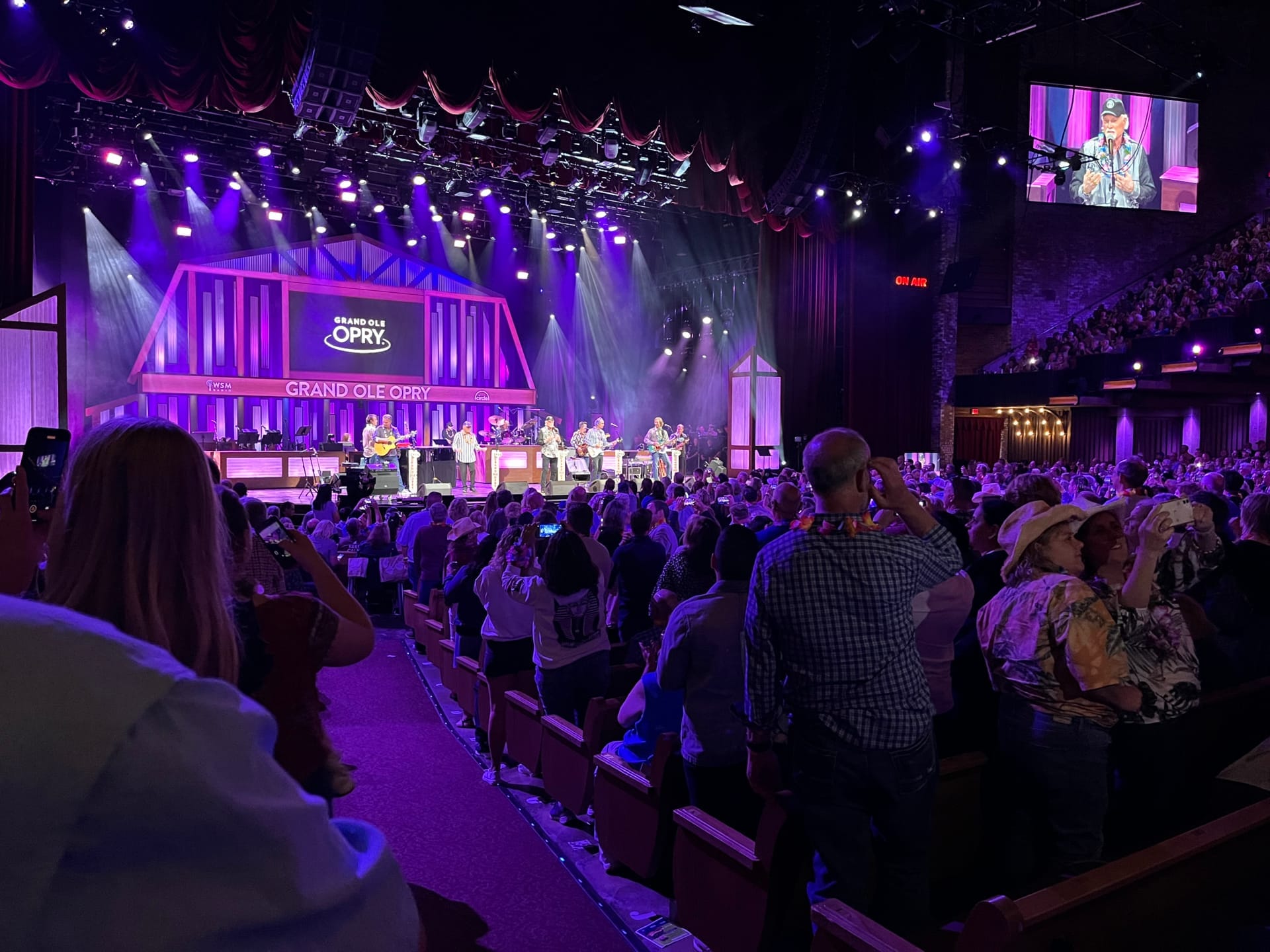
What Is the Grand Ole Opry House?
The Grand Ole Opry House is a dedicated 4,400-seat performance theater built specifically for the Grand Ole Opry, the weekly live country music showcase that has run continuously since 1925. The Opry moved to its current home at 600 Opry Mills Drive on March 15, 1974, after decades at the Ryman Auditorium downtown. The building was designed to give the Opry a permanent, purpose-built home with modern production capabilities while retaining the intimate feel of a classic variety show.
The Grand Ole Opry itself is the world's longest-running radio show. What began as a one-hour Saturday night barn dance on WSM Radio in Nashville grew into a multi-night institution that launched or defined the careers of virtually every major figure in country music. Today, the Opry typically holds shows on Tuesday and Thursday evenings and on Friday and Saturday nights, though the schedule shifts around holidays, tours, and special events.
For context on where the Opry fits into Nashville's broader musical landscape, the Nashville music history guide covers the full arc from WSM's early broadcasts to the city's present-day dominance in country, Americana, and beyond.
💡 Local tip
Always check opry.com for the current show schedule before planning your trip. The lineup of performing artists is typically announced a week or two in advance, and no two shows are identical. If seeing a specific artist matters to you, book as soon as the schedule drops — weekend shows sell out regularly.
Inside the Theater: What to Expect
Walking into the Opry House for the first time, the scale surprises people. The auditorium is larger than it looks in photographs, with steeply raked seating arranged in a wide arc around a thrust stage. The sightlines are excellent from most positions, but seats in the upper sections can feel remote from the stage. If proximity to the action matters to you, floor and lower-level sections are worth the price difference.
The stage itself carries one of the most recognized symbols in country music: a circle of wood cut from the original stage at the Ryman Auditorium, set into the center of the Opry House floor. Every performer steps into that circle at some point during their set. It is a deliberate, physical connection to the Opry's history, and performers who receive their Opry membership induction do so standing on that same wood. The detail is small, but it gives the space a ceremonial weight that a typical concert hall simply does not have.
The format of an Opry show is unlike a standard concert. Rather than a single headliner performing for two hours, the night moves through multiple acts, each playing a few songs before yielding the stage. A host or announcer connects the segments, live radio spots punctuate the show (the Opry still broadcasts live on WSM 650 AM), and the overall effect is closer to a curated variety showcase than a conventional gig. First-timers sometimes find the pace disorienting; regulars consider it a feature, not a flaw.
ℹ️ Good to know
The Opry show still airs live on WSM 650 AM radio and streams at wsmonline.com. If you are traveling to Nashville and cannot attend in person, listening from your hotel room before your visit gives useful context for the format and history.
Tickets & tours
Live prices and dates from our booking partner. If you book, we may earn a commission at no extra cost to you.
Old Town trolley tour of Nashville
From 54 €Instant confirmationFree cancellationHatch Show Print guided tour
From 21 €Instant confirmationFree cancellationDowntown walking tour of Nashville
From 21 €Instant confirmationFree cancellationNashville Downtown Underground Donut Tour
From 46 €Instant confirmationFree cancellation
The History Behind the Building
The Opry had outgrown the Ryman Auditorium by the early 1970s. The Ryman, built in 1892 as a religious tabernacle and later repurposed as a concert hall, had served as the Opry's home since 1943, and remained there until 1974. It had no air conditioning, limited backstage space, and aging infrastructure. Plans for a new facility were developed as part of the broader Opryland USA entertainment complex that opened in 1972.
The Opry House opened on March 15, 1974, with a dedication performance that included President Richard Nixon playing "Happy Birthday" on the piano at the dedication performance for Roy Acuff, who was celebrating his birthday that evening. The moment was widely covered and cemented the venue's national profile from the start. The theater was built on the banks of the Cumberland River, roughly eight miles northeast of downtown Nashville.
The venue suffered significant flood damage in May 2010, when the Cumberland River overflowed and inundated much of the Opryland area. The Opry House took on several feet of water and was closed for months during repairs. The recovery became a point of community pride, and the Opry returned to the stage in September 28, 2010 to considerable fanfare. Evidence of the flood is now part of the building's story rather than a scar.
The Opry House sits within a cluster of attractions in the Opryland and Music Valley area, including the Gaylord Opryland Resort, Opry Mills shopping mall, and the General Jackson Showboat. The neighborhood is distinctly different from downtown Nashville, functioning as a self-contained tourist zone rather than a living urban district.
Attending a Show: Practical Walkthrough
Doors typically open roughly an hour before show time. Arriving early is worthwhile: the lobby area contains Opry memorabilia, photographs spanning decades of performances, and merchandise that goes beyond what most music venues offer. There is also a bar and food service inside, though both can get crowded in the 30 minutes before curtain.
Parking is available on-site and is the most straightforward option for drivers. Rideshare drop-off works well, though pickup at the end of a show involves wait times as hundreds of people request rides simultaneously. If you are staying at the Gaylord Opryland Resort, the hotel may offer shuttle service to the Opry House, which eliminates the parking and rideshare logistics entirely.
Photography policies are generally permissive for personal use during shows, though flash photography and video recording restrictions may apply depending on the performers. Check with the venue on the night of your show.
⚠️ What to skip
The Opry House is located about 8 miles northeast of downtown Nashville. Budget extra time if you are relying on rideshare during a Friday or Saturday evening, when surge pricing and driver availability both work against you. Taxis remain an option via Nashville International Airport's ground transportation area, and some downtown hotels maintain shuttle arrangements.
Backstage Tours
Backstage tours of the Opry House are offered on most days and provide access to areas the general audience never sees: the dressing rooms used by current and legendary performers, the warm-up area directly behind the stage, and the circle of Ryman wood viewed at close range from the stage itself. Guides are knowledgeable and tend to be genuine Opry enthusiasts rather than rote tour operators.
Tours are separately ticketed from show attendance and run through the main visitor entrance. On show days, a premium tour option typically includes a seat for the evening performance. This combination ticket is popular and books out, so advance reservation is strongly recommended. Backstage tours on non-show days give fuller access to the stage area and are a reasonable option for travelers who cannot attend an evening performance.
If the backstage tour piques your interest in Nashville's recording history more broadly, Historic RCA Studio B on Music Row offers an equally intimate look at where dozens of country classics were recorded, with audio playback stations that bring the engineering history to life.
Time of Day and Crowd Patterns
The Opry House does not have walk-in daytime foot traffic in the way that a museum or park does. Outside of scheduled tours and performances, the building is generally not open to the public. Show nights on Fridays and Saturdays draw the largest crowds, with the surrounding parking areas and adjacent Opry Mills mall noticeably busier from late afternoon onward.
Tuesday and Thursday shows tend to attract a somewhat smaller audience and can offer a slightly calmer environment, though the production quality and lineup variety are not diminished. For first-time visitors who want the full cultural experience without peak-weekend crowds, a Tuesday or Thursday show is a solid choice.
After a show ends, the parking lot empties slowly. If you drove, expect to sit in vehicle queues for 15 to 20 minutes or longer on busy nights. The area directly outside the venue has limited late-night dining or bar options compared to downtown Nashville, so most visitors either head back to their hotel or make the drive back into the city for post-show food and drinks.
Who Should Consider Skipping
Travelers with no interest in country music or American radio history will likely find the experience thin. The Opry show format, with its multiple short sets and deliberately nostalgic presentation, is not designed for casual entertainment seekers. If your goal is simply to hear live music in Nashville, the city offers a broader and more eclectic range of options, from intimate listening rooms to historic honky-tonks on Broadway.
Visitors looking for spontaneous, drop-in live music will find the Broadway honky-tonk strip or smaller venues like the Bluebird Cafe a more flexible fit. The Opry House rewards advance planning and a degree of genuine interest in the tradition it represents.
Insider Tips
- The circle of Ryman Auditorium stage wood is set into the floor slightly downstage center. From floor-level seats, you can see it clearly. From upper sections, ask a staff member to point it out before the show starts.
- WSM 650 AM broadcasts the show live. Download a radio app or bring a small receiver if you want to hear the audio mix the way home audiences have experienced it since the 1920s — it is noticeably different from the in-house sound.
- The Opry's member induction ceremonies, held a handful of times per year, are among the most emotionally charged events in Nashville. If an induction is scheduled during your visit, prioritize that show over a standard lineup night.
- Combination backstage tour and show tickets sell faster than show-only tickets because the touring parties are capped in size. Book the combo as early as possible, ideally several weeks out for weekend dates.
- The Gaylord Opryland Resort is physically connected to Opry Mills via an internal walkway and is a short walk from the Opry House. Staying there eliminates all transportation friction and gives you the option of the hotel's shuttle service, making late-night returns from a show straightforward.
Who Is Grand Ole Opry House For?
- Country music fans who want to see performers in the specific context that defined the genre
- First-time Nashville visitors seeking one definitive cultural experience that explains why the city matters musically
- Couples and groups who prefer a seated, structured evening over the loud, crowded Broadway bar scene
- Travelers interested in American broadcasting and entertainment history
- Families with older children who appreciate live performance and can follow a multi-act variety format
Nearby Attractions
Other things to see while in Opryland & Music Valley:
- Gaylord Opryland Resort & Convention Center
Gaylord Opryland Resort & Convention Center is unlike any hotel in Nashville. Spread across 172 acres with nine acres of climate-controlled indoor atriums, it draws visitors year-round as a destination in its own right, not just a place to sleep. Here's everything you need to know before you go.
- General Jackson Showboat
The General Jackson Showboat offers lunch and dinner cruises along the Cumberland River from its dock near Opry Mills. Built in 1980 and styled after 19th-century Victorian riverboats, it combines a sit-down meal with live country and variety entertainment aboard one of the largest showboats ever constructed.
- Opry Mills
Opry Mills is Tennessee's largest outlet and value retail destination, home to roughly 200 stores, multiple dining options, and entertainment venues including Madame Tussauds and an escape room. Located in Nashville's Opryland area next to the Grand Ole Opry House, it draws shoppers, families, and visitors looking to fill a few hours between concerts and attractions.
Planning a trip? Discover personalized activities with the Nomado app.