Country Music Hall of Fame and Museum: What to Know Before You Go
The Country Music Hall of Fame and Museum is Nashville's most comprehensive tribute to the genre that built the city. With over 2.5 million artifacts spread across 140,000 square feet, it rewards several hours of careful exploration. Here's how to visit well.
Quick Facts
- Location
- 222 Rep. John Lewis Way South, Nashville, TN 37203 (Downtown / SoBro)
- Getting There
- Walkable from Broadway honky-tonk strip; Old Town Trolley Stop #7 (501 Demonbreun St). Rideshare drop-off on Fifth Ave S.
- Time Needed
- 2.5 to 4 hours for a thorough visit; budget a full morning or afternoon
- Cost
- General admission from $31.95 USD (verify current pricing at countrymusichalloffame.org before booking)
- Best for
- Music history fans, first-time Nashville visitors, families, rainy-day itineraries
- Official website
- www.countrymusichalloffame.org
Why This Museum Actually Earns Its Reputation
The Country Music Hall of Fame and Museum is not a shrine built for nostalgia alone. It is one of the most rigorously curated popular-music museums in the United States, operated by the not-for-profit Country Music Foundation, and it holds more than 2.5 million artifacts: handwritten lyrics, stage costumes, session recordings, fan letters, and instruments spanning country music's full timeline from Appalachian string bands through today's streaming era.
The current building at 222 Rep. John Lewis Way South opened in May 2001, replacing the original 1967 facility. The architecture signals its ambitions from outside: the curved glass facade references piano keys and the rotunda shape echoes a car radio dial, two nods to the recording studios and automobile culture that shaped the genre's spread through mid-20th-century America. It is a building that is trying to say something, and it mostly succeeds.
That said, visitors who wander in without context or time can leave underwhelmed. The museum rewards people who come prepared to read, listen, and linger. If you want a quick selfie with a sequined jacket and a fast exit, you will get that, but you will miss the deeper layers. For those who want to understand why Nashville became Nashville, this is the single best starting point in the city. Pair it with a visit to Ryman Auditorium just a few blocks north, and you have a half-day that covers country music's foundational story from two different angles.
💡 Local tip
Book tickets online in advance, especially on weekends and during summer. Walk-up tickets are usually available, but pre-booking saves time at the entrance and sometimes unlocks slightly better pricing on combo packages.
What You'll Actually See Inside
The permanent exhibition begins on the ground floor and moves chronologically, tracing country music's roots through old-time string bands, early radio broadcasts, the barn dance era, and the rise of Nashville as a recording center in the 1950s. The displays are dense but well-organized, with listening stations throughout so you can hear what is being described, not just read about it.
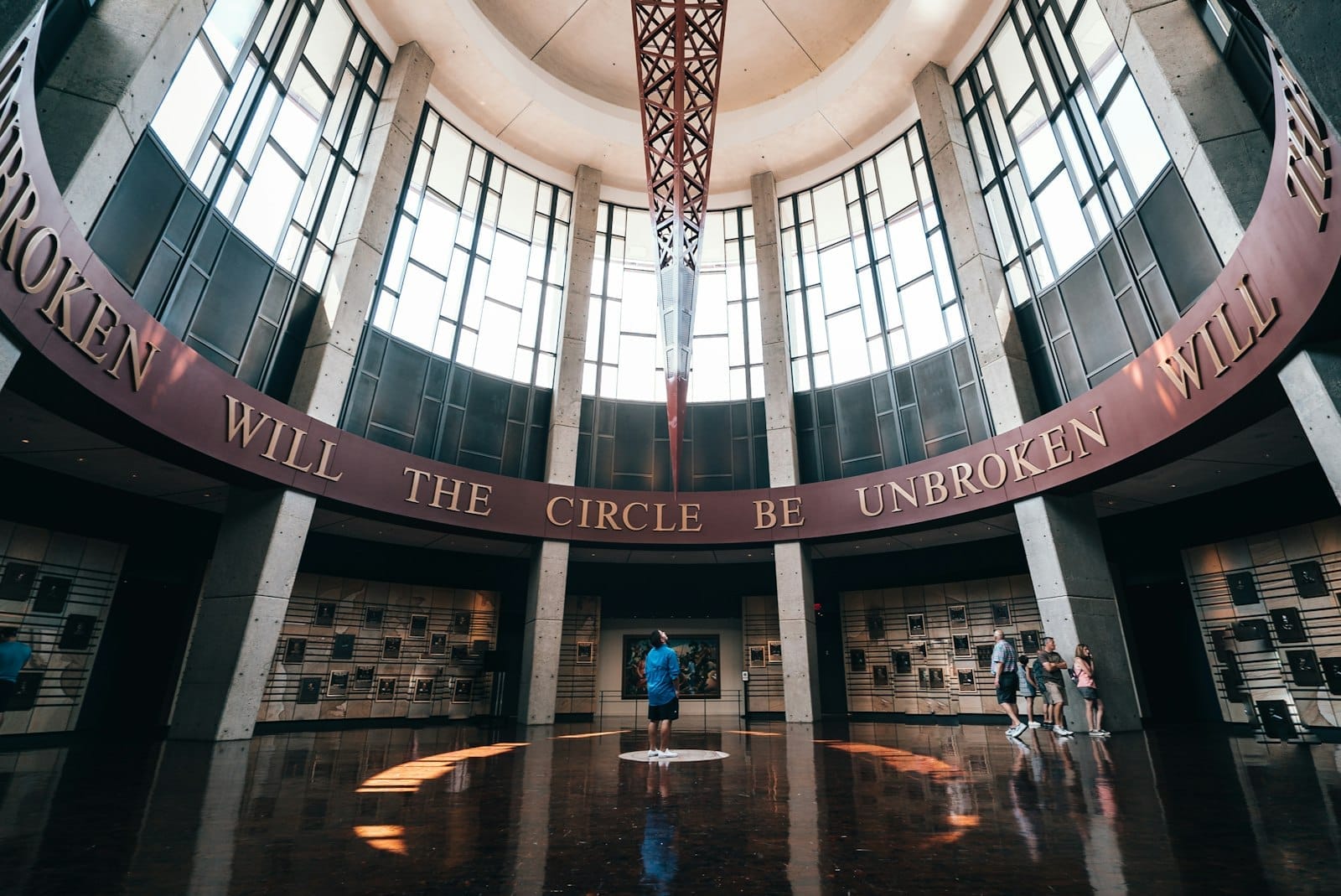
The Hall of Fame Rotunda occupies a separate circular room and has a particular atmosphere. The bronze plaques for inducted artists line the walls floor to ceiling, and the room's acoustics and lighting shift the tone from lively museum to something more ceremonial. First-time visitors often spend longer here than expected, recognizing names and pausing on the bios of artists they did not realize were connected to country music.
Rotating temporary exhibitions occupy significant gallery space and change several times per year. These can be ticketed separately or bundled with general admission. Past exhibitions have examined individual artists in depth, explored country music's relationship with specific themes like the military or farming, or showcased newly acquired collections. The quality varies, but the best temporary shows add real depth to the permanent collection's narrative.
The artifact collection contains pieces that stop you mid-stride: Elvis Presley's gold-plated Cadillac, Johnny Cash's tour bus, Patsy Cline's cocktail dress, and original master recording tapes from RCA Studio B sessions. The costumes display alone is extraordinary, ranging from Nudie Cohn's rhinestone rodeo suits to the more austere stage wear of later generations. Labels are specific about provenance and context, which separates this museum from ones that treat famous objects as simple eye candy.
Tickets & tours
Live prices and dates from our booking partner. If you book, we may earn a commission at no extra cost to you.
How the Experience Changes by Time of Day
The museum opens at 9:00 AM daily, and the first hour is genuinely quieter. School groups and tour buses tend to arrive mid-morning, and by 11:00 AM the main galleries can feel crowded around the most popular display cases. If you are particular about having room to read exhibit panels at your own pace, arriving at opening gives you roughly 60 to 90 minutes of relatively uncrowded conditions.
Afternoons pick up significantly, especially between 1:00 PM and 3:00 PM when visitors from nearby hotels and the Broadway strip filter in. The crowd composition shifts too: midday tends to bring more families with children, while later afternoon sees more adults on their own schedule. Late afternoon, around 4:00 PM, can actually thin out again as people leave to freshen up before evening plans, but you would be racing against the 5:00 PM close.
ℹ️ Good to know
The museum is closed on Thanksgiving, Christmas Eve, and Christmas Day. Hours are otherwise generally 9:00 AM to 5:00 PM daily, but verify at countrymusichalloffame.org before your visit, as holiday schedules can shift.
Historical and Cultural Context Worth Knowing
The Country Music Foundation was established in 1964, three years before the original museum opened, reflecting a deliberate effort by the industry to document and preserve the genre's history while it was still being made. That early institutional seriousness is visible in the depth of the collection today. The museum is not just celebrating country music; it is arguing for its cultural significance as a distinctly American form rooted in migration, labor, religious tradition, and regional identity. For visitors interested in how Nashville developed its specific identity, the Nashville music history guide provides useful background reading before or after your visit.
The move to the current building in 2001 coincided with country music's commercial expansion through the 1990s, when artists like Garth Brooks and Shania Twain made the genre a mainstream global product. The museum's scale reflects that period of ambition and investment. It was built to be taken seriously as a cultural institution, not as a tourist attraction with souvenir-shop priority. The research library and archives, though not generally accessible to general visitors, are used by scholars, journalists, and documentary makers from around the world.
The museum's location in the SoBro district, just south of Broadway, places it at the edge of Nashville's entertainment core. The Broadway honky-tonk strip is a five-minute walk north, and the contrast between the two experiences is worth noting: Broadway is loud, immediate, and built for the present moment; the Hall of Fame is quiet, archival, and concerned with the long record. Both are genuine parts of Nashville's music identity.
Practical Walkthrough: Getting There and Moving Through the Museum
The museum sits at 222 Rep. John Lewis Way South, in the SoBro area of downtown Nashville. From the Broadway entertainment district, it is roughly a five-minute walk south along Fifth Avenue. The building is large and clearly signed, so navigation is straightforward once you are in the area.
There is no dedicated metro or subway in Nashville, so most visitors arrive on foot from nearby hotels, by rideshare (Uber and Lyft both operate in Nashville and drop off directly on Fifth Avenue South), or via the Old Town Trolley hop-on/hop-off service, which stops at 501 Demonbreun Street, one block from the entrance. WeGo Public Transit buses also serve the downtown area. Parking garages are available nearby if you are driving, but downtown Nashville parking rates can be significant on busy days.
Inside, the museum is fully accessible, with elevators between levels and accessible restrooms throughout. The layout is linear enough to follow without getting lost, though the temporary exhibition spaces require slightly more intentional navigation. Audio guides are available and worth considering for visitors who want more detail than the wall labels provide. Photography is generally permitted in the permanent galleries without flash, though specific exhibits or borrowed artifacts may have restrictions noted on-site.
The on-site restaurant, run in partnership with a local operator, serves lunch and is a reasonable option if you are spending a full day in the area. The gift shop is extensive and skews heavily toward recorded music, books, and branded merchandise. For visitors piecing together a full music-focused day, the Musicians Hall of Fame is a short distance away and covers the session players and studio musicians who built Nashville's sound from behind the scenes.
Photography Tips and What to Expect Visually
The museum's interior lighting is designed for preservation rather than photography, which means most galleries are lit at lower levels with spotlighting on specific objects. Phone cameras handle this reasonably well in well-lit display areas, but you will notice some images come out soft in dimmer corridors. The Hall of Fame Rotunda photographs well with its warm overhead lighting and the bronze relief plaques.
The most photogenic single object in the collection is arguably Elvis Presley's 1960 gold-plated Cadillac, displayed prominently and lit to show the custom exterior in full detail. The Nudie suit displays are similarly striking. For exterior shots, the building's curved glass facade photographs best in morning light before it accumulates glare from the afternoon sun.
⚠️ What to skip
Some borrowed or loaned artifacts within temporary exhibitions prohibit photography entirely. Look for posted signs at exhibition entrances and respect restrictions, as staff actively monitor compliance.
Who Gets the Most From This Museum, and Who Might Not
Visitors with a genuine interest in American music history, whether or not they consider themselves country fans, consistently find the museum rewarding. The exhibition design connects country to broader American cultural movements, so the context holds for people who came to Nashville primarily for its live music scene rather than out of genre loyalty.
Families with older children, roughly ten and up, will find enough visual material and interactive elements to hold attention across a two-hour visit. Younger children can engage with certain sections, but the museum is primarily text and artifact-heavy, which tests patience in kids who prefer hands-on experiences. The Adventure Science Center, elsewhere in Nashville, is a better fit for younger children.
Visitors who are not interested in reading exhibit panels or listening to audio content, and who primarily want a fast, visually exciting experience, may find the pacing slow. The museum is not designed as an immersive entertainment experience; it is a serious history museum that happens to be about popular music. If you are on a tight schedule with one hour or less, you will cover only a fraction of the building and may feel you did not see enough to justify the admission price.
Insider Tips
- The museum offers combo tickets that bundle general admission with a guided tour of Historic RCA Studio B on Music Row. The studio tour departs by van from the museum entrance and is worth adding if you have extra time; the actual recording room where Elvis, Dolly Parton, and countless others recorded has a specific atmosphere that photographs cannot capture.
- If the Hall of Fame Rotunda is crowded when you first pass through, note it and return near closing time. In the last 30 to 45 minutes of the day, the rotunda is often nearly empty, and the room reads very differently without tour groups moving through.
- The museum's reading room and research archives are accessible by appointment to researchers, journalists, and serious enthusiasts. If you have a specific artist or era you want to go deeper on, contact the Country Music Foundation directly before your trip.
- Free parking validation is not offered by the museum, but several nearby garages have flat weekend rates that are significantly lower than weekday rates. If your visit falls on a Saturday or Sunday, look for independent parking structures rather than hotel-adjacent lots.
- Check the museum's event calendar before your trip. The Ford Theater inside the building hosts live performances, conversations, and album release events, some ticketed separately and some included with admission. These can meaningfully add to a visit if the timing aligns.
Who Is Country Music Hall of Fame and Museum For?
- First-time Nashville visitors who want cultural context before hitting the honky-tonks
- Music history enthusiasts interested in American roots music, recording history, and the Nashville Sound
- Families with children aged 10 and older looking for an engaging, air-conditioned half-day activity
- Rainy-day itineraries when outdoor Nashville attractions are less appealing
- Travelers combining the museum with a guided RCA Studio B tour for a full music-history day
Nearby Attractions
Other things to see while in Downtown Nashville:
- 3rd & Lindsley
Since 1991, 3rd & Lindsley has been the venue where Nashville musicians play when they want to be heard, not just seen. Located half a mile south of Broadway in the SoBro district, it is an intimate, no-frills room that draws touring acts, local legends, and serious audiences in equal measure.
- Acme Feed & Seed
Housed in a landmark 1943 building at the corner of 1st Avenue and Broadway, Acme Feed & Seed is a multi-level bar, restaurant, and music venue with a rooftop overlooking the Cumberland River. It offers a more layered experience than the typical honky-tonk strip, with a rooftop that earns its reputation for views and a ground floor that still delivers the Broadway energy.
- Adventure Science Center
Adventure Science Center is Nashville's premier interactive science museum, offering 44,000 square feet of hands-on exhibits, a 75-foot adventure tower, and a 63-foot dome planetarium. It has served the city since 1945 and remains one of the most engaging family destinations near downtown Nashville.
- Bicentennial Capitol Mall State Park
Bicentennial Capitol Mall State Park is a free, 19-acre outdoor park in downtown Nashville built to commemorate Tennessee's 200th anniversary of statehood. Anchored by a 200-foot granite map of the state, a 95-bell carillon, and the Rivers of Tennessee Fountains, it doubles as one of the most informative and peaceful green spaces in the city center.
Planning a trip? Discover personalized activities with the Nomado app.