Bicentennial Capitol Mall State Park: Nashville's Open-Air Tennessee History Museum
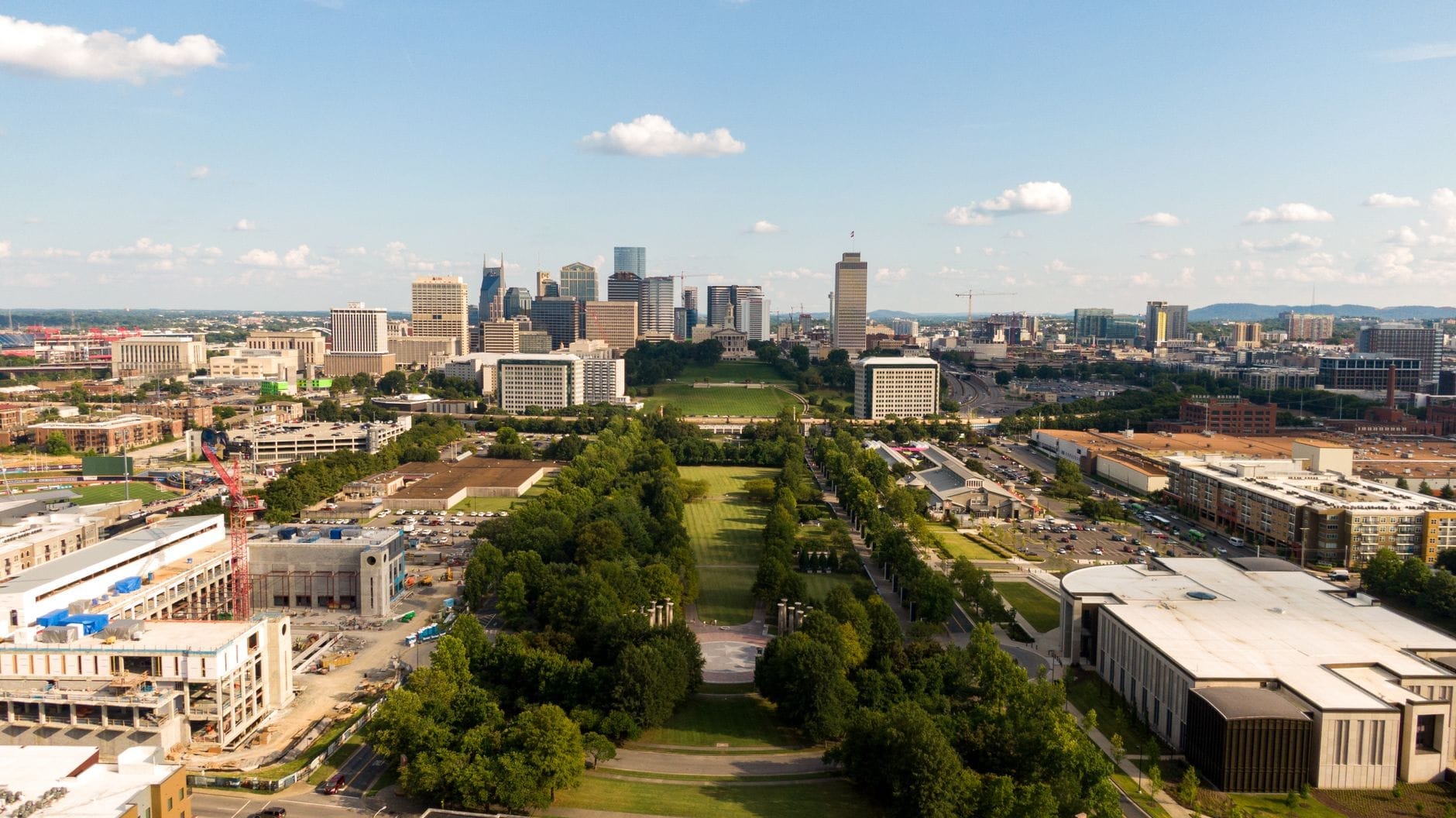
Bicentennial Capitol Mall State Park is a free, 19-acre outdoor park in downtown Nashville built to commemorate Tennessee's 200th anniversary of statehood. Anchored by a 200-foot granite map of the state, a 95-bell carillon, and the Rivers of Tennessee Fountains, it doubles as one of the most informative and peaceful green spaces in the city center.
Quick Facts
- Location
- 600 James Robertson Pkwy, Nashville, TN 37243 (downtown, at the foot of the Tennessee State Capitol)
- Getting There
- Walkable from downtown core; WeGo bus routes serve James Robertson Pkwy. No metro system in Nashville.
- Time Needed
- 45–90 minutes for a self-guided walk; up to 2 hours with a ranger-led tour
- Cost
- Free admission
- Best for
- History enthusiasts, families, solo travelers, photography, quiet morning walks
- Official website
- tnstateparks.com/parks/bicentennial-mall
What Bicentennial Capitol Mall State Park Actually Is
Bicentennial Capitol Mall State Park is not a typical city park where people jog past manicured lawns without stopping. It is a 19-acre outdoor monument to Tennessee's history, opened on June 1, 1996, to mark the state's 200th anniversary of statehood. The park sits directly north of the Tennessee State Capitol, framed by Jefferson Street, James Robertson Parkway, and the northern reaches of Sixth and Seventh Avenues. From the moment you enter, the design tells you this is a place meant to be read, not just walked through.
The centerpiece is a 200-foot granite map of Tennessee inlaid into the ground, accurate enough that you can trace county lines with your fingers. Surrounding it are interpretive walls, time capsules, a 95-bell carillon, and the Rivers of Tennessee Fountains, which represent each of the state's major river systems. Every element was commissioned with a specific historical purpose. Spend time actually reading the inscriptions and you will leave knowing more about Tennessee's geography, culture, and political history than most residents could tell you.
💡 Local tip
Free ranger-led tours are available from April through November on Mondays and Wednesdays at 10 a.m., 1 p.m., and 3 p.m. These tours are genuinely worth planning around if you want context beyond what the signage provides. No reservation appears to be required, but confirm at the park or via Tennessee State Parks before your visit.
The Park by Time of Day: When to Go and What to Expect
Early morning, roughly 7 to 9 a.m., is when the park belongs to you. The granite surfaces are cool underfoot, the carillon has not yet begun its cycles, and the Capitol dome above you catches the first flat light of the day in a way that photographs extremely well. State government workers cut through on their commutes, but leisure visitors are sparse. If you want the 200-foot map to yourself for an unobstructed photograph, this is your window.
By mid-morning on weekdays the park fills with school groups, particularly in spring and fall. The ranger-led tours at 10 a.m. draw clusters of students around the interpretive walls, which can make certain areas feel tight. This is not a problem if you move counterclockwise through the space while the group moves clockwise, but be aware that the fountains area becomes a popular photo stop.
Midday in summer is the one time the park tests your patience. Nashville summers run hot, frequently reaching 88 to 90 degrees Fahrenheit, and the park's open granite surfaces reflect and retain heat. There is shade along the perimeter near the walls and some tree coverage toward the northern edge, but the central map area is fully exposed. Bring water and sunscreen if you visit between late June and August. Spring (April to May) and fall (September to October) are comfortably mild and represent the most pleasant conditions for a long exploration.
Evening visits offer a different texture entirely. The Capitol is illuminated against the sky, the carillon sounds carry further in the cooler air, and the fountains lit at night create a surprisingly atmospheric scene for what is otherwise a civic space. The park stays accessible after dark, though the interpretive signage is harder to read without daylight.
Tickets & tours
Live prices and dates from our booking partner. If you book, we may earn a commission at no extra cost to you.
Old Town trolley tour of Nashville
From 54 €Instant confirmationFree cancellationHatch Show Print guided tour
From 21 €Instant confirmationFree cancellationDowntown walking tour of Nashville
From 21 €Instant confirmationFree cancellationNashville Downtown Underground Donut Tour
From 46 €Instant confirmationFree cancellation
The Key Features, Explained
The Tennessee Granite Map
The 200-foot map is the anchor of the entire park and worth examining closely rather than simply photographing from above. The granite is engraved with Tennessee's 95 counties, its major rivers, and topographic references. Stand near the eastern end representing the Great Smoky Mountains region and the elevation changes become visible in the carving depth. Walk westward toward the Mississippi River end and the relief flattens out. It is a physical geography lesson laid into the ground at a scale that makes the state's diversity tangible in a way a classroom map cannot.
The 95-Bell Carillon
One bell for each of Tennessee's 95 counties. The carillon tower is positioned at the northern edge of the park, and on days when it plays, the sound fills the entire space. The bells have a resonance that surprises people who associate carillons with delicate chiming. These are substantial, and the overtones linger. If you are sensitive to loud sound or visiting with very young children, note that carillon performances can be unexpectedly forceful at close range.
The Rivers of Tennessee Fountains
Thirty-one fountains represent Tennessee's river systems. The water features run in defined channels across the park's lower section and are a genuine relief on warm afternoons. Children are often tempted to wade, though this is not the intended use. The fountains are switched off during cold months, which affects the park's sensory character considerably. Visit in the warmer half of the year to experience the park as it was designed.
The Interpretive Walls and Time Capsules
Along the park's perimeter, low granite walls carry inscriptions covering Tennessee history from indigenous settlement through statehood and into the 20th century. The density of information is serious. Near the western boundary, sealed time capsules are embedded in the ground, intended to be opened at Tennessee's tricentennial in 2096. There is something quietly affecting about standing above a container of the present, knowing it will be opened by people not yet born.
Historical and Cultural Context
Tennessee became the 16th state of the United States on June 1, 1796, and the park's opening date of June 1, 1996 was chosen to mark exactly 200 years. The design process was a deliberate effort to create something more than decorative green space near the Capitol. The result is a civic landscape that functions simultaneously as a memorial, an educational installation, and a public gathering place.
The park sits at the base of the Tennessee State Capitol, which was completed in 1859 and is itself one of the most architecturally significant pre-Civil War government buildings in the American South. Visiting both on the same morning creates a coherent arc: the Capitol as the seat of government, the mall below as the story of the people and land that government represents.
For travelers interested in the broader sweep of Tennessee history and its connections to American history, the Tennessee State Museum is directly adjacent to the park. The museum provides interior depth to the outdoor history lesson the mall delivers. The combination of both in a single visit is worth planning for.
Getting There and Getting Around the Park
The park is located in downtown Nashville at 600 James Robertson Parkway. From the core of Lower Broadway and the honky-tonk corridor, it is a roughly 15 to 20 minute walk north through the Capitol Hill area. The walk is uphill toward the Capitol and covers some terrain that may require more effort for visitors with mobility limitations.
WeGo Public Transit buses serve routes along James Robertson Parkway, making the park reachable without a car. For general guidance on navigating Nashville without a vehicle, the getting around Nashville guide covers WeGo routes, rideshare options, and walkability by neighborhood.
The self-guided route through the park covers approximately 0.9 miles. The surface is primarily paved and level within the central areas, with some sloped sections near the perimeter. Visitors using wheelchairs or strollers should find the main interpretive areas accessible, though the outer edges near the walls involve some grade changes. Wear comfortable shoes regardless.
ℹ️ Good to know
Parking is available along James Robertson Parkway and in nearby state government lots, but availability fluctuates on weekdays when state offices are open. Rideshare drop-off and public transit are often the most straightforward options.
Photography Notes
The granite map photographs best from a higher vantage point rather than ground level. The Capitol steps or the Capitol's lower terrace provide an elevated perspective over the park's northern section. For the carillon tower, late afternoon light from the west produces the most defined shadows on the stone detailing. The fountains are most photogenic at midday when the water catches direct sunlight.
Wide-angle lenses work well throughout the park given its open layout. The one composition challenge is that the park's horizontal scale is significant, and the verticality of the Capitol above creates an unusual foreground-to-background relationship. Including the Capitol dome in the frame from within the park requires a lens with a focal length in the 16 to 24mm range on a full-frame camera.
Who Should Reconsider This Visit
Travelers who come to Nashville primarily for live music, nightlife, or the Broadway corridor may find Bicentennial Capitol Mall feels far removed from that experience, because it is. It sits north of the commercial center in a predominantly civic and governmental zone, and the atmosphere is quiet and contemplative rather than energetic. If you have a single afternoon in Nashville and live music is your priority, this is probably not how to spend it.
Visitors who want green space and outdoor activity but less structured history content might prefer Centennial Park, which offers more shade, open lawn, and the Parthenon replica without the same density of interpretive installations. Both are free, so the choice comes down to what you want from the visit.
Insider Tips
- The carillon plays on a schedule rather than continuously. If you want to hear it in full, ask a ranger or check with Tennessee State Parks for the day's performance times before your visit.
- The granite map is dramatic when wet. If rain has just passed through, the engraved county lines fill with water and the contrast makes the whole map sharper and more readable. A morning visit after overnight rain is one of the better conditions for photography.
- The Tennessee State Museum is free and shares a boundary with the park. Build in an extra hour to move between them on the same visit. The museum's Civil War and Reconstruction galleries add significant depth to what the park's walls cover in summary.
- The time capsule markers embedded near the western wall are easy to miss because they sit flush with the ground. Look for the bronze plaques and small raised lettering that mark where capsules are buried, intended for the state's tricentennial in 2096.
- Weekday mornings outside summer school-visit season give you the park almost entirely to yourself. If a school bus is in the lot when you arrive, the ranger-led tour group will likely clear the central map area within 30 minutes.
Who Is Bicentennial Capitol Mall State Park For?
- History enthusiasts who want outdoor context for Tennessee's statehood and geography
- Families with school-age children looking for an educational stop that costs nothing
- Photographers targeting the Capitol skyline with foreground interest
- Solo travelers who want a quiet, low-pressure mid-morning stop between downtown attractions
- Budget travelers building a free day in Nashville's downtown core
Nearby Attractions
Other things to see while in Downtown Nashville:
- 3rd & Lindsley
Since 1991, 3rd & Lindsley has been the venue where Nashville musicians play when they want to be heard, not just seen. Located half a mile south of Broadway in the SoBro district, it is an intimate, no-frills room that draws touring acts, local legends, and serious audiences in equal measure.
- Acme Feed & Seed
Housed in a landmark 1943 building at the corner of 1st Avenue and Broadway, Acme Feed & Seed is a multi-level bar, restaurant, and music venue with a rooftop overlooking the Cumberland River. It offers a more layered experience than the typical honky-tonk strip, with a rooftop that earns its reputation for views and a ground floor that still delivers the Broadway energy.
- Adventure Science Center
Adventure Science Center is Nashville's premier interactive science museum, offering 44,000 square feet of hands-on exhibits, a 75-foot adventure tower, and a 63-foot dome planetarium. It has served the city since 1945 and remains one of the most engaging family destinations near downtown Nashville.
- Bridgestone Arena
Bridgestone Arena sits at the corner of Broadway and 5th Avenue in the heart of downtown Nashville, hosting the NHL's Nashville Predators alongside some of the biggest concert tours in the country. With seating for up to 20,000 and four levels of viewing, it's the city's go-to venue for large-scale live events.
Planning a trip? Discover personalized activities with the Nomado app.