Centennial Park Nashville: The City's Green Heart (and Its Greek Surprise)
A 132-acre public park listed on the National Register of Historic Places, Centennial Park sits approximately two miles west of downtown Nashville across from Vanderbilt University. It is free to enter, open daily until 11 PM, and home to the only full-scale replica of the ancient Parthenon in the world.
Quick Facts
- Location
- 2500 West End Ave, Nashville, TN 37203 — about 2 miles west of downtown, across from Vanderbilt University
- Getting There
- WeGo bus routes along West End Ave stop near the park; rideshare to 'Centennial Park Nashville' drops off at the West End Ave entrance. Street parking available on surrounding streets.
- Time Needed
- 45 minutes for a walk-through; 2+ hours if you enter the Parthenon museum or bring kids to the playground
- Cost
- Free park entry. The Parthenon museum inside charges a separate admission fee.
- Best for
- Morning joggers, families, architecture enthusiasts, picnickers, and anyone needing a break from downtown's noise
- Official website
- www.conservancyonline.com/park
What Centennial Park Actually Is
Centennial Park is Nashville's largest and most historically significant urban park, covering approximately 132 acres along West End Avenue in the Midtown-West End corridor. It opened as a public park in 1903, a few years after the grounds were first developed for the Tennessee Centennial Exposition of 1897, a world's fair-style event that celebrated the state's 100th anniversary of statehood. The park has been listed on the National Register of Historic Places, a distinction that reflects both its age and its architectural centerpiece: a full-scale concrete replica of the ancient Parthenon of Athens, built to house the exposition's art galleries and never torn down.
That combination — free public parkland, nationally recognized history, and a building that would look at home on the Acropolis — makes this a genuinely unusual destination. It serves as a neighborhood park for Vanderbilt University students on one side and West End residents on the other, but it draws visitors from across the city and beyond, particularly on weekends and during warm weather.
ℹ️ Good to know
Park admission is free and the grounds are open daily from dawn to 11:00 PM. The Parthenon building inside the park operates as a museum and charges a separate admission fee — check the Nashville Parthenon's official site for current prices and hours before visiting.
The Parthenon: Why It Exists and Why It Matters
The replica Parthenon is the reason most first-time visitors come to Centennial Park, and it earns its reputation. When Tennessee hosted the 1897 Centennial Exposition, organizers built temporary versions of famous structures from around the world as exhibition halls. Most were demolished after the fair. The Parthenon, originally constructed in wood and plaster, proved so popular that Nashvillians refused to let it be torn down. The current permanent structure, built in concrete and completed in 1931, is an essentially full-scale reproduction of the original 5th-century BCE Doric temple in Athens.
The exterior columns stand roughly 34 feet tall and are finished to replicate the subtle curvature, known as entasis, used by ancient Greek architects to correct optical illusions. Inside, the museum houses a 42-foot gilded statue of Athena Parthenos, a modern recreation based on ancient descriptions, which serves as the focal point of the main hall. The building also displays a permanent collection of 19th and 20th century American paintings.
If you have a genuine interest in classical architecture or the history of world's fairs, the Parthenon is worth the extra admission. If you are on a tight schedule, the exterior alone — particularly in the late afternoon when the low western sun hits the columns directly — is impressive enough without paying to go inside. For context on Nashville's broader architecture, the Tennessee State Capitol offers another example of the city's long investment in neoclassical civic buildings.
Tickets & tours
Live prices and dates from our booking partner. If you book, we may earn a commission at no extra cost to you.
Old Town trolley tour of Nashville
From 54 €Instant confirmationFree cancellationHatch Show Print guided tour
From 21 €Instant confirmationFree cancellationDowntown walking tour of Nashville
From 21 €Instant confirmationFree cancellationNashville Downtown Underground Donut Tour
From 46 €Instant confirmationFree cancellation
What the Park Feels Like at Different Times of Day
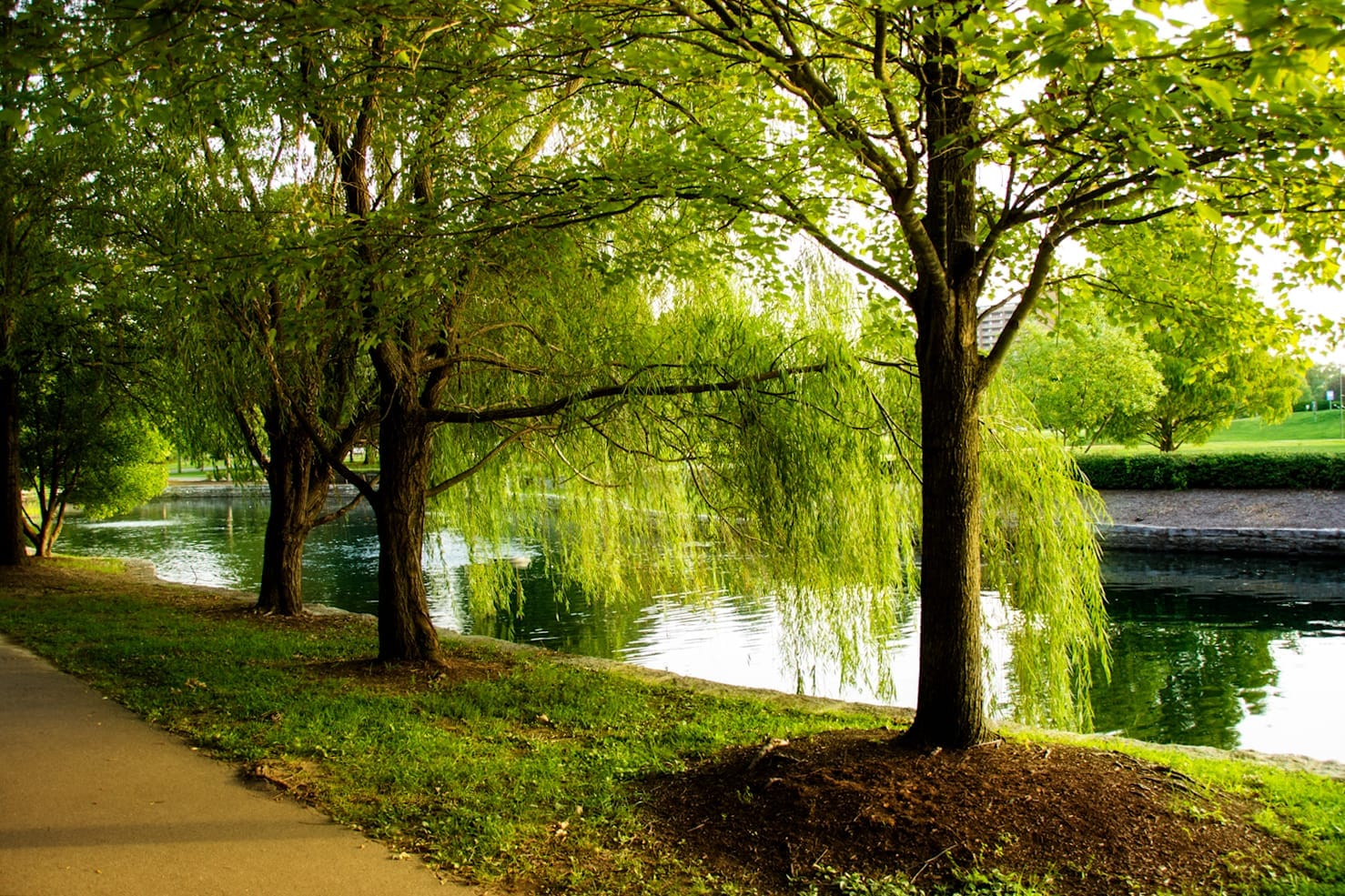
Centennial Park reads completely differently depending on when you arrive. Early mornings, roughly 7 to 9 AM, belong to regulars: joggers on the one-mile paved loop, dog walkers on the grass, and university students cutting through on the way to campus. The lake at the park's center reflects the sky before the foot traffic picks up, and the Parthenon's stone exterior catches the soft morning light without a crowd around it. This is when the park is quietest and most photogenic.
Midday on weekdays draws office workers from nearby buildings eating lunch on the grass near the Centennial Art Center and the bandshell stage. On weekends, particularly between April and October, the park fills considerably: families spread out blankets near the lake, children run toward the playground equipment, and groups gather around the Parthenon steps. The noise level is social but not overwhelming — this is not a park that ever feels chaotic, even at capacity.
Evenings bring a different crowd again. The one-mile loop fills with after-work joggers and cyclists. The area around the sunken garden, a formal landscaped section near the park's interior, tends to be quieter and more contemplative. The park stays open until 11 PM, and on summer evenings the bandshell hosts free concerts that draw large, relaxed crowds. Checking the Centennial Park Conservancy's calendar before an evening visit is worthwhile.
💡 Local tip
Photography tip: The Parthenon's west-facing facade photographs best in the last two hours of daylight. Arrive around 5–6 PM in summer, or 3–4 PM in winter, to catch warm directional light on the columns without harsh midday shadows.
Navigating the Park: What to See and How to Walk It
The park's paved one-mile loop trail is the most practical way to take in the main features without backtracking. Starting from the West End Avenue entrance near the Parthenon, you pass the main reflecting pool and the broad open lawn used for festivals, then continue around the central lake where Canada geese and mallards are year-round fixtures. The lake's perimeter is grassy and slightly informal — this is where you are most likely to find people feeding ducks, which park signs discourage (bread is harmful to waterfowl).
Further along the loop, the sunken garden is a formal feature worth a few minutes: neatly maintained plantings, stone pathways, and a central fountain that runs in warm months. The bandshell amphitheater is adjacent and hosts the majority of the park's public programming. Near the south end of the park, a playground serves younger children, and a dog park area is designated for off-leash dogs.
The entire loop is paved and relatively flat, making it accessible for strollers and wheelchairs. The grounds are mowed grass for the most part, so off-path walking is easy in dry weather. In wet conditions, the grassy areas can become soft, so avoid white sneakers after rain.
Practical Details: Getting There, Parking, and Timing
Centennial Park sits at the corner of West End Avenue and 25th Avenue North, approximately two miles west of downtown Nashville. WeGo Public Transit buses operate along West End Avenue, which is one of the city's main bus corridors — check current WeGo route maps for the most accurate stop locations near the park. Rideshare apps set to 'Centennial Park Nashville' will drop you at the West End Avenue entrance, which is the most logical starting point.
Driving is straightforward: West End Avenue is a major arterial road, and street parking is available along 25th Avenue North and the surrounding residential streets. There is a dedicated parking lot north of the Parthenon within the park, but it may fill during busy times. If you are combining this visit with a walk to nearby Vanderbilt University's campus, note that street parking in the Vanderbilt area can be limited on event days.
Nashville's weather affects the park experience more than it does indoor attractions. Summer visits (June through August) mean temperatures routinely reaching 87 to 90°F with humidity. Bring water, wear sunscreen, and plan to visit in the morning or evening rather than midday. Spring (April and May) and fall (September and October) offer the most comfortable conditions for extended time outdoors. The park remains pleasant in mild winters, though the fountain and reflecting pool may not be running.
⚠️ What to skip
Weekend afternoons from late April through September can see significant event activity at the bandshell and open lawns, with festivals occasionally closing portions of the park to general foot traffic. Check the Centennial Park Conservancy's event calendar before planning a quiet visit on a Saturday.
Cultural Context: How the Park Fits Into Nashville
Centennial Park occupies an interesting position in Nashville's geography and identity. It sits at the western edge of Midtown, adjacent to Vanderbilt University and within walking distance of Music Row. The park represents a Nashville that predates the city's 21st-century boom in country music tourism: it was built as a civic statement, an expression of pride by a post-Reconstruction Southern city determined to present itself as a place of culture and permanence. The nickname 'Athens of the South,' which Nashville acquired in the 19th century partly due to its concentration of universities and neoclassical architecture, finds its most literal expression here. You can read more about the city's cultural layers in our Nashville music history guide, which traces how a city of academic ambition eventually became the capital of country music.
The park today is maintained in part by the Centennial Park Conservancy, a nonprofit that funds programming and improvements beyond what the Metro Nashville parks budget covers. This partnership model is common in American city parks and has kept Centennial Park in good condition relative to smaller Nashville parks. For visitors interested in exploring more of Nashville's green spaces, Radnor Lake State Park offers a completely different, more naturalistic experience about eight miles to the southwest.
Honest Assessment: Who Will Love It and Who Will Not
Centennial Park is not a destination that delivers a single dramatic experience. It does not have a famous view of the skyline, a landmark restaurant, or a ticketed attraction that anchors a visit. What it offers is space, greenery, and an unexpectedly serious piece of architectural history in the middle of an American city. Visitors who appreciate that combination — and who enjoy a park that functions as a real neighborhood gathering place rather than a polished tourist attraction — will find it genuinely rewarding.
Travelers who are primarily drawn to Nashville's music scene and are working through a tight itinerary may find that the park does not compete with time spent at the Ryman or the Country Music Hall of Fame. It is not the kind of place that generates strong feelings either way, which is also part of its appeal: it asks nothing of you, and the entry cost matches that perfectly.
If you are visiting with children, the combination of open grass, the lake with its waterfowl, the playground, and the strange delight of explaining why there is a Greek temple in Tennessee makes this a strong choice. It pairs naturally with a visit to the Adventure Science Center, which is roughly two miles southeast. For a complete picture of what to do in and around Nashville's western neighborhoods, see our full Nashville attractions guide.
Insider Tips
- The Parthenon steps on the west side are a popular spot for portrait and engagement photography, especially on weekend mornings. If you want to photograph the building without strangers in the frame, arrive before 8 AM on a weekday.
- The one-mile paved loop is popular with Vanderbilt students and locals who track their pace, so walkers should keep to the right to avoid being overtaken by faster runners, particularly during the after-work rush between 5 and 7 PM.
- Canada geese are a permanent fixture around the central lake and can be surprisingly assertive during nesting season in early spring. Give them a wide berth, especially if they are near the path with goslings.
- Free outdoor concerts at the bandshell are a genuine highlight of summer evenings in Nashville and are not heavily advertised to out-of-town visitors. Check the Centennial Park Conservancy's events page if you are visiting between May and September — a concert might coincide with your trip at no cost.
- The sunken garden near the bandshell is often overlooked because it sits slightly below grade and is not visible from the main loop. Walk down the steps toward the formal plantings for a quieter corner of the park, even on busy weekend afternoons.
Who Is Centennial Park For?
- Families with children who need open space, a playground, and something genuinely interesting to point at
- Architecture and history enthusiasts curious about the 1897 Tennessee Centennial Exposition and the park's National Register status
- Joggers and walkers looking for a flat, paved, well-maintained loop away from downtown traffic
- Picnickers and casual visitors who want a free, low-commitment afternoon outdoors in a central location
- Photographers working in natural light, particularly those interested in classical architecture and landscape shots
Nearby Attractions
Other things to see while in Belle Meade & West Nashville:
- Belle Meade Historic Site & Winery
Belle Meade Historic Site & Winery sits on 30 acres in west Nashville, preserving a Greek Revival mansion that once anchored one of America's most celebrated Thoroughbred breeding farms. Guided tours cover the full arc of the site's history, including the lives of the enslaved people who built and ran it, followed by wine tastings in a setting that is equal parts educational and scenic.
- The Bluebird Cafe
Since 1982, the Bluebird Cafe has operated as a 90-seat listening room in Nashville's Green Hills neighborhood, roughly 10 miles south of downtown. It's where professional songwriters perform in the round, face to face with the audience, in a format that has no equivalent on Broadway.
- Cheekwood Estate & Gardens
Cheekwood Estate & Gardens combines a National Register-listed 1930s mansion, 55 acres of cultivated gardens, a 1.5-mile woodland sculpture trail, and a serious art museum under one admission. Located about 8.5 miles southwest of downtown Nashville in the Belle Meade area, it rewards slow exploration across multiple seasons.
- Nashville Zoo at Grassmere
Spread across 188 acres of former farmland just six miles southeast of downtown Nashville, the Nashville Zoo at Grassmere combines wildlife exhibits with a preserved 19th-century homestead. It is one of the most substantive family attractions in Middle Tennessee, and worth more than a quick morning stop.
Planning a trip? Discover personalized activities with the Nomado app.