Radnor Lake State Park: Nashville's Urban Wilderness Worth the Drive
Radnor Lake State Park sits just about 8 miles south of downtown Nashville yet feels entirely removed from the city. A free, day-use natural area with 7.75 miles of trails, an 85-acre lake, and wildlife ranging from great blue herons to white-tailed deer, it is one of the most ecologically significant urban parks in Tennessee.
Quick Facts
- Location
- 1160 Otter Creek Road, Nashville, TN 37220 — about 8 miles south of downtown
- Getting There
- Car or rideshare recommended; east entrance via Otter Creek Road off Granny White Pike (larger parking), west entrance via Otter Creek Road off Franklin Road
- Time Needed
- 1.5–3 hours for a full loop; shorter options for a quick lakeside walk
- Cost
- Free entry; no camping or picnicking permitted (day-use only)
- Best for
- Hikers, birders, wildlife photographers, families seeking outdoor space, and anyone needing a break from the honky-tonks
- Official website
- reserve.tnstateparks.com/radnor-lake
What Radnor Lake Actually Is
Radnor Lake State Park is a Class II State Natural Area covering approximately 1,367 acres in Oak Hill, a quiet residential enclave on Nashville's southern edge. The centerpiece is an 80-acre reservoir built in 1913–1914 by the Louisville and Nashville Railroad, originally created to supply water for steam locomotives and railroad operations. The railroad is long gone, but the lake and the mature hardwood forest surrounding it remain largely intact, which is remarkable given how completely Nashville's suburbs have grown around them on every side.
The park was among the first areas in Tennessee to receive State Natural Area designation, a classification that imposes strict use limits to protect ecological integrity. That is why you will not find picnic tables, grills, or a playground here. What you will find is 7.75 miles of trails, a working visitor center, a small aviary education facility, and a level of biodiversity that surprises most first-time visitors who expect nothing more than a pleasant pond.
ℹ️ Good to know
Park hours run from 6:00 a.m. to 20 minutes after sunset, year-round. The Visitor Center is open Thursday through Monday, 9:30 a.m. to 6:00 p.m. (closed 1:00–2:00 p.m. for lunch), and closed Tuesday and Wednesday. The Barbara J. Mapp Aviary Education Center operates Wednesday and Saturday, 10:00 a.m. to 1:00 p.m. Verify current hours at reserve.tnstateparks.com before visiting.
The Experience by Time of Day
Arrive within the first hour after the 6:00 a.m. opening and the park feels almost private. The main parking lot off Granny White Pike fills quickly on weekends, sometimes reaching capacity before 9:00 a.m. on clear autumn mornings, but those who arrive at dawn get the lake mostly to themselves. At this hour the water is mirror-flat, mist rises off the surface in cooler months, and the dawn chorus of wood thrushes, warblers, and red-tailed hawks creates a wall of sound that is jarring in its intensity given how close the traffic on Granny White Pike actually is.
Midday on weekends is the most crowded window, particularly between April and October. The Lake Trail fills with walkers, and sightlines on the wildlife-heavy south shore become disrupted by foot traffic. If that is the only time you can visit, it is still worth coming, but adjust your expectations: this is a beloved neighborhood park and it behaves like one on a sunny Saturday afternoon.
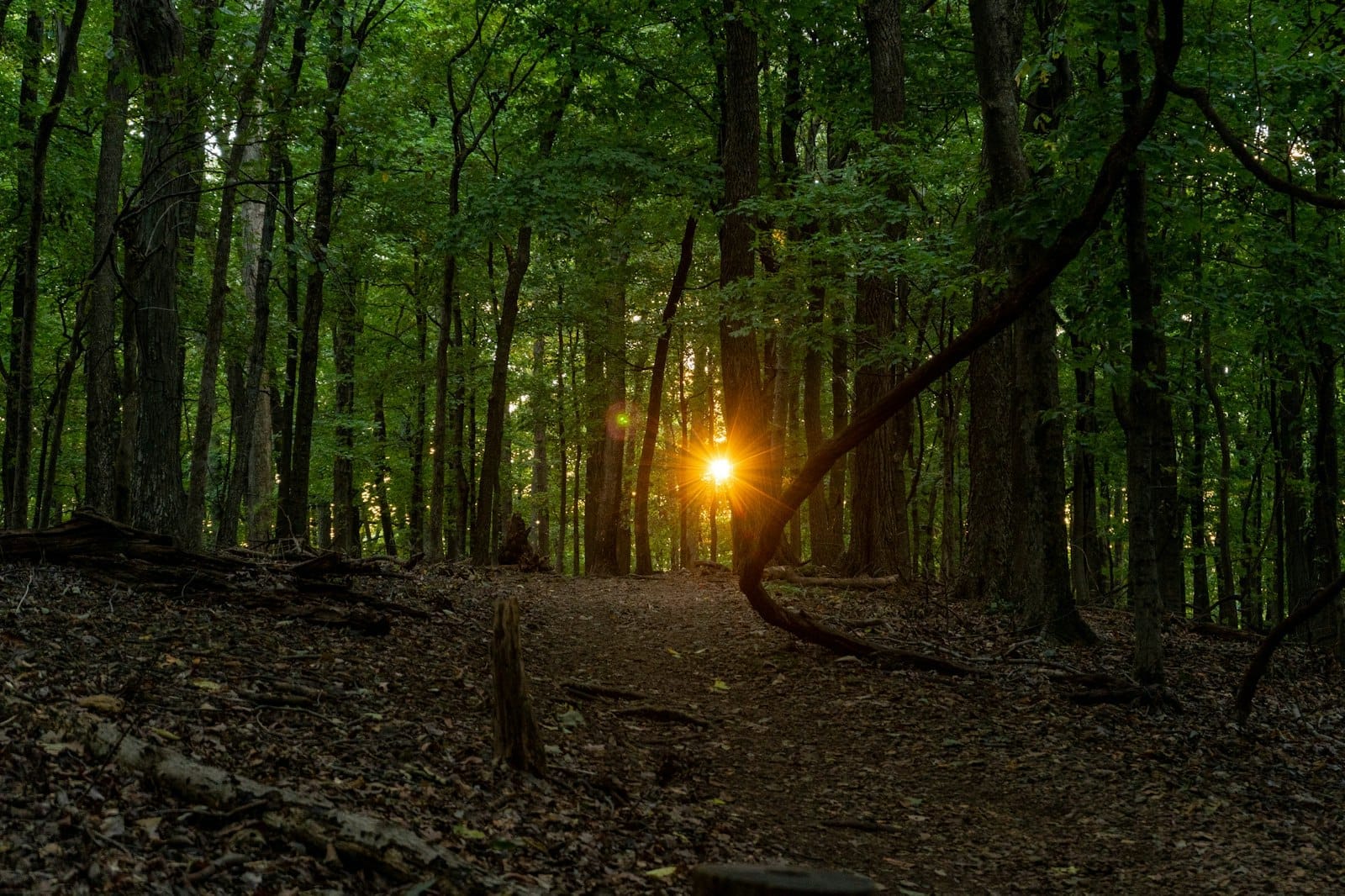
Late afternoon, roughly two hours before sunset, produces the best photography light and a second spike in wildlife activity. Great blue herons return to their favored fishing spots on the lake's eastern shallows, and deer move out from the tree line toward the water's edge. The quality of the golden hour here, with the low sun hitting the water through a gap in the canopy on the south shore, is genuinely striking.
Tickets & tours
Live prices and dates from our booking partner. If you book, we may earn a commission at no extra cost to you.
Old Town trolley tour of Nashville
From 54 €Instant confirmationFree cancellationHatch Show Print guided tour
From 21 €Instant confirmationFree cancellationDowntown walking tour of Nashville
From 21 €Instant confirmationFree cancellationNashville Downtown Underground Donut Tour
From 46 €Instant confirmationFree cancellation
The Trails: What to Expect Underfoot
The park has two entrance points. The east entrance off Granny White Pike has the largest parking area and direct access to the Nature Center and the Lake Trail. The west entrance off Franklin Road connects to Otter Creek Road Trail and the network of more challenging ridge paths. First-time visitors typically start at the east entrance.
The Lake Trail runs close to the water and is largely flat, making it the most accessible option. It is the only trail designated for all-terrain wheelchairs. The surface is packed gravel and natural earth, and it can get soft and slippery after rain, so waterproof footwear is worth having regardless of the forecast. The trail feels intimate rather than grand: you are rarely more than 30 feet from the water on the south side, and the canopy is thick enough that the lake appears and disappears through gaps in the tulip poplar and oak as you walk.
The ridge trails on the Ganier Ridge and South Cove sections involve genuine elevation change and offer a different character entirely. Up on the ridge you lose sight of the lake and move through older-growth forest where the understory opens up and you can see 50 or 60 yards through the trees in winter. These trails are moderately difficult and require some footing attention, particularly on the root-crossed descents. Dogs, bicycles, and jogging are only permitted on the Otter Creek Road Trail, not on the Lake Trail or ridge paths, so those sections stay notably quieter.
💡 Local tip
Parking at the east entrance fills fast on weekend mornings between April and October, sometimes by 8:30 a.m. If you arrive and find the lot full, the west entrance off Franklin Road typically has space and adds only a short walk to reach the lake loop.
Wildlife: What You Can Reasonably Expect to See
The ecological diversity here is a direct result of the protected status and the mature forest buffer surrounding the lake. White-tailed deer are seen on nearly every visit, often in small groups at the water's edge or browsing the lower slope above the south shore trail. Great blue herons are resident year-round and visible from the Lake Trail in the early morning and late afternoon. Beavers are active in the lake system and their work, gnawed stumps and dam structures near the inlets, is visible without any searching.
Birding is a serious draw. The park sits in the Cumberland Plateau's migration corridor, and during spring and fall migration, it attracts warblers, vireos, and thrushes in numbers that justify bringing binoculars. Barred owls call from the ridge at dawn and dusk. Osprey fish the lake during migration seasons. The Barbara J. Mapp Aviary Education Center, open on Wednesdays and Saturdays, houses raptors and other birds that cannot be released to the wild, and offers close-up observation that is particularly worthwhile for children or anyone new to birding.
Coyotes, river otters, and mink have all been documented in the park, though sightings require patience and early hours. Reptile activity, including eastern box turtles and various skinks, is visible on the trail edges on warm spring and summer mornings.
Historical Context and Why the Park Exists
The lake's origin story is industrial rather than scenic. The Louisville and Nashville Railroad built the reservoir in 1914 as a utilitarian water source, not a recreational asset. After the railroad ceased operations, the land sat in relative quiet for decades. By the late 1960s, real estate developers had identified the property's value as suburban Nashville expanded southward, and a housing development was proposed. A coalition of citizens and conservation groups fought the proposal, and in 1973 Radnor Lake was established as Tennessee’s first official State Natural Area under the State Natural Areas Preservation Act of 1971.
That fight over Radnor Lake became a landmark moment in Tennessee conservation history and set a precedent for protecting urban natural spaces within expanding cities. The nonprofit Friends of Radnor Lake continues to support the park through advocacy, education programs, and trail maintenance. Understanding this backstory gives the park a different weight: the silence along the Lake Trail exists not by accident but because a specific group of people, about 50 years ago, decided it was worth fighting for.
Practical Information for Planning Your Visit
There is no public transit route that conveniently reaches Radnor Lake. Nashville's WeGo bus network does not serve Otter Creek Road directly, so a car, rideshare, or bicycle from nearby neighborhoods are your realistic options. From downtown Nashville the drive is roughly 20 to 25 minutes depending on traffic, longer during the afternoon rush south on Franklin Road.
The park is free to enter and requires no reservation. There are no food vendors, cafes, or water fountains on the trail system, so bring your own water, especially in summer when the humidity along the lake can feel considerably heavier than the open forecast suggests. The visitor center has restroom facilities. Parking is free at both entrances.
Seasonal considerations matter here more than at most Nashville attractions. Summer is humid and the mosquitoes along the lake shore between June and August are significant enough that insect repellent is worth packing. Autumn, roughly mid-October through early November, produces fall color that makes the ridge trails particularly rewarding. For seasonal timing guidance applicable to Nashville's outdoor attractions broadly, see the best time to visit Nashville guide.
⚠️ What to skip
The park closes 20 minutes after sunset, and rangers do enforce this. Do not start a ridge trail loop in the late afternoon without checking the sunset time for that date. Getting caught on a ridge path in full dark is disorienting and the descent can be hazardous.
Photography rules are minimal: tripods are permitted on trails but drones are not allowed. The Lake Trail's south shore offers the cleanest unobstructed views of the water. For wildlife photography the east end of the lake near the dam has the most consistent heron activity. A 200–400mm equivalent lens will be useful; the animals are present but not habituated to close approach.
Who Should Skip This and Who Should Prioritize It
If your Nashville itinerary is entirely centered on live music, food, and Broadway's honky-tonk scene, Radnor Lake requires a deliberate detour that may not fit a short trip. It is not a quick add-on from downtown, and without a car it is genuinely inconvenient to reach. Visitors spending only one night in Nashville should probably weigh it against closer outdoor options like Centennial Park or the Cumberland Park riverfront walk.
For visitors staying two or more days, especially those who feel the need for genuine outdoor space rather than manicured urban greenery, Radnor Lake justifies the drive without qualification. Families with young children who are comfortable on uneven terrain, serious birders, trail runners (on Otter Creek Road Trail only), and anyone from a city without accessible urban wilderness will find it worth the effort. It is also a legitimate option for people who have done Nashville's main music and history attractions and want a different kind of morning.
Insider Tips
- The east parking lot fills fastest. If you are arriving after 8:00 a.m. on a weekend, drive directly to the west entrance off Franklin Road. The walk to the lake from there adds only a few minutes and you will almost always find space.
- The dam overlook at the east end of the lake is easy to miss because most trail maps show it as a minor spur. It offers the only elevated view across the full length of the lake and is worth the short detour, especially in early morning mist.
- Bring insect repellent from late May through September. The mosquito density along the south shore in summer is underreported in most online guides and can significantly affect how much you enjoy the lower lake trail.
- The Barbara J. Mapp Aviary Education Center is only open Wednesday and Saturday mornings from 10:00 a.m. to 1:00 p.m. If you have any interest in raptors or want an engaging stop for children, check that your visit day aligns with those hours before making plans around it.
- In mid-October the Ganier Ridge trail offers some of the best accessible fall foliage viewing in the Nashville area. The ridge elevation and the mix of oak, hickory, and maple canopy produce color that is noticeably richer than what you will see in the flatland parks closer to downtown.
Who Is Radnor Lake State Park For?
- Hikers and trail runners looking for real terrain within a major city
- Birders, particularly during spring and fall migration seasons
- Wildlife photographers wanting accessible subjects in natural settings
- Families with older children comfortable on uneven trails
- Multi-day Nashville visitors who want a morning of genuine outdoor quiet
Nearby Attractions
Other things to see while in Belle Meade & West Nashville:
- Belle Meade Historic Site & Winery
Belle Meade Historic Site & Winery sits on 30 acres in west Nashville, preserving a Greek Revival mansion that once anchored one of America's most celebrated Thoroughbred breeding farms. Guided tours cover the full arc of the site's history, including the lives of the enslaved people who built and ran it, followed by wine tastings in a setting that is equal parts educational and scenic.
- The Bluebird Cafe
Since 1982, the Bluebird Cafe has operated as a 90-seat listening room in Nashville's Green Hills neighborhood, roughly 10 miles south of downtown. It's where professional songwriters perform in the round, face to face with the audience, in a format that has no equivalent on Broadway.
- Centennial Park
A 132-acre public park listed on the National Register of Historic Places, Centennial Park sits approximately two miles west of downtown Nashville across from Vanderbilt University. It is free to enter, open daily until 11 PM, and home to the only full-scale replica of the ancient Parthenon in the world.
- Cheekwood Estate & Gardens
Cheekwood Estate & Gardens combines a National Register-listed 1930s mansion, 55 acres of cultivated gardens, a 1.5-mile woodland sculpture trail, and a serious art museum under one admission. Located about 8.5 miles southwest of downtown Nashville in the Belle Meade area, it rewards slow exploration across multiple seasons.
Planning a trip? Discover personalized activities with the Nomado app.