Cumberland Park Nashville: The Downtown River Park Worth Crossing For
Cumberland Park occupies the east bank of the Cumberland River just steps from downtown Nashville, offering free outdoor space, a well-designed playground, an amphitheater, and some of the best skyline views in the city. Opened in April 2012, it draws families, joggers, and river-watchers in roughly equal measure.
Quick Facts
- Location
- 592 S 1st St, Nashville, TN 37213 — east bank of the Cumberland River, downtown
- Getting There
- Walk across the John Seigenthaler Pedestrian Bridge from downtown, or take WeGo bus services to the riverfront area
- Time Needed
- 45 minutes to 2 hours depending on whether you have children
- Cost
- Free — no admission required
- Best for
- Families with children, joggers, skyline photography, riverside walks
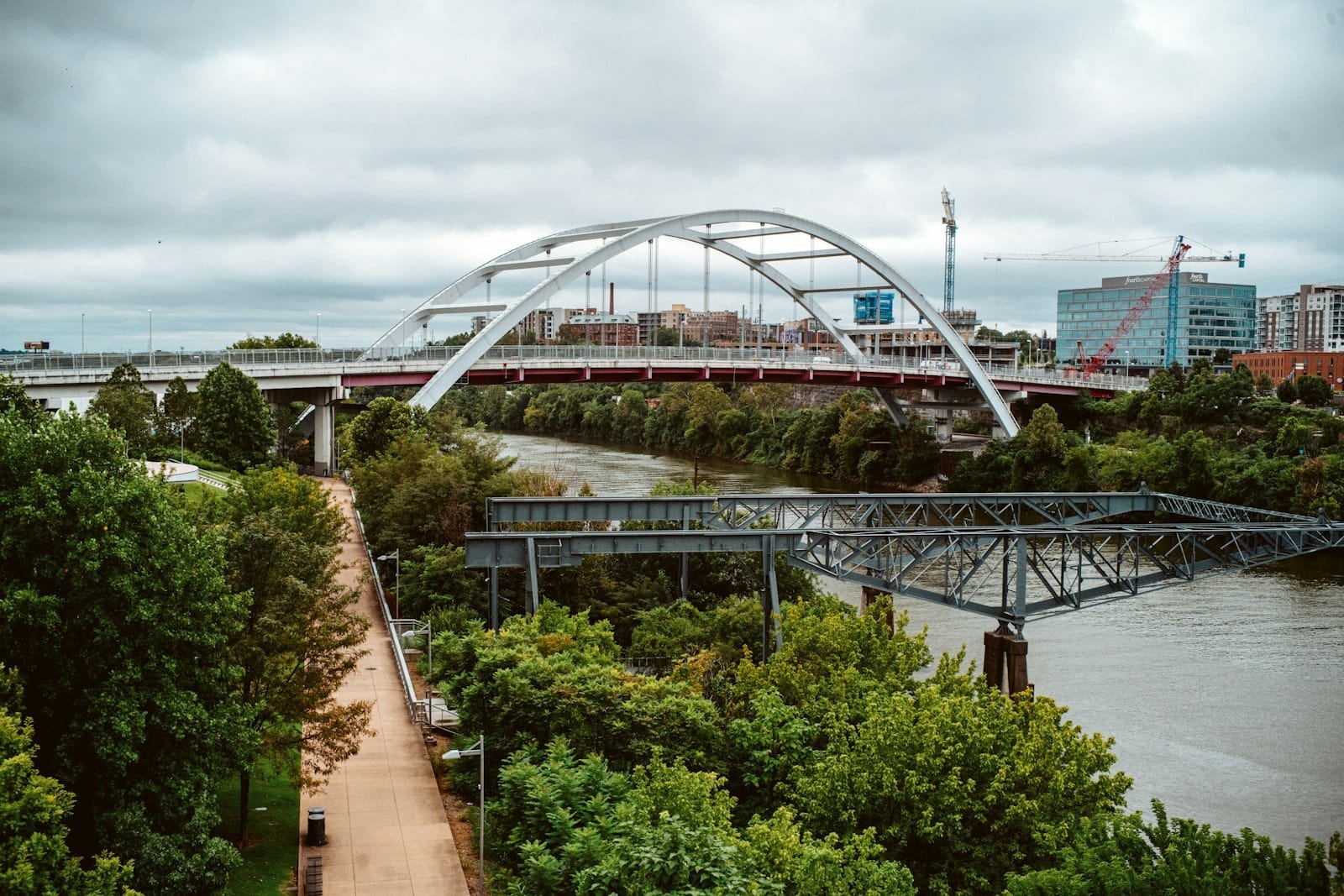
What Cumberland Park Actually Is
Cumberland Park is a public riverside park on the east bank of the Cumberland River in downtown Nashville, Tennessee, opened in April 2012. It sits directly across the water from the main downtown core and is accessible on foot via the John Seigenthaler Pedestrian Bridge, which arcs over the river from near Korean Veterans Boulevard. The park was designed by landscape architecture firm Hargreaves Associates and sits within the Metropolitan Government of Nashville and Davidson County's parks system.
The park combines a children's water play area, structured playground equipment, an outdoor amphitheater stage pavilion, open lawn space, and a continuous river walk. It is not a manicured botanical garden or a sprawling wilderness preserve — it is a thoughtfully designed urban park built to give downtown residents and visitors direct access to the riverfront without a car.
ℹ️ Good to know
Note on naming: Local reporting has discussed renaming Cumberland Park to Wasioto Park, reflecting a traditional Indigenous name for the region. Metro Nashville's parks website now lists it under the Wasioto Park page following the official renaming in December 2024. Signage at the park itself may still read Cumberland Park. Verify current naming before your visit.
The Walk Over: Getting Here Is Part of the Experience
The most satisfying way to arrive is on foot across the John Seigenthaler Pedestrian Bridge, a span added to the National Register of Historic Places in 1998 and regarded as one of the longest pedestrian-only bridges in the world. Crossing it from the downtown side takes roughly ten minutes at a relaxed pace, and the views upstream and downstream along the Cumberland River are clear and unobstructed in both directions.
On weekday mornings the bridge is quiet enough that you can hear the river below and the distant rumble of delivery trucks on Broadway. On weekend afternoons it fills with a steady mix of joggers, families with strollers, and groups of visitors taking photographs of the skyline. The park entrance at the east end of the bridge is low-key — no gate, no ticket booth, just a path that widens into the park's main lawn.
If you are arriving by car, street parking exists on the east side of the river along South First Street, but availability varies considerably on weekends. WeGo Public Transit bus routes connect the downtown riverfront to other parts of Nashville; check the WeGo website for current schedules and fares before your visit.
Tickets & tours
Live prices and dates from our booking partner. If you book, we may earn a commission at no extra cost to you.
Old Town trolley tour of Nashville
From 54 €Instant confirmationFree cancellationHatch Show Print guided tour
From 21 €Instant confirmationFree cancellationDowntown walking tour of Nashville
From 21 €Instant confirmationFree cancellationNashville Downtown Underground Donut Tour
From 46 €Instant confirmationFree cancellation
The Park Layout: What You Will Find
The playground and water play area anchor the northern portion of the park and are the primary reason families make the trip. The water features are ground-level jets and splash elements set into a rubberized surface — the kind of layout where children under ten will absolutely soak themselves in warm months, so pack a change of clothes. The playground equipment is age-differentiated, with structures suited to toddlers on one side and more physically challenging apparatus for older children toward the river edge.
The amphitheater stage pavilion sits toward the center of the park. When no event is scheduled, it reads as an open-air covered stage facing a sloped grass lawn — the kind of space that invites impromptu lounging. The pavilion was designed to support professional production needs, meaning it hosts real concerts and events rather than just informal gatherings. Check Metro Nashville Parks or local event listings for scheduled programming during your visit window.
The southern section of the park transitions into a quieter riverside walk with seating overlooking the water. This is where you find the best unobstructed view of the downtown Nashville skyline, with the AT&T Building and the cluster of towers framed against the river. The view is especially strong in the late afternoon when the light comes from the west and catches the glass facades of the downtown buildings.
💡 Local tip
Photography tip: Position yourself on the riverside path in the park's southern section roughly 90 minutes before sunset for the most direct light on the downtown skyline. The Nissan Stadium structure will be visible to your left; use it as a framing element rather than trying to avoid it.
How the Park Changes Through the Day
Early mornings — before 8 a.m. — belong to joggers completing riverside loops and the occasional dog walker. The water features are off at that hour, the playground is empty, and the grass holds dew. The light on the river at this time has a particular quality, flat and grey-blue, that makes the downtown reflection in the water look almost abstract.
Mid-morning through early afternoon on weekdays is when the park reaches a kind of productive calm — parents with young children, people reading on the lawn, the occasional work-from-anywhere type with a laptop on a bench near the amphitheater. Summer middays are genuinely hot. Nashville's humid subtropical climate means that July and August afternoons regularly push into the upper 80s and low 90s Fahrenheit (31–33°C), and with the open riverfront there is limited shade in some sections of the park. Sunscreen and water matter.
Weekends between 10 a.m. and 3 p.m. are the park's peak hours, with the playground area in particular becoming busy enough that adults without children may prefer the quieter southern riverside walk past the amphitheater. If you are visiting primarily for the views and the river atmosphere, a weekday morning or a late afternoon on any day will feel noticeably more spacious.
Historical and Cultural Context
The Cumberland River has been central to Nashville's existence since European settlement in the late 18th century — the city grew as a river trading post before it became the state capital or developed its identity around music. The name Cumberland itself comes from the Duke of Cumberland, though local Indigenous peoples had long-established names for the region, including Wasioto, which refers to the broader area around what is now central Tennessee. The ongoing discussion about renaming the park reflects a broader movement across downtown Nashville to acknowledge pre-colonial history more explicitly.
The park was built on what had previously been an underused and largely inaccessible stretch of the riverbank — the kind of industrial-edge land that many American cities have been converting to public greenspace since the 1990s. Its 2012 opening was part of a broader effort to activate Nashville's riverfront and create a pedestrian-friendly connection between the east bank neighborhoods and downtown, anchored by the Seigenthaler Bridge and the riverfront improvements on the downtown side.
For visitors interested in Nashville's broader outdoor offerings, the park connects naturally to a day that includes Riverfront Park and Ascend Amphitheater on the downtown side of the river, and it sits within easy walking distance of the broader east Nashville riverfront.
Practical Visitor Details
Admission is free. There is no fee to enter, no ticket booth, and no required registration. The park is an outdoor public space operated by Metro Nashville Parks.
Official opening hours were not confirmed in available sources at the time of writing — as an outdoor public park, it is generally accessible during daylight hours, but Metro Nashville Parks should be consulted for current posted hours, particularly if you are planning a very early morning or evening visit.
Restroom facilities are present in the park. The paths and play areas are paved and generally accessible for strollers and wheelchairs, though specific ADA accommodation details should be verified with Metro Nashville Parks directly. The park has no on-site food or beverage vendors in a permanent capacity, so bring water — especially in summer.
⚠️ What to skip
Summer heat advisory: Between June and August, midday temperatures regularly exceed 90°F (32°C) with high humidity. The park has limited shade in its central sections. If you are visiting with young children, plan your visit before 10 a.m. or after 5 p.m. during summer months.
Is This Park Worth Your Time?
For visitors on a tight downtown Nashville itinerary focused purely on music and entertainment, Cumberland Park is an easy addition rather than a dedicated excursion — the walk over the Seigenthaler Bridge and 30 minutes in the park adds context to the city's relationship with the river without pulling you far off course. Pair it with a visit to Bicentennial Capitol Mall State Park or Shelby Bottoms Greenway if green space and outdoor time are a priority for your trip.
Visitors expecting manicured gardens, lush woodland trails, or a large-scale natural area will find this park modest. It is urban greenspace — designed, maintained, and best understood as a neighborhood park that happens to have excellent river views and a good children's play area. Those qualities are exactly what make it worth the walk across the bridge.
Travelers without children who are primarily interested in the skyline view can get the best of what this park offers in under 30 minutes. Families with children, particularly those with kids in the 2–10 age range, could easily spend two hours here without running out of things to do.
Insider Tips
- Cross the Seigenthaler Bridge from the downtown side rather than driving to the park — parking on the east bank is limited and the bridge walk itself is one of the better free views in Nashville.
- The southern end of the riverside walk, past the amphitheater, is noticeably quieter than the playground section and offers the clearest unobstructed view of the downtown skyline. Most visitors cluster near the play area and never walk that far.
- If you see an event listed at the park's amphitheater stage during your visit dates, check whether it is free or ticketed — Metro Nashville Parks occasionally programs free outdoor concerts here, particularly in spring and fall.
- The water play jets are seasonal and may not be operating outside of late spring through early fall. Do not make wet-play the centerpiece of a winter or early spring visit without confirming they are running.
- The park connects to a broader east bank riverside trail. If you have a full morning and good walking shoes, you can continue south along the riverfront path toward Nissan Stadium for a longer loop back into downtown.
Who Is Cumberland Park For?
- Families with young children looking for free outdoor activity near downtown
- Visitors who want Nashville skyline photography from across the river
- Joggers and walkers building a downtown riverside loop into their day
- Travelers curious about Nashville's riverfront history and Indigenous place names
- Anyone combining a free outdoor stop with a broader downtown Nashville walking day
Nearby Attractions
Other things to see while in Downtown Nashville:
- 3rd & Lindsley
Since 1991, 3rd & Lindsley has been the venue where Nashville musicians play when they want to be heard, not just seen. Located half a mile south of Broadway in the SoBro district, it is an intimate, no-frills room that draws touring acts, local legends, and serious audiences in equal measure.
- Acme Feed & Seed
Housed in a landmark 1943 building at the corner of 1st Avenue and Broadway, Acme Feed & Seed is a multi-level bar, restaurant, and music venue with a rooftop overlooking the Cumberland River. It offers a more layered experience than the typical honky-tonk strip, with a rooftop that earns its reputation for views and a ground floor that still delivers the Broadway energy.
- Adventure Science Center
Adventure Science Center is Nashville's premier interactive science museum, offering 44,000 square feet of hands-on exhibits, a 75-foot adventure tower, and a 63-foot dome planetarium. It has served the city since 1945 and remains one of the most engaging family destinations near downtown Nashville.
- Bicentennial Capitol Mall State Park
Bicentennial Capitol Mall State Park is a free, 19-acre outdoor park in downtown Nashville built to commemorate Tennessee's 200th anniversary of statehood. Anchored by a 200-foot granite map of the state, a 95-bell carillon, and the Rivers of Tennessee Fountains, it doubles as one of the most informative and peaceful green spaces in the city center.
Planning a trip? Discover personalized activities with the Nomado app.