John Seigenthaler Pedestrian Bridge: Nashville's Best Free Walk
The John Seigenthaler Pedestrian Bridge spans the Cumberland River between downtown Nashville and the East Bank, offering unobstructed skyline views at no cost. A National Register-listed structure built in 1909, it doubles as a practical connector and one of the city's most rewarding short walks.
Quick Facts
- Location
- Connects Riverfront Park (downtown) to Cumberland Park and Nissan Stadium (East Bank), Nashville, TN
- Getting There
- Walk from Broadway or Lower Broadway hotels; WeGo bus to downtown, then 5-10 min walk to western entrance near 3rd Ave South
- Time Needed
- 20-40 minutes for a round trip; longer if you combine with Cumberland Park or Riverfront Park
- Cost
- Free, open 24 hours
- Best for
- Skyline photography, runners and cyclists, families, budget travelers
What the John Seigenthaler Pedestrian Bridge Actually Is
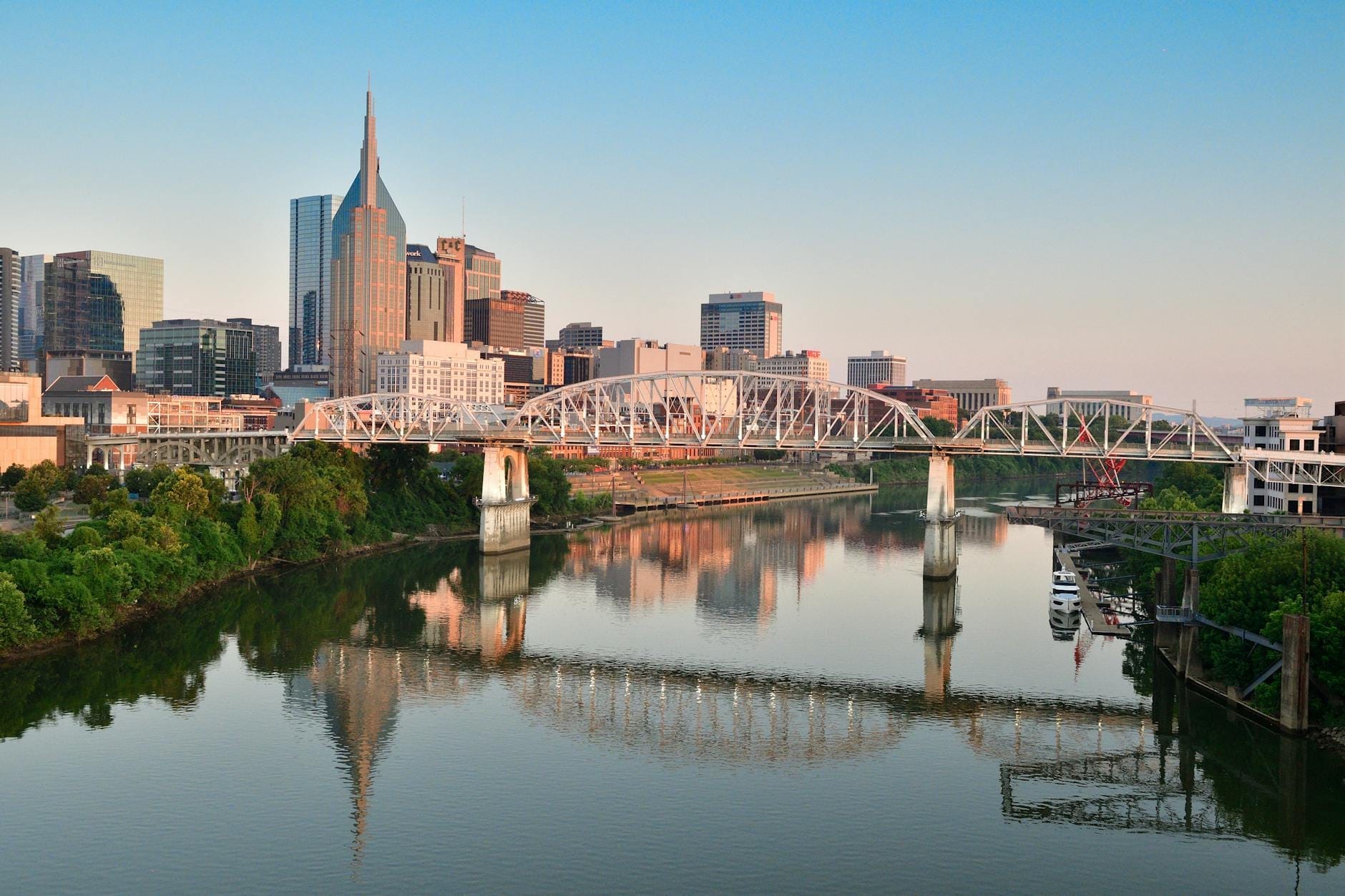
The John Seigenthaler Pedestrian Bridge is a 3,150-foot truss span crossing the Cumberland River in central Nashville, Tennessee. It links Riverfront Park on the downtown side to Cumberland Park and the Nissan Stadium precinct on the East Bank. No cars. No tolls. No tickets. It is one of the few places in the city where you can stop mid-span, lean against the railing, and watch the Nashville skyline without traffic noise competing for your attention.
The bridge was originally built between 1907 and 1909, designed by engineer Howard M. Jones, and is historically significant as one of the earliest major North American bridges supported by arched concrete piers. That fact alone gives the structure a quiet authority that most visitors walk over without realizing. It was listed on the National Register of Historic Places in 1998, the same year it was closed to vehicles. The conversion to pedestrian use was completed in 2003, and in 2014 it was renamed to honor John Seigenthaler, a Nashville-born journalist and civil rights advocate who served as an aide to Attorney General Robert F. Kennedy and later as editor of The Tennessean.
💡 Local tip
The bridge is officially open 24 hours, but the best light for photography falls in the 30 minutes after sunrise (when the skyline catches warm eastern light) and in the 20 minutes before sunset (when the city turns gold from the west).
How the Experience Changes by Time of Day
Early morning, roughly 6:00 to 8:00 a.m., is when the bridge belongs to joggers, cyclists, and the occasional dog walker. The deck is wide enough that foot and bike traffic rarely conflict, with a dedicated 15-foot central bike lane flanked by 10-foot elevated sidewalks on each side. At this hour the air carries the faint mineral smell of the river, and the sound of the current below is audible if you stand still. The skyline to the west sits sharp and unhurried in the morning light.
Midday brings more foot traffic, particularly on weekends when groups move between downtown attractions and the East Bank. The bridge doesn't feel crowded even then, but the midday sun is high and flat, draining contrast from photographs. If you're visiting purely for the views and not combining it with a workout or a river crossing, midday is the least rewarding time visually.
Evenings are the most social period. In the hour before dusk, couples, small groups, and photographers cluster near the midpoint. The Nashville skyline, with the AT&T Building and the Cumberland River below, catches orange and pink light that makes the scene almost absurdly photogenic. On Tennessee Titans game days, the eastern approach near Nissan Stadium fills with fans in blue and white, and the bridge becomes a loud, high-energy corridor between the parking areas and the stadium gates.
Tickets & tours
Live prices and dates from our booking partner. If you book, we may earn a commission at no extra cost to you.
Old Town trolley tour of Nashville
From 54 €Instant confirmationFree cancellationHatch Show Print guided tour
From 21 €Instant confirmationFree cancellationDowntown walking tour of Nashville
From 21 €Instant confirmationFree cancellationNashville Downtown Underground Donut Tour
From 46 €Instant confirmationFree cancellation
The Architecture and Why It Matters
Most pedestrians cross this bridge without registering that they're walking on a piece of civil engineering history. Jones's design used reinforced concrete arches rising from the riverbed to support the span at a time when that technique was virtually untested at this scale in North America. The result is a series of elegant concrete curves visible from the riverbanks below that give the bridge a monumental quality disproportionate to its relatively modest height above the water.
The conversion from vehicular to pedestrian use in 2003 preserved the original structure while adding the wide segregated-use deck with a central bike lane and elevated sidewalks. The surface is smooth, paved concrete, and the rails are open metal, keeping sightlines clear. There are no obstructions between you and the river or the skyline at any point on the crossing.
The bridge's position in the broader city landscape is worth noting. To the west, you look directly into Riverfront Park and Ascend Amphitheater, one of the city's main outdoor concert venues. To the east, Cumberland Park sits directly at the foot of the bridge, a small but well-designed green space with water features suited to families. The walk from one side to the other is a genuine transit between two distinct parts of Nashville.
The Man Behind the Name
John Seigenthaler (1927-2014) was a significant figure in both Nashville journalism and American civil rights history. As a young reporter and later editor at The Tennessean, he covered and sometimes participated in the civil rights movement in the South. In 1961, while serving as a Justice Department aide, he was beaten unconscious by a mob during the Freedom Rides in Montgomery, Alabama, an event that brought national attention to the violence faced by activists.
Renaming the bridge in his honor was a deliberate civic statement. Nashville has its own layered civil rights history, and placing Seigenthaler's name on a structure that physically connects communities across the Cumberland River carries meaning beyond simple commemoration. For visitors with an interest in that history, the bridge is a logical starting point before exploring further.
The Civil Rights Room at the Nashville Public Library provides deeper context on the city's role in the movement, and the Nashville civil war and history guide covers the broader timeline of the city's past.
Practical Walkthrough: Getting There and Using the Bridge
The western entrance sits near 3rd Avenue South in downtown Nashville, a straightforward 10 to 15 minute walk from the Lower Broadway honky-tonk strip. If you're staying in a downtown hotel, you can reach the bridge entirely on foot without needing transit.
WeGo Public Transit buses serve the downtown corridor, and the WeGo Star commuter rail terminates at Riverfront Station, which is a short walk from the western approach. Rideshare drop-offs work well on the downtown side; on the East Bank, the Nissan Stadium area has clear drop-off zones.
The deck is wide and paved, making it accessible for wheelchairs and strollers, though prospective visitors using mobility aids should check the approach ramps at each end for current conditions. Cyclists are welcome in the central lane and the bridge is popular with commuters connecting East Nashville neighborhoods to downtown.
⚠️ What to skip
On Tennessee Titans NFL game days, the bridge gets heavily congested in the two hours before kickoff and immediately after the game. If you're visiting for photos or a relaxed walk, avoid those windows. Check the Titans schedule before visiting on Sundays or Monday nights.
The eastern end connects directly to Cumberland Park and is a short walk from Nissan Stadium. If you're heading to a game or an event at the stadium, building the bridge crossing into your arrival route is a more scenic alternative to ground-level streets.
Photography Notes
The midspan position offers the best unobstructed angle on the Nashville skyline: low enough to keep the river in the foreground, high enough to clear the riverside trees. Wide-angle lenses (24-35mm equivalent) work well for capturing both the river surface and the full skyline height. At golden hour, the glass facades of downtown buildings reflect warm light directly back toward the bridge, making this one of the most reliably photogenic free spots in the city.
For long-exposure shots after dark, the bridge deck is steady enough for a tripod, and the lights of the city reflecting in the Cumberland River create strong compositional lines. The bridge itself, lit from below at night, also photographs well from the riverbank below, particularly from the Riverfront Park side.
ℹ️ Good to know
The bridge faces roughly west-to-east across the river. This means the best skyline views face west toward downtown, and you'll be shooting into the sun at midday. Morning light comes from behind you if you're standing on the eastern half, which is ideal for photographing the skyline.
Is It Worth Your Time?
Honestly, yes, with one caveat: this is a walk, not a destination. If you're expecting an observation deck, a museum, or any kind of amenity on the bridge itself, you'll be disappointed. There are no cafes, no exhibits, no seating beyond the railings, and no shelter in bad weather. What the bridge offers is a clean, free, architecturally interesting crossing with excellent views, and that's worth the 20 minutes it takes.
Visitors who are tight on time and only want a Nashville skyline photo should know that the bridge delivers this more reliably than most downtown vantage points. Visitors who want to combine it with a broader outing should consider pairing the crossing with Cumberland Park on the East Bank or Riverfront Park on the downtown side for a complete 45 to 60 minute loop along the river.
The bridge fits naturally into a broader exploration of downtown Nashville. For a structured itinerary that incorporates the crossing, the Nashville walking tour guide covers the most logical routes through the city center.
Insider Tips
- The best skyline reflection in the river appears on calm mornings with little wind, typically before 8 a.m. Wind chop breaks up the reflection by mid-morning on most days.
- If you're walking from Lower Broadway, approach via the riverfront rather than cutting through surface parking lots. The riverside path gives you a better sense of the river corridor and brings you directly to the western ramp.
- The bridge is noticeably cooler than street level in summer due to the river airflow, making it a useful mid-day break from Nashville's humid summer heat.
- At night, look back at the bridge from Cumberland Park after you cross. The concrete arch structure lit from underneath is one of the less-photographed views of the bridge and more architecturally revealing than the standard midspan skyline shot.
- The former name, Shelby Bridge, still appears on some older maps and rideshare apps when searching for the bridge. If you're having trouble locating it digitally, searching for Shelby Street Bridge or Shelby Avenue Bridge may return more accurate results.
Who Is John Seigenthaler Pedestrian Bridge For?
- Photographers looking for free Nashville skyline shots at sunrise or golden hour
- Runners and cyclists wanting a safe, car-free river crossing with good surface quality
- Budget travelers and families combining it with free access to Cumberland Park and Riverfront Park
- History-focused visitors interested in early 20th-century civil engineering or John Seigenthaler's civil rights legacy
- Anyone walking between downtown and the East Bank or Nissan Stadium who wants a more scenic route
Nearby Attractions
Other things to see while in Downtown Nashville:
- 3rd & Lindsley
Since 1991, 3rd & Lindsley has been the venue where Nashville musicians play when they want to be heard, not just seen. Located half a mile south of Broadway in the SoBro district, it is an intimate, no-frills room that draws touring acts, local legends, and serious audiences in equal measure.
- Acme Feed & Seed
Housed in a landmark 1943 building at the corner of 1st Avenue and Broadway, Acme Feed & Seed is a multi-level bar, restaurant, and music venue with a rooftop overlooking the Cumberland River. It offers a more layered experience than the typical honky-tonk strip, with a rooftop that earns its reputation for views and a ground floor that still delivers the Broadway energy.
- Adventure Science Center
Adventure Science Center is Nashville's premier interactive science museum, offering 44,000 square feet of hands-on exhibits, a 75-foot adventure tower, and a 63-foot dome planetarium. It has served the city since 1945 and remains one of the most engaging family destinations near downtown Nashville.
- Bicentennial Capitol Mall State Park
Bicentennial Capitol Mall State Park is a free, 19-acre outdoor park in downtown Nashville built to commemorate Tennessee's 200th anniversary of statehood. Anchored by a 200-foot granite map of the state, a 95-bell carillon, and the Rivers of Tennessee Fountains, it doubles as one of the most informative and peaceful green spaces in the city center.
Planning a trip? Discover personalized activities with the Nomado app.