Civil Rights Room at Nashville Public Library: History Worth a Detour
Tucked inside the Nashville Public Library's main branch on Church Street, the Civil Rights Room is a free, permanent exhibition documenting Nashville's pivotal role in the American civil rights movement. Through photographs, oral histories, and primary source documents, it tells the story of the 1960 lunch counter sit-ins with striking directness.
Quick Facts
- Location
- 2nd floor, Nashville Public Library Main Branch, 615 Church Street, Nashville, TN 37219 (downtown)
- Getting There
- Walkable from most of downtown; WeGo Public Transit buses serve Church Street. The Nashville Department of Transportation garage directly attached to the library remains closed; use nearby garages such as McKendree Garage or street parking instead.
- Time Needed
- 45 minutes to 1.5 hours depending on how deeply you engage with video presentations and documents
- Cost
- Free — no admission fee. Access is included with general library entry.
- Best for
- History travelers, students, educators, and anyone interested in the civil rights movement beyond surface-level tourism
- Official website
- library.nashville.org/research/civil-rights-room
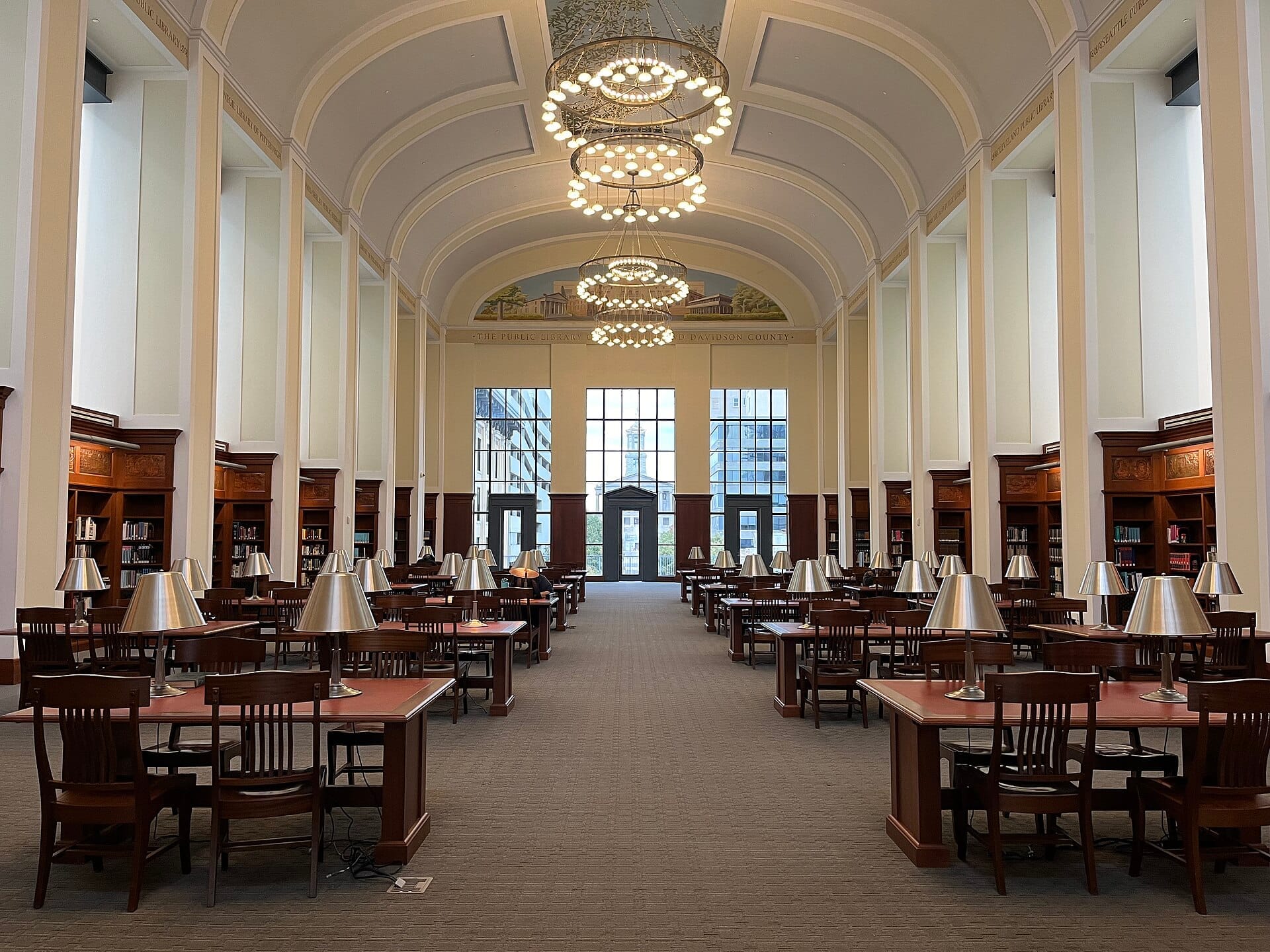
Why This Room Exists Where It Does
The Civil Rights Room at Nashville Public Library is not an accident of location. The Main Library sits on Church Street in downtown Nashville, within walking distance of the former Woolworth’s and other downtown lunch counters where, beginning in February 1960, Black college students staged some of the most strategically significant nonviolent sit-ins in American history. Nashville's movement was organized, disciplined, and locally led — a template that influenced civil rights organizing across the South. The room was developed and funded by Nashville philanthropists Robin and Bill King in 2003 specifically to document and preserve that legacy within the city's own public institution.
That geographic proximity matters when you visit. Standing in the room, reading firsthand accounts and looking at photographs taken a few blocks away, the history doesn't feel archival. It feels immediate. That quality distinguishes this space from larger civil rights museums in other cities. This is a neighborhood's reckoning with its own past, housed in the neighborhood where it happened.
ℹ️ Good to know
The Civil Rights Room is located on the 2nd floor at the north end of the building, inside the Nashville Room (Special Collections). Follow signs from the main entrance — staff at the information desk can direct you if the signage is unclear.
What You'll Actually See Inside
The room is compact but deliberately curated. The centerpiece is a large photographic timeline of Nashville's desegregation efforts across the 1950s and 1960s. These are not generic protest images pulled from wire services. Many are locally sourced, showing recognizable Nashville streets, storefronts, and figures — some of whom went on to national prominence, including John Lewis and Diane Nash, both of whom trained and organized in Nashville before becoming movement leaders.
Oral history recordings are a significant part of the collection. Visitors can listen to firsthand accounts from participants in the sit-ins and broader desegregation campaigns. The voices are unhurried and specific — they describe the preparation involved, the scripted nonviolence training, and the psychological toll of facing harassment without responding. These recordings do more to convey what actually happened than most written summaries.
Primary source documents round out the display: pamphlets, newspaper clippings, and organizational materials from the period. If you have any interest in the mechanics of how civil rights campaigns were structured at the local level, this material rewards close reading. The room also includes a video presentation area where a film on Nashville's movement can be viewed.
Tickets & tours
Live prices and dates from our booking partner. If you book, we may earn a commission at no extra cost to you.
Old Town trolley tour of Nashville
From 54 €Instant confirmationFree cancellationDowntown walking tour of Nashville
From 21 €Instant confirmationFree cancellationNashville Downtown Underground Donut Tour
From 46 €Instant confirmationFree cancellationNashville City Center audio-guided walking tour
From 9 €Instant confirmation
The Nashville Sit-Ins: Context You Need to Appreciate the Room
Nashville's sit-in campaign began on February 13, 1960, roughly two weeks after the more widely publicized Greensboro sit-ins in North Carolina. But Nashville's campaign was arguably more systematically organized. Students from Fisk University, American Baptist Theological Seminary, Meharry Medical College, and Tennessee Agricultural and Industrial State University had been training in nonviolent direct action for months under the guidance of civil rights strategist James Lawson. The sit-ins were not spontaneous — they were the result of weeks of role-playing exercises that prepared students to absorb verbal and physical abuse without retaliation.
By April 1960, the sustained pressure of boycotts and sit-ins had cost downtown Nashville businesses significant revenue. On April 19, 1960, after the home of civil rights attorney Z. Alexander Looby was bombed, thousands of Nashvillians marched silently to City Hall. Mayor Ben West, confronted on the steps by Diane Nash asking directly whether he thought it was wrong to discriminate based on race, answered yes. Within weeks, Nashville became the first major Southern city to begin desegregating its lunch counters. The Civil Rights Room documents this arc in full. For more on Nashville's broader civil rights history, the Nashville civil war and history guide provides useful context on the city's layered past.
How the Visit Feels at Different Times of Day
The Civil Rights Room shares its floor with the broader Special Collections division, so the atmosphere is that of a working research library: quiet, climate-controlled, with the particular stillness that makes focused attention easy. Morning visits tend to be the calmest. The library opens its doors and the upper floors fill slowly, leaving plenty of space to stand at the photo displays without crowding.
Midday on weekdays brings more foot traffic, including school groups. These visits can be lively — if you want a contemplative experience, arriving before 10 a.m. or after 3 p.m. works better. The video presentation room gives you a place to sit and absorb material even when the surrounding floor is busier. Weekend mornings are also relatively quiet and well-suited to unhurried visits.
The lighting inside is library-standard — functional, not dramatic. Photography of the displays is possible but the reflective surfaces on some framed pieces can be challenging. If you plan to photograph specific documents or photographs for your own records, bring patience rather than a flash.
Planning Your Visit: Practical Details
Access to the Civil Rights Room is free and it is open during all regular Main Library hours. Because library hours are subject to change, including holiday closures, check the Nashville Public Library website before you go. No advance booking is required for individual self-guided visits. Group tours or classroom programs can be arranged through the Special Collections division — contact the library directly to schedule.
The library is on Church Street in downtown Nashville, within easy walking distance of most major downtown hotels and attractions. WeGo Public Transit buses service the Church Street corridor. If you are driving, street parking exists nearby but fills quickly on weekdays; the library’s adjacent NDOT garage is closed, but garage parking such as the nearby McKendree Garage is typically more reliable.
The Civil Rights Room pairs naturally with other nearby downtown landmarks. The National Museum of African American Music is a short walk away and covers overlapping themes of Black cultural history through a different lens. If you are building a full day around Nashville's civil rights and music history, these two institutions complement each other well.
💡 Local tip
Check library hours online before visiting — the Main Library observes standard holiday closures and hours can vary. The Civil Rights Room has no separate entry process, so library hours are your hours.
Who This Attraction Is and Isn't For
The Civil Rights Room rewards visitors who come ready to read and listen. It is not a high-production museum with immersive installations or theatrical staging. The power of the space is in its primary sources: the documents, photographs, and recorded voices of people who were present. Visitors who engage with those materials will leave with a specific, grounded understanding of Nashville's civil rights movement that no summary can replicate.
Visitors looking primarily for entertainment or spectacle will find this space understated. Similarly, young children who cannot yet engage with document-heavy, reading-intensive displays may find it difficult to hold attention here. For families with older children or teenagers, the room can be a meaningful stop, particularly if paired with a broader conversation about the history. For families looking for more interactive options in downtown Nashville, the Adventure Science Center serves a different purpose.
For travelers interested in tracing Nashville's music and cultural history more broadly, the Country Music Hall of Fame and the Ryman Auditorium are both within walking distance and reflect different dimensions of the city's identity. The Civil Rights Room fits cleanly into a downtown Nashville walking tour focused on history and culture.
Accessibility
The Main Library is a public building in downtown Nashville. The Civil Rights Room is on the second floor. For specific information about elevator access, wheelchair accommodation, and other accessibility features, contact the Nashville Public Library Main Branch or Special Collections division directly before your visit. The room includes a seated video presentation area, which can accommodate visitors who need to be seated during their time in the space.
Insider Tips
- Arrive on a weekday morning before 10 a.m. if you want the space largely to yourself. Midday visits compete with school groups and lunch-hour foot traffic.
- The oral history recordings are the most underused part of the collection. Give them time — the firsthand accounts from sit-in participants are more specific and vivid than the written displays.
- The Civil Rights Room is part of Special Collections, so the staff on that floor tend to have deeper knowledge of the collection than general floor staff. If you have questions, ask at the Special Collections desk directly.
- Combine this visit with the nearby National Museum of African American Music on the same afternoon. The two institutions cover related history from different angles and together take three to four hours without feeling rushed.
- If you are visiting with a school group or organization, schedule a guided program in advance through the library. The room includes a classroom and presentation space that supports structured group learning in a way a self-guided visit cannot replicate.
Who Is Civil Rights Room at Nashville Public Library For?
- History travelers who want more than surface-level tourism
- Students and educators researching the American civil rights movement
- Travelers building a full day around Nashville's cultural and social history
- Solo visitors who appreciate quiet, document-rich spaces
- Anyone interested in the specific Nashville sit-in campaigns and the figures like Diane Nash and John Lewis who emerged from them
Nearby Attractions
Other things to see while in Downtown Nashville:
- 3rd & Lindsley
Since 1991, 3rd & Lindsley has been the venue where Nashville musicians play when they want to be heard, not just seen. Located half a mile south of Broadway in the SoBro district, it is an intimate, no-frills room that draws touring acts, local legends, and serious audiences in equal measure.
- Acme Feed & Seed
Housed in a landmark 1943 building at the corner of 1st Avenue and Broadway, Acme Feed & Seed is a multi-level bar, restaurant, and music venue with a rooftop overlooking the Cumberland River. It offers a more layered experience than the typical honky-tonk strip, with a rooftop that earns its reputation for views and a ground floor that still delivers the Broadway energy.
- Adventure Science Center
Adventure Science Center is Nashville's premier interactive science museum, offering 44,000 square feet of hands-on exhibits, a 75-foot adventure tower, and a 63-foot dome planetarium. It has served the city since 1945 and remains one of the most engaging family destinations near downtown Nashville.
- Bicentennial Capitol Mall State Park
Bicentennial Capitol Mall State Park is a free, 19-acre outdoor park in downtown Nashville built to commemorate Tennessee's 200th anniversary of statehood. Anchored by a 200-foot granite map of the state, a 95-bell carillon, and the Rivers of Tennessee Fountains, it doubles as one of the most informative and peaceful green spaces in the city center.
Planning a trip? Discover personalized activities with the Nomado app.