Ryman Auditorium: Nashville's Most Storied Stage
Built in 1892 as a gospel tabernacle and home to the Grand Ole Opry for over three decades, Ryman Auditorium is the most historically significant music venue in the United States. Whether you're attending a concert or taking a self-guided tour, the building itself commands attention.
Quick Facts
- Location
- 116 Rep. John Lewis Way North, Downtown Nashville, TN 37219
- Getting There
- WeGo bus routes serve downtown; rideshare drops off on Rep. John Lewis Way. Multiple parking garages within 2 blocks.
- Time Needed
- 1–1.5 hours for a self-guided tour; full evening for a concert
- Cost
- Tour and concert tickets priced individually in USD; check ryman.com for current rates
- Best for
- Music history fans, concert-goers, architecture enthusiasts, first-time Nashville visitors
- Official website
- www.ryman.com
What Is the Ryman Auditorium?
Ryman Auditorium is a National Historic Landmark at the center of downtown Nashville, Tennessee, and one of the most acoustically celebrated performance spaces in North America. Originally constructed in 1892 as the Union Gospel Tabernacle, it was later renamed in honor of riverboat captain Thomas G. Ryman, who funded much of its construction after reportedly experiencing a religious conversion during a revival meeting. The building served as the home of the Grand Ole Opry from 1943 to 1974, a 31-year run that cemented its status as a landmark where country music became a national genre.
Today the venue operates as both an active concert hall and a daytime museum, drawing visitors who want to stand on the same stage where Hank Williams, Patsy Cline, Johnny Cash, and hundreds of others performed. The nickname 'Mother Church of Country Music' is not just marketing copy: the building looks like a church, sounds like a concert hall, and carries the weight of a National Historic Landmark.
💡 Local tip
Check the Ryman's daily calendar before planning your visit. On concert days, self-guided tour access ends earlier than usual, and the auditorium closes to day visitors in the afternoon to prepare for the show.
The Building: Architecture and Acoustics
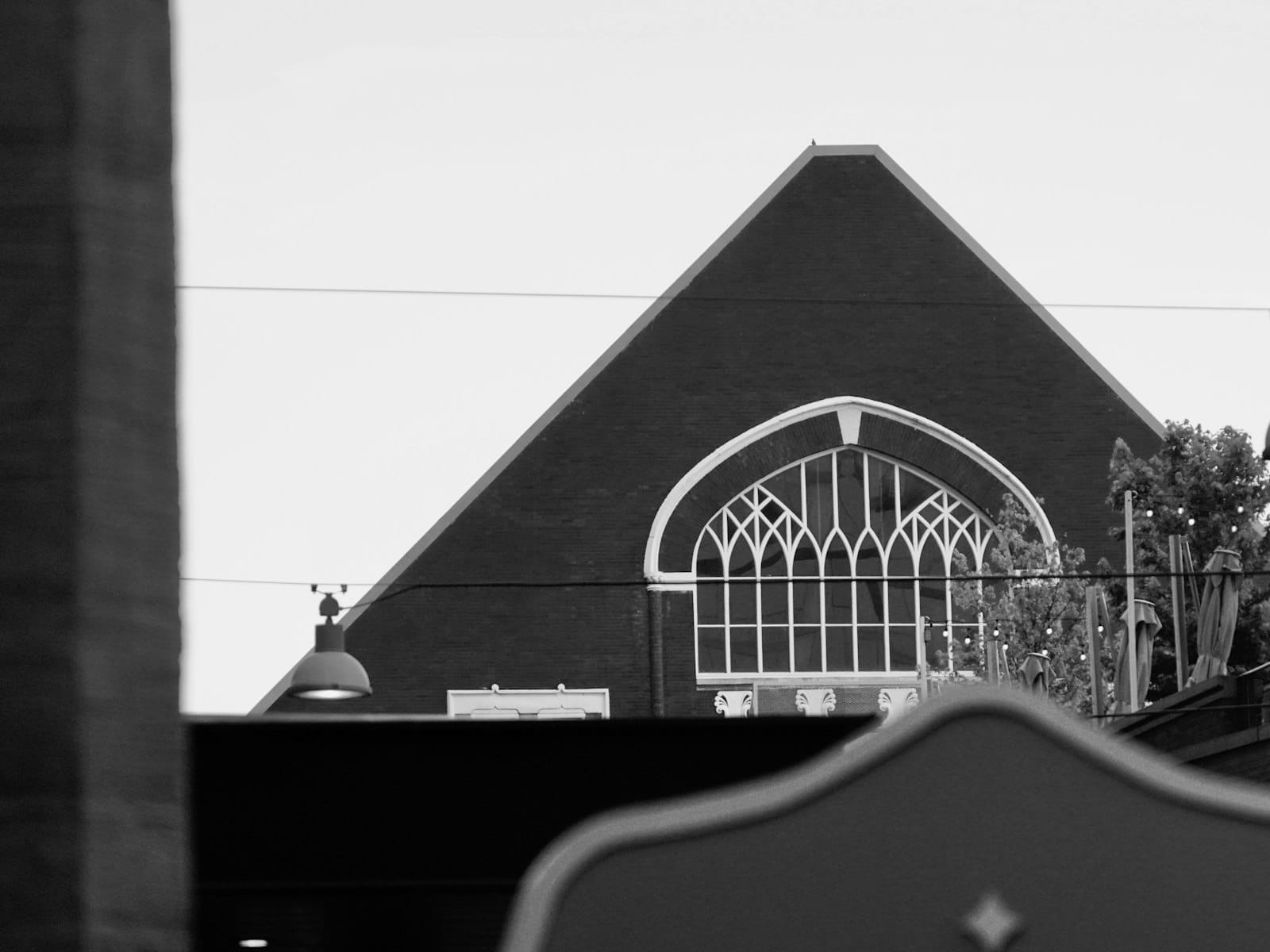
The Ryman's exterior is unassuming red brick, the kind of sturdy Victorian Gothic construction that was common for civic and religious buildings in the American South during the 1890s. Arched stained-glass windows line both flanks of the main hall. From the outside, especially from the alley on the north side, the scale of the building reads as modest. That impression dissolves the moment you walk inside.
The main auditorium seats 2,362 people across a ground floor of original wooden pew benches and a curved balcony above. The pews are not padded. They are the same oak benches installed over a century ago, and after 90 minutes, you will feel them. For a concert, bring a jacket to fold into a cushion if you have back or comfort concerns.
The acoustics are the Ryman's most discussed feature, and they earn the attention. The high ceiling and wood-heavy interior create a natural resonance that engineers regularly cite as one of the best unamplified environments in the country. Artists who perform here often note that the room itself seems to amplify sincerity over spectacle, which may partly explain why it pairs so well with acoustic genres.
Tickets & tours
Live prices and dates from our booking partner. If you book, we may earn a commission at no extra cost to you.
Old Town trolley tour of Nashville
From 54 €Instant confirmationFree cancellationHatch Show Print guided tour
From 21 €Instant confirmationFree cancellationDowntown walking tour of Nashville
From 21 €Instant confirmationFree cancellationNashville Downtown Underground Donut Tour
From 46 €Instant confirmationFree cancellation
The Daytime Tour Experience
Self-guided tours begin at 9:30 AM daily, though last entry times vary depending on the evening's performance schedule. The tour routes visitors through the ground floor exhibition space, which covers the building's origins as a tabernacle, its transition into an entertainment venue, and its three-decade tenure as the Opry's home. Display cases hold original costumes, instruments, and photographs. The exhibit design is clear and uncluttered, which makes it accessible even for visitors with no prior knowledge of country music history.
The tour's focal point is access to the main stage itself. Visitors can walk out onto the boards under the stage lights, stand at the microphone position, and look out at rows of empty pews rising toward the balcony. It is a genuinely affecting moment for anyone who understands what happened in this room. If you want to understand what the Ryman means to Nashville's identity, the Country Music Hall of Fame provides the broader context, but the Ryman provides the physical space.
Mornings on weekdays tend to be the quietest for tours. By mid-morning on weekends and during peak summer months, groups begin arriving in volume and the stage photo line can stretch for 20 minutes. Arriving at or just after 9:00 AM gives you the best chance of a clear stage photograph and unhurried access to the exhibits.
ℹ️ Good to know
Photography is allowed throughout the self-guided tour, including on stage. A dedicated backstage tour option offers access to dressing rooms and behind-the-scenes areas; check the website for availability and current pricing.
Attending a Concert at the Ryman
The Ryman hosts concerts regularly, spanning country, folk, bluegrass, Americana, rock, and occasionally comedy and spoken word. The programming leans toward artists for whom intimacy and musicianship matter more than arena-scale production, which suits the room perfectly. Tickets are available through the official Ryman website and through authorized ticketing platforms; resale prices can climb significantly for popular acts, so buying early through official channels is advisable.
Arrive at least 30 minutes before doors open if you want floor-level pew seating near the front, since pews are not reserved by row for general admission tickets. The balcony offers excellent sightlines and a slightly better acoustic perspective for some seat positions. Parking nearby fills quickly on event nights: the city blocks surrounding the Ryman hold several commercial garages, and rideshare drop-off on Rep. John Lewis Way is straightforward. For context on Nashville's broader live music landscape, the Nashville live music guide covers venues across the city.
The concession stands sell beer, wine, and spirits at standard Nashville venue prices, which are not cheap. Food options are limited inside. If you are eating dinner before the show, the blocks around lower Broadway and the adjacent streets have no shortage of options, though restaurants fill up on weekend evenings.
⚠️ What to skip
The Ryman has a strict bag policy. Small clutches and clear bags are typically permitted; large bags, backpacks, and outside food and drink are not. Check the current policy on ryman.com before your visit, as specifics can be updated.
Historical Weight: The Grand Ole Opry Years
From 1943 to 1974, the Grand Ole Opry broadcast live from this stage every week, making the Ryman the center of gravity for American country music during its most formative period. The Opry relocated to the purpose-built Grand Ole Opry HouseGrand Ole Opry House in 1974, but the Ryman remained close to the Opry organization and still hosts Opry performances on select dates, bringing the show back to its historic home.
The cultural lineage running through this building connects directly to the studios and music businesses that grew up a few blocks away on Music Row. For a deeper walk through that history, Nashville's music history guide traces the threads from the Ryman's early Opry broadcasts through the city's evolution into a global recording center.
The building was nearly demolished in the 1970s after the Opry left. A preservation campaign, supported in part by country music artists who had performed there, ultimately saved it. The restoration work undertaken in the 1990s preserved the original structure while adding modern infrastructure. The fact that you can still sit on those oak pews is the direct result of that fight.
Practical Notes for Your Visit
The Ryman sits in downtown Nashville, approximately one block north of the Lower Broadway entertainment corridor. The walk from most downtown hotels takes under 10 minutes. From Broadway, head north on Rep. John Lewis Way (formerly 5th Avenue North) and the building is visible on your right. The surrounding blocks include a mix of parking structures, small restaurants, and the Nashville Arcade a short distance away.
The venue is accessible, with ramps, elevators, and accessible seating options available for both tours and concerts. Guests requiring specific accommodations are encouraged to contact the venue ahead of time. The guide to getting around Nashville covers WeGo bus routes and rideshare logistics in more detail if you are navigating the city without a car.
Weather has no significant impact on the Ryman experience itself, as the building is fully enclosed. However, Nashville summers are hot and humid, with afternoon temperatures regularly reaching the high 80s Fahrenheit. If you are walking from a hotel or parking garage, you will arrive warm. The air conditioning inside is reliable.
Who might not enjoy this: visitors who prioritize visual spectacle over historical and acoustic depth may find the interior plain by modern arena standards. The pew seating, while authentic, is genuinely uncomfortable for long concerts. If your primary interest is in rowdier honky-tonk energy rather than seated performance, the Broadway strip one block south delivers that experience more directly.
Insider Tips
- The best seat in the house for pure acoustics is often cited as the lower balcony, center section. It puts you at ear level with the stage and in the sweet spot of the room's natural resonance.
- On weekday mornings before 10:00 AM, the ground floor tour area is quiet enough to spend real time reading the exhibit panels. Weekend midday visits feel noticeably more crowded and rushed.
- The Ryman hosts a limited run of Grand Ole Opry shows each winter, on select dates. These dates sell quickly and offer something the regular Opry House shows do not: the original room, the original broadcast, and the weight of the history all at once.
- The small gift shop near the entrance carries Ryman-branded items that are specific to the venue and not available at generic Nashville souvenir shops. The vintage-style concert posters are printed by Hatch Show Print, the historic letterpress shop that has produced Ryman posters for decades.
- If you are visiting Nashville primarily for music, timing your trip to include both a daytime Ryman tour and an evening concert at any venue gives you a complete picture of the city's relationship with live performance.
Who Is Ryman Auditorium For?
- Country music fans who want to connect with the genre's origins in a physical, tangible way
- Architecture and historic preservation enthusiasts interested in late 19th-century American civic buildings
- Concert-goers who prefer seated, acoustically rich environments over general admission standing crowds
- First-time visitors to Nashville looking for the single venue that explains the city's musical identity
- Travelers combining a music history itinerary across multiple Nashville landmarks
Nearby Attractions
Other things to see while in Downtown Nashville:
- 3rd & Lindsley
Since 1991, 3rd & Lindsley has been the venue where Nashville musicians play when they want to be heard, not just seen. Located half a mile south of Broadway in the SoBro district, it is an intimate, no-frills room that draws touring acts, local legends, and serious audiences in equal measure.
- Acme Feed & Seed
Housed in a landmark 1943 building at the corner of 1st Avenue and Broadway, Acme Feed & Seed is a multi-level bar, restaurant, and music venue with a rooftop overlooking the Cumberland River. It offers a more layered experience than the typical honky-tonk strip, with a rooftop that earns its reputation for views and a ground floor that still delivers the Broadway energy.
- Adventure Science Center
Adventure Science Center is Nashville's premier interactive science museum, offering 44,000 square feet of hands-on exhibits, a 75-foot adventure tower, and a 63-foot dome planetarium. It has served the city since 1945 and remains one of the most engaging family destinations near downtown Nashville.
- Bicentennial Capitol Mall State Park
Bicentennial Capitol Mall State Park is a free, 19-acre outdoor park in downtown Nashville built to commemorate Tennessee's 200th anniversary of statehood. Anchored by a 200-foot granite map of the state, a 95-bell carillon, and the Rivers of Tennessee Fountains, it doubles as one of the most informative and peaceful green spaces in the city center.
Planning a trip? Discover personalized activities with the Nomado app.