Tennessee State Museum: Nashville's Best Free Attraction That Most Visitors Overlook
The Tennessee State Museum tells 13,000 years of Tennessee art and history across two floors of thoughtfully curated galleries. Admission is free, parking is free, and the building itself — opened in 2018 beside Bicentennial Capitol Mall State Park — is one of downtown Nashville's most underused resources for curious travelers.
Quick Facts
- Location
- 1000 Rosa L. Parks Blvd., Nashville, TN — corner of Rosa L. Parks Blvd. and Jefferson St., beside Bicentennial Capitol Mall State Park
- Getting There
- Free parking on site; WeGo bus routes serve the Capitol Hill area. A short walk or rideshare from Lower Broadway.
- Time Needed
- 2–3 hours for a thorough visit; 90 minutes if you focus on key galleries
- Cost
- Free admission
- Best for
- History enthusiasts, families, rainy-day visits, Civil War buffs, travelers wanting depth beyond the honky-tonks
- Official website
- tnmuseum.org
What the Tennessee State Museum Actually Is
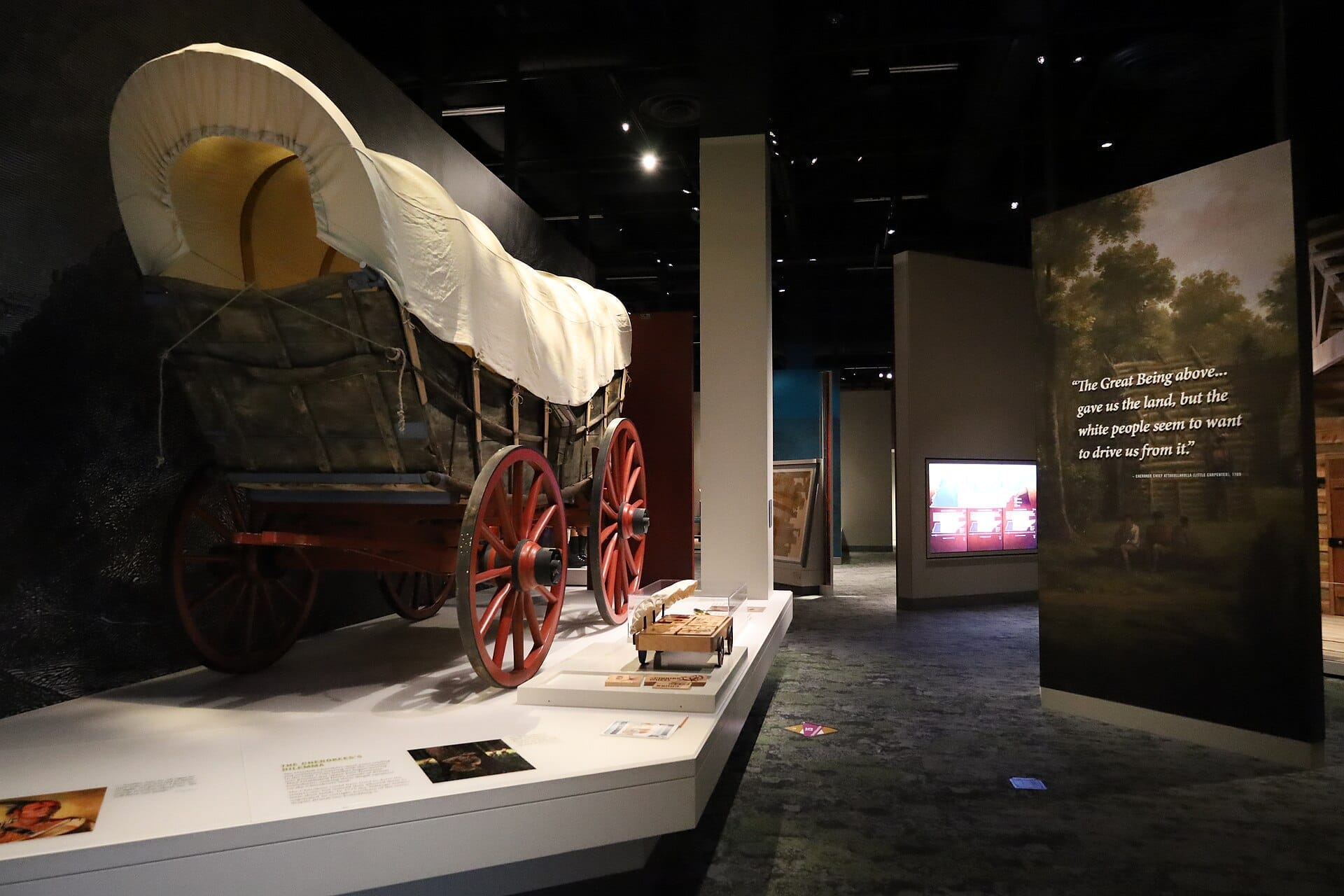
The Tennessee State Museum is Tennessee's official state history museum, and it earns that title in full. Established in 1937 but relocated to its current purpose-built facility in October 2018, the museum occupies a striking contemporary building at the foot of Capitol Hill. It covers roughly 13,000 years of human presence in Tennessee, from the earliest Paleo-Indian hunters to 20th-century civil rights struggles, across permanent galleries that are unusually well-funded and professionally installed for a free institution.
The building's design is worth noting on its own. The structure sits low and wide against the hillside, with a facade that references the layered limestone bluffs of Tennessee's landscape. Inside, ceilings are high, natural light enters from clerestory windows, and the circulation through galleries feels deliberate rather than maze-like. You always know roughly where you are in the timeline.
💡 Local tip
The museum is open Tuesday through Saturday, 10:00 a.m. to 5:00 p.m., and Sunday from 1:00 p.m. to 5:00 p.m. It is closed Mondays and major holidays. Admission is free. Free parking is available on site.
The Galleries: A Floor-by-Floor Understanding
The permanent collection moves chronologically. The earliest galleries cover the Native peoples of Tennessee with genuine seriousness — not as a brief prologue to European arrival, but as a sustained account of complex civilizations. Stone tools, ceramic vessels, and shell ornaments from Mississippian culture sites are displayed alongside archaeological context that explains what researchers actually know versus what they have inferred. This section alone justifies a visit for anyone with an interest in pre-Columbian North America.
Moving through the colonial and early American periods, the narrative sharpens around Tennessee's role as a frontier state. The displays on the Overmountain Men and the Battle of Kings Mountain — a pivotal moment in the American Revolutionary War — are unusually detailed for a state museum. Period firearms, campaign maps, and personal objects ground the story without turning it into mythology.
The Civil War galleries are the most expansive section, and rightly so: Tennessee was the last Southern state to secede and the first to be readmitted to the Union, and fighting touched virtually every county. The museum does not shy away from the contradictions. Slavery is addressed with directness. The experience of enslaved Tennesseans, Unionist Tennesseans in Confederate territory, and the complex loyalties of the mountain counties all receive space. These are not comfortable galleries, and they are better for it.
The 20th-century galleries cover industrialization, the Great Migration, the Tennessee Valley Authority, and the civil rights movement. Nashville's own role in the sit-in movement of 1960 — students from Fisk University and American Baptist College who helped desegregate downtown lunch counters — receives focused attention here. For deeper context on that history, the Civil Rights Room at the Nashville Public Library is a natural companion stop, just a few blocks away.
Tickets & tours
Live prices and dates from our booking partner. If you book, we may earn a commission at no extra cost to you.
Old Town trolley tour of Nashville
From 54 €Instant confirmationFree cancellationHatch Show Print guided tour
From 21 €Instant confirmationFree cancellationDowntown walking tour of Nashville
From 21 €Instant confirmationFree cancellationNashville Downtown Underground Donut Tour
From 46 €Instant confirmationFree cancellation
How the Experience Changes by Time of Day
Arriving at opening on a weekday morning is the best version of this museum. By 10:15 a.m. on a Tuesday or Wednesday, you may find yourself moving through entire galleries with only the ambient sound of climate control systems and the occasional docent footstep. The light in the upper galleries at this hour is cool and flat, which suits the display cases well.
By midday on weekends, school groups and family visitors begin to fill the lower floors. The noise level rises noticeably in the Native history and early American sections, which are laid out more openly. If you are traveling with children, this is actually fine — the museum staff handle groups well and the interactive elements on lower floors are genuinely designed for younger visitors. If you want contemplative quiet, arrive early or head to the upper Civil War and 20th-century galleries, which tend to stay calmer throughout the day.
💡 Local tip
Weekday mornings between 10:00 a.m. and noon offer the lowest crowds and the most relaxed pace. Sunday afternoons (the museum opens at 1:00 p.m.) can be surprisingly quiet, especially in winter months.
Location and Getting There
The museum sits at 1000 Rosa L. Parks Blvd., at the corner of Rosa L. Parks Boulevard and Jefferson Street. This places it on the north side of Capitol Hill, adjacent to Bicentennial Capitol Mall State Park — a long, open greenspace that runs along the Tennessee State Capitol's north face. The combination of the museum and the mall makes for a natural half-day pairing: walk the outdoor park first, then step inside for the history.
From Lower Broadway, the museum is roughly a 15-minute walk north through the state government district, or a short Uber or Lyft ride. WeGo Public Transit bus routes serve the Capitol Hill area; check current schedules at wegotransit.com before visiting. Free on-site parking is available, which is genuinely rare for downtown Nashville — a practical advantage if you are driving in. The Bicentennial Capitol Mall State Park directly alongside the museum is free and open daily, and its granite map of Tennessee set into the plaza floor makes for an unusual orientation exercise before you head inside.
The building is fully accessible. Elevators connect all floors, ramps are integrated throughout the galleries, and restrooms are accessible at each level. Strollers move easily through the wide corridors.
Practical Walkthrough: What to Prioritize
Two to three hours gives you a thorough visit. If your time is limited to 90 minutes, prioritize the Civil War galleries and the 20th-century section — these are where the collection is strongest and where the interpretive depth is most impressive. The pre-Columbian galleries reward slower attention and are worth returning to if you have time remaining.
The museum has a café and a gift shop. The shop stocks a thoughtful selection of Tennessee history books, reproductions of historic maps, and locally made goods — better than average for a state museum gift shop. Water fountains and seating areas are distributed throughout the galleries, which matters on a full visit.
Photography is generally permitted in permanent galleries without flash. Temporary exhibitions may have different rules. If you are building a broader Nashville history itinerary, consider combining the Tennessee State Museum with the Country Music Hall of Fame (paid admission, about a mile south) and the Tennessee State Capitol (free guided tours available) into a single downtown day. These three sites together cover the state's cultural and political history with minimal overlap.
⚠️ What to skip
The museum is closed on Mondays and major holidays. Verify the holiday closure calendar at tnmuseum.org before planning your visit, particularly around Thanksgiving, Christmas, and New Year's Day.
Is It Worth Your Time? An Honest Assessment
The Tennessee State Museum is not a flashy destination. There are no IMAX screens, no celebrity-fronted audio guides, and no themed merchandise tied to a current pop-culture moment. What it offers instead is a serious, well-funded, professionally curated account of a genuinely complicated American state — one that has been a crossroads of Indigenous civilization, European settlement, slavery, civil war, country music, and civil rights within a relatively compact geography.
For travelers who come to Nashville primarily for the music scene and the Lower Broadway experience, this museum represents the deeper layer beneath the neon. It will not replace an evening at the Ryman or a late night at a honky-tonk. But it does something those experiences cannot: it gives the city a history with actual weight. The admission price — nothing — removes any barrier to finding out whether that appeals to you.
Travelers who find themselves underwhelmed by Broadway's commercial noise and looking for something with more substance will find the Tennessee State Museum consistently rewarding. For a broader orientation to what else Nashville offers beyond the entertainment district, the full Nashville attractions guide covers the city across every interest and budget.
Who might want to skip it: visitors on a very short trip who have already decided Nashville is purely about live music and nightlife, travelers with very young children who are not yet ready for exhibit-based exploration (though the interactive sections on lower floors do help), and anyone who finds American history from a state-institution perspective limiting in scope. The museum is thorough within Tennessee's borders; it does not position itself as a national or global history institution.
Insider Tips
- The museum's parking lot off Jefferson Street is free and rarely full, even on weekends — a genuine anomaly for downtown Nashville. If you are already driving to another downtown attraction, this is a natural add-on with no parking cost.
- Check the museum's temporary exhibition schedule at tnmuseum.org before your visit. The temporary gallery space on the ground floor hosts rotating shows that frequently cover subjects not addressed in the permanent collection, from Tennessee folk art to specific Civil War campaigns.
- The outdoor plaza between the museum and Bicentennial Capitol Mall State Park includes a granite map of Tennessee with the state's 95 counties carved into the stone. It is a useful piece of orientation before you head inside — and an underrated photo opportunity that most visitors walk past without noticing.
- If you are particularly interested in the Civil War galleries, visit on a weekday when docents are most reliably available on the floor. Staff at this museum are knowledgeable and genuinely interested in conversation — unlike many large institutions where floor staff are primarily crowd-management personnel.
- The museum's gift shop carries a small selection of titles from the Tennessee State Library and Archives that are not widely available elsewhere, including county-level histories and reproductions of 19th-century Tennessee survey maps. Worth browsing even if you are not a book buyer.
Who Is Tennessee State Museum For?
- History enthusiasts who want substantive context for Tennessee's role in American history
- Families with school-age children looking for an educational rainy-day option with no admission cost
- Civil War researchers and buffs seeking a comprehensive statewide overview before visiting battlefield sites
- Travelers building a full downtown Nashville history day alongside the State Capitol and Bicentennial Mall
- Solo travelers or couples who want a quieter, more reflective counterpoint to Nashville's entertainment-heavy downtown
Nearby Attractions
Other things to see while in Downtown Nashville:
- 3rd & Lindsley
Since 1991, 3rd & Lindsley has been the venue where Nashville musicians play when they want to be heard, not just seen. Located half a mile south of Broadway in the SoBro district, it is an intimate, no-frills room that draws touring acts, local legends, and serious audiences in equal measure.
- Acme Feed & Seed
Housed in a landmark 1943 building at the corner of 1st Avenue and Broadway, Acme Feed & Seed is a multi-level bar, restaurant, and music venue with a rooftop overlooking the Cumberland River. It offers a more layered experience than the typical honky-tonk strip, with a rooftop that earns its reputation for views and a ground floor that still delivers the Broadway energy.
- Adventure Science Center
Adventure Science Center is Nashville's premier interactive science museum, offering 44,000 square feet of hands-on exhibits, a 75-foot adventure tower, and a 63-foot dome planetarium. It has served the city since 1945 and remains one of the most engaging family destinations near downtown Nashville.
- Bicentennial Capitol Mall State Park
Bicentennial Capitol Mall State Park is a free, 19-acre outdoor park in downtown Nashville built to commemorate Tennessee's 200th anniversary of statehood. Anchored by a 200-foot granite map of the state, a 95-bell carillon, and the Rivers of Tennessee Fountains, it doubles as one of the most informative and peaceful green spaces in the city center.
Planning a trip? Discover personalized activities with the Nomado app.