Musicians Hall of Fame & Museum: Nashville's Tribute to the Players Behind the Records
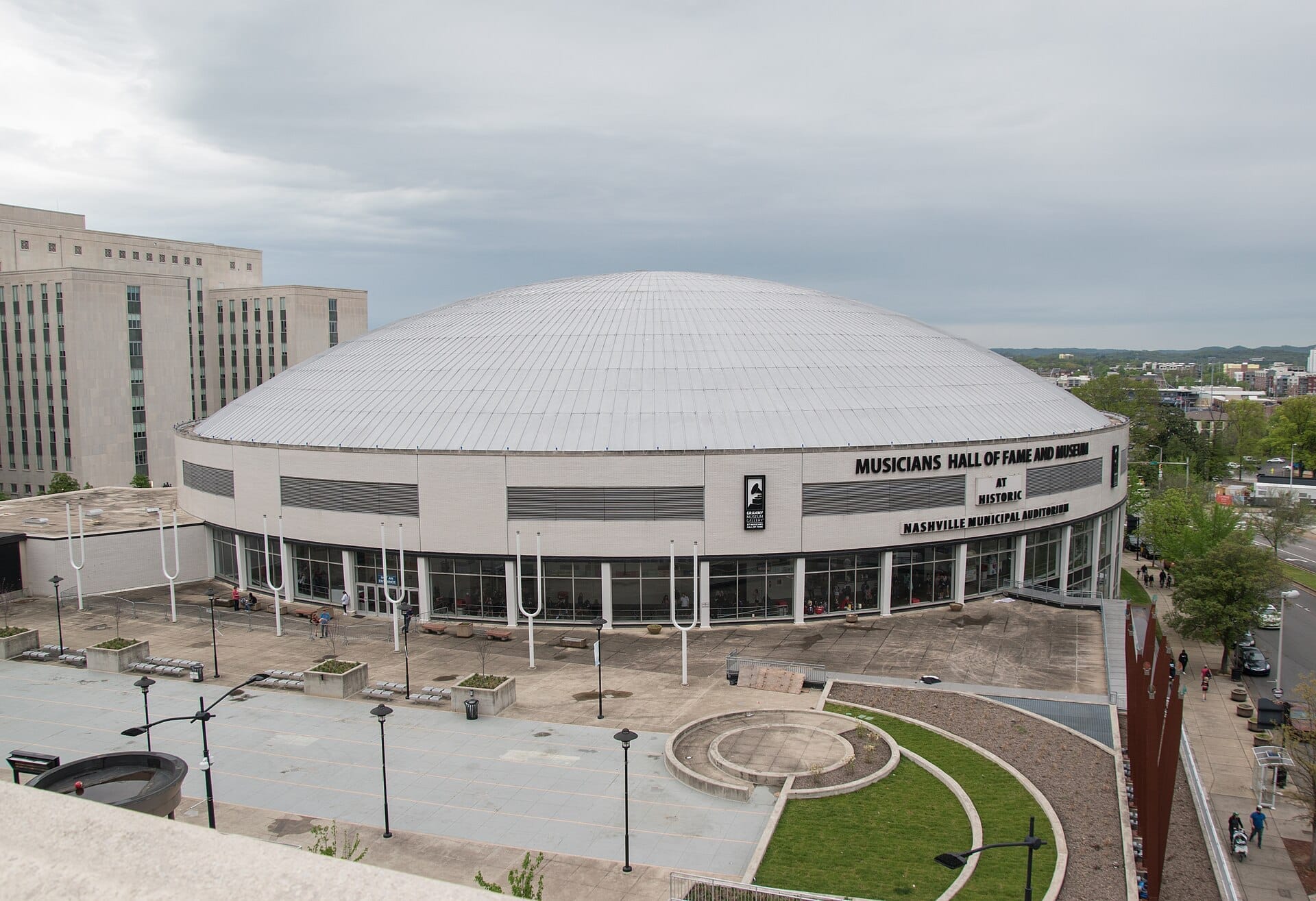
While other Nashville institutions celebrate the stars, the Musicians Hall of Fame & Museum tells the story of the session players, studio musicians, and sidemen whose hands, lips, and fingers actually made the records. Located inside the historic Nashville Municipal Auditorium on Gay Street, it is one of downtown Nashville's most underrated and genuinely educational music experiences.
Quick Facts
- Location
- 401 Gay Street (Nashville Municipal Auditorium), Downtown Nashville, TN 37219
- Getting There
- Walkable from Broadway; WeGo bus routes serve downtown. Paid parking in nearby garages. Rideshare drop-off on Gay Street or Musicians Way.
- Time Needed
- 1.5 to 2.5 hours for a thorough visit
- Cost
- General admission around $28 (verify current pricing); discounts for seniors, students, military, and police. Children 5 and under free. Includes GRAMMY Museum Gallery access.
- Best for
- Music history buffs, working musicians, serious record collectors, and anyone curious about what happens behind the microphone
- Official website
- www.musicianshalloffame.com
What the Musicians Hall of Fame & Museum Actually Is
Most music halls of fame celebrate the face on the album cover. The Musicians Hall of Fame & Museum in Nashville makes a deliberate and long-overdue correction: it honors the people in the room who were never on the cover at all. Session musicians, studio bands, orchestral players, live sidemen, the players whose performances defined the sound of decades of recorded music without their names being widely known.
The museum opened in 2006, founded by Nashville songwriter Joe Chambers, and relocated to its current home on the first floor of the Nashville Municipal Auditorium on August 29, 2013. That building, at 401 Gay Street in downtown Nashville, is itself a piece of city history: a mid-century civic auditorium that has hosted everything from political conventions to boxing matches since the 1960s. The museum occupies the ground-level footprint, with its entrance on Musicians Way just off James Robertson Parkway.
ℹ️ Good to know
Hours: Monday through Saturday, 10:00 AM to 5:00 PM. Closed Sundays, Thanksgiving, Christmas Day, and New Year's Day. Admission includes access to the GRAMMY Museum Gallery. Verify current ticket prices at musicianshalloffame.com before visiting.
The museum sits comfortably within walking distance of several major downtown music institutions. If you are already planning time at the Country Music Hall of Fame or the Ryman Auditorium, the Musicians Hall of Fame makes a natural companion stop. Unlike those two venues, it rarely draws long queues, which means you can generally walk in on a weekday morning and have significant sections of the exhibit space to yourself.
The Core Exhibit: Studios, Sessions, and the Sounds You Already Know
The museum is organized around a simple but powerful premise: almost every piece of popular recorded music you have ever loved was played by a small number of extraordinarily skilled professionals who showed up on time, read charts cold, and delivered first-rate performances in a single session. Many of these players worked across multiple genres and cities simultaneously, and they are the true architects of the American popular music canon.
Inductees span genres with no apology: the Nashville A-Team (the studio players who defined the Nashville Sound of the 1950s and 60s), the Funk Brothers from Motown in Detroit, the Wrecking Crew from Los Angeles, the musicians behind Atlantic and Stax recordings in Memphis and New York. The museum does not treat any single city or genre as the center of the universe, which is one of its genuine strengths.
Artifacts on display include original instruments, handwritten session charts, studio photographs, and recording equipment. The exhibit cases are dense with material, and the interpretive text is written at a level that assumes the visitor already knows something about music. This is not a tourist-facing simplification. You will encounter names you may not recognize at first, and you will likely leave knowing significantly more than when you arrived.
Tickets & tours
Live prices and dates from our booking partner. If you book, we may earn a commission at no extra cost to you.
Old Town trolley tour of Nashville
From 54 €Instant confirmationFree cancellationNashville Soul of Music City night tour
From 40 €Instant confirmationFree cancellationCountry Hall of Fame, RCA studio B and Hatch Show Print tour
From 41 €Instant confirmationFree cancellationSelf-Guided Audio Tour in the Heart of Downtown Nashville
From 6 €Instant confirmationFree cancellation
The GRAMMY Museum Gallery
Admission includes access to the GRAMMY Museum Gallery, a separate but connected exhibition space operated in partnership with the Recording Academy. This component rotates exhibits and focuses on GRAMMY-winning recordings, artists, and the history of the awards themselves. The content here tends to be more accessible to general audiences than the core Hall of Fame exhibits, and it can hold significant appeal for visitors who may not have a deep background in session music but are nonetheless avid music fans.
The combination of the two spaces means the full visit covers both the institutional history of recorded music and the specific craft of the musicians who executed it, a pairing that creates a more complete picture than either exhibit would on its own.
💡 Local tip
Plan to arrive when the museum opens at 10:00 AM on a weekday. Crowds here are far lighter than at Broadway-facing attractions, but morning visits still give you the best chance of having the exhibit cases and interactive stations to yourself.
How the Visit Feels at Different Times of Day
On weekday mornings, the museum is genuinely quiet. The Municipal Auditorium building itself has a certain institutional calm to it: polished floors, wide corridors, the faint echo of a large public building that has seen generations of use. The exhibit rooms are climate-controlled and well-lit without being harsh, and the acoustic elements (recorded music, audio stations) are mixed at a level that allows you to hear clearly without feeling overwhelmed.
By early afternoon, especially on weekends, visitor numbers increase modestly. Groups occasionally pass through, and the interactive stations can attract small queues. Even at its busiest, the museum never reaches the saturation point of the most popular downtown Nashville attractions, where lines extend outside the building and the experience becomes primarily one of crowd management.
The surrounding area on Gay Street and Musicians Way is not a pedestrian destination in the way that Broadway is. There are no bars immediately outside the front door, no souvenir carts, no persistent hawkers. After your visit, you will walk through a quieter corner of downtown Nashville before rejoining the main tourist current. Some visitors find this orientation disorienting. Others find it a relief.
Historical and Cultural Context
Nashville's identity as a music city rests on more than its concert stages and recording contracts. The session musician culture that developed here, particularly through Music Row studios from the late 1950s onward, created a professional class of players who could deliver commercially viable recordings across country, pop, gospel, and R&B with remarkable consistency and speed. The Nashville A-Team, a loose collective of studio regulars, played on thousands of recordings for artists ranging from Elvis Presley to Bob Dylan, Patsy Cline to Simon and Garfunkel.
This history is rarely foregrounded in the broader Nashville tourism narrative, which tends to focus on star performers rather than the infrastructure that supported them. The Musicians Hall of Fame & Museum exists specifically to correct that imbalance, and it does so with enough depth and primary source material to satisfy visitors who already know the general outline of the story.
If Nashville's music history interests you broadly, the museum pairs well with a visit to Historic RCA Studio B on Music Row, where many of the session musicians honored here actually recorded. The studio tour and the museum together create a context that neither provides alone.
Practical Information: Getting There, Accessibility, and What to Bring
The museum is located at 401 Gay Street, inside Nashville Municipal Auditorium, with its public entrance on Musicians Way just off James Robertson Parkway. On foot from the center of Broadway, the walk takes roughly 10 to 15 minutes, passing through the northern edge of downtown Nashville. The route is flat and entirely on sidewalk.
Paid parking garages are available in the surrounding blocks. WeGo Public Transit buses serve downtown Nashville, and rideshare services drop off directly on Gay Street. There is no dedicated parking lot attached to the museum.
Accessibility is well handled. The museum is fully wheelchair accessible, with a ramp from street level to the front entrance and no stairs required to move through the public exhibit areas. A wheelchair is available to borrow with 24 hours advance notice by contacting the museum directly. Mobility devices of all kinds are permitted throughout.
💡 Local tip
Photography is generally permitted in the exhibit areas for personal use. The artifact cases are often positioned with lighting that can create glare on glass. Shooting from a slight angle rather than directly perpendicular to the case tends to produce cleaner results.
If you are building a downtown Nashville itinerary around music history, consider pairing this museum with the Johnny Cash Museum and the National Museum of African American Music for a single day that covers multiple dimensions of American music heritage. All three are within the downtown Nashville footprint and walkable from each other, though that full sequence will fill an entire day.
Who Will Love This Museum, and Who Might Not
The Musicians Hall of Fame & Museum rewards curiosity and prior knowledge. Visitors who arrive with some familiarity with American popular music history, recording industry structure, or instrument culture will get considerably more from the experience than those who come in cold. The exhibit text does a reasonable job of providing context, but it does not slow down to define terms or explain significance at the level of a purely introductory experience.
Young children are unlikely to find it engaging for more than a short time. The museum is not structured around interactive or hands-on elements designed for young visitors, and the subject matter (session recording, studio history, instrument technique) requires a baseline of music literacy to resonate.
For working musicians, recording industry professionals, serious music fans, or anyone who has spent time wondering who actually played on a favorite record, this is one of the more satisfying museum experiences in Nashville. It is genuinely focused on craft and contribution rather than celebrity, which makes it distinctive in a city where celebrity tends to dominate the narrative.
If you are planning a broader music-focused trip and want a framework for understanding Nashville's place in American music history, the Nashville music history guide provides useful background before you visit.
Insider Tips
- The museum's inductee wall covers session players from multiple cities and eras, not just Nashville. Give yourself time to read the individual plaques rather than scanning past them. Many carry career details that place familiar recordings in a completely new light.
- Weekday mornings between 10:00 AM and noon are the quietest window. If you want to spend time at audio and video stations without waiting, this is your best window.
- The Municipal Auditorium building itself is worth a brief look. The exterior and lobby areas reflect mid-century civic architecture that is increasingly rare in downtown Nashville's fast-changing streetscape.
- Ask staff about current or upcoming events. The auditorium and museum space host occasional live performances and induction ceremonies, and timing a visit around one of these can add a dimension the regular exhibit cannot replicate.
- Combining this visit with Historic RCA Studio B on Music Row makes for a genuinely coherent half-day dedicated to Nashville's session music heritage. The studio tour requires a separate ticket and is run through the Country Music Hall of Fame.
Who Is Musicians Hall of Fame & Museum For?
- Music history enthusiasts who want to go deeper than the star-focused narrative
- Working musicians and recording professionals looking for a craft-centered museum experience
- Visitors who have already done the major downtown Nashville attractions and want something more substantive
- Record collectors and audio obsessives interested in the instruments and equipment behind iconic recordings
- Travelers building a full music history itinerary across multiple Nashville museums in a single day
Nearby Attractions
Other things to see while in Downtown Nashville:
- 3rd & Lindsley
Since 1991, 3rd & Lindsley has been the venue where Nashville musicians play when they want to be heard, not just seen. Located half a mile south of Broadway in the SoBro district, it is an intimate, no-frills room that draws touring acts, local legends, and serious audiences in equal measure.
- Acme Feed & Seed
Housed in a landmark 1943 building at the corner of 1st Avenue and Broadway, Acme Feed & Seed is a multi-level bar, restaurant, and music venue with a rooftop overlooking the Cumberland River. It offers a more layered experience than the typical honky-tonk strip, with a rooftop that earns its reputation for views and a ground floor that still delivers the Broadway energy.
- Adventure Science Center
Adventure Science Center is Nashville's premier interactive science museum, offering 44,000 square feet of hands-on exhibits, a 75-foot adventure tower, and a 63-foot dome planetarium. It has served the city since 1945 and remains one of the most engaging family destinations near downtown Nashville.
- Bicentennial Capitol Mall State Park
Bicentennial Capitol Mall State Park is a free, 19-acre outdoor park in downtown Nashville built to commemorate Tennessee's 200th anniversary of statehood. Anchored by a 200-foot granite map of the state, a 95-bell carillon, and the Rivers of Tennessee Fountains, it doubles as one of the most informative and peaceful green spaces in the city center.
Planning a trip? Discover personalized activities with the Nomado app.