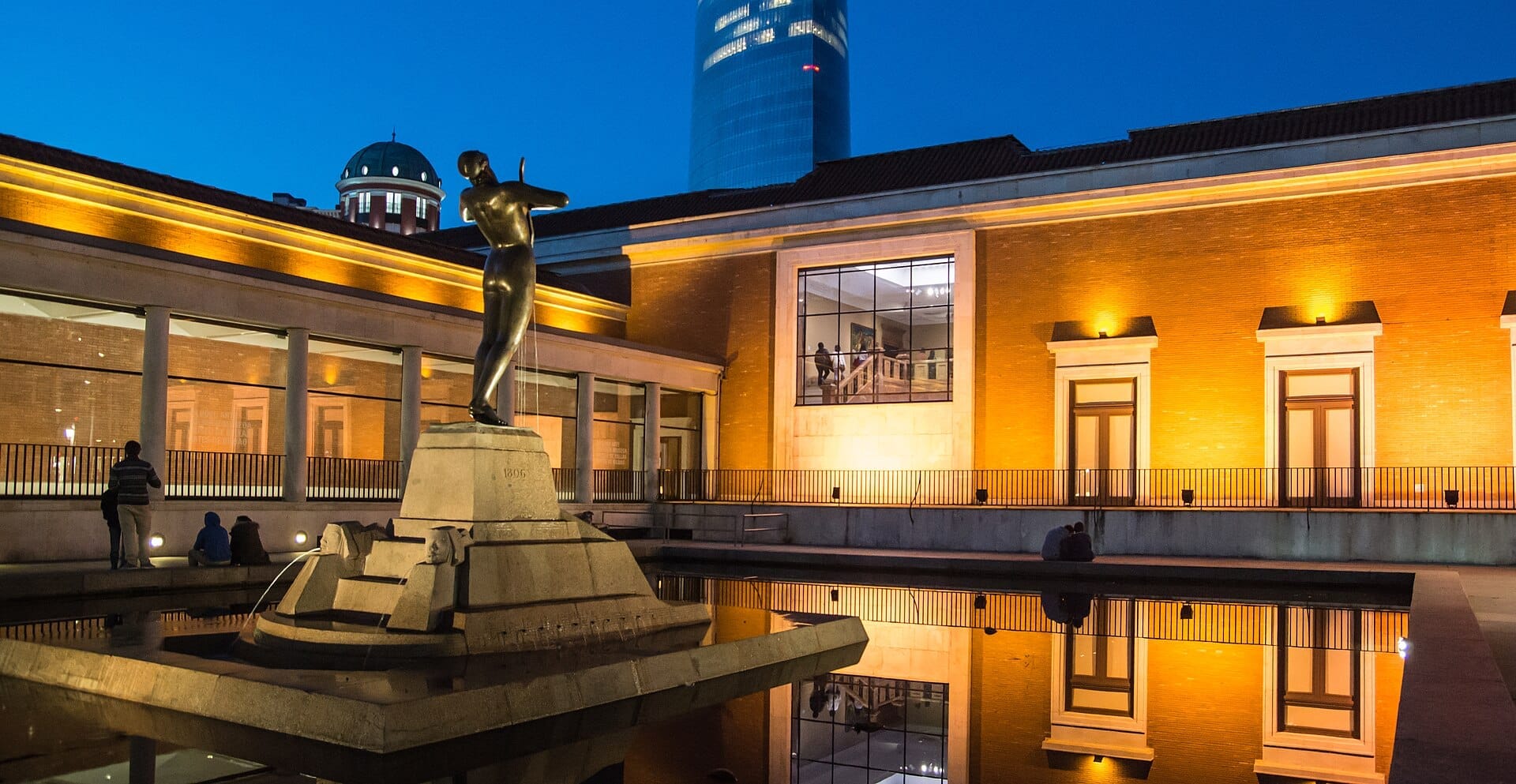
Ensanche is Bilbao's commercial and architectural heartland, built on a grid of wide boulevards stretching west from the old town across the left bank of the Nervión. Gran Vía runs through the centre of it all, lined with banks, boutiques, and some of the finest modernist facades in the Basque Country. It is where Bilbao does its daily business, eats its lunch, and drinks its evening wine.
Ensanche is Bilbao's 19th-century expansion district and the beating commercial core of the modern city. Laid out on a rational grid of wide avenues on the left bank of the Nervión, it grew as a planned counterpart to the dense medieval streets of Casco Viejo on the right bank — bringing order, ambition, and bourgeois architecture that still defines the skyline today. If Casco Viejo is where Bilbao's history lives, Ensanche is where the city actually works.
Orientation: Where Ensanche Sits in Bilbao
Ensanche occupies the left bank of the Nervión estuary, directly across from Casco Viejo, and stretches westward from Plaza Circular along Gran Vía toward the San Mamés stadium area. Its central spine is Gran Vía Don Diego López de Haro, a broad, tree-lined boulevard that runs roughly east to west and serves as the clearest navigational axis in the city. Everything radiates from this street.
The district broadly encompasses two neighbourhoods: Abando, which includes the eastern stretch of Gran Vía and the financial core around Plaza Moyúa, and Indautxu, which picks up to the west and has a slightly more residential, less formal character. To the north, Ensanche borders the Abandoibarra waterfront redevelopment zone, home to the Guggenheim. To the east, a short walk across the bridges brings you to Casco Viejo. South and west, the city climbs into denser residential hillside districts.
The grid layout, rare for a Spanish city of this age, makes Ensanche unusually easy to navigate. Streets intersect at right angles, blocks are regular, and key squares punctuate the main axis at intervals. Plaza Circular marks the eastern gateway, Plaza Moyúa sits at the midpoint, and the Sagrado Corazón statue looms roughly 13 metres tall at the western end, making a hard-to-miss visual landmark when you need to reorient yourself.
Character and Atmosphere: What It Feels Like to Walk Here
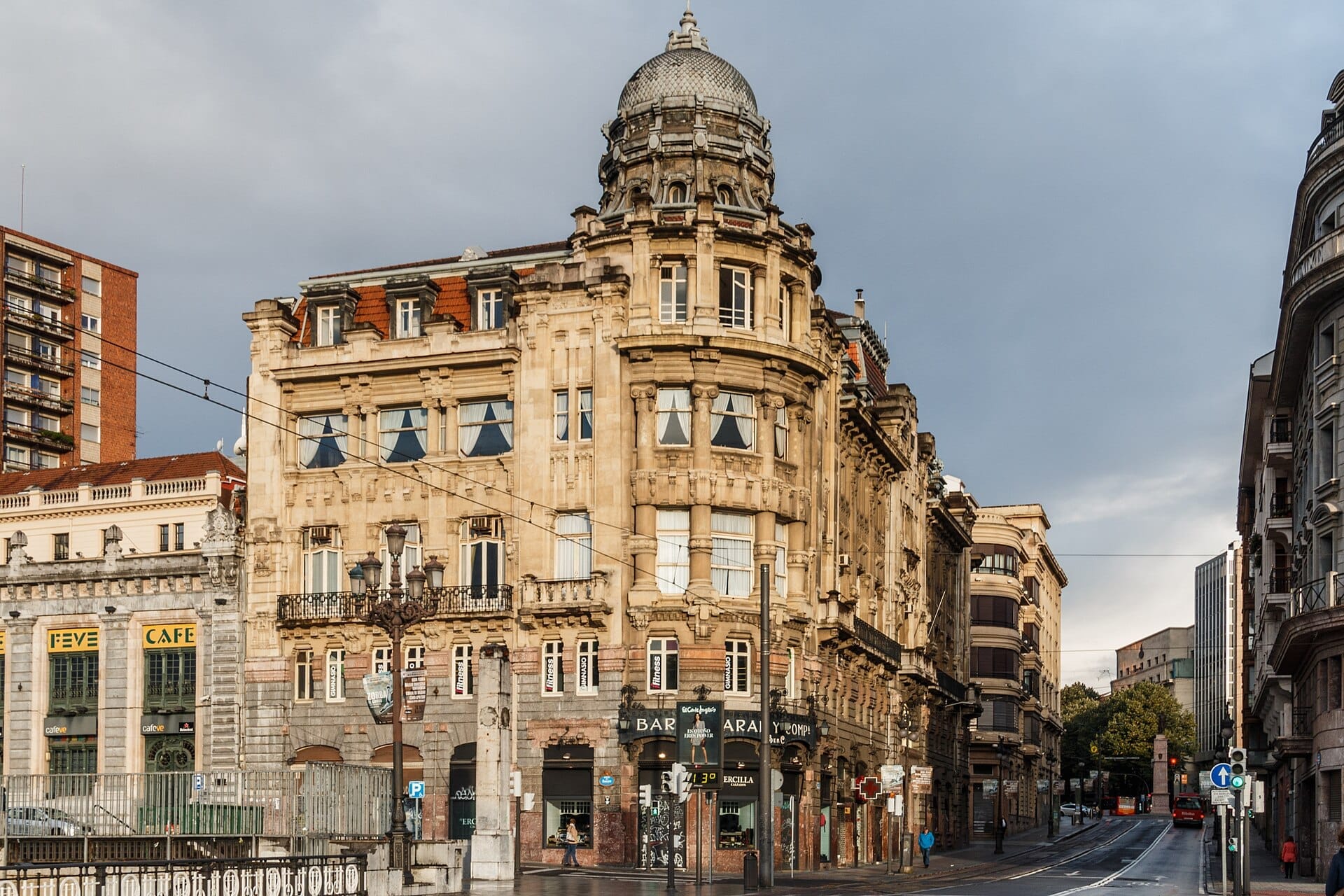
Mornings in Ensanche have a purposeful, urban rhythm. By 8am, the cafés along Gran Vía are open, locals are standing at counters drinking café con leche and eating toast with tomato, and office workers are moving through wide footpaths with the unhurried-but-brisk pace of people who know exactly where they are going. The architecture sets the tone: grand eclectic and Art Nouveau facades in pale stone, ornate ironwork balconies, and corner buildings with curved turrets that catch the morning light well.
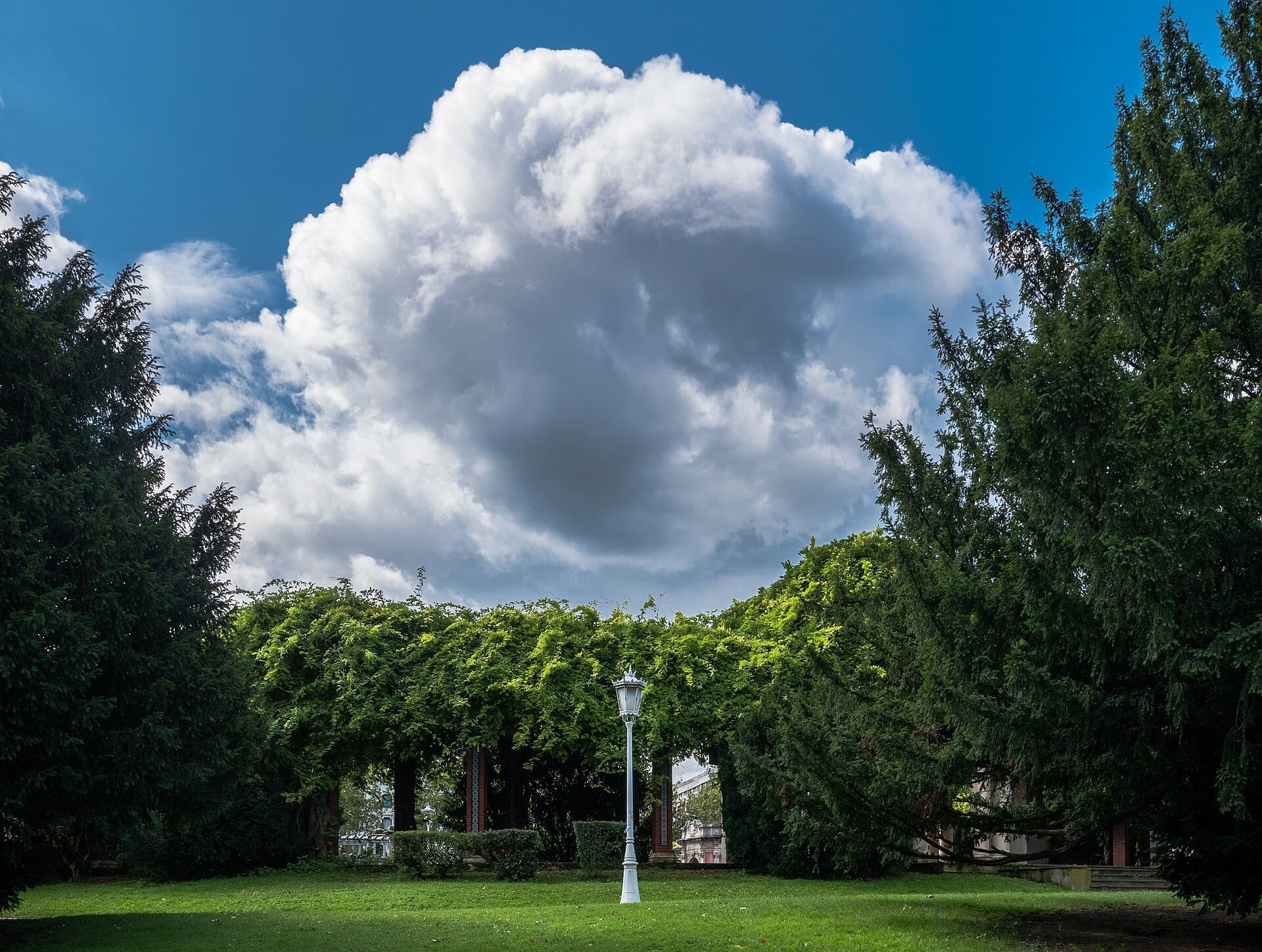
By midday the commercial energy peaks. Gran Vía becomes Bilbao's main shopping street, with international brands mixed alongside local institutions, and the side streets fill with office workers heading to lunch. The area around Jardines de Albia, a calm garden square just off Gran Vía, offers a rare pause: plane trees shade the central path, a bronze sculpture of the writer Antonio de Trueba anchors the space, and the 19th-century church of San Vicente de Paúl provides a quietly photogenic backdrop.
Afternoons shift the character slightly. Shops reopen after the lunchtime pause, pedestrianised stretches like Calle Ercilla fill with shoppers, and the bars begin pulling their first pintxos of the evening. By 7pm the outdoor terraces on Plaza Moyúa are full. After dark, Ensanche is lively but not rowdy. It lacks the late-night intensity of the student nightlife zones, which suits travelers who want evening atmosphere without 2am noise coming through hotel windows.
ℹ️ Good to know
Ensanche feels markedly different on weekdays versus weekends. Monday to Friday it runs on office hours: busy at commute times, quieter mid-afternoon, animated in the evening. Saturdays are all-day commercial activity with heavy pedestrian traffic. Sundays are noticeably quieter, with many shops closed, though cafés, restaurants, and the bar scene remain active.
What to See and Do
Gran Vía itself is worth walking end to end at least once, not just as a transit corridor but as an open-air architecture exhibition. The buildings from the late 19th and early 20th centuries range from restrained classicism to exuberant modernismo, and the scale of the street gives you the space to actually look up at facades that in a narrower city you would walk straight past. The Arriaga Theatre sits just beyond the eastern end of the boulevard, at the bridge approach to Casco Viejo, and is worth a look even if you do not attend a performance.
Plaza Moyúa is the most architecturally interesting square in the district. The elliptical space is framed by the Palacio Chávarri, now the headquarters of the Government Delegation in the Basque Country, and the Hotel Carlton, a grand 1926 landmark that once sheltered the Basque government during the Spanish Civil War. The Metro Bilbao entrances here are among the famous glass canopy structures known locally as Fosteritos, designed by Norman Foster. They have become an icon of the city's post-industrial regeneration. For a broader look at Bilbao's architectural story, the Bilbao architecture guide covers both the 19th-century Ensanche buildings and the contemporary waterfront.
A short walk north from Plaza Moyúa, crossing into Abandoibarra, brings you to the Guggenheim Museum Bilbao and the Zubizuri bridge. Most visitors staying in Ensanche treat these as a quick ten-minute walk from their hotel rather than a separate destination. The Museo de Bellas Artes is also within comfortable walking distance, at the edge of the Doña Casilda Park, which marks the southern boundary of the Ensanche area and provides the greenest breathing space in this part of the city.
Walk Gran Vía from Plaza Circular to Sagrado Corazón and back, observing the architectural variation block by block
Sit in Jardines de Albia in the afternoon, when the square has its best light and local retirees fill the benches
Explore Plaza Moyúa and photograph the Fosterito metro entrances at dusk when the glass canopies glow
Visit the Museo de Bellas Artes, whose collection of Basque and Spanish art is genuinely world-class and less crowded than the Guggenheim
Walk north along the riverbank toward the Guggenheim, a 12-minute stroll that shows the contrast between 19th-century Ensanche and the contemporary waterfront
If you are planning a full day in the city, the Bilbao walking tour guide maps a route that connects Ensanche with Casco Viejo and Abandoibarra in a single logical loop.
Eating and Drinking in Ensanche
The food scene in Ensanche covers a wider range than the pintxos bars of Casco Viejo, though there are plenty of those too. The streets running off Gran Vía, particularly in the blocks around Plaza Moyúa and toward Indautxu, have a dense concentration of bars, restaurants, and cafés at every price point. For a full orientation to Basque eating culture, the Basque food guide for Bilbao explains the difference between a pintxos bar, a sidrería, and a Michelin-grade restaurant, and which experiences are worth the effort.
The pintxos culture in Ensanche leans slightly more polished than the Casco Viejo equivalent. Bars here tend to display elaborate counter arrangements of prepared bites: slices of cured fish on bread, anchovy and olive skewers, crab tartlets, and the classic tortilla pintxo. Prices are broadly similar across the city, with most individual pintxos costing between two and three euros and a small glass of wine or local Txakoli about the same. The atmosphere is stand-up, eat-fast, move-on. It is social eating in the truest sense.
For sit-down meals, Ensanche has everything from inexpensive menú del día lunch deals (typically two courses, bread, and a drink for around 14-18 euros at midday) to formal Basque cuisine restaurants. The area around Indautxu in particular has developed a reputation for good neighbourhood restaurants that are popular with locals rather than tourists, with menus focused on seasonal Basque produce: salt cod, spider crab, piquillo peppers, and grilled txuletón beef. Calle Ledesma, a narrow street running parallel to Gran Vía, is one of the classic pintxos strips and gets genuinely packed on Friday evenings.
💡 Local tip
Lunch is the main meal in the Basque Country, typically served between 2pm and 4pm. Most restaurants offer a menú del día on weekdays that represents excellent value, often including wine. If you want to eat like a local rather than a tourist, make lunch your largest meal and graze on pintxos in the evening instead of sitting down to a full dinner.
Coffee culture here is serious. Bilbaínos are particular about their morning café con leche, and the traditional café bars along Gran Vía take it seriously. There are also several upscale hotel lobbies, including the Carlton on Plaza Moyúa, where you can have coffee in considerably more ornate surroundings. For more on what to eat and where to eat it across the city, the pintxos guide to Bilbao gives the full breakdown of how the system works and which streets to target.
Getting There and Around
Ensanche is the best-connected neighbourhood in Bilbao for public transport. Three Metro Bilbao stations serve the district on lines 1 and 2: Abando at the eastern end near Plaza Circular, Moyúa at the midpoint, and San Mamés at the western end near the stadium. All three are useful depending on where exactly you are going. The metro runs frequently and is the fastest way to connect Ensanche with other parts of the city and the wider metro area.
Abando station is also Bilbao's main intercity rail terminus, served by Renfe long-distance trains connecting to Madrid, Barcelona, and other Spanish cities, as well as Euskotren regional services. If you are arriving in Bilbao by train from elsewhere in Spain, you will step out directly into the Ensanche. From Bilbao Airport (IATA: BIO), the Bizkaibus A3247 service connects directly to Plaza Moyúa, which is as central as it gets. For full details on all options from the airport, the Bilbao airport guide covers journey times, fares, and the relative merits of each option.
Within the neighbourhood itself, walking is the most practical option. The grid layout means you rarely need to backtrack, and the main attractions are within a 15-minute walk of each other at most. Gran Vía has wide, well-maintained footpaths. The Abandoibarra waterfront to the north is a ten-minute walk from Moyúa station. Casco Viejo across the river is roughly the same. If the weather is poor, which in Bilbao's oceanic climate it sometimes is, the metro covers the key hops instantly.
💡 Local tip
Get a Barik card from any metro station on arrival. The rechargeable smart card works across Metro Bilbao, Bilbobus city buses, the Euskotren tram, and some regional lines, and cuts per-journey costs significantly compared to buying single tickets. It is worth getting even for a two-day visit.
The Euskotren Tranbia tram runs along the waterfront to the north of Ensanche, connecting Abandoibarra with Atxuri station near Casco Viejo. It is a scenic and convenient option for reaching the Guggenheim without going underground. For a full overview of how to move around Bilbao, see the getting around Bilbao guide.
Where to Stay in Ensanche
Ensanche is the most practical base for a first-time visitor to Bilbao, and many would argue for any visitor. Its central location puts you within walking distance of Casco Viejo, the Guggenheim, the Museo de Bellas Artes, and Doña Casilda Park without requiring any public transport. The accommodation offer ranges from international chain hotels to independent boutique properties, generally at mid-range to upper-mid-range prices. For a broader comparison of Bilbao's neighbourhoods as bases, the where to stay in Bilbao guide weighs Ensanche against Casco Viejo and the waterfront area.
The best location within Ensanche for accommodation depends on your priorities. The blocks immediately around Plaza Moyúa are the most prestigious address, with the Carlton nearby and several upscale hotels within a short walk, but they are also the most expensive and the most traffic-exposed. The streets between Moyúa and Indautxu, particularly south of Gran Vía, tend to be quieter at night while still being completely central. This zone suits travelers who want to walk to everything during the day but sleep without street noise.
One caveat on noise: Gran Vía itself is a busy urban boulevard and rooms facing it directly will have traffic and pedestrian noise well into the evening. If light sleep is a concern, ask for a room facing a side street or an interior courtyard when booking. The western end of Ensanche, around San Mamés, is worth noting for stadium-event nights. Athletic Club de Bilbao draws large crowds, and the streets around the ground get loud before and after matches.
⚠️ What to skip
If you are visiting during Aste Nagusia, Bilbao's major August festival, the entire city centre including Ensanche operates at a different volume level. Accommodation sells out months in advance and prices spike significantly. Book well ahead and check whether your hotel's location keeps you in the middle of the festivities or at a manageable distance from the loudest stages.
Who Ensanche Is For
Ensanche is not a neighbourhood that plays to one type of traveler. It does not have the medieval charm of Casco Viejo or the architectural spectacle of Abandoibarra. What it has is function, quality, and the sense of a city living its actual daily life rather than performing for visitors. The architecture is genuinely impressive once you learn to read it; the food and drink scene is deep and reliable; the transport connections are as good as it gets.
Travelers who prefer authentic urban atmosphere over tourist-curated experiences will find Ensanche satisfying. It rewards walkers who cover it slowly and look up occasionally. Those seeking a nightlife hub or a neighborhood with a specific 'village' feel might find it slightly too commercial and formal. Families, couples, and solo travelers on a first or second visit to Bilbao will all find it works well as a base.
Ensanche is Bilbao's commercial and architectural core, built on a 19th-century grid around Gran Vía and Plaza Moyúa, with Art Nouveau and eclectic facades throughout.
It is the best-connected neighbourhood in the city, with three metro stations (Abando, Moyúa, San Mamés nearby), direct rail access via Abando station, and an airport bus to Plaza Moyúa.
Ideal for first-time visitors: walking distance from the Guggenheim, Casco Viejo, the Museo de Bellas Artes, and Doña Casilda Park.
The food and pintxos scene is excellent, with Calle Ledesma and the streets around Indautxu offering reliable bars popular with locals rather than tourists.
One caveat: it is an urban, commercial neighbourhood. Rooms on Gran Vía can be noisy, it lacks the intimate medieval feel of Casco Viejo, and stadium nights around San Mamés add crowd noise to the western end.
Bilbao rewards a focused weekend with world-class architecture, one of Spain's best food cultures, and a walkable city centre that packs serious depth into 48 hours. This itinerary covers the essential stops across two well-structured days.
The Basque Country packs extraordinary variety into a compact region: world-class museums, Gothic old towns, wild Atlantic coastline, and some of Europe's finest food. This guide covers the essential stops in and around Bilbao, from the Guggenheim to the fishing villages of the Bizkaia coast.
Bilbao sits at the heart of the Basque Country, one of Europe's most serious food cultures. This guide covers the essential dishes, where to eat them, how the pintxos bar system actually works, and what to skip — so you eat well from your first meal to your last.
Bilbao has a strong museum scene for a city of its size. This guide covers the city's top institutions, from Frank Gehry's titanium icon on the riverfront to the quiet rooms of the Basque Museum in the Casco Viejo, with practical tips to help you plan your visit.
Bilbao's Atlantic climate means rain is always possible, but some months are dramatically better than others. This guide breaks down every season by weather, crowd levels, hotel prices, and festivals so you can pick the right time for your trip.
Bilbao Airport (IATA: BIO) is the main gateway to the Basque Country, located just 9-12 km from the city centre. This guide covers every transport option into Bilbao, with real fares, journey times, seasonal timetable notes, and the common mistakes first-time visitors make.
Bilbao's architectural story spans Gothic old-town churches, grand 19th-century boulevards, and one of the most consequential buildings of the 20th century. This guide covers every major landmark, the best walking routes, seasonal tips, and what to prioritize if your time is limited.
Bilbao sits inland on the Nervión estuary, but within 40 km you'll find some of northern Spain's finest coastline. This guide covers the best beaches near Bilbao, from sheltered urban strands reachable by metro to dramatic surf breaks and picturesque fishing villages.
Aste Nagusia (Semana Grande) turns Bilbao into one of Europe's great street festivals every August. This guide covers exact dates, the free concert schedule, txosna culture, accommodation realities, and practical tips for navigating nine days of non-stop celebration.
Bilbao in winter is mild, rainy, and far less crowded than summer. This guide covers the real weather, what to do indoors and out, how to navigate the city, and why the off-season has genuine advantages for the right kind of traveler.
Bilbao's nightlife runs later and harder than most visitors expect. This guide walks you through every stage of a proper Bilbao evening, from early pintxo crawls and riverside sunset walks to cocktail bars, live music, and clubs that don't fill until 2am.
Two Basque cities, 77 kilometres apart, and both worth your time — but for very different reasons. This guide breaks down what Bilbao and San Sebastián each do best, who they suit, how much each costs, and why the real answer is often 'both'.
Bilbao is compact enough to explore on foot in a single day, but the route you choose makes all the difference. This guide covers the best self-guided walking tour of Bilbao from Casco Viejo to the Guggenheim, with practical timings, admission costs, seasonal advice, and practical tips on what to skip.
Bilbao is a strong family destination. This guide covers the best kid-friendly attractions in the city and the wider Bizkaia province, from interactive museums and funicular rides to fairy-tale castles and sheltered beaches.
Bilbao's compact centre is walkable, but its integrated public transport network — metro, tram, city buses, and regional rail — makes the whole metro area easy to navigate. This guide covers every option, from the Barik smart card to airport transfers, with practical advice on what's worth using and what to skip.
Bilbao has pulled off one of Europe's most remarkable urban reinventions, transforming from a grimy industrial port into a world-class destination for architecture, food, and culture. But is it right for your trip? This guide gives you the full picture: what genuinely impresses, what disappoints, and exactly how to make the most of it.
Pintxos are the beating heart of Bilbao's food culture. This guide covers the best neighbourhoods and bars for a classic txikiteo crawl, how ordering works, what things cost, and the etiquette mistakes most visitors make. Whether you have one evening or three, here's how to eat like a Bilbaíno.
Bilbao offers a surprising amount for a city of around 350,000. This guide covers the best things to do in Bilbao, Spain, from world-class museums and Europe's largest covered market to coastal day trips and the Basque food scene, with practical advice on timing, pricing, and getting around.
Bilbao packs a lot into 40 square kilometres. This guide breaks down the city's main neighbourhoods by traveller type, budget, and atmosphere, so you can choose where to stay with confidence, whether you're here for a weekend city break or a longer Basque Country trip.