Best Time to Visit Bilbao: Season-by-Season Breakdown
Bilbao's Atlantic climate means rain is always possible, but some months are dramatically better than others. This guide breaks down every season by weather, crowd levels, hotel prices, and festivals so you can pick the right time for your trip.
Plan and book this trip
Tools from our partner Travelpayouts help you compare flights and hotels. If you book through them, we may earn a commission at no extra cost to you.
Flights
Hotels map
TL;DR
- June to mid-September offers the warmest, driest weather, but July and August are peak season with hotel prices up to 60% higher.
- April-May and September-October are the sweet spot: decent weather, smaller crowds, and noticeably lower costs.
- Late August brings Aste Nagusia (Semana Grande), Bilbao's massive nine-day street festival, which transforms the city and fills every hotel.
- Winter (November-March) is the cheapest time to visit but also the rainiest, with shorter days and fewer outdoor options.
- Bilbao is not southern Spain: even in July, rain is possible. Pack a compact waterproof regardless of when you go.
Understanding Bilbao's Climate
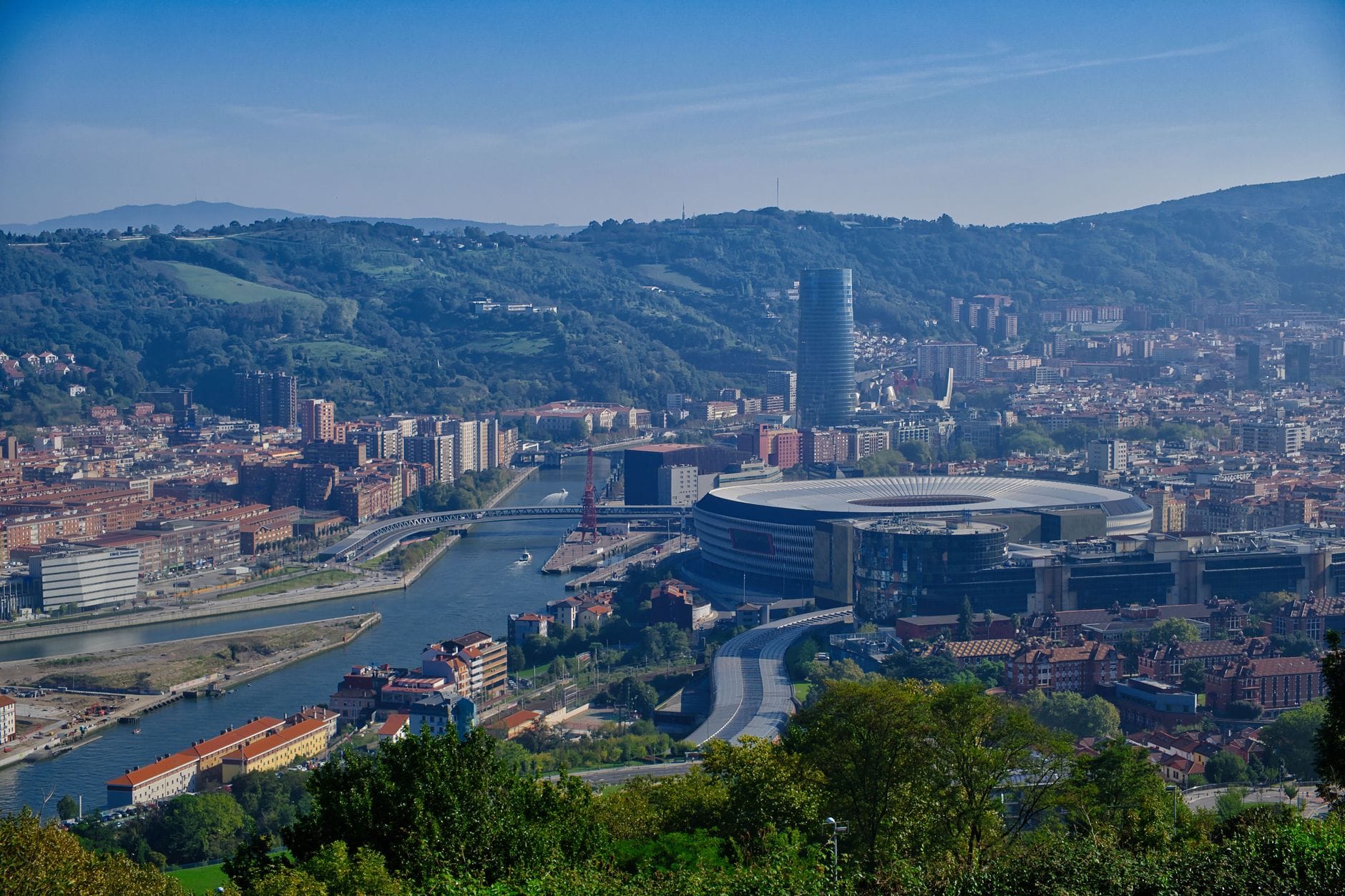
Bilbao sits at roughly 43°N on the Bay of Biscay, about 12 km inland from the Atlantic coast. Its Köppen classification is Cfb, a humid oceanic climate, which means mild winters, warm but not scorching summers, and rainfall spread across all twelve months. This is nothing like Madrid or Barcelona. Expecting reliably sunny, hot days in Bilbao will leave you disappointed. Expecting a cool, green, culturally rich city with occasional sunshine will leave you very happy.
Temperatures are moderate year-round. Winter months average around 8-10°C, while the height of summer sees averages in the low-to-mid 20s°C, with occasional days nudging 28-30°C. The surrounding hills, some rising above 400 m, create microclimates that can shift conditions quickly. Rain is distributed throughout the year, but November through January tends to be the wettest stretch, while May through September is relatively drier, even if showers remain entirely possible on any given day.
ℹ️ Good to know
Bilbao's annual rainfall is among the highest of any major Spanish city. Even in July, you can expect a few rainy days. A compact rain jacket or foldable umbrella is not optional gear here, it is essential, whatever the season.
Spring (April-May): The Underrated Sweet Spot
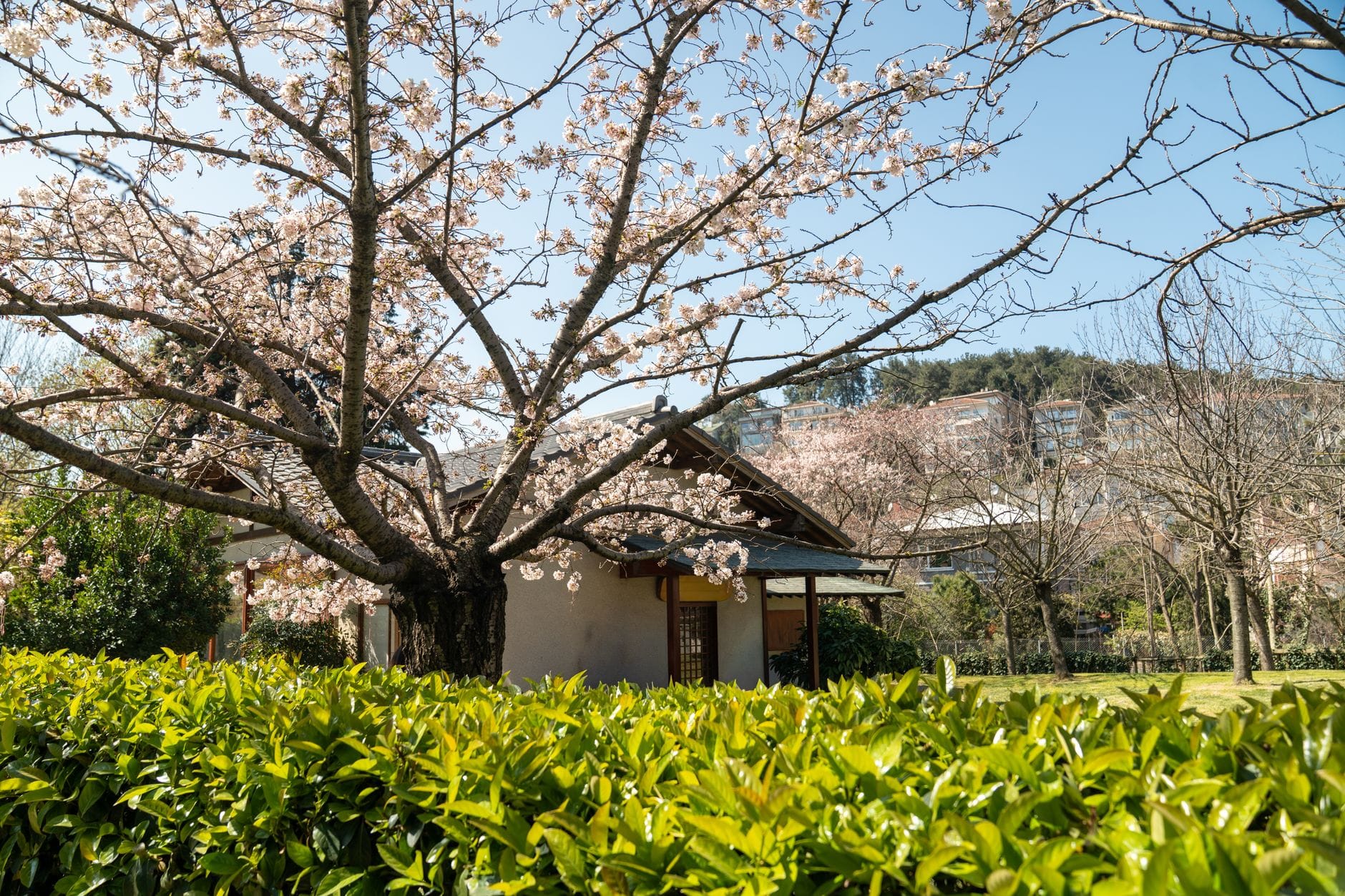
Spring is arguably the most underappreciated time to visit Bilbao. Temperatures climb from around 12-14°C in April to a pleasant 17-20°C by late May. The hills around the city turn intensely green, and the Etxebarria Park and Doña Casilda Park are at their most photogenic. Rain remains frequent in April but eases noticeably through May.
Hotel prices in spring are typically 30-40% lower than peak summer rates. A mid-range hotel that costs €120-140 per night in August might run €80-95 in May. Tourist sites like the Guggenheim are fully open but not packed. Queues at the Mercado de la Ribera are manageable, and you can actually linger at a pintxo bar without fighting for space. For anyone prioritizing value and a genuine local atmosphere, May is the month most worth serious consideration.
✨ Pro tip
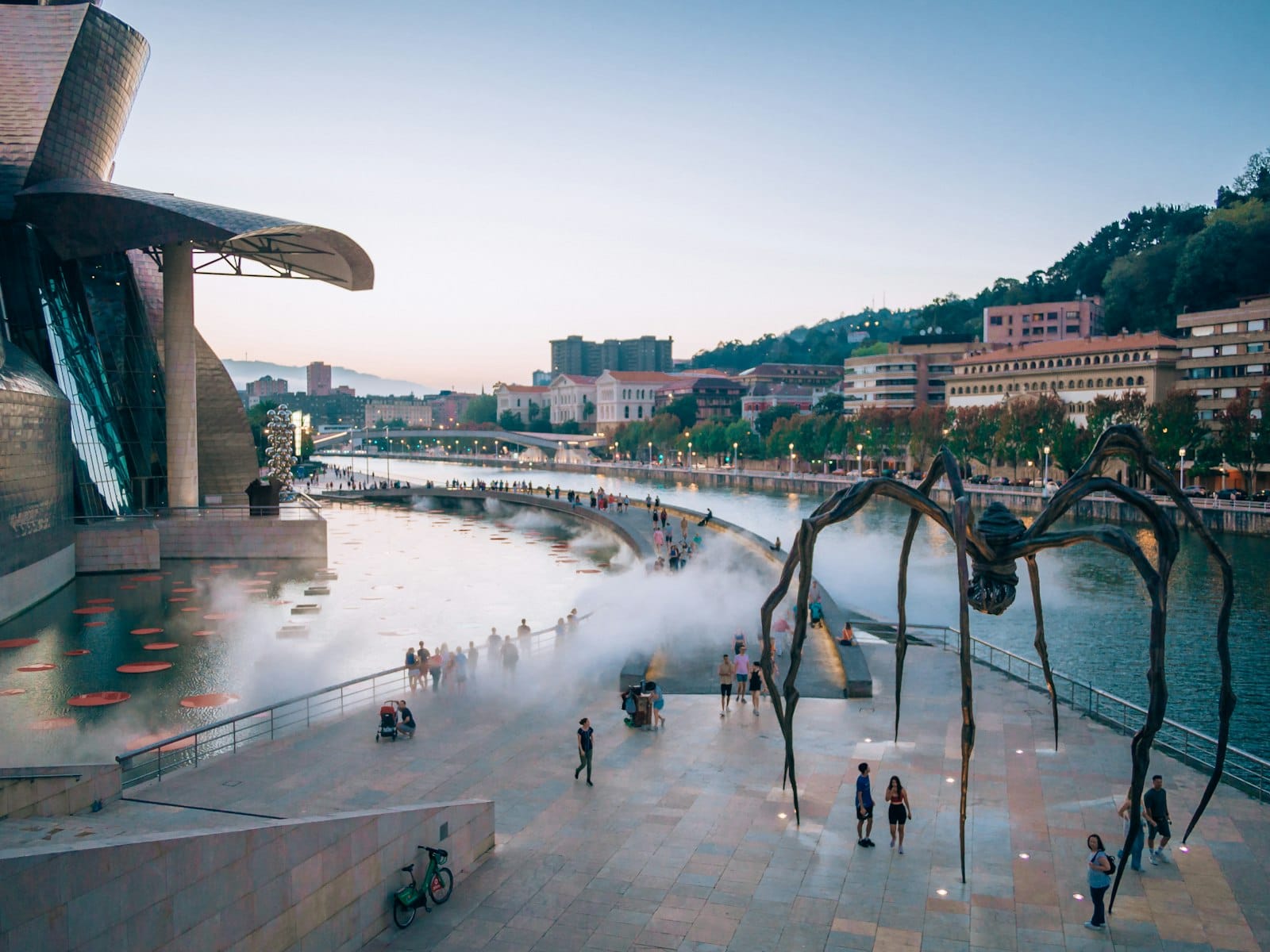
Book accommodations in the Casco Viejo or Ensanche for spring visits. Prices are competitive, and you'll be within walking distance of both the Old Town pintxo bars and the Guggenheim waterfront, which looks spectacular on a bright spring morning.
Summer (June-September): Peak Season, Peak Payoff

Summer is when Bilbao is at its most energetic and its most expensive. June is a transitional month, warm with temperatures typically between 18-23°C, increasingly dry, and not yet overrun. July and August represent full peak season. The Aste Nagusia festival in late August alone draws hundreds of thousands of visitors over nine days. Expect concerts, fireworks, street parties, and a city that barely sleeps.
The BBK Live music festival, held on Mount Kobetas above the city in early July, adds another wave of demand. During these events, hotel rates spike sharply and availability disappears weeks or months in advance. Plan around them deliberately: either lean into the festival atmosphere and book early, or schedule your trip for the weeks either side to avoid the surge.
September deserves special mention. Early September retains summer warmth, averaging 20-23°C, crowds thin out after the August peak, and prices begin to drop. Day trips to places like Gaztelugatxe or the beaches around Sopelana are still viable and far less crowded than in high summer. September may be the single best individual month to visit Bilbao for travelers who want warm weather without the peak-season chaos.
- June Warm, increasingly dry, pre-peak prices, great for outdoor sightseeing and day trips.
- July Peak season begins; BBK Live festival; highest prices, busiest attractions, but excellent beach weather.
- August Aste Nagusia in late August dominates; book months ahead or avoid entirely if you dislike crowds. Hot but not extreme.
- September Post-peak sweet spot; summer warmth remains, prices drop, queues shorten, and locals reclaim the city.
Autumn (October-November): Quiet and Affordable
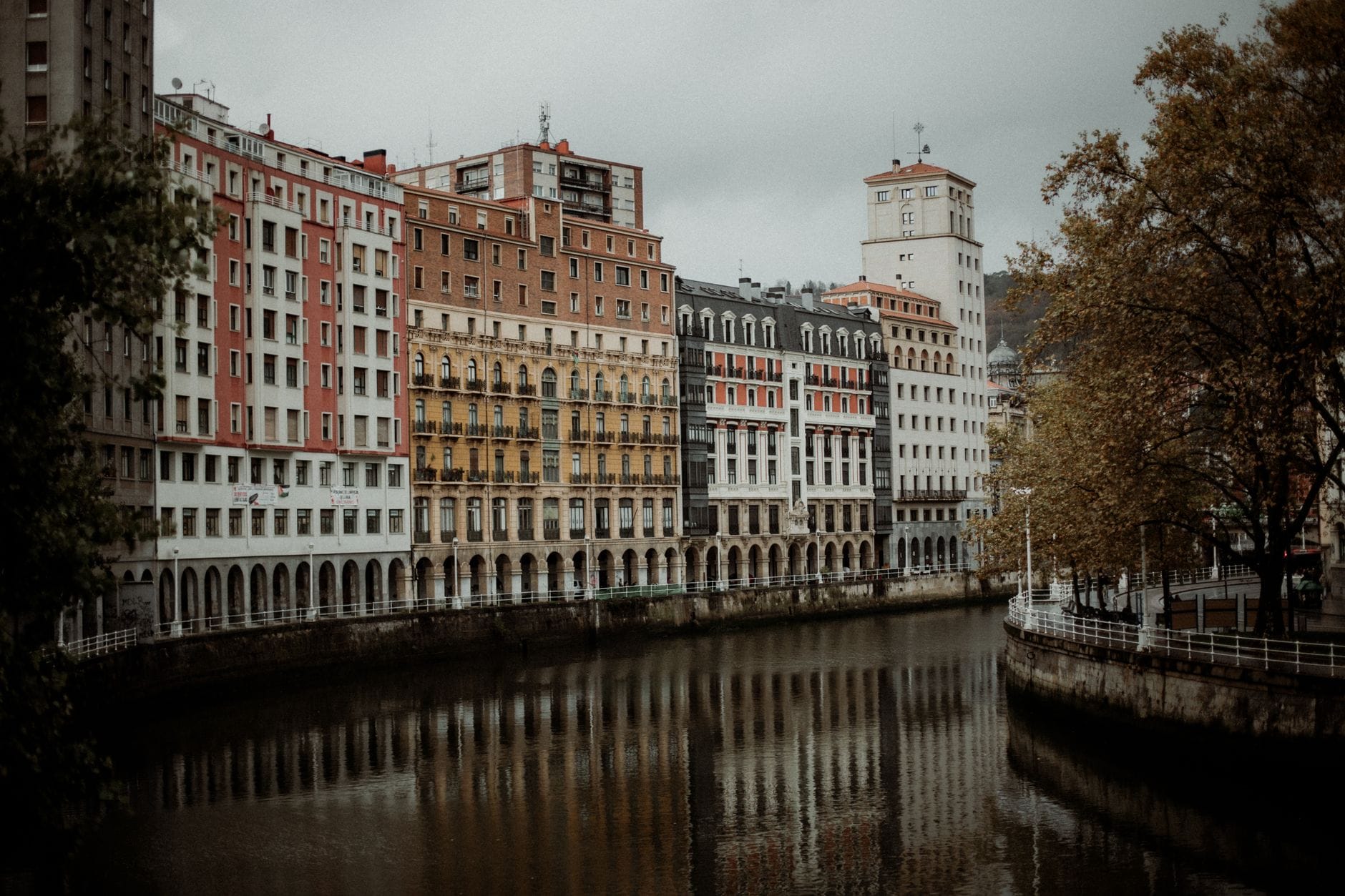
October is a genuine alternative to spring for budget-conscious travelers. Temperatures stay mild, typically 14-18°C in early October, before cooling toward 10-12°C in November. Rain increases steadily through the season, and November can feel genuinely grey. But hotel prices are at their lowest since winter, museums are uncrowded, and the city operates in its normal, unhurried rhythm.
For architecture enthusiasts, autumn light can be atmospheric in Abandoibarra, the redeveloped waterfront district where the Guggenheim and Euskalduna Concert Hall sit. Overcast skies actually photograph well against the titanium curves of the museum. The Bilbao Fine Arts Museum is an excellent wet-day refuge, with a collection that rivals many better-known Spanish museums.
Winter (December-March): Low Cost, High Rain
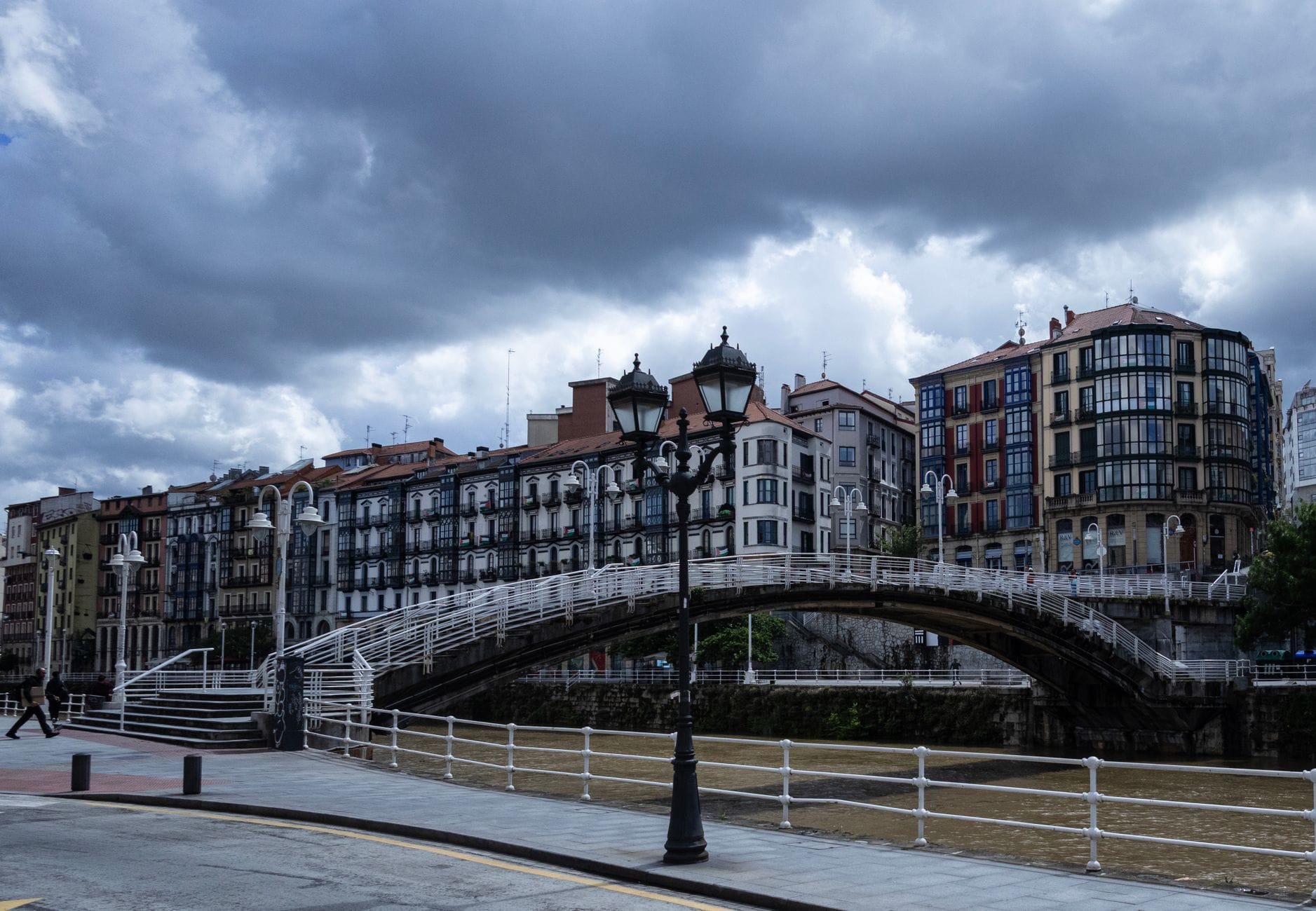
Winter in Bilbao is mild by northern European standards, rarely freezing, with temperatures hovering between 6-13°C. Snow in the city centre is extremely rare. But it is also the rainiest stretch of the year, with frequent grey days and limited daylight. If your primary goal is outdoor sightseeing, winter is the hardest season to work with.
The upside is cost. Mid-range hotels drop well below the €100 mark, and you can experience Bilbao's world-class food scene, the pintxo bars of the Casco Viejo and the Ensanche's sit-down restaurants, without any of the summer crowds. The Mercado de la Ribera, Europe's largest covered market, is particularly enjoyable in winter when it functions as a local daily market rather than a tourist attraction.
December has a festive dimension worth considering. Christmas markets and lights appear across the city, and the Basque tradition of txikiteo (hopping between bars for small glasses of wine) reaches a seasonal peak. New Year's Eve draws visitors but is less chaotic than Barcelona or Madrid. January and February are the quietest months of the year, with the lowest prices and genuinely local atmosphere.
⚠️ What to skip
If you visit in winter, check opening hours carefully. Some smaller museums and attractions operate reduced schedules from November through February. The Artxanda Funicular, Bilbao's hillside cable car, can close in bad weather, which is more frequent in winter months.
Practical Planning: Prices, Crowds, and Key Dates
Accommodation pricing in Bilbao follows a clear pattern. A mid-range hotel room that costs around €80-100 in January can climb to €140-200 during July and August, with a further spike to €200 or more during Aste Nagusia and BBK Live. Shoulder months, April-May and September-October, typically fall in the €90-120 range. These are indicative figures; specific hotels, booking timing, and demand in any given year will shift them. Always compare prices 2-3 months in advance and set price alerts if you have flexibility.
Getting to Bilbao is straightforward via the city's airport, IATA code BIO, located in the municipality of Loiu about 9-12 km from the city centre. From the airport, the Bizkaibus A3247 line connects to Plaza Moyúa in the city centre, running every 15-30 minutes. Occasional tickets cost €5; Barik card holders pay a discounted fare (around €1+). Taxis run approximately €25-30 depending on time and traffic. Once in the city, the integrated Barik card covers metro, tram, and buses at discounted rates. Our Bilbao airport guide covers all transfer options in detail.
- BBK Live Music Festival: early July, exact dates vary by year
- Aste Nagusia (Semana Grande): nine days in late August, Bilbao's biggest annual event
- Semana Santa (Easter): significant crowds in spring, dates shift year to year
- Christmas and New Year: festive atmosphere in December, moderate crowds
- January-February: lowest prices, quietest period, most rain
If you are deciding between Bilbao and elsewhere in the Basque Country, timing affects the comparison. San Sebastián, 100 km east, is significantly more crowded and expensive in summer, making Bilbao a practical base for the region in July and August. Read our Bilbao vs San Sebastián comparison for a fuller breakdown. For those planning a longer regional itinerary, the Basque Country itinerary guide gives context on how to sequence towns and timing across the region.
FAQ
What is the best month to visit Bilbao for good weather?
June and September are the best single months for weather. Both offer warm temperatures (18-23°C), relatively low rainfall compared to the rest of the year, and far fewer crowds than July and August. May is a close runner-up, particularly for anyone prioritizing value alongside decent conditions.
Is Bilbao worth visiting in winter?
Yes, but with adjusted expectations. Winters are mild but rainy, with temperatures around 6-13°C. The payoffs are real: lowest accommodation prices of the year, uncrowded museums, and an authentic local atmosphere in the pintxo bars and markets. It is not ideal for outdoor day trips, but for a cultural and food-focused trip, winter works well.
How far in advance should I book for Bilbao's Aste Nagusia festival?
At least 3-4 months in advance, ideally more. Aste Nagusia in late August is the biggest event in the Bilbao calendar, drawing enormous crowds across nine days. Hotels fill quickly and prices increase sharply. If you want to experience the festival, book early. If you want to avoid it, plan for before August 15 or after the first week of September.
Does it rain a lot in Bilbao in summer?
Less than the rest of the year, but yes, summer showers are common. Bilbao's oceanic climate means rain is possible in any month. July and August are the driest months statistically, but a rainy day or two per week is not unusual. Packing a compact waterproof is sensible regardless of when you travel.
When are hotel prices cheapest in Bilbao?
January and February are the cheapest months, followed by late November and March. Prices in these months can be 40-60% lower than peak summer rates. October and April also offer significant savings over summer while still providing reasonable weather.