Museo de Bellas Artes de Bilbao: The Art Museum That Rewards Slow Looking
The Museo de Bellas Artes de Bilbao holds one of Spain's most quietly impressive collections, spanning eight centuries of art from Flemish old masters to Basque modernism. Set inside Parque Doña Casilda, it draws far fewer crowds than the Guggenheim just up the river, which means you can actually stand in front of a painting and think.
Quick Facts
- Location
- Plaza del Museo 2, 48009 Bilbao — inside Parque Doña Casilda Iturrizar
- Getting There
- Metro: Moyua (Lines 1 and 2) or Indautxu (Line 1), both around 10 minutes on foot
- Time Needed
- 2–3 hours for a focused visit; half a day if you explore the park and nearby neighbourhood
- Cost
- Free during expansion works (entrada gratuita). Entry via Plaza Eduardo Chillida / 1970 building. Confirm current hours and which galleries are open on the museum site.
- Best for
- Art lovers, visitors who want depth over spectacle, travellers making the most of free admission during the works
- Official website
- www.museobilbao.com
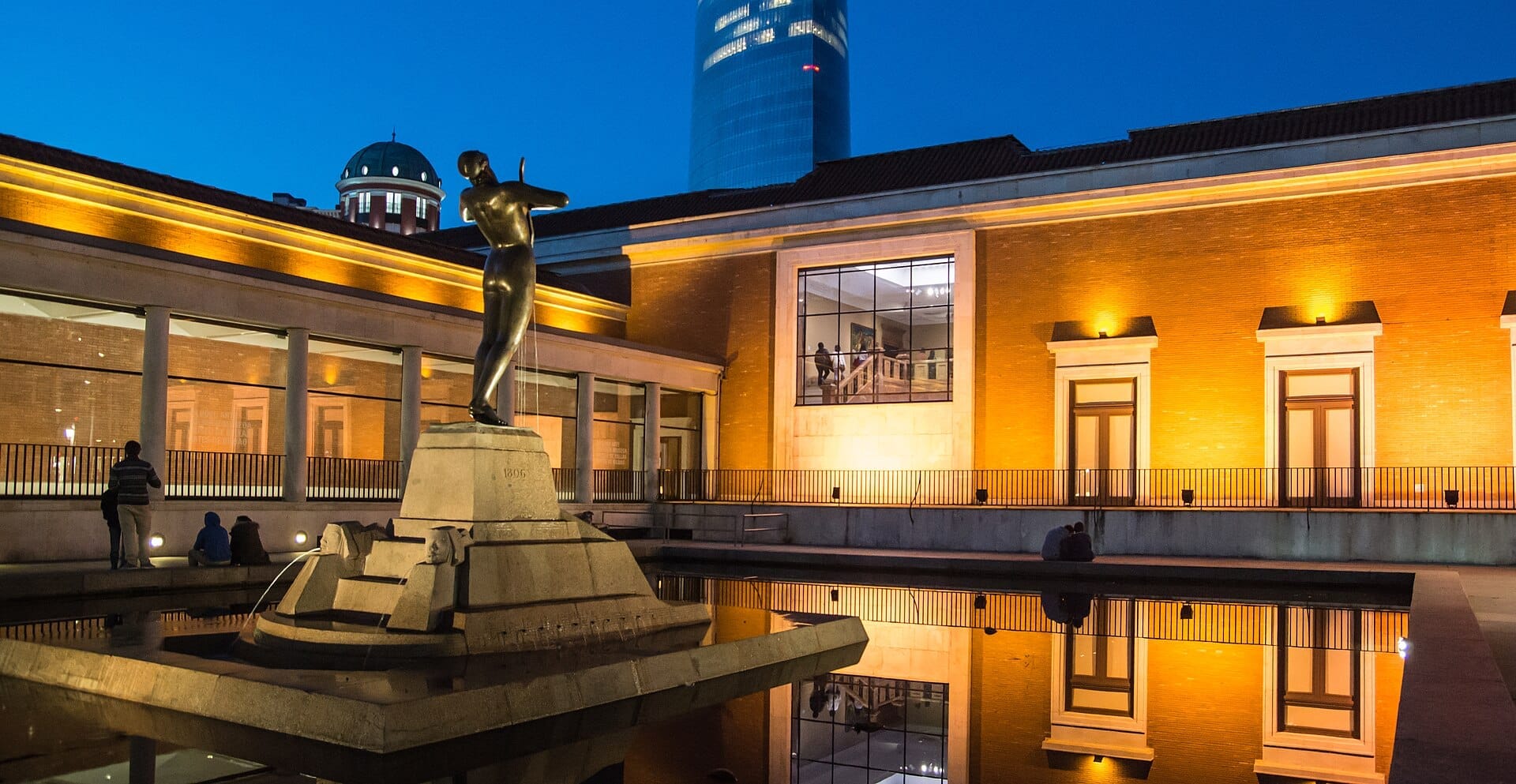
Why This Museum Deserves More of Your Time Than It Gets
Every visitor to Bilbao knows about the Guggenheim. Far fewer give serious attention to the Museo de Bellas Artes de Bilbao, which is a genuine oversight. This is a museum with over 8,000 works spanning from the 12th century to the present, a well-designed building that handles natural light thoughtfully, and almost none of the selfie-stick traffic that clogs the titanium landmark a kilometre up the Nervión river. The collection is not a consolation prize. It includes Flemish and Spanish old masters, a serious holding of Basque art from the 19th and early 20th centuries, works on paper, and contemporary pieces that hold their own against major European institutions.
The museum's current form is the result of a 1945 merger between two earlier institutions: the original Museo de Bellas Artes de Bilbao, founded in 1908, and the Museum of Modern Art, which opened in 1924. That dual origin explains something about the collection's unusual range. It was never built around a single patron's taste or a single historical era. It grew organically, which means walking through the galleries sometimes produces unexpected juxtapositions that a more curated collection would have avoided.
💡 Local tip
Admission is free during the expansion works (entrada gratuita). Enter via Plaza Eduardo Chillida / the 1970 building. Expect a partial route rather than a complete pre-expansion circuit, and confirm current hours and open galleries on the museum site—reopening may continue in phases through 2026.
The Setting: A Museum Inside a Park
The Museo de Bellas Artes sits inside Parque Doña Casilda Iturrizar, Bilbao's most elegant public park, which adds something to the experience that you do not get at most urban museums. Arriving from the Gran Vía side of the Ensanche, you pass under mature trees, past a large ornamental pond with ducks, and reach the museum entrance with a distinct sense of having changed pace. The park is well used by locals at all hours: joggers in the early morning, families on weekend afternoons, elderly residents on benches through the middle of the day.
The building itself is a composed, mid-20th-century structure, expanded in the early 2000s by architect Luis María Uriarte. It is not architecturally flashy, which is arguably its virtue: the design serves the collection rather than competing with it. For a broader sense of how Bilbao's built environment has evolved, the Bilbao architecture guide gives useful context on the city's layered urban history, from the 19th-century Ensanche grid to the post-industrial riverside.
After a visit, the park itself is worth staying in for at least twenty minutes. The light in the late afternoon, when the trees filter low sun onto the pond, is particularly good. The neighbourhood around the museum, the Ensanche, is one of the more pleasant areas of Bilbao for walking, with wide pavements, good café terraces, and a noticeably unhurried atmosphere compared to the tourist-heavier Casco Viejo.
Tickets & tours
Live prices and dates from our booking partner. If you book, we may earn a commission at no extra cost to you.
Bilbao walking tour
From 16 €Instant confirmationFree cancellationAll Iron Bilbao tour: Athletic Club and Guggenheim Museum
From 107 €Instant confirmationFree cancellationGuggenheim Museum Bilbao entrance ticket and in-app audio tour
From 0 €Instant confirmationFull-day tour to Biarritz, Bayonne and Saint-Jean-de-Luz from Bilbao
From 69 €Instant confirmationFree cancellation
What the Collection Actually Contains
When galleries are open, the permanent collection is organised across the historic complex (the original neoclassical building and the 1970 modern extension), moving broadly from older works to contemporary pieces. During the expansion, treat this as a partial visit—follow on-site signage for what is accessible. The medieval and early modern section typically includes Flemish panel paintings, Spanish Renaissance and Baroque works, and a notable group of pieces by El Greco. Where rooms are open, paintings are often close enough to examine technique directly, something large retrospective blockbusters rarely allow.
The Basque art holdings are where the museum becomes genuinely distinctive. Works by Ignacio Zuloaga, Darío de Regoyos, and Juan de Echevarría document a specific moment in Basque cultural history, roughly the late 19th to mid-20th century, when local painters were simultaneously engaging with European modernism and asserting a regional identity. For anyone interested in how peripheral European art scenes absorbed and responded to movements centred in Paris and Madrid, this section is unusually illuminating.
The contemporary galleries occupy the newer wing. Quality here is more variable, as it is in most encyclopaedic museums, but there are strong holdings of Spanish and international post-war abstraction. The decorative arts section, which many visitors skip, includes Basque silverwork and furniture that fills in historical context the paintings alone cannot provide.
ℹ️ Good to know
The audioguide costs 1 €; verify at the ticket desk. For a focused visit, it is worth using in the old masters and Basque art sections, where historical context significantly deepens what you see.
How the Experience Changes Through the Day
Historically the museum opened around 10:00, with the first hour among the quietest periods. During the works, hours and open rooms can shift with construction phases—confirm on the museum site before you go. If galleries are open early, a morning arrival still gives the calmest looking conditions before school groups and midday visitors arrive.
From around midday to 15:00 on weekdays, and throughout the day on weekends, the museum typically sees its heaviest traffic when fully open. School visits often concentrate in the morning. The café inside (when open) is a reasonable place to pause. Closing times have historically been later on weekdays (around 20:00) with Sundays often shorter—commonly around 10:00–15:00—so check official hours during the works rather than assuming a daily 20:00 close.
Tuesdays are the one day to avoid: the museum is closed, with limited exceptions for special openings. Closing dates also include 25 December, 1 January, and 6 January. On 24 and 31 December the museum closes at 15:00.
Practical Walkthrough: Getting Here and Getting In
The museum's address is Plaza del Museo 2, 48009 Bilbao. From Moyua metro station (Lines 1 and 2), the walk takes around 10 minutes through the Ensanche grid, passing along the Gran Vía and down into the park. From Indautxu station (Line 1), the approach is slightly different but similar in time. Both routes are flat, straightforward, and well-signed.
If you are combining this visit with other Ensanche-area attractions, Parque Doña Casilda is directly adjacent and worth at least a short walk. The Azkuna Zentroa cultural centre is also within the neighbourhood, providing a very different but complementary experience of Bilbao's cultural infrastructure.
Admission is currently free during the expansion works (entrada gratuita)—do not rely on older guides quoting paid general/reduced tickets, Wednesday-only free entry, or past combined Guggenheim ticket deals as current. Enter via Plaza Eduardo Chillida (1970 building). Full reopening may continue through 2026 in phases; atrium free-access plans have been discussed for later stages, but while works are ongoing, treat access as free-during-construction and confirm what is open on the museum site.
⚠️ What to skip
The museum is closed on Tuesdays. This catches many visitors by surprise, particularly those spending only two days in Bilbao. Check the calendar before building an itinerary around it.
Placing This Museum in the Broader Bilbao Art Conversation
Bilbao's art landscape is often reduced to a single institution, but the city supports a genuine range of serious collections. The best museums in Bilbao is a useful overview of how the city's offerings compare. The Museo de Bellas Artes occupies a specific and important position: where the Guggenheim foregrounds contemporary and conceptual work in a building that is itself the spectacle, the Bellas Artes offers historical depth and the particular story of Basque visual culture over eight centuries.
Visitors planning a longer stay in the city will find the 2-day Bilbao itinerary helpful for sequencing both museums efficiently alongside the Mercado de la Ribera and the Casco Viejo without doubling back unnecessarily.
The Museo de Bellas Artes is not the kind of museum that produces a single overwhelming moment, the way the Guggenheim's atrium or a major Rothko room might. Its rewards are cumulative and quieter. If you visit looking for spectacle, you will leave underwhelmed. If you visit willing to slow down, read the labels, and spend time with a single Basque landscape, you will likely leave having seen something you will remember—even on a partial route during the expansion.
Accessibility and Visitor Facilities
Admission is free during the expansion works for standard entry; visitors needing assistance should confirm current access arrangements and any companion policies on the museum site. For specific physical accessibility details such as lift locations, ramp configurations, and accessible toilet facilities, contact the museum directly before your visit, as construction phases can change routes through the building.
The museum has a café and a bookshop. The bookshop carries a good selection of Basque art titles in Spanish and Basque, as well as broader art history publications, and is worth a look even for those not buying. There is paid parking nearby, but given the straightforward metro connections, arriving by public transport is simpler.
Insider Tips
- Admission is free during the expansion works (entrada gratuita). Enter via Plaza Eduardo Chillida (1970 building). Not every wing may be open as reopening continues in phases—possibly into 2026—so check the museum site for what is accessible before you go.
- The Basque art section in the older wing tends to be quieter than the more internationally famous old masters rooms. If you have limited time, prioritise this section — it is what makes this museum distinct from any other European fine arts collection.
- The park surrounding the museum is worth factoring into your visit. A circuit of Parque Doña Casilda after you finish adds maybe 20 minutes and provides a useful decompression before re-entering the Ensanche. The ornamental pond side of the park, away from the museum entrance, is less visited.
- If you are visiting in winter, this museum is one of the most comfortable ways to spend a grey Bilbao morning. The building is well heated, the galleries are calm on weekday mornings, and the collection rewards the kind of slow attention that cold weather encourages.
Who Is Museo de Bellas Artes de Bilbao For?
- Art enthusiasts who want historical depth and Basque cultural context beyond the Guggenheim
- Budget-conscious travellers: admission is free during the expansion works—confirm open galleries before you go
- Visitors on a second or third trip to Bilbao who have already covered the major landmarks
- Families with children over 12 who engage with art; confirm family access details on the museum site during the works
- Travellers seeking a quieter, slower morning experience away from the more crowded waterfront
Nearby Attractions
Other things to see while in Ensanche:
- Artxanda Funicular & Viewpoint
The Artxanda Funicular has been carrying Bilbao residents up to the hilltop since 1915, covering 770 metres of track in a three-minute trip. At the top, a wide terrace opens up one of the clearest panoramas over the Basque capital and the Nervión estuary. It is straightforward, affordable, and genuinely rewarding on a clear day.
- Azkuna Zentroa (Alhóndiga)
Once a 1909 municipal wine warehouse, Azkuna Zentroa is now one of Bilbao's most inventive civic spaces. Designed for transformation by Philippe Starck and reopened in 2010, it houses 43 wildly individual columns, a rooftop pool with a glass floor, cinemas, a media library, and a packed cultural programme. Entry to the building is free.
- Parque de Doña Casilda de Iturrizar
Created in 1907 after philanthropist Casilda Iturrizar donated the land to the city, Parque de Doña Casilda Iturrizar is Bilbao's most emblematic green space. Located in the Abando district between Indautxu and the Abandoibarra waterfront, it offers a rare combination of formal garden design, open lawns, and quiet pond paths — all free and open around the clock.
Planning a trip? Discover personalized activities with the Nomado app.