Parque de Doña Casilda Iturrizar: Bilbao's Elegant Historic Park
Created in 1907 after philanthropist Casilda Iturrizar donated the land to the city, Parque de Doña Casilda Iturrizar is Bilbao's most emblematic green space. Located in the Abando district between Indautxu and the Abandoibarra waterfront, it offers a rare combination of formal garden design, open lawns, and quiet pond paths — all free and open around the clock.
Quick Facts
- Location
- Paseo Don José Anselmo Clavé, 48009 Bilbao — next to the Museum of Fine Arts, linking El Ensanche with Abandoibarra
- Getting There
- Metro: Indautxu or San Mamés (L1/L2); Tram: Abandoibarra or Guggenheim stops
- Time Needed
- 45 minutes to 2 hours, depending on pace
- Cost
- Free — public municipal park, no admission fee
- Best for
- Picnics, morning walks, families with children, museum-hopping breaks
What Is Parque de Doña Casilda Iturrizar?
Parque de Doña Casilda Iturrizar is one of Bilbao's most celebrated urban parks — an elegant historic green expanse that has anchored the city's left bank since it opened in 1907. The park sits on land donated to Bilbao by Casilda de Iturrizar, a wealthy widow and philanthropist whose name it now carries in full. Construction began in 1907, following a park that had been planned as part of Bilbao's ambitious Ensanche expansion from 1876 onward — the same grid-driven urban growth project that gave the city its wide avenues and ordered city blocks.
Before it bore its current name, the park was known successively as the Parque del Ensanche and the Parque de las Tres Naciones. It only received its definitive name in 1945. The municipal park covers around 85,200 square metres (roughly 8.5 hectares) — smaller than Etxebarria Park farther east, but richer in formal garden character. Today, the park borders the Gran Vía on one side and sits just a few minutes on foot from the Abandoibarra riverfront and the Guggenheim Museum Bilbao.
💡 Local tip
The park is open 24 hours daily and entry is completely free. No booking or ticket is required at any time of year.
The Layout: What You'll Actually See
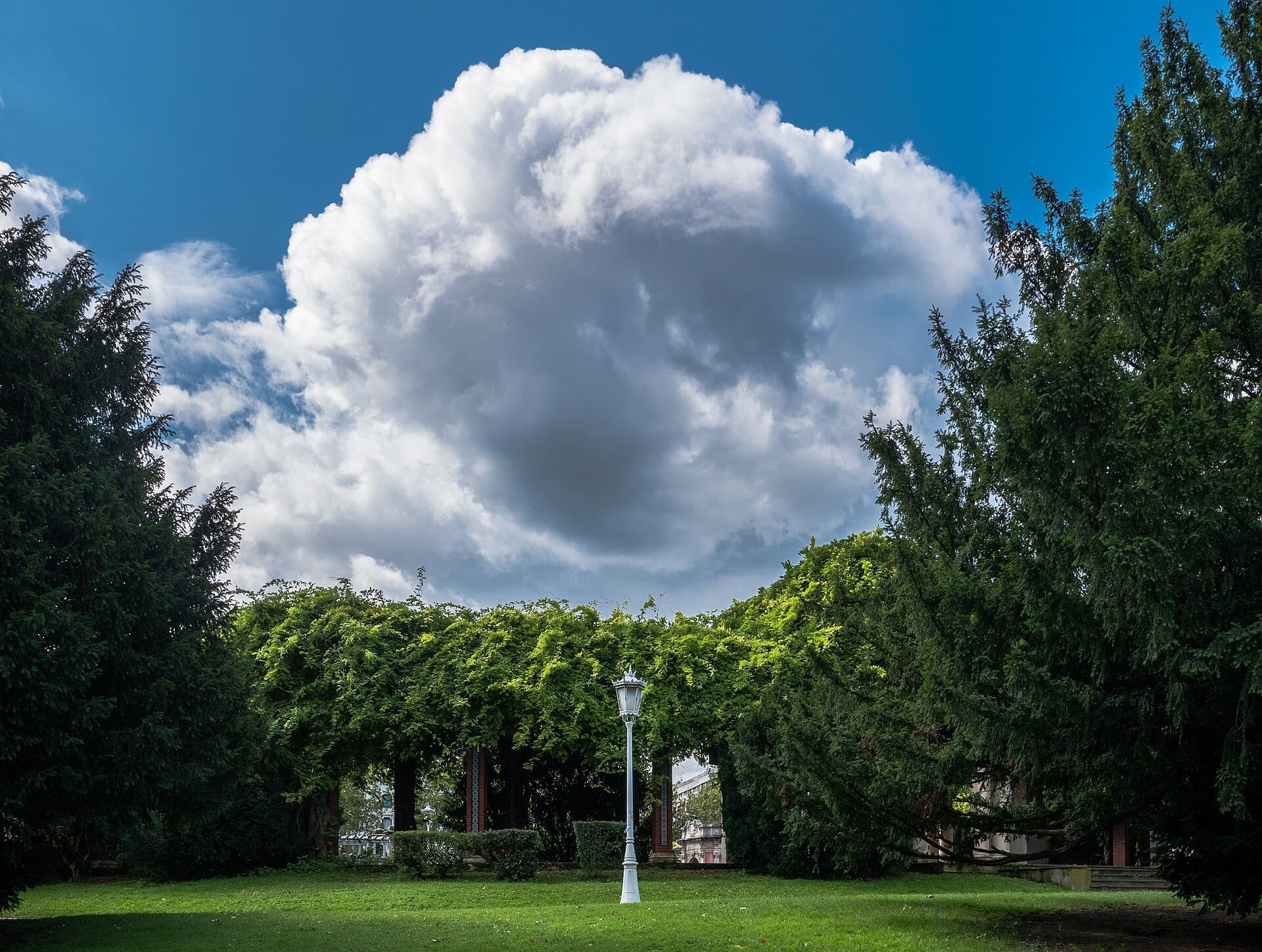
The park follows a formal 19th-century European garden tradition, with wide tree-lined promenades, a rectangular ornamental pond at its heart, and structured planting beds giving way to more open grassy areas. The central pond is one of the park's defining features: ducks and geese drift across the still water, and locals sit on the surrounding benches in all weather. Children feed the birds without ceremony; older residents read newspapers on the same benches in the morning quiet.
Mature trees — many of them decades old — create a canopy effect in summer, lowering the perceived temperature noticeably compared to Bilbao's surrounding streets. In autumn, the colour change across the park's plane trees and oaks becomes one of the better visual displays in the city. The paths are wide, paved, and mostly flat, with a few gentle undulations near the outer edges. Sculptures and fountains punctuate the routes without overwhelming the overall calm.
The park also contains a children's playground area and open lawns where locals spread out on warm afternoons. Near the edges, you'll find kiosk-style cafes that operate during daylight hours — useful for a coffee before continuing to the nearby Fine Arts Museum or down to the Abandoibarra promenade.
Tickets & tours
Hand-picked options from our booking partner. Prices are indicative; availability and final rates are confirmed when you complete your booking.
San Juan de Gaztelugatxe guided tour from Bilbao
From 65 €Instant confirmationFree cancellationSan Sebastian, Hondarribia, Hendaye, and Getaria from Bilbao
From 54 €Instant confirmationFree cancellationGaztelugatxe and Mundaka small group guided tour from Bilbao
From 50 €Instant confirmationFree cancellationBilbao walking tour
From 16 €Instant confirmationFree cancellation
How the Park Changes Through the Day
Early mornings, roughly 7am to 9am, are when the park belongs to Bilbao's residents: joggers on timed circuits, dog walkers crossing in every direction, and retirees occupying the same benches with the predictability of clockwork. The light comes in low and diffused on clear days, catching the water on the central pond and the dew on the grass. Traffic noise from Gran Vía is audible but not intrusive. The overall atmosphere is unhurried, and tourist numbers are essentially zero.
Midday brings a different crowd. Office workers from the Ensanche arrive with takeaway lunches, families with pushchairs cut through on school runs, and the kiosk cafes do steady business. In summer, the shade under the larger trees becomes prime real estate by noon, when temperatures in the surrounding streets climb into the mid-20s Celsius. The park earns its keep as a cooling corridor between the city blocks.
Late afternoon into early evening is arguably the richest time to visit. The light softens, the school-age crowd peaks around 5pm to 7pm, and the benches fill with the kind of spontaneous, unhurried social activity that defines Basque city life. By 8pm in summer, with daylight still strong, the park has a warm, slow-moving quality that the city's bars and streets can't quite replicate. On weekends, this window extends further — locals picnic on the grass well into the evening.
ℹ️ Good to know
Bilbao's oceanic climate means rain is possible year-round. The park's tree canopy provides partial shelter on light rain days, but heavy Atlantic fronts — more common November through January — make the open lawns impractical. The paths remain usable and the pond area retains its appeal even in grey weather.
Getting There: Transit and Access
The park is well served by multiple transit options. The Metro Bilbao stop at Indautxu (Lines 1 and 2) puts you at the Ensanche side of the park in around a 10-minute walk along Gran Vía. The San Mamés metro stop (also Lines 1 and 2) approaches from the opposite direction. If you're coming from the Guggenheim or Abandoibarra, the Euskotren tram stops at either the Abandoibarra or Guggenheim stop, both a short walk from the park's northern edge.
Multiple Bilbobus lines serve the surrounding streets, including routes 1, 10, 13, 18, 27, 38, 48, 49, 72, and 77. If you're planning a full day that combines the park with other attractions, consider the Bilbao Fine Arts Museum, which shares a boundary wall with the park's southern edge — you can walk directly between the two. Combine both in a single morning with ease.
The park is fully accessible for wheelchair users. Paths are wide, paved, and free of significant gradient changes across most of the interior. Public transport access points, including nearby metro stations, have accessible infrastructure. Families with prams will find the flat terrain straightforward throughout.
The Cultural Context: Casilda Iturrizar and the Ensanche
The park doesn't exist in isolation — it's inseparable from the story of Bilbao's rapid 19th-century expansion. The Ensanche district was Bilbao's planned answer to industrial-era growth: a rational grid of wide streets and bourgeois apartment blocks that spread from the medieval Casco Viejo across the left bank of the Nervión. The park was conceived as the lungs of this new city quarter, a formal green space that would give the Ensanche residents somewhere to walk that wasn't paved over.
Casilda de Iturrizar's decision to donate the land to the city was the kind of act that defines civic memory. Bilbao's industrial wealth in the late 19th century produced a merchant class with both resources and civic ambition, and the park stands as one of the more tangible legacies of that era. The formal landscaping style, with its emphasis on ordered promenades, ornamental water, and sculptural accents, reflects the European garden fashions of the period — similar in spirit to the expansion parks of Madrid or Barcelona, but scaled to Bilbao's proportions.
Today the park functions as a physical connector between two of Bilbao's most important cultural zones: the 19th-century Ensanche with its commercial heart on Gran Vía, and the post-industrial Abandoibarra waterfront where the Guggenheim Museum Bilbao and the Euskalduna Concert Hall define the city's contemporary ambitions. Walking through the park is, in a quiet way, walking through a century of what Bilbao has wanted to be.
Photography and Practical Tips for Visitors
The central pond offers the most consistently rewarding photography in the park. Reflections of surrounding trees on still mornings can be striking, and the ducks and waterfowl add life to frames without requiring any special timing. The formal tree-lined promenades photograph well in autumn when colour is peak, roughly late October through mid-November in Bilbao's climate.
For wider context shots that place the park within the city, the footbridge over Puente de Deusto nearby offers elevated views toward the Abandoibarra skyline, with the park's green canopy visible below. Architecture enthusiasts will also want to frame the Fine Arts Museum building from the park's southern edge, where the relationship between the formal garden and the museum facade reads clearly.
If you're building a walking day around the park, the logical continuation from the park's northern edge is toward Abandoibarra and the Guggenheim's famous exterior sculpture garden, including the iconic Puppy by Jeff Koons. From the southern edge, the Museum of Fine Arts is the immediate next step. For a longer route, the Bilbao walking tour routes often thread through the park as a natural midpoint.
Who Should Skip This, and Limitations
If you have one day in Bilbao and every hour is accounted for, the park is a pass-through rather than a destination. It does not have the historical density of the Casco Viejo, the architectural drama of Abandoibarra, or the collection depth of the Fine Arts Museum next door. What it offers is space, pace, and a slice of how Bilbao actually lives — which is either exactly what you want or something you can skip without regret.
Visitors seeking manicured botanical garden experiences or specific plant labelling will find the park pleasant but undocumented — it's a civic park, not a horticultural institution. And anyone arriving during a serious Atlantic rainstorm will find the open sections cold and uninviting, though the tree-lined paths remain walkable.
Insider Tips
- The park's kiosk cafes operate during daylight hours and are significantly cheaper than the cafes inside the Fine Arts Museum next door. Have your coffee here first, then walk into the museum.
- The pond area is at its calmest between 7am and 8:30am on weekdays — virtually no tourists, soft light on the water, and the ambient sound of the city just beginning to wake up. It's a genuinely different experience from midday.
- Autumn (late October to mid-November) brings the best colour to the park's trees. If your visit falls in this window and the weather is dry, it's worth prioritising the park more highly than you otherwise might.
- The park's northern edge connects directly to the Abandoibarra promenade. Rather than doubling back through the Ensanche streets, exit from the north and walk the riverfront toward the Guggenheim — a much more visually interesting route than the parallel street.
- Bilbao hosts the Aste Nagusia festival in August, and the park becomes a venue for outdoor events and gatherings during that week. If you're in the city for the festival, check the official programme for park-based activities.
Who Is Parque de Doña Casilda de Iturrizar For?
- Families with young children needing outdoor space and a playground without paying entry fees
- Travellers combining the park with the adjacent Fine Arts Museum in a single morning
- Joggers and walkers looking for a flat, tree-shaded route away from traffic
- Photographers interested in formal garden composition, water reflections, and autumn foliage
- Anyone wanting to observe everyday Bilbao life outside the tourist circuit
Nearby Attractions
Other things to see while in Ensanche:
- Artxanda Funicular & Viewpoint
The Artxanda Funicular has been carrying Bilbao residents up to the hilltop since 1915, covering 770 metres of track in a three-minute trip. At the top, a wide terrace opens up one of the clearest panoramas over the Basque capital and the Nervión estuary. It is straightforward, affordable, and genuinely rewarding on a clear day.
- Azkuna Zentroa (Alhóndiga)
Once a 1909 municipal wine warehouse, Azkuna Zentroa is now one of Bilbao's most inventive civic spaces. Designed for transformation by Philippe Starck and reopened in 2010, it houses 43 wildly individual columns, a rooftop pool with a glass floor, cinemas, a media library, and a packed cultural programme. Entry to the building is free.
- Museo de Bellas Artes de Bilbao
The Museo de Bellas Artes de Bilbao holds one of Spain's most quietly impressive collections, spanning eight centuries of art from Flemish old masters to Basque modernism. Set inside Parque Doña Casilda, it draws far fewer crowds than the Guggenheim just up the river, which means you can actually stand in front of a painting and think.