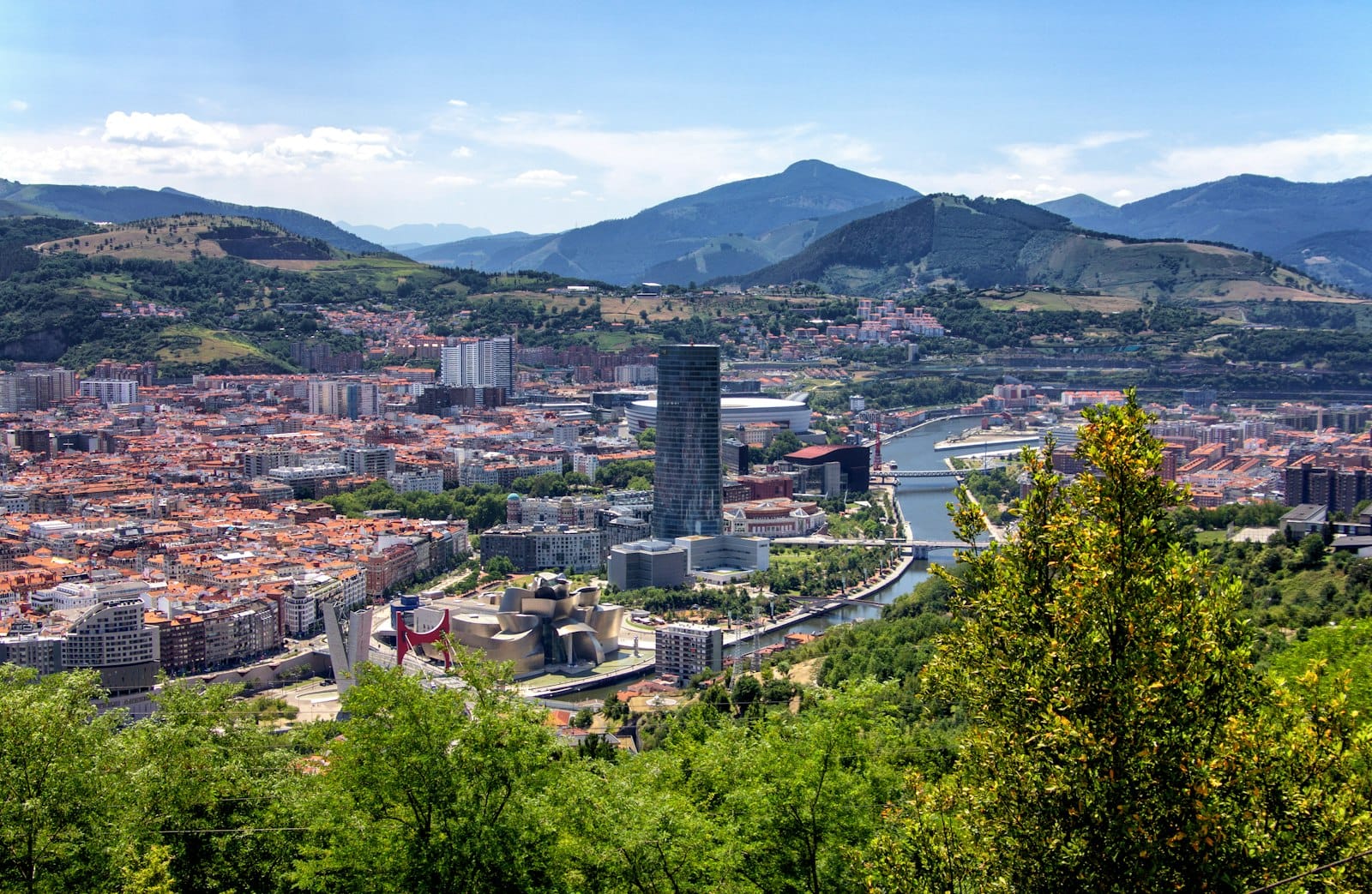
Abandoibarra is the riverfront district that put Bilbao on the world map. Built on the ruins of former shipyards and port facilities along the Nervión estuary, it is now a showcase of 21st-century urban planning, anchored by the Guggenheim Museum Bilbao and framed by two-thirds open parkland.
Abandoibarra is where post-industrial Bilbao became a byword for urban reinvention. Stretching along the left bank of the Nervión between the iconic Guggenheim Museum and the Euskalduna Concert Hall, this former dockland is now the city's most architecturally dramatic district: wide promenades, landmark towers, riverside sculpture trails, and a skyline that looks nothing like the grimy port it replaced just three decades ago.
Orientation
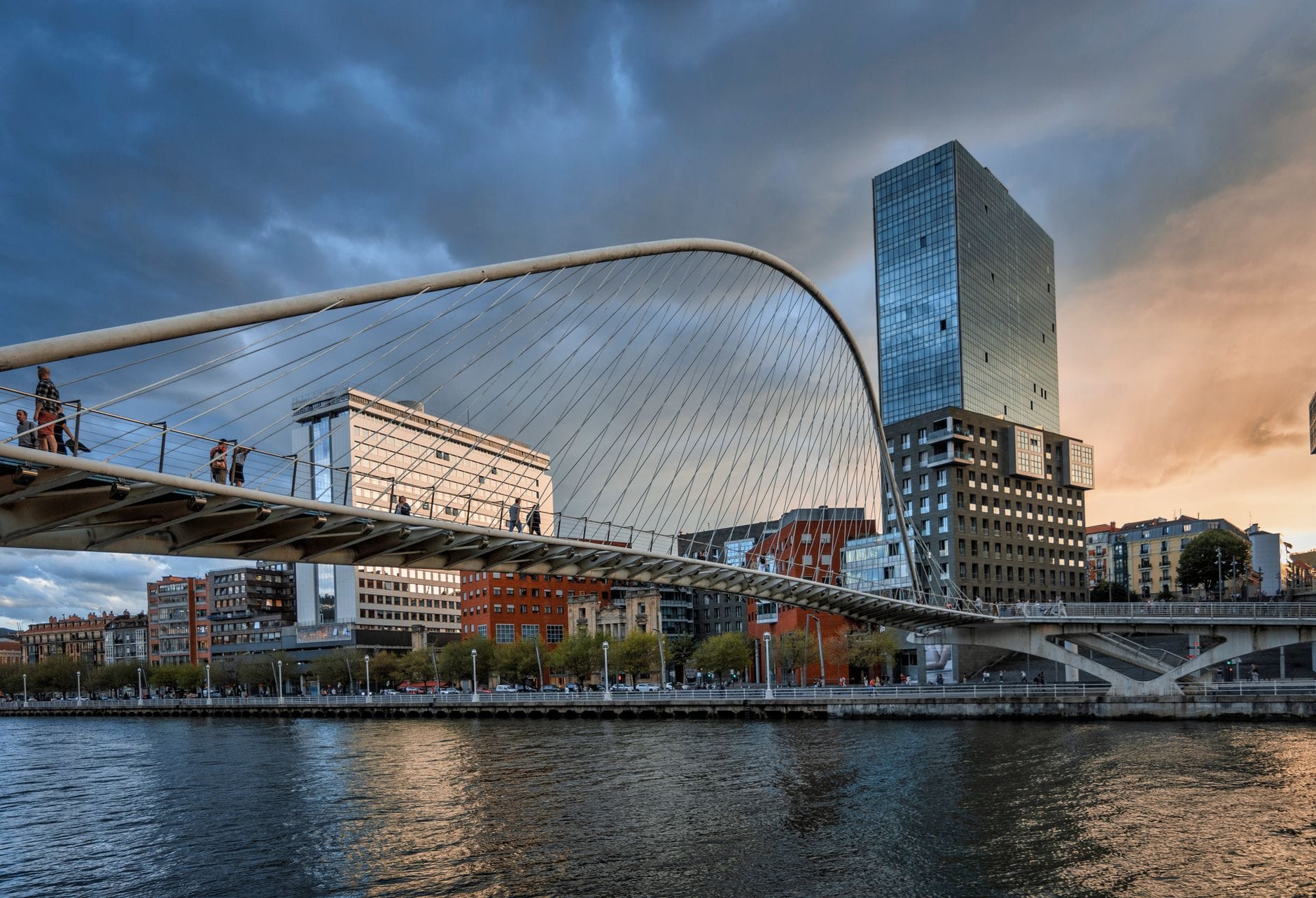
Abandoibarra sits within the Abando district on the left bank of the Nervión estuary, occupying roughly 345,000 square metres of what was once active port and shipyard land. Its boundaries are clearly readable on the ground: the Puente de la Salve bridge marks the eastern edge, where the Guggenheim Museum announces itself beneath the bridge's red arch. Moving west along Avenida Abandoibarra, the district stretches to the Euskalduna Conference and Concert Hall, which anchors the western end near the Olabeaga inlet. The River Nervión forms the northern edge, and the older Abando neighbourhood, including the Gran Vía commercial axis, rises to the south.
The relationship between Abandoibarra and the rest of Bilbao is easy to read spatially. Walk south from the promenade for five minutes and you enter the Ensanche district, with its 19th-century grid of wide avenues and commercial life. Cross the Pedro Arrupe footbridge north across the Nervión and you land in Deusto, the university quarter. Head east along the riverbank and, within ten minutes on foot, you reach the bridges that connect to Casco Viejo, Bilbao's medieval old town. Abandoibarra is not a starting point for deep city exploration so much as a centrepiece that everything else orbits.
The Euskotren tram line runs directly through the district along Avenida Abandoibarra, connecting it to the main Abando railway station to the southeast and continuing west toward La Casilla, the line's terminus. This single tram route makes Abandoibarra one of the most accessible points in the entire city, even if the area itself is compact enough to explore entirely on foot.
Character and Atmosphere
The first thing you notice walking into Abandoibarra from the Ensanche is the sudden openness. After the tight grid of Gran Vía and the surrounding streets, the riverfront feels almost startlingly spacious: broad promenades, long sight lines across the water, and the titanium curves of the Guggenheim catching whatever light the Basque sky offers. This is a district that was designed to be seen as much as lived in, and it shows.
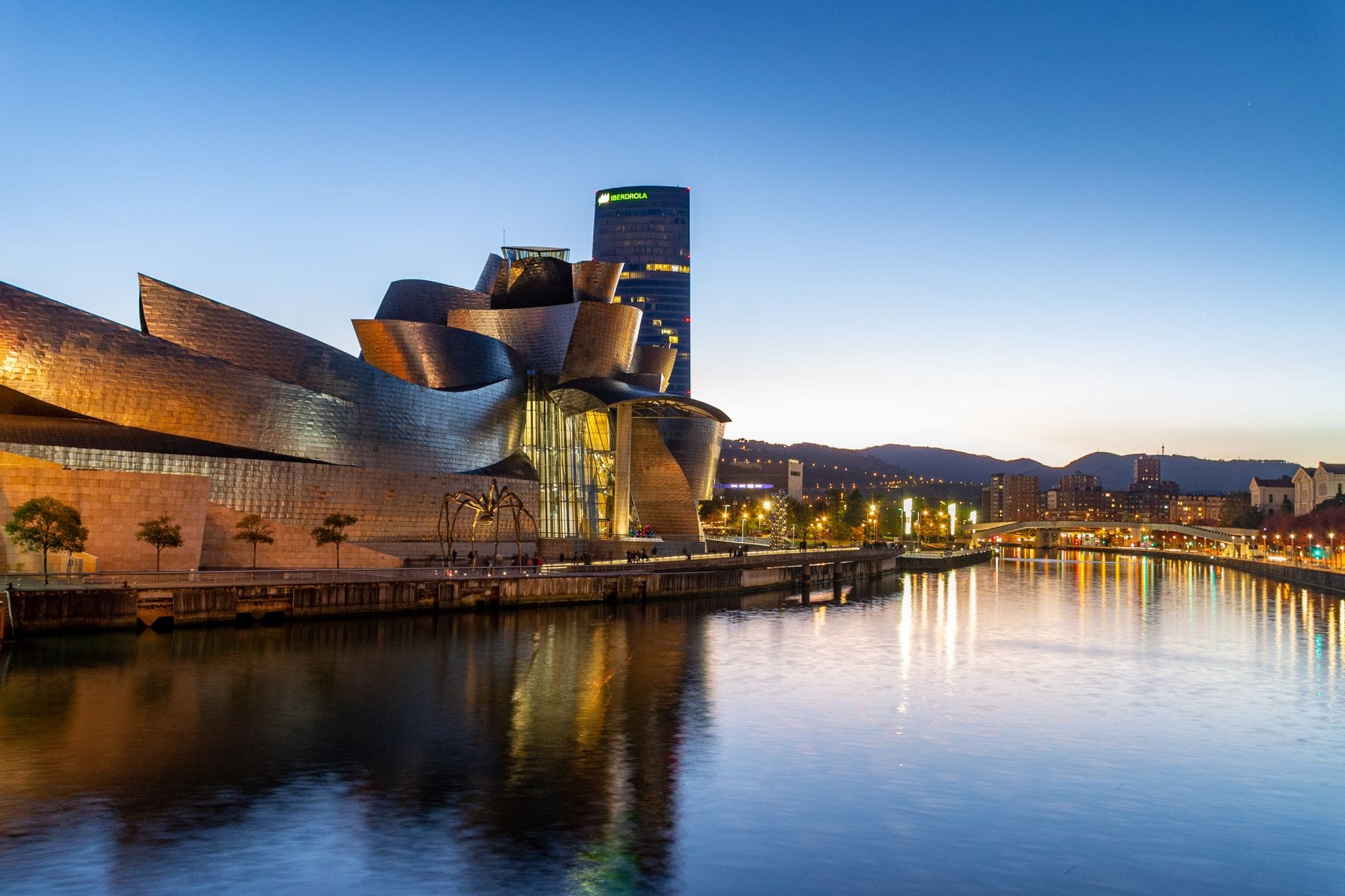
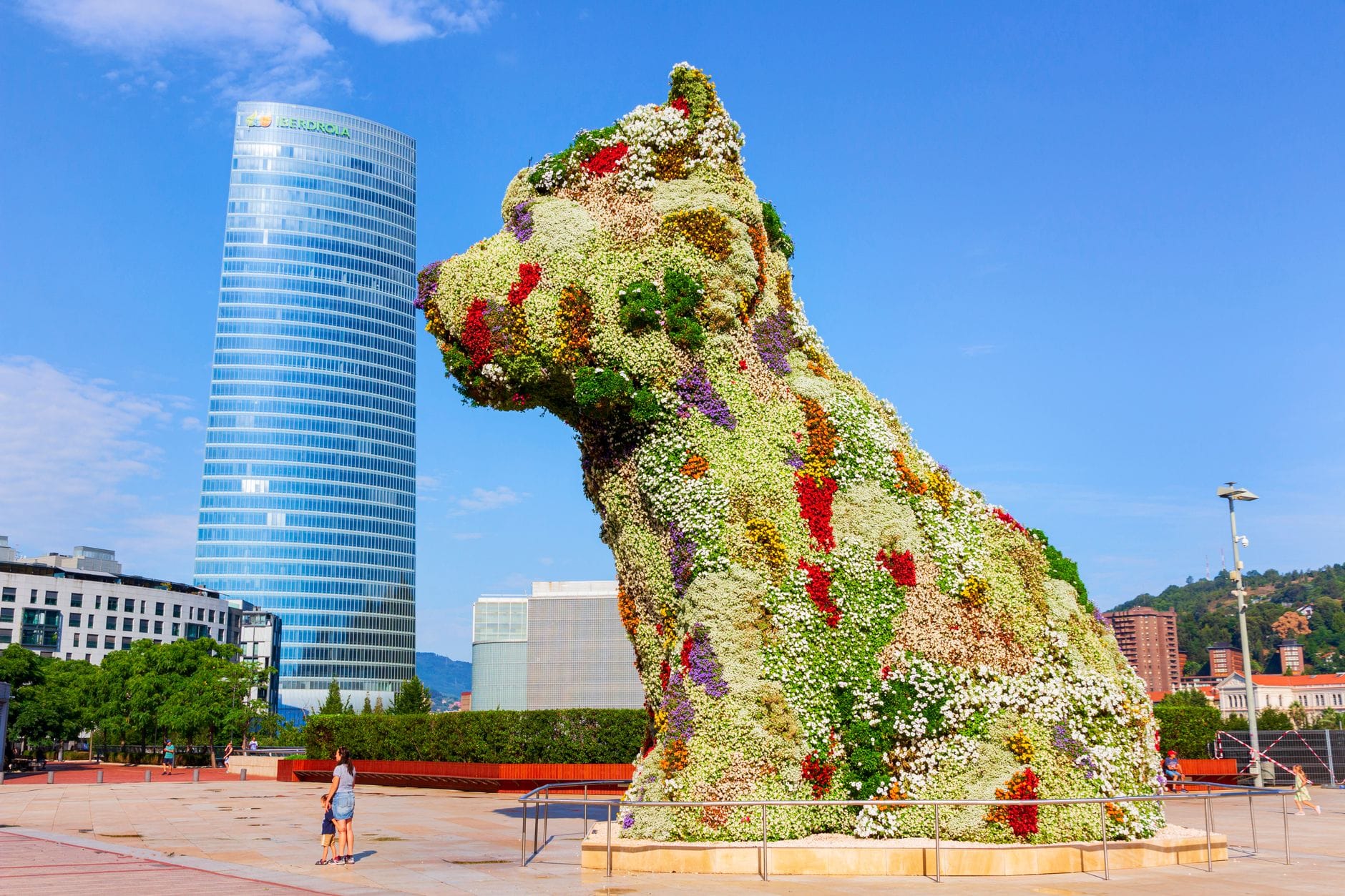
In the mornings, the Abandoibarra promenade belongs to joggers, cyclists using the dedicated riverside path, and people walking dogs along the water. The light on the Nervión at this hour is flat and silvery, reflecting back the Iberdrola Tower and the Guggenheim's titanium panels with a cool industrial clarity. By mid-morning, the first tour groups begin filtering in from the old town and hotel clusters nearby, gathering at the Puppy topiary sculpture outside the Guggenheim. The atmosphere shifts from local routine to international tourism fairly quickly on weekends.
Afternoons, especially in summer, draw a mixed crowd: families using the park's open lawns, architecture students sketching the skyline, and visitors moving between the Guggenheim and the sculpture trail. The Paseo de la Memoria outdoor route, embedded within the park, features works by internationally recognised sculptors including Tucker, Lüpertz, and Basque artists such as Eduardo Chillida, creating something closer to an open-air gallery than a conventional park path. Late afternoons in warm months are especially atmospheric: the low sun catches the western face of the Iberdrola Tower, and the esplanade outside the Guggenheim catches a golden hour that makes mediocre phone cameras suddenly look professional.
After dark, Abandoibarra is quiet by Bilbao's standards. The Euskalduna Concert Hall draws evening audiences when performances are scheduled, and there are hotel bars and restaurant terraces along the waterfront strip. But this is not a nightlife district in the way that Casco Viejo or the Ensanche are. The promenade empties, the sculptures stand in relative silence, and the illuminated Guggenheim reflects in the river in a way that rewards anyone willing to walk here after dinner.
💡 Local tip
If you want the Guggenheim exterior without the crowds, walk here at dusk on a weekday. The titanium panels glow amber and the esplanade clears considerably after 7pm, even in high season.
What to See and Do
The Guggenheim Museum Bilbao is the reason most visitors come to Abandoibarra, and it earns its reputation on both architectural and curatorial grounds. Designed by Frank Gehry and opened in October 1997, the building's titanium-clad forms remain extraordinary up close, where the scale and detail become apparent in a way photographs never quite capture. The permanent collection of modern and contemporary art is substantial, but the temporary exhibitions are arguably the stronger draw, typically featuring major international names.
Immediately outside the Guggenheim, Jeff Koons's Puppy sculpture has become one of the most photographed objects in the Basque Country: a 12-metre-tall West Highland Terrier made from a steel structure planted with flowering plants that are changed seasonally. It sounds absurd described, but in person it stops people in their tracks. Louise Bourgeois's giant spider sculpture Maman stands on the riverside terrace on the other side of the building, a stark contrast in mood.
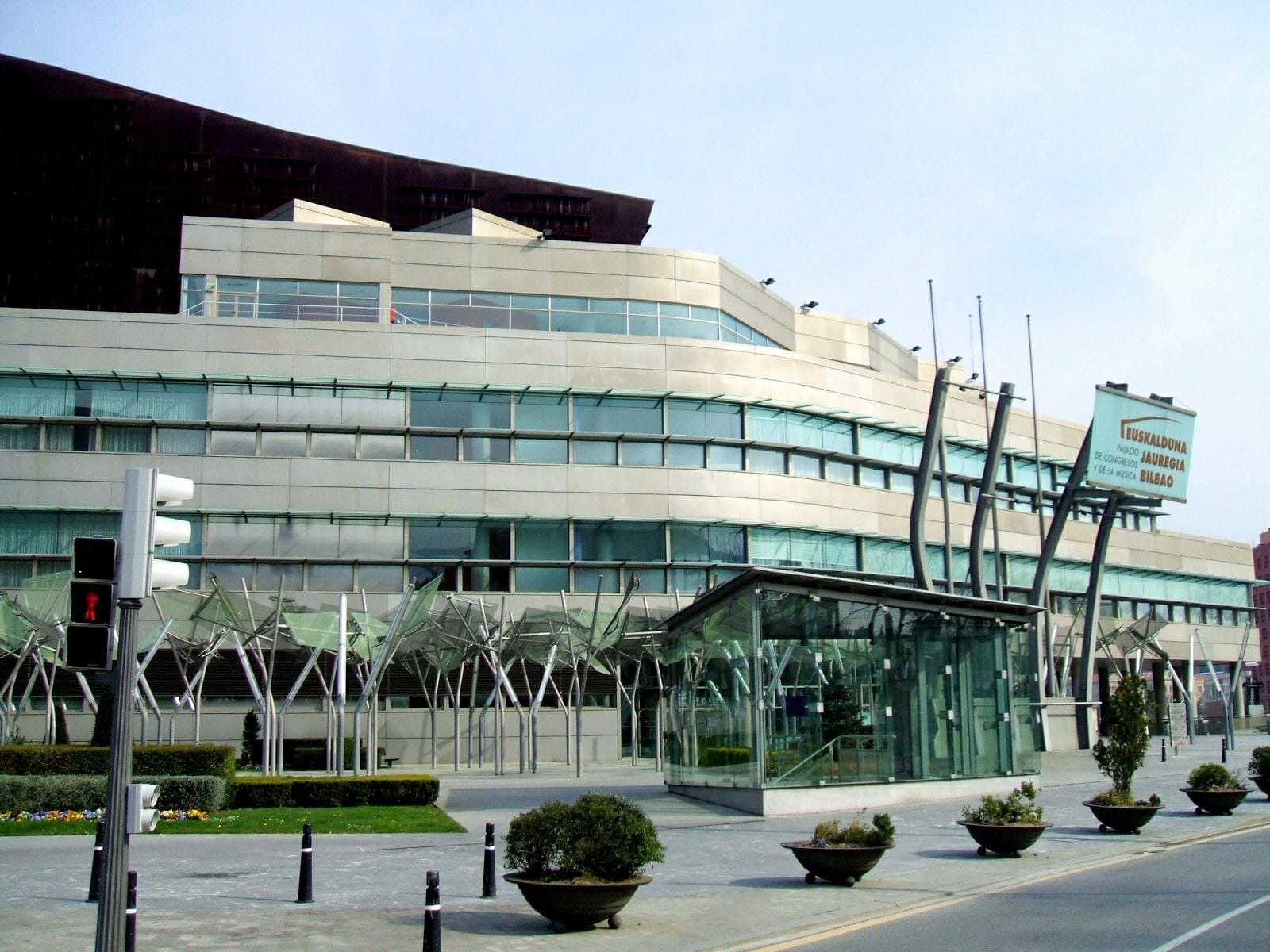
At the western end of the district, the Euskalduna Concert Hall is worth examining even if you have no ticket. The building, designed by Federico Soriano and Dolores Palacios and completed in 1999, references the hull of a ship in both its form and its weathering steel cladding, a deliberate acknowledgement of the shipbuilding history the site replaced. Inside, it serves as home to the Bilbao Symphony Orchestra and hosts major touring productions.
Between these two anchor buildings, the Abandoibarra Park and promenade offer around 1 to 1.5 kilometres of riverside walking through a landscape that mixes formal gardens, open lawns, fountains, and the Paseo de la Memoria sculpture trail. The park design by landscape architect Kathryn Gustafson integrates the green spaces with the wider urban fabric rather than isolating them, so the transition from park to pavement to plaza feels continuous rather than abrupt.
Guggenheim Museum Bilbao: permanent collection plus major temporary exhibitions; check the official site for current programming before visiting
Puppy and Maman sculptures on the Guggenheim esplanade: free to view from the exterior at all hours
Euskalduna Concert Hall: evening concerts and productions; check the programme at the official Euskalduna site
Paseo de la Memoria sculpture trail through Abandoibarra Park: free, walkable at any time
Riverside promenade cycling: dedicated lane runs the length of the waterfront
Iberdrola Tower viewpoint: the tower itself is commercial offices, but the surrounding plaza is publicly accessible and offers strong views back toward the old city
ℹ️ Good to know
The Guggenheim Museum is closed on Mondays (except public holidays and during summer high-season periods when it opens daily). Admission prices change periodically, so check the official Guggenheim Bilbao website before visiting.
Eating and Drinking
Abandoibarra's food scene is anchored around the museum and waterfront hotels rather than an organic neighbourhood restaurant culture. The Guggenheim Museum itself has a restaurant, the Nerua, which holds a Michelin star and focuses on creative Basque cuisine using local and seasonal produce. It is one of the better museum restaurants in Europe, though reservation well in advance is strongly advised and prices reflect the setting.
Beyond the Guggenheim, the cafés and restaurants along Avenida Abandoibarra and the adjacent hotel terraces lean toward the mid-range international visitor bracket: decent quality, higher prices than equivalent places in the Ensanche or Casco Viejo, and menus that cater to people who have been walking all morning. There are pintxo options, but this is not a destination bar-hop strip the way Calle Ledesma or the streets around Plaza Nueva are.
For serious pintxos or a more authentic Bilbao eating experience, it is worth walking ten to fifteen minutes east toward Casco Viejo or south into the Ensanche. Our Bilbao pintxos guide covers the best streets and bars across the city, most of which are outside Abandoibarra. Think of the waterfront district as a place to eat before or after a museum visit rather than as a food destination in its own right.
The exception worth noting is the café culture on the park promenade itself during warmer months, when outdoor terrace seating along the river provides one of the better spots in the city for a coffee with a view. Prices run slightly higher than the city average for what amounts to a similar product, but the setting earns some of that premium.
⚠️ What to skip
Restaurant prices in Abandoibarra are noticeably higher than in the Ensanche or Casco Viejo, particularly on terraces facing the Guggenheim. If budget matters, eat elsewhere and come here for the architecture and the walk.
Getting There and Around
The most straightforward way to reach Abandoibarra from elsewhere in Bilbao is the Euskotren Tranbia tram line, which stops directly in the district at the Guggenheim stop on Avenida Abandoibarra. This tram connects to the Abando Indalecio Prieto main railway station to the southeast and runs west toward La Casilla, its terminus; Hospital Universitario is an intermediate stop on that western stretch. Single-journey fares are reduced significantly with the rechargeable Barik card.
Metro Bilbao's Abando station (served by Lines 1 and 2) is about ten minutes on foot from the Guggenheim, walking northwest from the station along Alameda Mazarredo. This makes Abandoibarra easy to access from most of the metro network, including the coastal towns served by Line 1. For more detail on getting around the city as a whole, the getting around Bilbao guide covers all transit options including the Barik card, metro maps, and tram routes.
On foot, the district is an easy fifteen-minute walk from Casco Viejo, following the riverside path east to west. From the Ensanche and Gran Vía, walk north down Alameda Mazarredo toward the Guggenheim: the titanium building is visible before you arrive, which makes navigation straightforward. Cyclists using the dedicated riverside lane can reach Abandoibarra from either direction along the estuary without needing to use road traffic lanes.
Taxis and ride-hailing services drop off easily along Avenida Abandoibarra or the esplanade outside the Guggenheim. Parking is available in underground car parks in the district, but given the transit connections and walkability, arriving by public transport or on foot makes more sense for most visitors.
Where to Stay
Abandoibarra has a small but notable concentration of higher-end hotels, mostly along or just off the riverfront promenade. Staying here puts you within walking distance of the Guggenheim and offers direct river views from upper floors, but the trade-off is that the neighbourhood itself goes quiet at night and you will need to walk or tram to reach the more animated parts of the city. For a broader look at accommodation options across Bilbao, the where to stay in Bilbao guide breaks down each neighbourhood's strengths for different types of travellers.
Abandoibarra suits travellers who prioritise a contemporary aesthetic, proximity to the Guggenheim, and easy river views over immersion in Bilbao's street-level social life. Families with young children benefit from the park and promenade directly at hand. Couples on short city breaks often find the waterfront hotels well-placed for a two-day itinerary that combines the museums by day with evening meals in the Ensanche.
Budget travellers and those wanting the densest concentration of pintxo bars, nightlife, and neighbourhood atmosphere will generally find better value and more character staying in the Ensanche or Casco Viejo, with Abandoibarra treated as a daytime destination rather than a base.
The Bigger Picture: Why Abandoibarra Matters
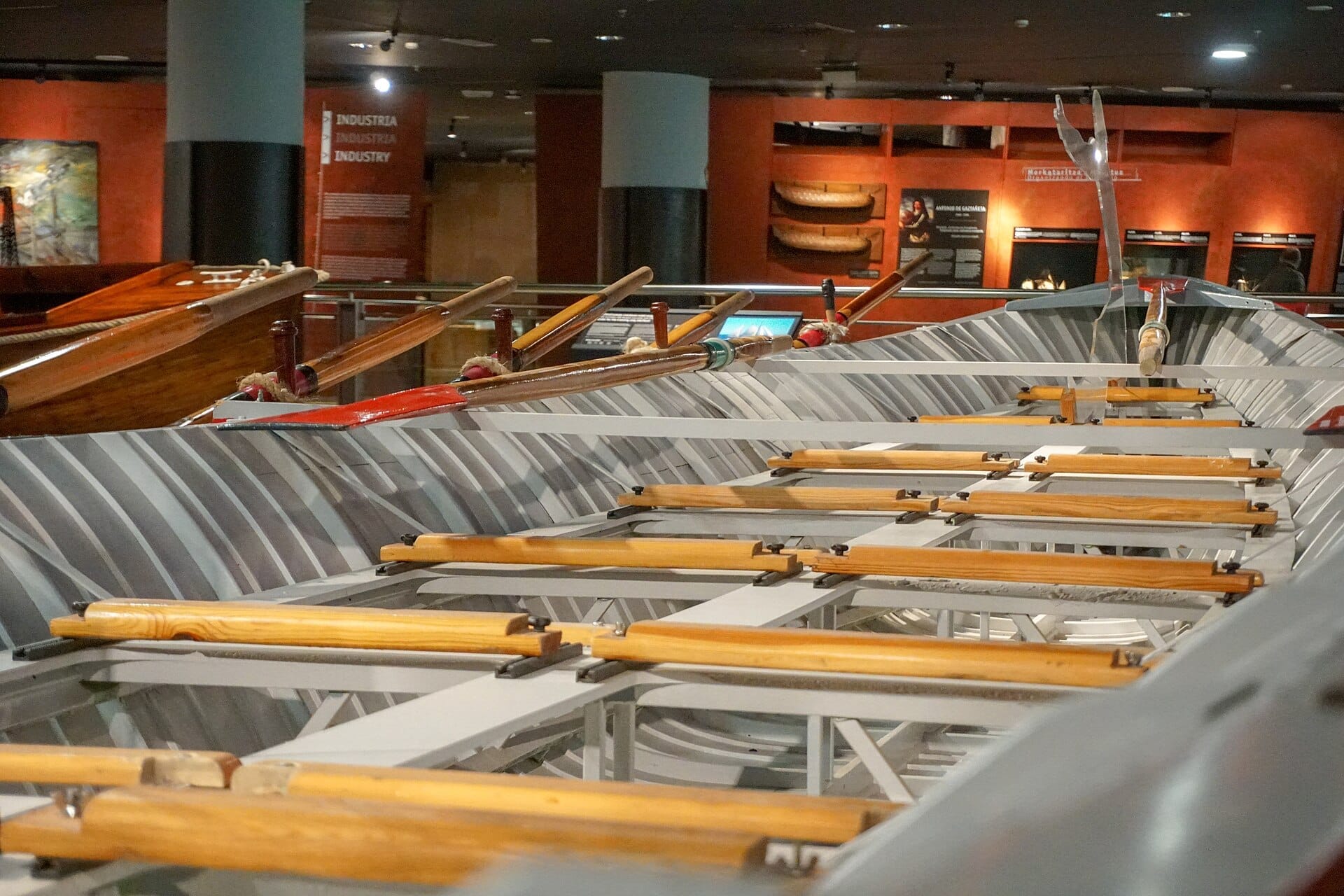
Understanding Abandoibarra requires a quick glance at what it replaced. Through most of the 20th century, this stretch of the Nervión waterfront was occupied by active shipyards and port infrastructure. The Astilleros Euskalduna shipyard, which closed in the mid-1980s during the collapse of Bilbao's heavy industrial base, left behind a contaminated wasteland at a moment when the city's economy was contracting sharply. The regeneration project, managed by the public-private body Bilbao Ría 2000 and anchored by the decision to site the new Guggenheim here in the 1990s, is now studied in urban planning programmes internationally as an example of what cultural investment can do to catalyse physical and economic transformation.
The master plan by César Pelli (whose firm also designed the Iberdrola Tower) devoted roughly two-thirds of the total area to parks and public open space, a ratio that explains why the district feels more like a green corridor than a conventional urban neighbourhood. The result is not without critics: some argue that Abandoibarra is more spectacle than city, more stage set than lived community. These are fair observations. But as a demonstration of what post-industrial cities can become, and as a genuinely pleasurable place to walk, this stretch of the Nervión delivers. For travellers curious about Bilbao's transformation, the Bilbao architecture guide traces the full arc from 19th-century Ensanche expansion through the Guggenheim era and beyond.
If you are planning a full itinerary that takes in Abandoibarra alongside the old town, the Ensanche, and the wider Basque coast, the 2 days in Bilbao itinerary is a practical starting point. Most visitors find that half a day in Abandoibarra, including time inside the Guggenheim, covers the district well, leaving the rest of the day for the more layered neighbourhood life elsewhere in the city.
TL;DR
Abandoibarra is Bilbao's flagship regeneration district: a former shipyard turned riverfront cultural corridor stretching between the Guggenheim Museum and the Euskalduna Concert Hall.
Two-thirds of the district is parks and public space, making it Bilbao's most pedestrian-friendly waterfront area and a strong choice for families and morning walks.
The Guggenheim Museum Bilbao, Puppy sculpture, Euskalduna Concert Hall, and Paseo de la Memoria sculpture trail are the core draws; the architecture alone warrants the visit even without a museum ticket.
Food and nightlife are limited and overpriced relative to other parts of Bilbao; treat this as a daytime destination and head to the Ensanche or Casco Viejo for pintxos and evening atmosphere.
Best for: architecture enthusiasts, museum-goers, first-time visitors to Bilbao, families wanting riverside green space. Not ideal for: budget travellers, those seeking local neighbourhood immersion, or nightlife seekers.
Bilbao rewards a focused weekend with world-class architecture, one of Spain's best food cultures, and a walkable city centre that packs serious depth into 48 hours. This itinerary covers the essential stops across two well-structured days.
The Basque Country packs extraordinary variety into a compact region: world-class museums, Gothic old towns, wild Atlantic coastline, and some of Europe's finest food. This guide covers the essential stops in and around Bilbao, from the Guggenheim to the fishing villages of the Bizkaia coast.
Bilbao sits at the heart of the Basque Country, one of Europe's most serious food cultures. This guide covers the essential dishes, where to eat them, how the pintxos bar system actually works, and what to skip — so you eat well from your first meal to your last.
Bilbao has a strong museum scene for a city of its size. This guide covers the city's top institutions, from Frank Gehry's titanium icon on the riverfront to the quiet rooms of the Basque Museum in the Casco Viejo, with practical tips to help you plan your visit.
Bilbao's Atlantic climate means rain is always possible, but some months are dramatically better than others. This guide breaks down every season by weather, crowd levels, hotel prices, and festivals so you can pick the right time for your trip.
Bilbao Airport (IATA: BIO) is the main gateway to the Basque Country, located just 9-12 km from the city centre. This guide covers every transport option into Bilbao, with real fares, journey times, seasonal timetable notes, and the common mistakes first-time visitors make.
Bilbao's architectural story spans Gothic old-town churches, grand 19th-century boulevards, and one of the most consequential buildings of the 20th century. This guide covers every major landmark, the best walking routes, seasonal tips, and what to prioritize if your time is limited.
Bilbao sits inland on the Nervión estuary, but within 40 km you'll find some of northern Spain's finest coastline. This guide covers the best beaches near Bilbao, from sheltered urban strands reachable by metro to dramatic surf breaks and picturesque fishing villages.
Aste Nagusia (Semana Grande) turns Bilbao into one of Europe's great street festivals every August. This guide covers exact dates, the free concert schedule, txosna culture, accommodation realities, and practical tips for navigating nine days of non-stop celebration.
Bilbao in winter is mild, rainy, and far less crowded than summer. This guide covers the real weather, what to do indoors and out, how to navigate the city, and why the off-season has genuine advantages for the right kind of traveler.
Bilbao's nightlife runs later and harder than most visitors expect. This guide walks you through every stage of a proper Bilbao evening, from early pintxo crawls and riverside sunset walks to cocktail bars, live music, and clubs that don't fill until 2am.
Two Basque cities, 77 kilometres apart, and both worth your time — but for very different reasons. This guide breaks down what Bilbao and San Sebastián each do best, who they suit, how much each costs, and why the real answer is often 'both'.
Bilbao is compact enough to explore on foot in a single day, but the route you choose makes all the difference. This guide covers the best self-guided walking tour of Bilbao from Casco Viejo to the Guggenheim, with practical timings, admission costs, seasonal advice, and practical tips on what to skip.
Bilbao is a strong family destination. This guide covers the best kid-friendly attractions in the city and the wider Bizkaia province, from interactive museums and funicular rides to fairy-tale castles and sheltered beaches.
Bilbao's compact centre is walkable, but its integrated public transport network — metro, tram, city buses, and regional rail — makes the whole metro area easy to navigate. This guide covers every option, from the Barik smart card to airport transfers, with practical advice on what's worth using and what to skip.
Bilbao has pulled off one of Europe's most remarkable urban reinventions, transforming from a grimy industrial port into a world-class destination for architecture, food, and culture. But is it right for your trip? This guide gives you the full picture: what genuinely impresses, what disappoints, and exactly how to make the most of it.
Pintxos are the beating heart of Bilbao's food culture. This guide covers the best neighbourhoods and bars for a classic txikiteo crawl, how ordering works, what things cost, and the etiquette mistakes most visitors make. Whether you have one evening or three, here's how to eat like a Bilbaíno.
Bilbao offers a surprising amount for a city of around 350,000. This guide covers the best things to do in Bilbao, Spain, from world-class museums and Europe's largest covered market to coastal day trips and the Basque food scene, with practical advice on timing, pricing, and getting around.
Bilbao packs a lot into 40 square kilometres. This guide breaks down the city's main neighbourhoods by traveller type, budget, and atmosphere, so you can choose where to stay with confidence, whether you're here for a weekend city break or a longer Basque Country trip.