Getting Around Bilbao: The Complete Transport Guide
Bilbao's compact centre is walkable, but its integrated public transport network — metro, tram, city buses, and regional rail — makes the whole metro area easy to navigate. This guide covers every option, from the Barik smart card to airport transfers, with practical advice on what's worth using and what to skip.
Plan and book this trip
Tools from our partner Travelpayouts help you compare flights and hotels. If you book through them, we may earn a commission at no extra cost to you.
Flights
Hotels map
TL;DR
- The Barik rechargeable card is the single best investment for any visit — it works on metro, tram, Bilbobus, Bizkaibus, and Euskotren, and costs significantly less per journey than paper tickets.
- Metro Bilbao has 3 integrated lines covering the city centre and estuary corridor; transfers at Zazpikaleak/Casco Viejo within 15 minutes count as one journey.
- The historic centre — Casco Viejo, the Guggenheim waterfront, and the Ensanche — are all within comfortable walking distance of each other.
- From Bilbao Airport (BIO), the Bizkaibus A3247 costs around €5 without Barik (cheaper with the card) and takes about 20–40 minutes; a taxi runs €20–25 in about 15 minutes.
- Night metro runs until around 02:00 on Fridays and all night on Saturdays — no need for a taxi after a late dinner or night out.
How Walkable Is Bilbao, Really?
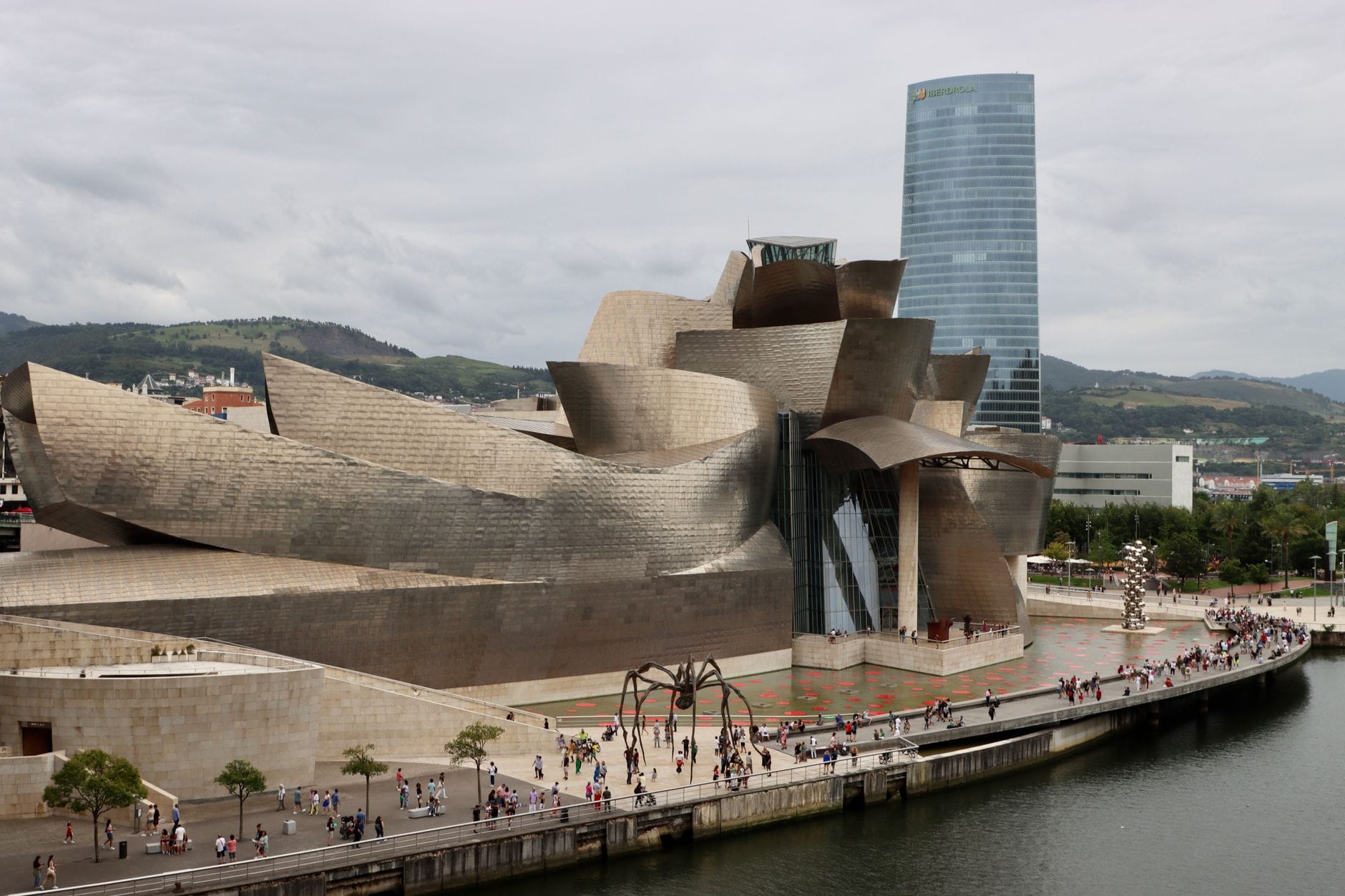
Bilbao covers just 40.59 km², and the tourist core is far smaller than that. From the Mercado de la Ribera in Casco Viejo to the Guggenheim Museum Bilbao on the Abandoibarra waterfront is roughly a 20-minute walk along the river. The city is built around the Nervión estuary, so the main axis runs east-west along flat riverbanks — terrain that's genuinely easy on foot.
The hills are a different story. Bilbao's residential neighbourhoods climb steeply above the flat centre, and if your accommodation or itinerary takes you uphill, transport becomes useful quickly. The Artxanda funicular, for example, exists precisely because walking up is a serious effort. For the main sightseeing circuit, though, walking is not just viable — it's the best way to absorb the city.
💡 Local tip
A self-guided walk from Casco Viejo to the Guggenheim along the riverfront takes about 25–30 minutes and passes the Zubizuri bridge, the Euskalduna concert hall approach, and the full Abandoibarra redevelopment. It's one of the best urban walks in northern Spain and requires no transport at all.
The Barik Card: Why You Need It on Day One
The Barik card is Bilbao's integrated contactless transit card, accepted across Metro Bilbao, the Euskotren Tranbia tram, Bilbobus city buses, Bizkaibus regional buses, and Euskotren suburban rail. It uses a zone-based fare system: a single zone trip costs around €0.95 with Barik, compared to roughly €1.60 for a paper single ticket. On a multi-day visit with several daily trips, the savings add up fast.
You can buy and recharge the Barik card at metro stations, tobacconists (estancos), and some convenience stores. There's a small card issuance fee, but no expiry on the credit loaded onto it — so if you have leftover credit, it's there for your next visit. The card is personal but in practice it's widely used between travel companions at unstaffed gates; note that officially each user should validate their own card.
✨ Pro tip
Load at least €10 onto the Barik card when you buy it. Recharge machines are common but occasionally out of service, and running out of credit at a metro barrier is avoidable friction. The credit never expires, so there's no downside to loading extra.
Metro Bilbao: The Fastest Way to Cross the City
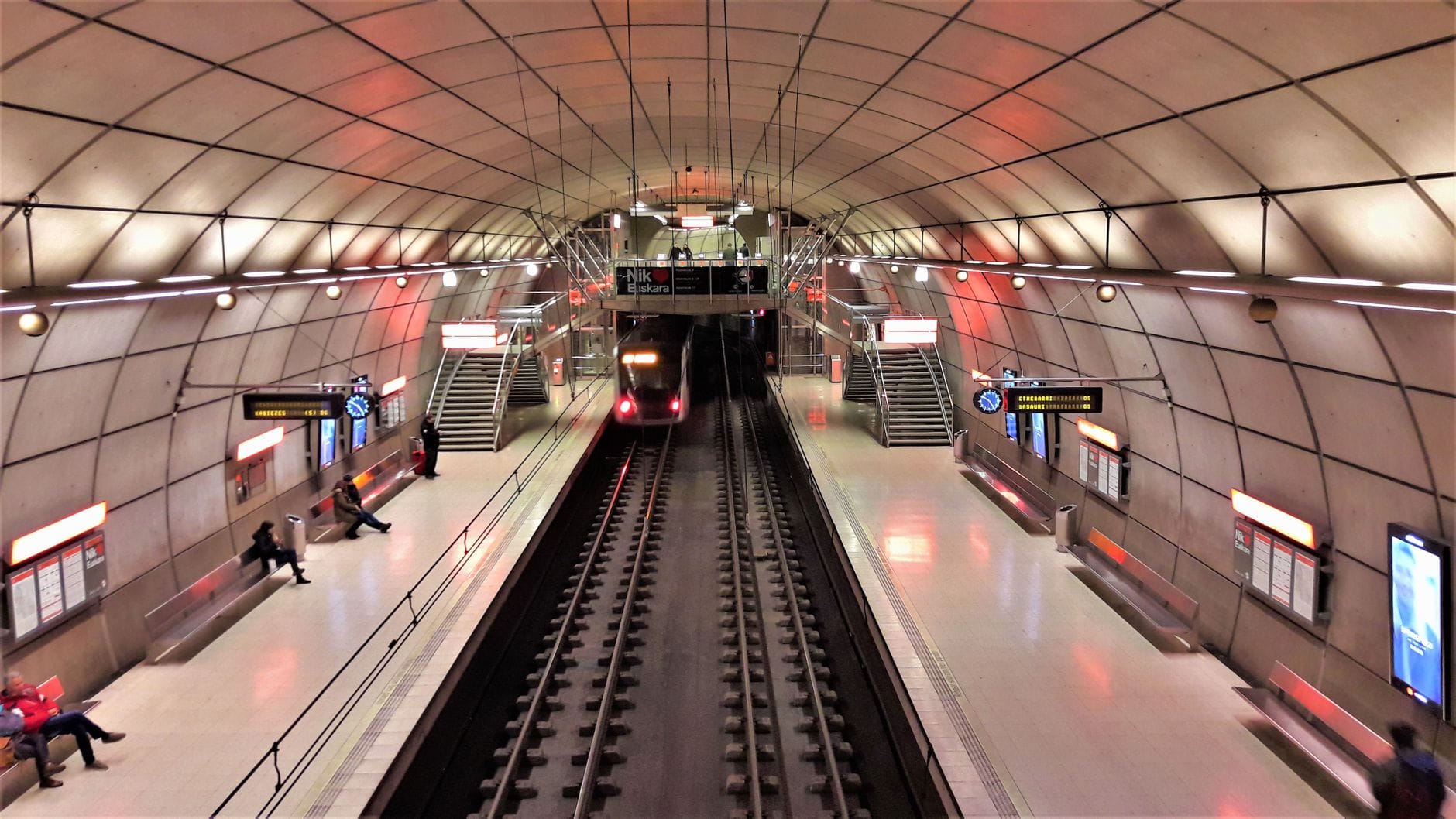
Metro Bilbao operates 3 lines as a single integrated system, not three separate networks. Lines 1 and 2 run along the Nervión estuary corridor, connecting the city centre with coastal towns like Getxo and Plentzia in one direction and Basauri in the other. Line 3, operated by Euskotren, serves a shorter urban route connecting Matiko and Kukullaga and links higher neighbourhoods to the east of Bilbao. For most visitors, Lines 1 and 2 cover everything that matters.
The interchange station at Zazpikaleak/Casco Viejo connects the lines. If you transfer here and re-validate within 15 minutes, the system counts it as a single journey — an important detail that prevents accidental double charges. The metro reaches Getxo and the coast in around 25 minutes from the centre, making it a practical option for a day trip to the beaches without renting a car.
- Standard hours (Mon–Thu, Sun) Approximately 06:00 to 23:00. Service is frequent during peak hours, less so late evening.
- Friday and eve of public holidays Extended to around 02:00, covering late-night arrivals and nights out.
- Saturday nights All-night service, making taxis largely unnecessary for getting home after midnight.
- Aste Nagusia (Bilbao's Great Week, August) Additional late-night and all-night trains are added during the festival week. Check Metro Bilbao's official schedule that year for exact times.
- Public holidays Timetables can revert to Sunday schedules or be modified. Always verify on the day via the Metro Bilbao app or official CTB website.
Tram, Buses, and Suburban Rail
The Euskotren Tranbia tram runs a single line through the city centre, connecting the main Abando rail station (Bilbao-Abando) with the Abandoibarra waterfront and continuing toward Basurto. It's slow compared to the metro but useful for short hops along the river — particularly if you're heading to or from the Guggenheim and the tram stop is closer than the nearest metro entrance. The Barik card works on the tram.
Bilbobus covers the city with a comprehensive network of lines operating roughly 06:00–23:00, supplemented by the Gautxori night bus service from around 23:00 to 02:30 on Fridays and throughout Saturday nights. For most tourist itineraries, buses are rarely the fastest option — the metro and tram are quicker for most cross-city movements — but they're useful for reaching neighbourhoods not on the metro map.
Bizkaibus is the provincial bus network connecting Bilbao with towns across Biscay. If you're planning a day trip to Guernica, the coast, or the Urdaibai area, this is likely your mode. The main Bizkaibus terminal is at Termibus (Bilbao Intermodal) in the Basurto-Zorroza district. Euskotren suburban rail and Renfe Cercanías provide similar connectivity for different routes — Euskotren serves the coast and mountain towns, while Renfe connects Bilbao with the broader Spanish rail network from Bilbao-Abando station.
ℹ️ Good to know
Bilbao-Abando, Bilbao-Concordia, and San Mamés are the city's main rail stations, each serving different operators. If you're arriving by long-distance RENFE train, you'll arrive at Abando. If you're coming on Euskotren from the coast or mountain towns, check which station your service uses — they are not all the same building.
Getting from Bilbao Airport (BIO) to the City Centre
Bilbao Airport (IATA: BIO) is located in the municipality of Loiu, approximately 9–12 km northwest of the city centre. There is no metro connection to the airport — this surprises many first-time visitors. Your options are the Bizkaibus A3247, a taxi, or a private transfer. A full breakdown is in our Bilbao Airport guide.
- Bizkaibus A3247 (airport bus) Runs between the airport and Plaza Moyúa in the city centre, stopping at Termibus. Frequency varies from every 15 to 30 minutes depending on time of day. Occasional (paper) fare is around €5 one way; Barik is cheaper. Journey time is around 20–40 minutes to central Bilbao. Accepts Barik card.
- Taxi Official taxis queue outside arrivals. Journey to central Bilbao takes around 15–20 minutes. Typical fare is €20–25, though surcharges apply at night, on weekends, and for luggage — confirm before departing. No app required; ranks are clearly signed.
- Uber / Cabify Both operate in Bilbao and can be booked from the airport. Pricing is comparable to or occasionally higher than taxis at busy arrival times. Pickup regulations at BIO can change — check app instructions on arrival for the designated pickup zone.
- Private transfer Pre-booked door-to-door transfers are available and useful for groups or heavy luggage. Book in advance through your accommodation or a reputable transfer operator.
⚠️ What to skip
There is no direct metro link to Bilbao Airport. Anyone who tells you to 'take the metro to the airport' is mistaken. The Bizkaibus A3247 is the only public transport option and it stops in the city centre at Plaza Moyúa and at Termibus/Bilbao Intermodal by San Mamés metro station. If you need a metro connection, you'll transfer at Plaza Moyúa or San Mamés.
Taxis, Ride-Hailing, and Driving in Bilbao
Licensed taxis in Bilbao are metered and generally reliable. You can hail them on the street, find them at designated ranks (near major hotels, the Guggenheim, Abando station, and Casco Viejo), or call a dispatch service. Tipping is not expected but rounding up to the nearest euro is common for short trips. For late-night journeys in areas not well served by night buses, taxis are the practical default.
Uber and Cabify both operate in Bilbao, though coverage and pricing can vary. In a city of Bilbao's size, ride-hailing is functional but rarely transformative — you won't be waiting long for either a taxi or an app-based ride in central areas. During Aste Nagusia (the August festival week) and on major event nights at San Mamés stadium, all forms of on-demand transport get busy. Book or hail early, or use the metro.
Driving in central Bilbao is largely unnecessary and mildly punishing. Parking in the Ensanche or near the Ensanche district costs roughly €15–25 per day in underground car parks. Street parking is limited and heavily regulated. If you're renting a car for day trips — say, to Gaztelugatxe or Guernica — pick it up on your departure day and return it before settling into the city.
Transport Tips by Neighbourhood and Attraction
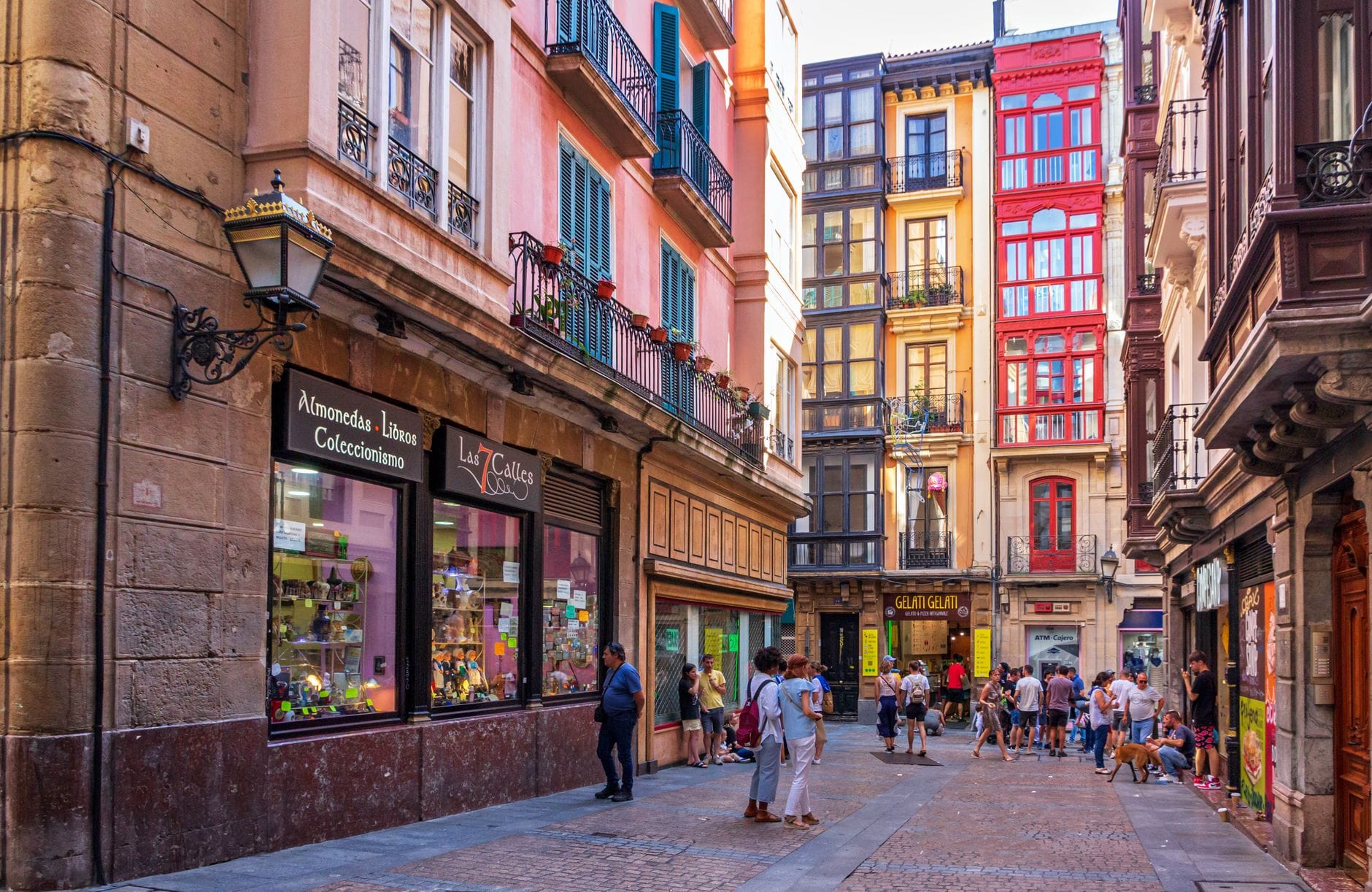
The Casco Viejo (Old Town) is most easily reached on foot from most central accommodation, or via the Casco Viejo/Zazpikaleak metro station on Lines 1 and 2. The Guggenheim and Abandoibarra waterfront are a short walk from the Guggenheim tram stop or Moyúa metro station. San Mamés Stadium has its own dedicated metro stop on Line 2, making match-day transport straightforward.
- Guggenheim Museum Walk from Abando (15 min), tram to Guggenheim stop, or metro to Moyúa (5-min walk). All practical options.
- Casco Viejo / Plaza Nueva Metro to Casco Viejo/Zazpikaleak (Lines 1 or 2), or a flat 20-minute walk from the Guggenheim along the river.
- Artxanda Funicular Walk from Casco Viejo (10 min) to the funicular base station at Castaños. No metro needed.
- Getxo and the coast Metro Line 1 to Areeta or Algorta (around 20–25 minutes from Moyúa). Fast and cheap with Barik.
- Termibus / long-distance buses Metro to San Mamés (Line 2) or tram to Basurto. Both put you a short walk from the bus terminal.
For a structured introduction to the city on foot, the Bilbao walking tour guide covers the main route from Casco Viejo to the waterfront with practical waypoints. If you're planning a broader trip through the region, note that Bilbao's transport network connects efficiently with San Sebastián by bus and rail — relevant if you're following a Basque Country itinerary.
FAQ
Do I need a transport card for just 2–3 days in Bilbao?
Yes, it's worth it. The Barik card reduces metro fares from around €1.60 (single paper ticket) to roughly €0.95 per zone. Even over a short visit with 4–6 journeys per day, the savings cover the card's issuance fee and then some. Any remaining credit is valid indefinitely for your next trip.
Is there a metro or train from Bilbao Airport to the city centre?
No. There is no metro connection to Bilbao Airport (BIO). The Bizkaibus A3247 is the only public transport option, running to Plaza Moyúa and Termibus/Bilbao Intermodal in the city centre for around €5 without Barik (cheaper with the card). Journey time is about 20–40 minutes. Taxis take 15–20 minutes and cost approximately €20–25. Uber and Cabify also operate from the airport.
How late does the Bilbao metro run?
On Monday through Thursday and Sunday, Metro Bilbao runs until approximately 23:00. On Fridays and the evening before public holidays, service extends to around 02:00. On Saturday nights, the metro runs all night. During Aste Nagusia (Bilbao's August festival week), additional late-night services are added — check the official schedule that year.
Can I walk between the main attractions in Bilbao?
Yes, for the core tourist circuit. Casco Viejo to the Guggenheim along the river is about 20–25 minutes on flat, easy terrain. The Ensanche (Gran Vía area) is similarly accessible on foot. Hills and outlying neighbourhoods require transport, but most visitors find they walk more than they expected and are pleased they did.
What is the best way to get to Getxo or the Basque coast from Bilbao?
Metro Line 1 is the easiest option for Getxo — take it to Areeta (for Las Arenas) or Algorta, roughly 30–40 minutes from Moyúa in the city centre. For further coastal destinations like Mundaka, Lekeitio, or Bakio, Bizkaibus regional buses from Termibus are usually the most practical option. Check the Bizkaibus timetable in advance, as frequencies vary by destination and season.