Parque de Etxebarria: Bilbao's Industrial Past Turned Hilltop Green Space
Covering around 170,000 square metres above Casco Viejo, Parque de Etxebarria is Bilbao's largest park and one of its most rewarding free attractions. Built on the site of a former steel foundry that closed in 1982, it offers sweeping views over the city, open lawns for locals to unwind, and a quiet contrast to the streets below.
Quick Facts
- Location
- Etxebarria Parkea, 48005 Bilbao (above Casco Viejo / Begoña district)
- Getting There
- Metro: Zazpikaleak/Casco Viejo (Lines 1, 2, 3) + public elevator; or Santutxu station
- Time Needed
- 45 minutes to 2 hours depending on pace
- Cost
- Free. No tickets, no reservations.
- Best for
- Panoramic city views, picnics, morning walks, escaping tourist crowds
- Official website
- www.bilbaoturismo.net/BilbaoTurismo/en/parks/etxebarria-park
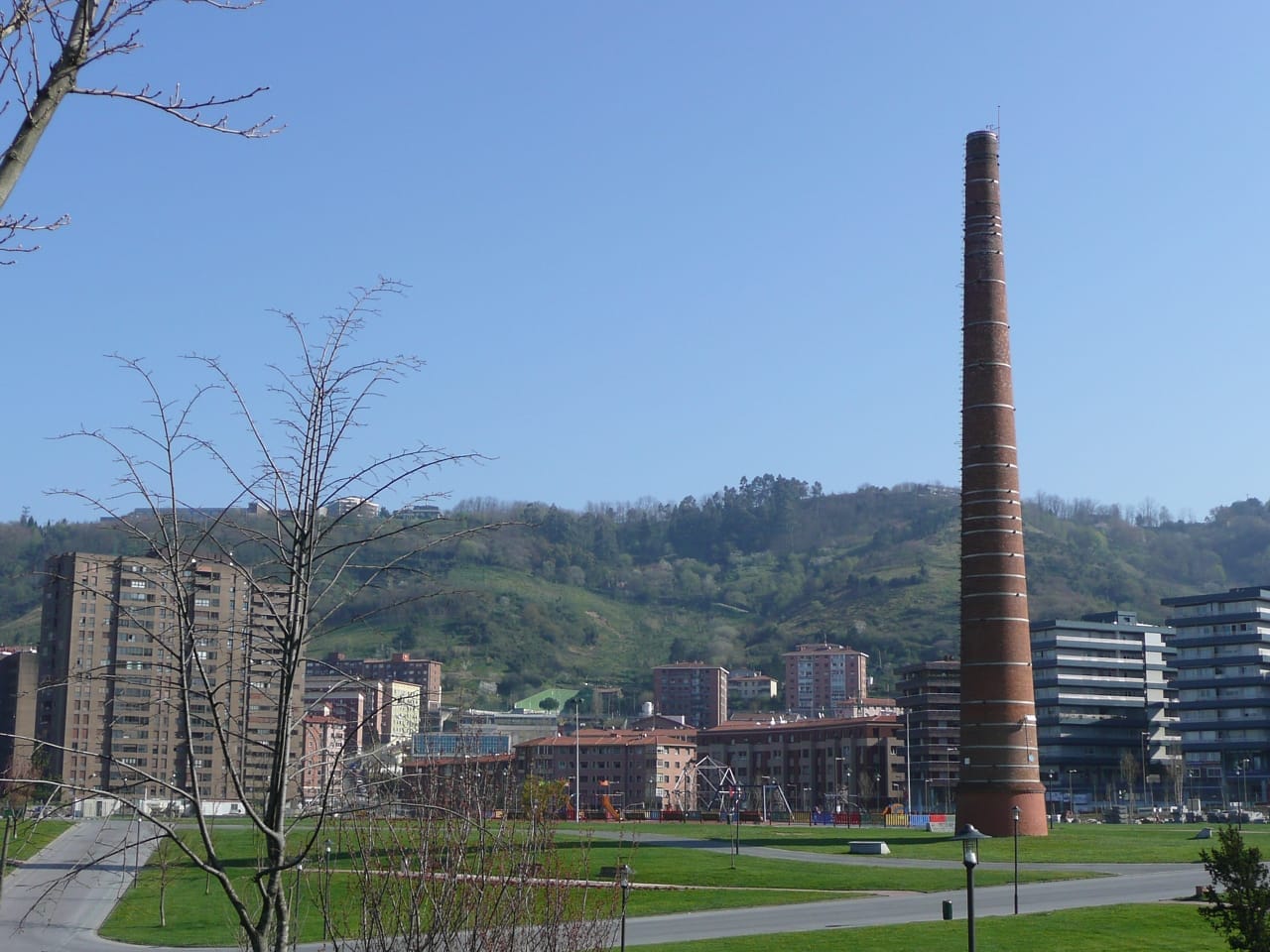
What Is Parque de Etxebarria?
Parque de Etxebarria (Etxebarria Parkea in Basque) is the largest urban park in Bilbao, stretching across roughly 170,000 square metres of hillside terrain directly above the city's medieval Old Town. It is a genuinely functional green space, used daily by joggers, dog walkers, students, and families rather than tourists following a map. That distinction matters: this is a park shaped by local rhythms, not heritage tourism.
The park opened in 1990 after a redevelopment process that ran from 1987, transforming the derelict site of the Aceros Echevarría steel foundry into public green space. The foundry, which had operated for much of the 20th century, closed in 1982 as part of the broader collapse of heavy industry in the Basque Country. Rather than leave the land to decay, Bilbao converted it into one of the first major reclamation projects of the city's industrial reinvention, predating the Guggenheim by nearly a decade.
ℹ️ Good to know
The park is open 24 hours a day, year-round, with no entry fee. There are no gates or ticketing points.
The Industrial Legacy Underfoot
You do not need to know the history to enjoy the park, but knowing it changes the experience. The Aceros Echevarría foundry was part of Bilbao's iron and steel identity, an industry that defined the city from the mid-19th century and drew tens of thousands of workers from across Spain. When that era ended in the early 1980s, it left behind not just unemployment but large tracts of contaminated, unused land in and around the city.
Etxebarria was one of the first sites to be cleaned up and handed back to residents. Walking across the wide lawns today, it is easy to miss the scale of what happened here. The ground was stripped, treated, and replanted. What you are standing on is, in a real sense, a symbol of Bilbao's capacity for reinvention, though the park itself makes no theatre of this. There are no dramatic monuments or interpretive panels narrating the transformation. It simply exists as open space.
For a broader sense of how this industrial reinvention shaped the city, the Itsasmuseum Bilbao on the riverfront documents the maritime and industrial history of the estuary in considerable depth.
Tickets & tours
Live prices and dates from our booking partner. If you book, we may earn a commission at no extra cost to you.
San Juan de Gaztelugatxe guided tour from Bilbao
From 65 €Instant confirmationFree cancellationSan Sebastian, Hondarribia, Hendaye, and Getaria from Bilbao
From 54 €Instant confirmationFree cancellationGaztelugatxe and Mundaka small group guided tour from Bilbao
From 50 €Instant confirmationFree cancellationBilbao walking tour
From 16 €Instant confirmationFree cancellation
What the Park Looks and Feels Like
The terrain is sloping, which is the first thing you notice. From the lower entrance near Plaza Unamuno, the park rises steadily up the hillside, opening out into wide grassed terraces with mature trees along the edges. The upper areas are more exposed, with clearer sightlines over the city rooftops toward the Nervión estuary and the hills of Artxanda to the north.
The main viewpoint at the top of the park offers one of the better free panoramas in central Bilbao. In clear weather, you can see the Casco Viejo roofline, the dome of the Basílica de Begoña, the Ensanche's grid of streets, and on exceptional days, the surrounding ring of green hills that contains the city. It is not a dramatic elevated lookout in the manner of a mirador, but rather a wide, gradual reveal as you climb.
The surfaces underfoot vary. The lower sections have paved paths suitable for pushchairs and easier walking. Higher up, the paths become grassier and less even. The overall gradient is moderate to steep, which makes this unsuitable for visitors with significant mobility limitations unless they use the public elevator accessible from Zazpikaleak/Casco Viejo metro station, which brings you up to the park level without needing to climb the stairs from Plaza Unamuno.
💡 Local tip
To avoid the steep stair climb from Casco Viejo, take the free public elevator (ascensor) at Zazpikaleak/Casco Viejo metro station. It deposits you close to the park entrance at a much higher point, saving considerable effort.
Time of Day: How the Experience Changes
Early mornings, particularly on weekdays, the park belongs almost entirely to locals. Joggers loop the upper terraces, older residents sit on benches in the shade, and the air carries the particular quiet of a city not yet fully awake. The light at this hour is soft and flat, which makes for decent photography without harsh shadows.
Midday and early afternoon on weekends bring a different energy. Groups of friends spread out on the grass with food and drinks, children run the open areas, and the dog-walking population peaks. This is the version of Etxebarria that feels most alive and most specifically Bilbaíno. Sitting here on a Saturday in late spring, with the city humming below and people treating the park as an extension of their living space, gives you something no museum visit can replicate.
Late afternoon in summer is the least comfortable time to visit. The upper terraces have little shade and the sun sits directly on them. If you are visiting in July or August, either go in the morning before 10:00 or wait until after 18:00 when the temperature drops and the light improves significantly. Rain, which Bilbao receives throughout the year, transforms the park quickly. The paths become slippery on the grassy sections, and the view disappears into low cloud. Bring a waterproof layer regardless of the forecast.
Getting There: Practical Access from Casco Viejo
The park sits immediately above the Casco Viejo, Bilbao's historic old quarter, and this proximity is one of its main practical advantages. From Plaza Unamuno, the most common approach involves the Calzadas de Mallona, a set of stairs that climb directly up to the park's lower entrance. The walk from the plaza takes around 8 to 12 minutes depending on pace.
By metro, Zazpikaleak/Casco Viejo station (served by Lines 1, 2, and 3) is the most convenient stop. From there, the public elevator bypasses the stair climb entirely. Santutxu metro station provides an alternative entry point from the opposite side of the park, which some visitors use to create a through-route rather than doubling back.
Several Bilbobus lines stop in the immediate area, with a stop at Zumalakarregi (Etxebarria Parkea) serving the park directly. Bus routes change periodically, so check current Bilbobus schedules before relying on a specific line number.
⚠️ What to skip
Bilbao's weather is genuinely unpredictable at any time of year. The hillside location makes Etxebarria more exposed to wind and rain than the streets below. Check the forecast before visiting, and carry a light waterproof.
What to Do Here: Realistic Expectations
Parque de Etxebarria is not a park with curated attractions or programmed activities. There are no paid rides, no botanical collections to follow, and no café inside the park itself. What it offers is open space, decent views, shade, and the experience of spending time where Bilbao's residents actually spend time.
The main reason visitors come here is the panoramic view from the upper section. It is worth the climb, particularly in clear weather, but it is a view rather than a spectacle. If you are expecting something on par with the views from Artxanda funicular, this is a more modest prospect, closer and lower, but requiring far less planning or cost.
The park works particularly well when combined with a morning walk through Casco Viejo. Start with coffee at one of the bars around Plaza Nueva, then climb up through the Old Town to Etxebarria for the view, and return downhill in time for pintxos before the lunchtime rush.
Families with children will find the open lawns useful for burning energy. For more structured family content in the city, the guide to Bilbao with kids covers the range of options across different neighborhoods.
Who Will Enjoy This and Who Might Not
Etxebarria rewards visitors who are comfortable making their own entertainment in a public space. It is ideal for travellers who want to slow down, get some altitude, observe daily life, or simply sit on a hillside above a city without paying for the privilege.
It is a poor choice for visitors with limited mobility who cannot use the elevator option, since the majority of the park's best sections involve uneven, sloping terrain. It is also unlikely to impress anyone whose time is very short and who is choosing between this and Bilbao's paid cultural institutions. The park does not compete with the Guggenheim or the Museo de Bellas Artes on cultural depth.
It is also worth being honest about the view: while the panorama from the upper section is attractive, if seeing Bilbao from height is a priority, the Artxanda funicular delivers a more dramatic and expansive panorama from a greater elevation.
Insider Tips
- The public elevator at Zazpikaleak/Casco Viejo metro station is free to use and cuts out the steep stair climb entirely. Most visitors do not know it exists. Look for the ascensor signage near the station exit.
- Weekend afternoons in spring and early summer are when the park feels most alive. Locals bring food, blankets, and footballs. If you want to experience the park as a social space rather than a tourist attraction, this is the time to come.
- The upper terrace provides one of the few spots in central Bilbao where you can photograph the Casco Viejo roofline from above without needing to pay for access. Late afternoon in autumn gives the warmest light on the Old Town buildings.
- The park is genuinely open around the clock, but avoid late-night visits unless you are comfortable in unlit urban parks. The lower sections near the stairs are poorly lit after dark.
- There are no cafés or drinking water fountains reliably available inside the park. Bring water, particularly in summer, and eat before you arrive or carry food with you.
Who Is Parque de Etxebarria For?
- Travellers wanting free panoramic views over central Bilbao without a queuing process
- People who want to experience a non-tourist side of local daily life
- Morning walkers and joggers looking for a green space close to the Old Town
- History-minded visitors interested in Bilbao's industrial reinvention
- Families needing open space for children to run around
Nearby Attractions
Other things to see while in Casco Viejo (Old Town):
- Basílica de Begoña
Perched on a hill above the old town, the Basílica de Begoña is the spiritual heart of Bilbao and home to the city's patron, the Virgin of Begoña. Gothic in structure, free to enter, and surprisingly uncrowded, it offers both architectural interest and a genuine window into Basque religious life.
- Church of San Nicolás de Bari
Standing at the gateway to Bilbao's old town, the Iglesia de San Nicolás de Bari is one of the city's most accomplished examples of 18th-century Baroque architecture. Built between 1743 and 1756 to an unusual Greek-cross plan set within a square, it anchors one of the most photogenic corners of the Casco Viejo, steps from the Arenal riverside and Teatro Arriaga.
- Euskal Museoa (Basque Museum)
Housed in a 17th-century former Jesuit college on Plaza Miguel de Unamuno, Euskal Museoa is Bilbao's oldest and most comprehensive museum of Basque history and culture. With general admission at €10 (reduced €5; under 18 free; free on Wednesdays) and a central Casco Viejo location steps from the metro, it rewards curious travelers who want more than architecture and pintxos. Reopened 10 June 2026 after renovation.
- Mercado de la Ribera
Built in 1929 and spanning 10,000 square metres beside the Nervión estuary, Mercado de la Ribera is one of the largest covered markets in Spain. It combines a working food market with pintxos bars, a riverside terrace, and a history stretching back to the 14th century.
Planning a trip? Discover personalized activities with the Nomado app.