Church of San Nicolás de Bari: Bilbao's Baroque Landmark in Casco Viejo
Standing at the gateway to Bilbao's old town, the Iglesia de San Nicolás de Bari is one of the city's most accomplished examples of 18th-century Baroque architecture. Built between 1743 and 1756 to an unusual Greek-cross plan set within a square, it anchors one of the most photogenic corners of the Casco Viejo, steps from the Arenal riverside and Teatro Arriaga.
Quick Facts
- Location
- Plazuela de San Nicolás, 1, 48005 Bilbao — edge of Casco Viejo
- Getting There
- Metro Casco Viejo station (Lines 1, 2 & 3), about a 2–3 minute walk
- Time Needed
- 20–40 minutes for the church; pair with a wider Casco Viejo walk
- Cost
- Free entry (verify locally, as hours and access can vary)
- Best for
- Architecture enthusiasts, history lovers, photography, quiet reflection
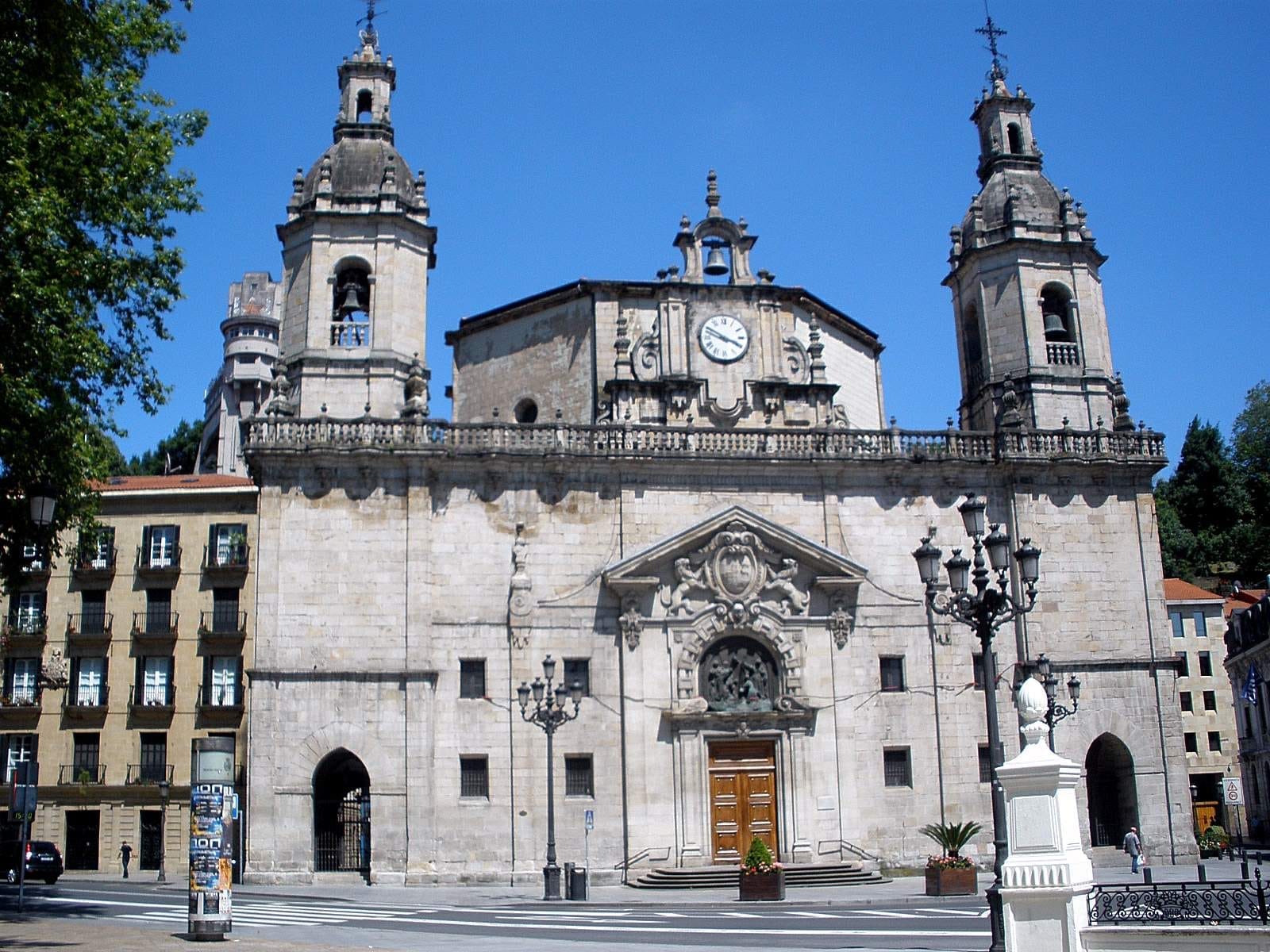
Why the Church of San Nicolás de Bari Matters
The Iglesia de San Nicolás de Bari occupies a small but theatrical square at the point where Bilbao's Casco Viejo meets the Arenal riverside promenade. It is one of the city's notable 18th-century Baroque religious buildings, and its position facing the Nervión river is no accident: San Nicolás is the patron saint of sailors, and for centuries this church served as the spiritual centre for a port city whose fortunes rose and fell with maritime trade.
Most visitors pass the façade on the way between the old town and the Teatro Arriaga without stopping. That is a mistake. The exterior alone repays five minutes of careful attention, and the interior offers a composed, unhurried space that is increasingly rare in a city that has become one of Europe's more popular short-break destinations.
💡 Local tip
The church sits directly on the pedestrian route between Metro Casco Viejo and the Arenal. Factor it into any walking tour of the old town rather than treating it as a detour.
Architecture: The Greek-Cross Plan and Baroque Façade
Built between 1743 and 1756 and consecrated in that final year, the church was designed by the architect Ignacio de Ibero. What distinguishes San Nicolás architecturally from other Basque churches of its era is the Greek-cross ground plan set within a square, an unusual choice that creates a centrally organised interior rather than the elongated nave typical of the period. This form allows the interior to breathe differently: light enters from multiple angles, and the sense of enclosure is more intimate than monumental.
The façade is where the Baroque ambition is most legible. Two flanking towers frame a central section of layered stone ornamentation, with saints in niches, scrolled cornices, and a composition that builds upward with deliberate theatricality. The stonework has darkened unevenly over time, which gives the surface texture and depth that a restored façade would lose. Look closely and you can read the hierarchy of the decoration: the maritime references in the symbolic program reflect the church's original relationship with Bilbao's trading community.
For broader context on Bilbao's architectural history, from this 18th-century Baroque church to the titanium curves of the Guggenheim, the Bilbao architecture guide covers the city's built environment across four centuries.
Tickets & tours
Live prices and dates from our booking partner. If you book, we may earn a commission at no extra cost to you.
San Juan de Gaztelugatxe guided tour from Bilbao
From 65 €Instant confirmationFree cancellationSan Sebastian, Hondarribia, Hendaye, and Getaria from Bilbao
From 54 €Instant confirmationFree cancellationGaztelugatxe and Mundaka small group guided tour from Bilbao
From 50 €Instant confirmationFree cancellationBilbao walking tour
From 16 €Instant confirmationFree cancellation
The Interior: Space, Light, and Detail
Step inside and the street noise drops away almost immediately. The interior is relatively modest in scale but careful in proportion. The Greek-cross plan means that wherever you stand, you are never far from the centre of the space, and the eye moves naturally upward toward the dome rather than down a long nave. The colour palette is cool and restrained — stone grey, cream, and the occasional gilded accent — which makes the church feel composed rather than austere.
Side chapels hold altarpieces of varying periods, and the quality of craftsmanship in the carved woodwork is worth examining closely. Candles are usually burning in at least one chapel, and the faint smell of wax and old stone is part of the sensory experience. If you visit during a service, the acoustics of the octagonal space carry sound evenly throughout — the church rewards hearing as well as seeing.
ℹ️ Good to know
Visiting hours are not independently verified. Check locally on arrival, as Spanish churches often observe midday closures and access during services may be limited to worshippers. Bilbao's official tourism site (bilbaoturismo.net) is the most reliable starting point for current schedules.
The Setting: Plazuela de San Nicolás and the Arenal
The small square in front of the church, Plazuela de San Nicolás, is one of the more pleasant spots in this part of Bilbao to pause for a few minutes. It is sheltered on three sides, which takes the edge off the Atlantic wind that funnels along the estuary in autumn and winter. In the morning, the façade catches direct light from the east and the stone takes on a warmer tone than at other times of day — morning is when the exterior photographs best.
The square opens directly onto the Arenal promenade and is a short walk from the Teatro Arriaga, Bilbao's neo-Baroque opera house, which makes this corner of the city a natural pairing for anyone interested in 18th and 19th-century architecture. The Zubizuri bridge is also within comfortable walking distance along the riverbank.
In the evening, when the Casco Viejo fills with locals moving between pintxos bars, the square in front of San Nicolás becomes a crossing point rather than a destination. The church itself is typically closed by this hour. That is worth knowing: if you want to see the interior, plan for the morning or early afternoon.
Historical Context: San Nicolás and Bilbao's Maritime Past
Bilbao grew into a significant commercial city primarily through the export of Basque iron and the import of wool and other goods. By the time construction of the current church began in 1743, the city had already been a trading hub for several centuries, and the choice of San Nicolás — patron saint of sailors and merchants — as its dedicatee was entirely deliberate. An earlier church that preceded this building stood in roughly the same location, underlining how long this particular site has served the city's seafaring and commercial community.
The church sits at the edge of the Casco Viejo, the medieval core of Bilbao known in Basque as Zazpikaleak (the Seven Streets). For a wider introduction to the neighbourhood and what to see within it, the Casco Viejo neighbourhood guide provides context on the surrounding streets, markets, and landmarks.
Practical Walkthrough: Getting There and Making the Most of a Visit
The church is straightforward to reach. From Metro Casco Viejo (Lines 1, 2 and 3), walk toward the river and you will reach the Plazuela de San Nicolás in about two to three minutes. From the Mercado de la Ribera, it is a similarly short walk north along the riverbank. If you are coming from the Ensanche or the Guggenheim side of the city, cross the Puente del Arenal and the church façade will be directly in front of you.
San Nicolás works well as a starting point for a walking circuit of the Casco Viejo. From here you can move into the Seven Streets toward the Plaza Nueva for pintxos, continue to the Mercado de la Ribera on the waterfront, and loop back via the Euskal Museoa, the Basque museum that houses one of the most important collections of Basque ethnography in existence.
Bilbao's climate is oceanic and rain is possible at any time of year. The church offers a dry interval if a shower catches you mid-walk, assuming it is open at that hour. The exterior is fully visible regardless of weather, and the square has enough natural shelter to make standing and looking at the façade comfortable even in light rain.
⚠️ What to skip
The Casco Viejo is extremely busy on weekend evenings, particularly around the pintxos routes. If you want to photograph the church façade without crowds in the frame, visit on a weekday morning before 10:00.
What This Attraction Is and Is Not
The Church of San Nicolás de Bari is not a grand cathedral and does not claim to be. Its scale is human rather than overwhelming, and the experience of visiting is quiet and concentrated rather than spectacular. If you are expecting something on the scale of Burgos or Seville, you will find it modest. But modesty is not the same as lack of interest, and the architectural quality here is genuine.
Visitors who come primarily for the Guggenheim or for the food scene and have no particular interest in religious architecture may find San Nicolás easy to skip. That is a reasonable call. But for anyone who wants to understand Bilbao's history beyond its 1990s reinvention, spending twenty minutes here adds real depth to the picture of what this city was before it became internationally famous.
Insider Tips
- The best exterior photographs are taken in the morning when the sun is to the east and the stone façade is fully lit. By midday in summer the light flattens considerably.
- The Plazuela de San Nicolás is a natural landmark for meeting points in the Casco Viejo. Tell anyone to meet you 'at the church by the river' and most locals will understand immediately.
- If the main door is closed, check whether a side entrance is open. Spanish churches often keep lateral access available during the middle of the day even when the main doors are shut.
- The square is at the junction of several pedestrian routes, which means it captures a cross-section of Bilbao street life without being a formal tourist gathering point. Sitting on the steps for a few minutes is a good way to observe the rhythm of the neighbourhood.
- Combine this stop with the Santiago Cathedral in the heart of the Seven Streets to get a full picture of Bilbao's ecclesiastical architecture across different periods — the two churches are less than ten minutes apart on foot.
Who Is Church of San Nicolás de Bari For?
- Architecture and urban history enthusiasts who want to understand Bilbao's pre-industrial identity
- Photographers looking for Baroque façade shots with good morning light and manageable crowds
- Walkers using the Casco Viejo as a full-day itinerary who want to anchor the route with a cultural stop
- Travellers seeking a quiet, reflective space away from the more tourist-heavy parts of the old town
- Anyone combining Bilbao's religious heritage: pairs naturally with Santiago Cathedral and the Basque Museum
Nearby Attractions
Other things to see while in Casco Viejo (Old Town):
- Basílica de Begoña
Perched on a hill above the old town, the Basílica de Begoña is the spiritual heart of Bilbao and home to the city's patron, the Virgin of Begoña. Gothic in structure, free to enter, and surprisingly uncrowded, it offers both architectural interest and a genuine window into Basque religious life.
- Parque de Etxebarria
Covering around 170,000 square metres above Casco Viejo, Parque de Etxebarria is Bilbao's largest park and one of its most rewarding free attractions. Built on the site of a former steel foundry that closed in 1982, it offers sweeping views over the city, open lawns for locals to unwind, and a quiet contrast to the streets below.
- Euskal Museoa (Basque Museum)
Housed in a 17th-century former Jesuit college on Plaza Miguel de Unamuno, Euskal Museoa is Bilbao's oldest and most comprehensive museum of Basque history and culture. With general admission at €10 (reduced €5; under 18 free; free on Wednesdays) and a central Casco Viejo location steps from the metro, it rewards curious travelers who want more than architecture and pintxos. Reopened 10 June 2026 after renovation.
- Mercado de la Ribera
Built in 1929 and spanning 10,000 square metres beside the Nervión estuary, Mercado de la Ribera is one of the largest covered markets in Spain. It combines a working food market with pintxos bars, a riverside terrace, and a history stretching back to the 14th century.
Planning a trip? Discover personalized activities with the Nomado app.