Euskal Museoa (Basque Museum): Bilbao's Window into 400,000 Years of Basque Life
Housed in a 17th-century former Jesuit college on Plaza Miguel de Unamuno, Euskal Museoa is Bilbao's oldest and most comprehensive museum of Basque history and culture. With general admission at €10 (reduced €5; under 18 free; free on Wednesdays) and a central Casco Viejo location steps from the metro, it rewards curious travelers who want more than architecture and pintxos. Reopened 10 June 2026 after renovation.
Quick Facts
- Location
- Plaza Miguel de Unamuno 4, Casco Viejo, Bilbao
- Getting There
- Metro Bilbao: Casco Viejo station (Lines 1, 2 & 3), about a 3-min walk
- Time Needed
- 1.5 to 2.5 hours
- Cost
- General €10 | Reduced €5 | Special reduced €3 for unemployed | Under 18 free | Free on Wednesdays
- Best for
- History seekers, rainy-day escapes, culture travelers, families with older kids
- Official website
- www.euskalmuseoa.eus/es/hasiera
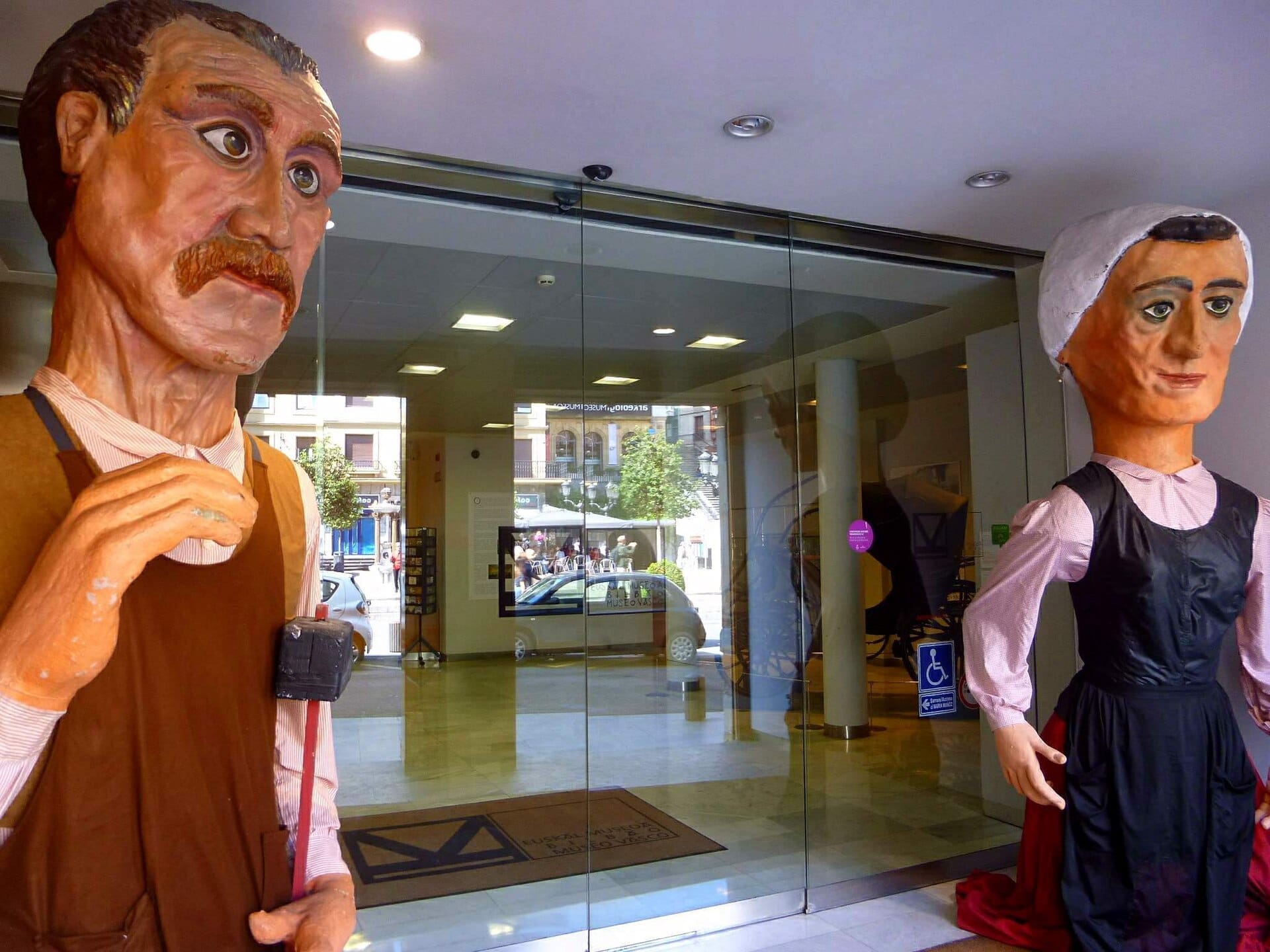
What Euskal Museoa Actually Is
Euskal Museoa – Museo Vasco de Bilbao is the principal museum of Basque history and ethnography in the city, and one of the oldest dedicated institutions of its kind in the Basque Country. It opened in 1921 and has occupied the same address ever since: a handsome 17th-century Baroque building on Plaza Miguel de Unamuno that was originally constructed as the Jesuit school of San Andrés, built in the 17th century. The transition from Jesuit college to public museum took place over centuries of changing hands, but the bones of the building, its stone cloister, its thick walls, its interior courtyard, remain largely intact.
The museum's scope is broad. Exhibits trace Basque culture from prehistoric times through to the industrial era, covering archaeology, maritime history, traditional rural life, religious art, cartography, and the ironworking traditions that eventually made Bilbao one of Europe's major industrial ports. If you have spent most of your Bilbao visit focused on contemporary architecture and modern art, this museum offers a deliberate counterpoint.
ℹ️ Good to know
Opening hours: Monday and Wednesday–Saturday 10:00–19:00; Sunday 10:00–14:00. Closed Tuesday. Free admission on Wednesdays. Verify current hours at euskalmuseoa.eus before your visit, as schedules can change on public holidays.
The Building: A 17th-Century Jesuit College in the Heart of Casco Viejo
Before you step inside, take a moment at Plaza Miguel de Unamuno. The square is named after the philosopher and writer born in Bilbao in 1864, and it functions as one of the social hubs of the Casco Viejo, often dotted with locals on benches and children cutting through on the way home from school. The museum façade is relatively restrained compared to the grandeur of some Spanish religious architecture, but the stone is warm and the proportions are unmistakably 17th century.
Inside, the building's former collegiate structure gives the museum an unusual spatial logic. Galleries wrap around a central cloister, and the cloister itself is a highlight worth pausing in. Stone arcades on multiple levels frame a courtyard that feels quiet even during busy visiting hours. This architectural container adds something that modern museum buildings rarely provide: a sense that the objects inside have been here for a long time and belong to a continuous living tradition.
The museum sits at the upper end of the Casco Viejo, near the point where the medieval street grid begins to thin out. If you are already exploring the old town, it is a natural culmination rather than a detour. The Plaza Nueva and the Mercado de la Ribera are both within comfortable walking distance, making it easy to fold Euskal Museoa into a half-day circuit of the old town.
Tickets & tours
Hand-picked options from our booking partner. Prices are indicative; availability and final rates are confirmed when you complete your booking.
San Juan de Gaztelugatxe guided tour from Bilbao
From 65 €Instant confirmationFree cancellationSan Sebastian, Hondarribia, Hendaye, and Getaria from Bilbao
From 54 €Instant confirmationFree cancellationGaztelugatxe and Mundaka small group guided tour from Bilbao
From 50 €Instant confirmationFree cancellationBilbao walking tour
From 16 €Instant confirmationFree cancellation
What You Will See Inside
The collection is organized across multiple floors, broadly moving from prehistory through ethnography to the more recent industrial and maritime past. The archaeological rooms cover tools, ceramics, and burial remains from settlements in the Basque hills, some dating back hundreds of thousands of years. Labels are in Basque, Spanish, and English, though the depth of English translation varies by gallery.
The ethnographic sections are among the most immediately engaging for first-time visitors. Scale models of traditional Basque farmhouses (caseríos) show how rural communities organized domestic and agricultural life. There are reconstructed interiors, tools for ironsmithing and fishing, and clothing from different periods. These are the kinds of objects that explain how a culture developed its distinct character across isolated mountain valleys and a stretch of Atlantic coastline.
One of the museum's most striking single objects is the Mikeldi idol, a pre-Roman Iron Age stone sculpture of a boar or bull, dating to roughly the 4th or 5th century BCE. It is small, worn, and oddly compelling. Most visitors walk past it without fully registering what they are looking at, which is a shame: it is among the oldest surviving Basque sculptural objects in existence.
💡 Local tip
Ask at the front desk about current temporary exhibitions. The museum regularly supplements its permanent collection with themed shows on Basque history and culture. These are not always visible from the main website in advance.
The upper floors deal with maritime heritage, cartography, and the economic history of Biscay, including the iron and steel industries that reshaped Bilbao in the 19th century. This section is denser and better suited to visitors with prior interest in Basque economic or industrial history. Casual visitors sometimes find the pacing slower here.
How It Feels at Different Times of Day
Weekday mornings, particularly Wednesday through Thursday before noon, are the quietest visiting windows. At that hour, the cloister courtyard is nearly silent, the stone cool and dim, and it is possible to spend real time with individual objects without the background noise of tour groups. Weekend mornings are noticeably busier, especially Saturday between 11:00 and 13:00 when the museum fills with a mix of families and out-of-town visitors.
Saturday hours are continuous from 10:00 to 19:00, matching Monday and Wednesday–Friday. Sunday still closes early at 14:00. Plan around the shorter Sunday window if that is your only available day.
On rainy days, which are not infrequent in Bilbao given its Atlantic oceanic climate, Euskal Museoa becomes a useful refuge. The interior is comfortable regardless of weather, and the two-hour visit slots in naturally during a downpour when outdoor plans are disrupted. Unlike the Guggenheim, which draws long queues on bad-weather days, this museum rarely sees waiting times at the entrance.
Getting There and Practical Logistics
The museum is served directly by Metro Bilbao's Casco Viejo station, shared by Lines 1, 2, and 3. From the station exit, the walk to Plaza Miguel de Unamuno takes about three minutes along Calle Esperanza or through the narrow streets of the Siete Calles (the Seven Streets, the medieval core of Bilbao).
For a broader orientation to getting around the city, the Getting Around Bilbao guide covers the Barik card, metro lines, and bus options in detail. The Barik rechargeable card offers discounted fares across metro, bus, and tram, and is worth picking up if you plan to use public transport more than a couple of times during your stay.
The museum is described by tourism sources as well-suited for visitors with reduced mobility. The building has been adapted to accommodate wheelchair access, though some areas of a historic 17th-century structure inevitably present physical constraints. Contact the museum directly if specific accessibility requirements need to be confirmed before your visit.
⚠️ What to skip
The museum is closed every Tuesday. This is easy to overlook when planning. If your Bilbao stay only covers a Tuesday, you will need to find an alternative. The nearby Arriaga Theatre and Plaza Nueva area are good alternatives for a Casco Viejo half-day.
Is It Worth Your Time?
Euskal Museoa is not a blockbuster attraction. It does not have a café worth lingering in, a rooftop terrace, or a gift shop full of witty souvenirs. What it has is depth: a coherent, well-maintained collection that tells the story of Basque identity through objects, and a building that gives those objects appropriate weight. At €10 for general admission (€5 reduced; free on Wednesdays and for under 18s), it is priced fairly for what it offers.
Visitors who arrive in Bilbao primarily for the Guggenheim Museum Bilbao or for the food scene may find Euskal Museoa rewarding as a complement rather than a centerpiece. Spending a morning here before an afternoon of pintxos and old town exploration makes good structural sense. If you want to understand why Bilbao and the Basque Country feel distinct from the rest of Spain, this museum provides more of the answer than any single afternoon of wandering.
Visitors on very short stays, say 24 hours in the city, will probably prioritize differently. The museum rewards a relaxed pace, and it is best not treated as something to rush through in 45 minutes on the way to lunch.
If your interest in Basque culture extends to contemporary and fine art, consider pairing your visit with the Museo de Bellas Artes Bilbao, which holds one of the strongest art collections in northern Spain and is free on certain days. Together, these two museums offer a cultural overview of the Basque Country that the Guggenheim, for all its brilliance, does not attempt.
Photography and What to Bring
Photography for personal use is generally permitted in the permanent collection, though flash photography is typically restricted around older and light-sensitive materials. The cloister courtyard is one of the most photogenic spaces in the Casco Viejo, particularly on overcast days when the diffuse northern light eliminates harsh shadows. A wide-angle lens or a smartphone with a good ultrawide mode makes the most of the arcade geometry.
There is no coat check or bag storage prominently noted, so travel light. The museum is not large enough to be physically exhausting, but the floor surfaces and occasional uneven thresholds in the historic building mean comfortable shoes are worth wearing, as they are throughout the Casco Viejo.
Insider Tips
- The Mikeldi idol, the pre-Roman Iron Age stone animal sculpture, is easy to walk past without pausing. It is one of the most significant prehistoric Basque objects in existence. Take a moment with it.
- Saturday hours are continuous 10:00–19:00 (same as Monday and Wednesday–Friday). Sunday closes at 14:00. Aim to arrive before midday on weekends for a quieter visit.
- The cloister courtyard is accessible from the main galleries and is a peaceful space. On busy days, stepping into it provides a few minutes of quiet that the galleries themselves may not offer.
- Unemployed visitors qualify for a special reduced rate of €3. Under 18s enter free, and admission is free for everyone on Wednesdays. Confirm current concessions at the ticket desk.
- The museum sits at the top of the Casco Viejo, making it a natural starting point for a downhill walk through the Siete Calles toward the Ribera market and the riverside. Starting here and working your way down avoids the uphill climb at the end of a long morning.
Who Is Euskal Museoa (Basque Museum) For?
- History and anthropology enthusiasts who want context for what makes Basque culture distinct
- Travelers visiting Bilbao on rainy or overcast days looking for a quality indoor experience without Guggenheim queues
- Families with children aged 10 and above who can engage with ethnographic displays and scale models
- Visitors on a second or third trip to Bilbao who have already covered the headline attractions
- Budget-conscious travelers: under 18s enter free, and everyone gets free entry on Wednesdays
Nearby Attractions
Other things to see while in Casco Viejo (Old Town):
- Basílica de Begoña
Perched on a hill above the old town, the Basílica de Begoña is the spiritual heart of Bilbao and home to the city's patron, the Virgin of Begoña. Gothic in structure, free to enter, and surprisingly uncrowded, it offers both architectural interest and a genuine window into Basque religious life.
- Church of San Nicolás de Bari
Standing at the gateway to Bilbao's old town, the Iglesia de San Nicolás de Bari is one of the city's most accomplished examples of 18th-century Baroque architecture. Built between 1743 and 1756 to an unusual Greek-cross plan set within a square, it anchors one of the most photogenic corners of the Casco Viejo, steps from the Arenal riverside and Teatro Arriaga.
- Parque de Etxebarria
Covering around 170,000 square metres above Casco Viejo, Parque de Etxebarria is Bilbao's largest park and one of its most rewarding free attractions. Built on the site of a former steel foundry that closed in 1982, it offers sweeping views over the city, open lawns for locals to unwind, and a quiet contrast to the streets below.
- Mercado de la Ribera
Built in 1929 and spanning 10,000 square metres beside the Nervión estuary, Mercado de la Ribera is one of the largest covered markets in Spain. It combines a working food market with pintxos bars, a riverside terrace, and a history stretching back to the 14th century.