East End
Adelaide's East End stretches along the eastern reaches of Rundle Street, from Pulteney Street toward the Park Lands, and packs an outsized amount of character into a compact grid. Independent restaurants, laneway bars, heritage produce exchange buildings, and the Adelaide Botanic Garden all sit within easy walking distance of each other, making it one of the most rewarding parts of the city to explore on foot.
Located in Adelaide
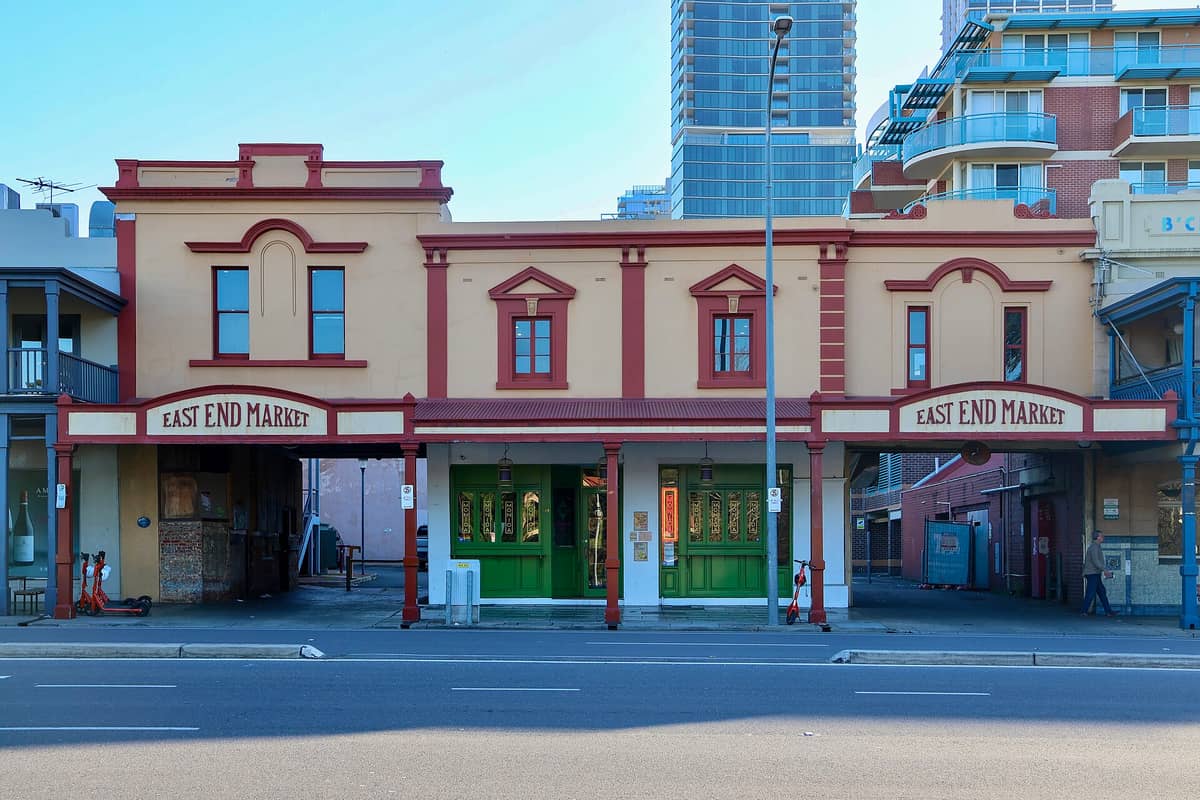
Overview
The East End is where Adelaide loosens its collar. Anchored by the café and restaurant strip of eastern Rundle Street and bookended by the green sweep of the Adelaide Botanic Garden, this informal precinct rewards slow walking, long lunches, and unplanned detours into laneways that somehow always lead somewhere worth stopping.
Orientation
The East End has no hard official boundary, but the consensus is clear enough on the ground. Think of it as a rough rectangle bordered by North Terrace to the north, East Terrace to the east, Flinders Street to the south, and Pulteney Street to the west. Within that frame, eastern Rundle Street is the spine, and everything else radiates from it.
Rundle Street itself runs east-west and eventually becomes Rundle Mall as it pushes west toward the city core. The transition from mall to street happens around Pulteney Street, and the character shifts noticeably: the chain stores and food courts fall away, replaced by independent shopfronts, plane trees, and the kind of footpath seating that invites lingering. North Terrace runs along the northern edge of the precinct and connects directly to major cultural institutions including the Art Gallery of South Australia and the South Australian Museum, which are within easy walking distance.
At the eastern end of Rundle Street, the city grid dissolves into the Adelaide Botanic Garden and the surrounding Park Lands. This green buffer is one of Adelaide's defining features: the entire city centre is encircled by parkland, and the East End sits right up against it. Visitors who walk from the café strip to the garden often find the shift from urban to green happens in fewer than five minutes.
ℹ️ Good to know
The East End sits within the City of Adelaide local government area. Nearby Norwood, with its own dining strip along The Parade, is technically a separate council area and a short bus or taxi ride further east along Magill Road.
Character & Atmosphere
Early mornings on Rundle Street feel unhurried in a way that the western CBD rarely does. The plane trees hold the light differently at this hour, casting long shadows across café chairs being set out for the day. A few cyclists cut through, delivery vehicles make their rounds, and the first espresso machines start up inside narrow shopfronts. By nine in the morning, the footpath tables are filling with people who look like they have nowhere urgent to be.
Lunchtime pulls a mixed crowd: office workers from the surrounding streets, students from the nearby universities, and visitors who have drifted east from the central hotels. The laneways off Rundle Street, particularly Ebenezer Place and Vardon Avenue, compress this energy into something more concentrated. The scale here is human-sized: narrow passages, hand-painted signs, the smell of coffee mixing with something coming off a kitchen grill.
After dark, the East End takes on a different register. The restaurants fill properly, and the bar scene in the laneways comes into its own. This is not a loud nightlife precinct in the way that some parts of the West End can be. The venues tend toward the intimate end of the spectrum, and the noise level on Rundle Street itself stays manageable most nights. Weekend evenings are the exception, when the street gets genuinely busy and taxi and rideshare pickups cluster around the eastern end.
The neighbourhood has a noticeably independent streak. The proportion of chain outlets is low compared to the central mall. Local operators, many of whom have been on the street for years, set the tone. That said, the area is popular and not undiscovered: on warm Saturday afternoons, finding a footpath table without a wait requires either timing or patience.
What to See & Do
The Adelaide Botanic Garden is the most significant attraction in the precinct and one of the best free things to do in central Adelaide. Established in 1857, the garden covers around 50 hectares and includes the Bicentennial Conservatory, the Santos Museum of Economic Botany, and extensive rose, herb, and international rose gardens. The main entrance on North Terrace is the most commonly used, but the garden also connects to the broader Park Lands and the River Torrens path system.
Immediately adjacent to the garden's main entrance is the National Wine Centre of Australia, housed in a striking building at the corner of Hackney Road and Botanic Road. The centre offers self-guided wine discovery experiences, tastings, and educational exhibits covering the breadth of Australian wine regions. For visitors with more than a passing interest in South Australian wine, this is a more instructive starting point than simply heading to a bottle shop. Check their current session times before visiting, as hours vary.
The former Adelaide Fruit and Produce Exchange buildings on East Terrace are a reminder that this part of the city had a working commercial past before its current incarnation as a dining and leisure precinct. The heritage sandstone facades are worth pausing at, even if you are not going inside. The laneways of Ebenezer Place and Vardon Avenue, running parallel to and between Rundle Street, reward exploration: small bars, independent retailers, and food outlets occupy spaces that feel genuinely local rather than designed for foot traffic.
- Walk the Adelaide Botanic Garden: allow at least 90 minutes for the full loop, more if you stop at the Bicentennial Conservatory
- Explore Ebenezer Place and Vardon Avenue laneways off Rundle Street
- Visit the National Wine Centre of Australia for tastings and wine education
- Browse the independent bookshops, record stores, and clothing boutiques along eastern Rundle Street
- Connect to the River Torrens Linear Park path system from the northern edge of the Botanic Garden
The North Terrace cultural precinct is a short walk from the Botanic Garden entrance, putting the Art Gallery of South Australia, the South Australian Museum, and the Migration Museum all within reach of an East End base. For those interested in First Nations culture, the Tandanya National Aboriginal Cultural Institute on Grenfell Street offers galleries and cultural programs, and sits comfortably within the broader East End area.
💡 Local tip
The Adelaide Botanic Garden is free to enter and open daily. Early morning visits offer the quietest experience and better light for photography. The garden café opens for breakfast and lunch and is a good option if you want to eat without heading back to Rundle Street.
Eating & Drinking
Eastern Rundle Street is one of Adelaide's strongest concentrations of independent food and drink. The range is genuine: you can move in a single block from a tightly edited Vietnamese lunch spot to a wood-fired pizza restaurant to a wine bar with a list that takes South Australian regions seriously. Price points span budget to mid-range comfortably, with some options at the more considered end of the spectrum as you approach the laneway venues.
Cafés are a particular strength. The morning coffee culture here operates at a level that sets a high baseline, and the competition among operators keeps quality up. Expect espresso-based drinks made with locally roasted beans, food menus that go beyond toast, and staff who tend to know what they are doing. The footpath seating, when the weather allows, makes the café experience here notably pleasant compared to more enclosed central-city options.
Lunch is the most crowded meal period, particularly on weekdays when nearby workers fill the street. Dinner on Rundle Street rewards booking ahead at the more popular venues, especially on Thursday through Saturday evenings. The laneway bars operate on a walk-in basis mostly, but they fill up on weekends. If you are heading out after 9pm, the pace picks up considerably around Ebenezer Place.
For a broader sense of how the East End fits into Adelaide's food culture overall, the what to eat in Adelaide guide covers the city's main culinary identities, from Asian-influenced restaurant strips to the strong local wine and produce scene that underpins much of what gets cooked on Rundle Street.
- Rundle Street: the main strip for restaurants, cafés, and bars across cuisines and budgets
- Ebenezer Place: compact laneway with bar and small-venue concentration
- Vardon Avenue: another off-street option with an independent, local character
- National Wine Centre: for structured wine tasting with South Australian focus
- Botanic Garden café: a solid option for breakfast or lunch within the garden
⚠️ What to skip
Parking on and around Rundle Street is time-limited and fills quickly on weekends. If you are driving to dinner, allow extra time to find a space on the surrounding streets, or use one of the nearby city car parks and walk in.
Getting There & Around
The East End is walkable from the core of the Adelaide CBD. From the Rundle Mall end, it is roughly a five to ten minute walk east along Rundle Street to reach the heart of the precinct. From the Adelaide Railway Station on North Terrace, the walk south-east to Rundle Street takes around ten minutes at a comfortable pace. The Adelaide Festival Centre and Elder Park are to the west, making the East End the natural destination for a longer cross-city walk.
Adelaide Metro operates several bus routes that stop on or near Rundle Street and the surrounding roads. The City Connector service runs along Rundle Street and provides stops near the Botanic Garden. Grenfell Street, one block south, and North Terrace, one block north, are both served by multiple bus routes connecting to the wider Adelaide Metro network. For practical guidance on using public transport across the city, the getting around Adelaide guide covers fare structures, ticketing, and route planning.
The Adelaide tram runs along King William Street and connects to Glenelg to the south-west. The nearest tram stops are a short walk west of the East End precinct, meaning the tram is useful for connecting to the coast or the central CBD rather than for accessing the East End directly. The Adelaide Railway Station on North Terrace, served by suburban rail lines, is the main rail access point for visitors arriving from further afield.
Within the East End itself, everything is walkable. The distance from the western edge at Pulteney Street to the Botanic Garden entrance on North Terrace is around 700 metres. The laneways are pedestrian-only or low-traffic, and the flat terrain makes navigation straightforward. Ride-hailing services including Uber operate throughout Adelaide and are a practical option for late-night returns or for reaching destinations further afield.
Where to Stay
The East End is not the city's primary hotel district, but accommodation options exist within and immediately adjacent to the precinct. Staying here suits visitors who prioritise walkability to restaurants and the Botanic Garden over proximity to the main convention and business facilities in the western CBD. The general character of the area, quieter than the central mall but more active than residential North Adelaide, works well for independent travellers spending several days in the city.
For a broader view of where to base yourself across Adelaide, the where to stay in Adelaide guide compares the main accommodation zones including the CBD, North Adelaide, Glenelg, and the inner east. The East End suits those who want an urban base with immediate access to food and culture, rather than those seeking resort-style amenities or beachfront locations.
Noise is worth considering. Rundle Street itself can be lively on Friday and Saturday nights, and rooms directly above or adjacent to the bar and restaurant strip will reflect that. Properties one or two streets back, toward Flinders Street or Grenfell Street, tend to be quieter while keeping the same walking distance to the precinct's attractions.
What to Know
The East End earns its reputation as one of the most enjoyable parts of Adelaide to spend time in. The combination of a strong independent food and drink scene, genuine heritage character, and the immediate adjacency of the Botanic Garden gives it a range that few urban precincts of its size can match. It works on a Tuesday lunch as well as it does on a Saturday evening.
It is not without limits. The precinct is compact, and visitors expecting the density of a large-city dining district may find it covers quickly. Weekend evenings can feel crowded in the laneways, and the popularity of certain venues makes walk-in dining at prime times unreliable. The area is unambiguously popular with visitors, which occasionally means the footpath tables are full and the quieter neighbourhood character is harder to find.
For anyone building a broader Adelaide itinerary, the East End pairs naturally with a morning at the Adelaide Central Market to the west, or an afternoon at the cultural institutions on North Terrace. It is also the natural starting point for walking east into the Park Lands or north along the River Torrens toward Adelaide Oval and the zoo.
💡 Local tip
Visit the East End on a weekday if you want the streets at their most relaxed. The weekend market culture in other parts of Adelaide draws locals away from Rundle Street on Saturday mornings, making it one of the quieter and more pleasant times to walk the strip and find a table without waiting.
TL;DR
- The East End covers eastern Rundle Street and the surrounding laneways, bounded roughly by North Terrace, East Terrace, Flinders Street, and Pulteney Street.
- The Adelaide Botanic Garden and the National Wine Centre of Australia are the main anchor attractions, both free or low-cost to explore.
- The food and drink scene is dominated by independent operators across cafés, restaurants, and laneway bars, with price points spanning budget to mid-range.
- Best suited to independent travellers, food and wine enthusiasts, and anyone who wants a central but slightly less corporate base than the main CBD hotel strip.
- Weekend evenings can be busy in the laneways; weekday visits offer a more relaxed version of the same precinct.
Related Travel Guides
- 3 Days in Adelaide: The Perfect Itinerary
Three days is enough time to get a genuine feel for Adelaide, from its North Terrace cultural corridor and Central Market to coastal beaches and the Adelaide Hills. This itinerary cuts through the noise and gives you a day-by-day plan that locals would actually approve of.
- Aboriginal Culture & Heritage in Adelaide: A Practical Guide to Kaurna Country
Adelaide sits on the traditional lands of the Kaurna people, one of the oldest continuous cultures on Earth. This guide covers the key places, experiences, and context you need to engage meaningfully with Aboriginal culture and heritage across the city.
- Adelaide Festivals: The Complete Event Calendar
Adelaide is one of Australia's busiest festival cities. From one of the world's largest open-access arts festivals to a globally respected world-music event, this guide covers the major dates, ticket prices, crowd warnings, and practical logistics.
- Adelaide's Best Food Markets: A Complete Guide
Adelaide has a concentrated, high-quality food-market scene. Whether you're after fresh produce, artisan cheeses, or a weekend breakfast ritual, this guide covers the city's top markets, their hours, and how to get the most out of each visit.
- Romantic Adelaide: The Best Experiences for Couples
Adelaide rewards couples with an extraordinary range of romantic experiences: coastal sunsets, world-class wine country, historic gardens, and intimate cultural corners. This guide covers the best of them, from the Adelaide Hills to the foreshore.
- Adelaide Fringe Festival: The Complete Visitor Guide
Adelaide Fringe is the world's second-largest arts festival, running across February and March each year. This guide covers dates, ticketing, venues, getting around, what to expect from the heat, and practical tips that turn a good trip into a great one.
- Best Hikes Near Adelaide: Trails for Every Level
Adelaide sits on the doorstep of some of South Australia's finest walking country. These are the best hikes near Adelaide, from a quick gorge walk 10km from the CBD to long-distance trail sections through the Mount Lofty Ranges.
- Luxury Adelaide: The Best High-End Experiences Worth Paying For
Adelaide offers high-end wine, dining, and tours without east-coast price inflation. This guide covers premium experiences and neighbourhoods — with a clear view of what's worth the spend and what to skip.
- Adelaide Nightlife: Best Bars, Clubs & Live Music Guide
Adelaide's nightlife is smaller than the east-coast capitals but easier to navigate. From Hindley Street live music to East End craft-beer bars and late-night clubs, this guide covers the best spots, realistic prices, and practical logistics.
- Adelaide on a Budget: How to Explore South Australia's Capital Without Overspending
Adelaide is one of Australia's more affordable capitals. From the free city tram zone and produce markets to no-cost museums and parklands, this guide covers how to stretch your AUD further.
- One Week in Adelaide & South Australia: The Complete 7-Day Itinerary
Seven days is enough time to experience Adelaide's food and culture, drive through two wine regions, explore the Adelaide Hills, and reach Kangaroo Island. This guide breaks it down day by day with logistics, timing, and no filler.
- Best Shopping in Adelaide: Markets, Malls, Arcades & Local Finds
Adelaide is a stronger shopping destination than many visitors expect. From a Victorian-era arcade and a major fresh market to independent boutique strips and creative food halls, this guide covers where to shop, browse, and buy.
- Adelaide's West End: The Complete Guide to Bars, Culture & Things to Do
Adelaide's West End is the city's most culturally layered precinct, anchored by a 155-year-old food market and surrounded by a dense concentration of bars, live music venues, theatres, and independent restaurants. This guide covers what to eat, where to drink, what to see, and how to plan your visit.
- Best Wildlife Experiences in Adelaide & South Australia
South Australia is unusually rich in accessible wildlife. From holding a koala in the Adelaide Hills to watching wild sea lions on Kangaroo Island, these are the best animal encounters the region has to offer, ranked so you can plan the trip.
- Adelaide Wine Guide: Regions, Varietals & Cellar Doors
Adelaide sits at the centre of one of the world's great wine landscapes. This guide breaks down the closest regions, what each grows best, how far they are from the city, and what to know before you visit a cellar door.
- Adelaide with Kids: The Best Family Activities in 2026
Adelaide is one of Australia's most family-friendly cities, with free museums, wildlife parks, beaches, and outdoor adventures spread across the city and its surrounding hills. This guide covers the best things to do in Adelaide with kids, from toddlers to teenagers.
- Barossa Valley from Adelaide: The Complete Day Trip Guide
The Barossa Valley sits about 70 km northeast of Adelaide and packs world-class Shiraz, historic villages, and serious food into a single day. This guide covers every practical angle: how to get there, what to do, where to eat, and what most visitors get wrong.
- Best Beaches in Adelaide: Where to Swim, Stroll, and Soak It All In
Adelaide's coastline stretches along Gulf St Vincent with calm, warm water and a string of distinct beach suburbs, each with its own character. This guide covers the best beaches near Adelaide, from family-friendly foreshores to secluded clifftop bays worth the drive.
- Best Museums in Adelaide: History, Art, Science & More
Adelaide has a concentrated museum culture for a city its size. This guide covers art, natural history, migration, railways, aviation, and living history, with practical details to help you plan your visit.
- Best Time to Visit Adelaide: A Season-by-Season Guide
Adelaide's Mediterranean climate makes it approachable year-round, but the experience varies dramatically by season. This guide covers temperatures, rainfall, major events, crowd levels, and practical tips to help you choose the right time for your trip.
- Best Views & Viewpoints in Adelaide: Hilltop Lookouts, Coastal Panoramas & City Skylines
Adelaide rewards the curious with sweeping views from multiple angles: the Mount Lofty Ranges to the east, the Gulf St Vincent coast to the west, and a compact city skyline in between. This guide covers the best viewpoints in and around Adelaide, from iconic hilltop lookouts to waterfront vantage points and one genuinely thrilling rooftop climb.
- Best Day Trips from Adelaide: Wine Regions, Wildlife & Coastline
Adelaide sits at the centre of one of Australia's most rewarding day-trip networks. Within two hours you can be walking among sea lions on Kangaroo Island, tasting century-old Tawny Port in the Barossa, or swimming below limestone cliffs on the Fleurieu Peninsula. This guide covers the best day trips from Adelaide, organised by region and type.
- Free Things to Do in Adelaide: 20 Ways to Explore the City Without Spending a Cent
Adelaide has an unusually strong set of free attractions. From North Terrace museums to hilltop views, beaches, and one of Australia's finest botanic gardens, this guide covers the best no-cost experiences in the city and its surrounds.
- Getting Around Adelaide: The Complete Transport Guide
Adelaide is one of Australia's most navigable cities, but knowing which services are free, when to walk versus drive, and how to reach the beaches and hills makes a real difference. This guide covers every transport option in practical detail.
- Is Adelaide Worth Visiting? An Honest Assessment
Adelaide divides opinion. Some travellers find it a low-key, surprisingly rich destination. Others leave feeling underwhelmed. This guide breaks down exactly what Adelaide offers, who it suits, and what to realistically expect before you book.
- Kangaroo Island from Adelaide: How to Plan Your Visit
Kangaroo Island is South Australia's most rewarding day trip or short break from Adelaide. This guide covers every way to get there, the best time to go, what to do once you arrive, and the practical details that most travel sites skip.
- Things to Do in Adelaide: A Definitive Guide to South Australia's Capital
Adelaide offers more than its size suggests. This guide covers the city's best experiences across culture, food, nature, and day trips — plus a clear view of what's worth your time, what to skip, and how to get around without wasting money.
- Best Walks in Adelaide: 18 Routes, Trails & Walking Attractions
Adelaide rewards walkers more than almost any other Australian city. From the 19.5km Park Lands loop to a gentle stroll along the River Torrens or a gorge trail ending at a waterfall, these are the best walks in Adelaide for every pace and preference.
- What to Eat in Adelaide: A Food Lover's Guide
Adelaide is a serious food city. With nearby wine regions, a legendary central market, and a dining scene shaped by Greek, Italian, Vietnamese, and Chinese communities, knowing where and what to eat here makes a real difference.
- Where to Stay in Adelaide: The Complete Neighbourhood Guide
Choosing where to stay in Adelaide shapes your entire trip. This guide breaks down every major neighbourhood by location, transport links, price range, and who it suits best — so you can book with confidence.