South Australian Museum: What to See, Know, and Expect
One of Australia's oldest public museums, the South Australian Museum on North Terrace holds one of the world's largest collections of Aboriginal Australian cultural material, alongside Pacific, meteorite, and natural history exhibits. General admission is free, and a visit typically takes two to three hours.
Quick Facts
- Location
- North Terrace, Adelaide CBD, SA 5000
- Getting There
- Tram, train, or bus to Adelaide City — steps from the stop
- Time Needed
- 2–3 hours for a thorough visit
- Cost
- Free general entry; some special exhibitions charge a fee
- Best for
- History lovers, families, rainy-day escapes, solo explorers
- Official website
- www.samuseum.sa.gov.au
What the South Australian Museum Actually Is
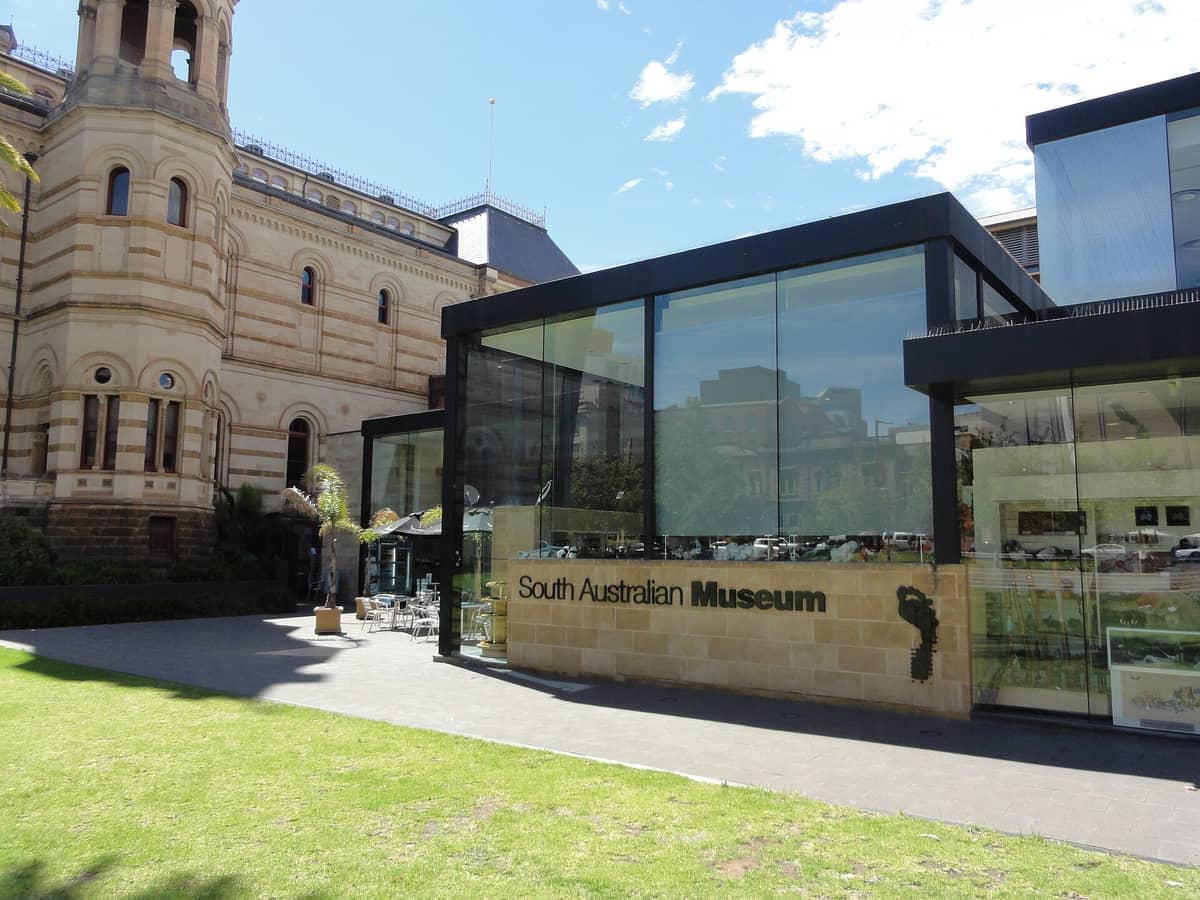
The South Australian Museum is a natural history and anthropology museum that has been open to the public for over 165 years, making it one of the most established cultural institutions in the country. Its stone facade sits directly on North Terrace, Adelaide's grand institutional boulevard, flanked by the Art Gallery of South Australia on one side and the State Library on the other. From the outside, the building reads as classic Victorian civic architecture: symmetrical, solid, and slightly imposing. Inside, the scale opens up considerably.
The collections span natural history, Pacific cultures, and Aboriginal Australian heritage. The museum holds one of the largest collections of Aboriginal Australian cultural material in the world — a point worth pausing on, because it elevates this institution well beyond a regional curiosity. Researchers travel from overseas to access these holdings. For a casual visitor, that depth means you are looking at artefacts and objects with genuine scholarly weight behind them, not curated surface-level displays.
ℹ️ Good to know
Opening hours: Daily 10 am–5 pm. Closed Christmas Day and Good Friday. Opens at noon on Anzac Day (25 April). Always confirm current hours on the official website before visiting, as special exhibitions can affect access.
The Collections: What You Will Actually See
Aboriginal Cultures Gallery
The Aboriginal Cultures Gallery is the centrepiece of the museum and arguably the most significant reason to visit. The collection covers language groups and cultural traditions from across Australia, presented across a large gallery space with floor-to-ceiling displays. Items include ceremonial objects, everyday tools, bark paintings, and woven materials. The curation is respectful and contextual — labels explain origin and significance rather than presenting objects as isolated curiosities.
If you want broader cultural context for what you see here, the Living Kaurna Cultural Centre in Adelaide offers a complementary on-Country perspective. The two experiences work well together, though neither requires the other.
Pacific Cultures and Natural History
The Pacific collection covers Melanesian, Micronesian, and Polynesian material culture, with carved figures, canoes, and ritual objects that reflect centuries of seafaring civilisations. The natural history floors move through geology, minerals, and palaeontology. The mineral gallery is quietly impressive, particularly for anyone who did not expect a room full of fluorescent specimens and meteorite fragments.
The giant squid specimen tends to stop people cold. It is an 11-metre model of a giant squid displayed across four floors. and the sheer scale of it is difficult to prepare for. Children react with fascination or mild alarm, sometimes both. Adults with no particular interest in marine biology tend to linger longer than they expect.
Tickets & tours
Live prices and dates from our booking partner. If you book, we may earn a commission at no extra cost to you.
Southern cultural bus tour
From 171 €Instant confirmationFree cancellationUltimate Adelaide and Hahndorf full-day tour
From 94 €Instant confirmationFree cancellationHalf-day Lofty Descents tour by bike
From 89 €Instant confirmationFree cancellationAdelaide kayak tour with expert instructors
From 51 €Instant confirmationFree cancellation
How the Experience Changes by Time of Day
Morning visits, particularly on weekdays, are noticeably quieter. The galleries have a contemplative quality before 11:30 am, with school groups sometimes arriving around 11 am. The natural light that enters through upper-level windows gives the mineral and Pacific galleries a warmer tone in the morning than under full fluorescent conditions later in the day.
Between roughly 11 am and 1 pm, the museum sees its highest foot traffic, particularly on weekends and school holidays. The ground floor and main gallery entrances can feel congested. If you are visiting with young children during peak hours, the sensory load increases significantly. Arriving before 11 am or after 3 pm gives you noticeably more space and quieter conditions.
💡 Local tip
Weekday mornings between 10 am and 11:30 am offer the most relaxed experience, with smaller crowds and easier movement through the larger gallery halls.
Getting There and Getting Around Inside
The museum sits directly on North Terrace, which is one of the most accessible streets in Adelaide for public transport. The closest tram stop is Art Gallery, directly in front of the museum on North Terrace. Adelaide Railway Station is about a 10-minute walk away, and multiple bus routes serve the area. and the museum entrance is clearly signposted. Parking is available on Kintore Avenue and at nearby Wilson Parking facilities, though driving into the CBD on weekends means accounting for event traffic, particularly if something is on at Adelaide Oval.
North Terrace is also a walkable corridor. If you are already visiting the Art Gallery of South Australia or the Migration Museum, the South Australian Museum fits naturally into the same morning or afternoon without needing to move your car or rethink transport.
Inside, The galleries are accessible for most wheelchairs and mobility devices, though some larger power chairs may not navigate every turn. Wheelchairs and walkers are available to borrow at no charge. One accessible parking space exists at the rear of the building, though availability is not guaranteed.
For a broader look at how to structure a day around the CBD's cultural institutions, the best museums in Adelaide guide covers the full landscape of options.
Cultural and Historical Context
The museum was established well over a century and a half ago, rooted in the colonial-era tradition of scientific collection and natural history classification. Like many institutions of its type, it is navigating an ongoing process of reassessing how historical collections are interpreted and, in some cases, repatriated. This tension is present in how some galleries are labelled and contextualised, and it is worth approaching the Aboriginal Cultures Gallery with that awareness.
The museum is located on the traditional lands of the Kaurna people, the original custodians of the Adelaide Plains. The Adelaide Aboriginal culture guide provides further context for visitors who want to engage with First Nations history more broadly during their time in the city.
Despite its colonial origins, the museum has invested heavily in making its Pacific and Aboriginal collections research-grade and publicly meaningful. The depth of material is not matched by many institutions globally, which gives the experience a different weight than a typical regional natural history museum.
Photography, Practicalities, and Honest Limitations
Photography is generally permitted in the galleries without flash. Some specific items or sections may have restrictions; look for signage at the entrance to each gallery room. The mineral collection photographs particularly well under artificial lighting, while the Aboriginal Cultures Gallery requires thoughtfulness about what you choose to photograph and share, given the cultural sensitivity of some objects.
The museum has a cafe on site and a gift shop near the main entrance. Both are what you would expect: a reasonable selection of hot drinks and light food, and a shop with books, replicas, and natural history items weighted toward younger visitors.
⚠️ What to skip
Some visitors expecting interactive or heavily multimedia exhibits may find the South Australian Museum more traditional in its presentation than modern natural history institutions. The strength here is collection depth, not high-tech installation. Adjust expectations accordingly.
If you are travelling with very young children under five, the ground floor and the fossil sections hold attention well, but the Aboriginal Cultures Gallery and Pacific collection are denser and more suited to older children and adults. The museum does run family-focused programming on selected weekends; check the website before visiting if this is a priority.
Pairing the Museum with the Rest of North Terrace
North Terrace functions as a cultural spine through the Adelaide CBD. The South Australian Museum anchors one section of it alongside the Art Gallery, State Library, and the Mortlock Wing of the State Library, which is worth a look even if you are not planning to read anything. The North Terrace precinct as a whole can absorb the better part of a day if you move between institutions without rushing.
For visitors who want to cover cultural Adelaide efficiently, building a half-day around the North Terrace strip and then moving toward the Central Market or Rundle Mall for food and afternoon activity is a well-worn and sensible approach. The museum itself is free, so there is no financial pressure to pace yourself against a ticket price.
Insider Tips
- The mineral fluorescence display requires you to enter a darkened alcove inside the gallery — easy to walk past if you are not looking for it. It is one of the more visually striking things in the building.
- The museum's research library is accessible to the public for specific inquiries; if you have a genuine interest in Pacific or Aboriginal material culture, it is worth knowing this resource exists beyond the public galleries.
- On rainy winter days, the museum draws larger than usual crowds from midday onward. Arriving right at 10 am opening gives you the galleries almost to yourself.
- The giant squid display starts on the ground floor and continues through the third floor. If you have children who are marine biology enthusiasts, go there first before energy flags.
- Special exhibitions in the temporary gallery space at the rear of the building do sometimes carry an entry fee. Check the website in advance if budget is a concern so there are no surprises at the door.
Who Is South Australian Museum For?
- Travellers with a serious interest in Pacific or Aboriginal Australian cultural history
- Families with children aged six and above who engage with natural history
- Rainy-day visitors looking for several hours of free indoor content
- First-time Adelaide visitors building a North Terrace cultural day
- Solo travellers who prefer unhurried, self-guided exploration at their own pace
Nearby Attractions
Other things to see while in Adelaide CBD:
- Adelaide Arcade
Opened in December 1885, Adelaide Arcade is one of Australia's oldest and best-preserved Victorian-era shopping arcades. Free to enter and located opposite Rundle Mall's fountain, it offers a rare combination of architectural beauty, specialty retailers, and a genuine sense of Adelaide's commercial history.
- Adelaide Botanic Garden
Open daily and completely free, Adelaide Botanic Garden covers 50 hectares on the northern edge of the CBD. From a 19th-century palm house to a full-scale tropical rainforest glasshouse, it rewards a slow morning or a purposeful afternoon walk.
- Adelaide Central Market
Adelaide Central Market has operated continuously since 1869, making it one of the largest undercover fresh produce markets in the Southern Hemisphere. Spread across 5,720 square metres in the heart of the CBD, it draws locals, chefs, and curious visitors to its mix of produce stalls, specialty food traders, and casual eateries. This guide covers everything you need to plan a worthwhile visit.
- Adelaide Festival Centre
Opened in 1973, Adelaide Festival Centre is South Australia's flagship performing arts complex, anchoring the northern edge of the CBD along King William Road. From major theatre productions to intimate performances, it draws both locals and visitors year-round — and its riverside location makes it as much a place to linger as to attend a show.
Planning a trip? Discover personalized activities with the Nomado app.