Adelaide Festival Centre: The Heart of South Australia's Performing Arts Scene
Opened in 1973, Adelaide Festival Centre is South Australia's flagship performing arts complex, anchoring the northern edge of the CBD along King William Road. From major theatre productions to intimate performances, it draws both locals and visitors year-round — and its riverside location makes it as much a place to linger as to attend a show.
Quick Facts
- Location
- King William Road, Adelaide SA 5000 (Adelaide CBD, ~200m north of North Terrace)
- Getting There
- Walk from Adelaide Railway Station or North Terrace tram stops; also walkable from Rundle Mall via King William Street
- Time Needed
- 30–60 min to explore the precinct; 2–3 hours for a show plus pre-show drinks
- Cost
- Free to enter the precinct; show tickets priced by event (check the official website for current listings)
- Best for
- Theatre-goers, architecture enthusiasts, couples, and anyone exploring the CBD riverbank
- Official website
- www.adelaidefestivalcentre.com.au
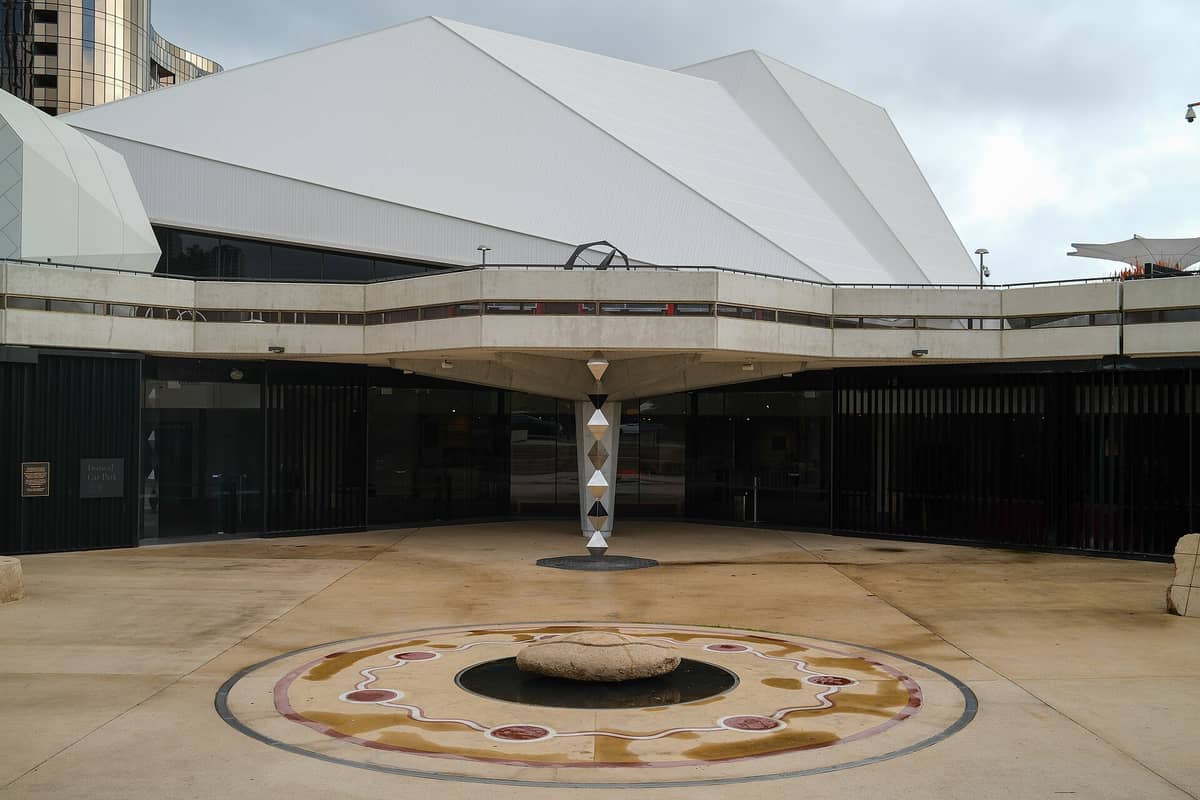
What Is the Adelaide Festival Centre?
The Adelaide Festival Centre is South Australia's principal performing arts venue, a purpose-built complex that opened on 2 June 1973 when Prime Minister Gough Whitlam officially declared it open. Construction began in 1970, making it Australia’s first multi-purpose arts centre — and it predates many comparable facilities in other Australian cities. — and it predates many comparable facilities in other Australian cities. For more than five decades it has served as the primary stage for drama, opera, ballet, and contemporary performance in the state.
The complex sits at the northern end of King William Road, right where the street meets Elder Park and the River Torrens. It occupies a significant civic position: the Adelaide Oval is visible across the water, and the green ribbon of the parklands frames the precinct on two sides. That geography means the Festival Centre is not merely an indoor venue — it functions as a public threshold between the city grid and the riverbank, and the outdoor plaza and stairs draw foot traffic even on days when nothing is scheduled inside.
The precinct contains several distinct performance spaces, including the Festival Theatre (the largest), the Dunstan Playhouse, the Space Theatre, and Her Majesty’s Theatre, each suited to different types of productions. Together they host everything from touring Broadway musicals to experimental works programmed during Adelaide's major festivals. The programming calendar runs almost continuously, so there is usually something on regardless of when you visit.
The Architecture and Setting
The Festival Centre's architecture is unapologetically of its era. Designed by architect John Morphett, the building is a heavy Brutalist structure of board-formed concrete, with angular geometries and a raised platform that gives the complex a slightly monumental quality when approached from King William Road. The facades are not delicate, but they have aged into something that reads more as civic solidity than harshness — particularly in the morning light when the rough concrete texture casts strong shadows and the building looks almost sculptural.
The outdoor forecourt and terraced plaza are worth pausing at. The stepped areas leading down toward Elder Park create natural gathering spots, and on warm evenings the whole precinct takes on a relaxed sociability that the building's exterior doesn't immediately suggest. Tables from the onsite restaurants spill out, people sit on the steps, and the sound of the river and nearby parklands filters through. It's a genuinely pleasant urban space once you get past the foyer and look outward.
💡 Local tip
If you arrive 30 minutes before a show, walk around the riverside terrace at the back of the complex before going in. The view across the Torrens toward Adelaide Oval is one of the better unsung views in the CBD — especially at dusk when the oval lights reflect on the water.
Tickets & tours
Live prices and dates from our booking partner. If you book, we may earn a commission at no extra cost to you.
Ultimate Adelaide and Hahndorf full-day tour
From 94 €Instant confirmationFree cancellationAdelaide kayak tour with expert instructors
From 51 €Instant confirmationFree cancellationTrue Crime Tour in Adelaide
From 21 €Instant confirmationFree cancellationAdelaide city guided tour
From 37 €Instant confirmationFree cancellation
Getting There and Getting In
The Festival Centre's address is King William Road, Adelaide SA 5000. It sits roughly 200 metres north of the North Terrace intersection, which makes it one of the most walkable major attractions in the city. From Adelaide Railway Station, the walk takes around five minutes heading north and then along the riverbank path. From Rundle Mall, allow about ten to twelve minutes on foot down King William Street.
Adelaide's tram network stops at multiple points along North Terrace, and the free city tram runs between the Entertainment Centre (west) and the Botanic Garden (east) — making this a zero-cost option for many visitors already in the CBD. For a broader overview of getting around, the guide to getting around Adelaide covers tram, bus, and rail options in detail.
The precinct itself is freely accessible at all times. The ticketing phone line operates Monday to Friday, 8:30 a.m. to 6 p.m. (excluding public holidays), but individual venue access depends on what is scheduled. The ticketing phone line operates Monday to Friday, 8:30 a.m. to 6 p.m. (excluding public holidays), but individual venue access depends on what is scheduled. Door-opening times vary by event; the Festival Theatre reopened on 27 February 2026 after upgrades. Check the official website for specific event times before making a trip specifically to see inside the theatres.
⚠️ What to skip
There is no general visitor admission, but the venue offers a Festival Theatre guided tour. If you want to see inside the Festival Theatre or Dunstan Playhouse, check the official listings for tour availability or attend a performance. The outdoor areas and plaza are open to the public.
How the Experience Changes Through the Day
In the morning, the Festival Centre precinct is quiet and almost meditative. Dog walkers and joggers pass along the Torrens path, and the concrete plaza is largely empty. This is the best time to appreciate the building's structure without distraction — the angular profile against a clear sky reads crisply, and the surrounding parklands smell of cut grass and eucalyptus from Elder Park. If you want a photograph of the exterior without crowds, before 9 a.m. is ideal.
Midday brings workers from nearby office buildings taking lunch along the riverbank, and the plaza seating fills for an hour or two. The atmosphere is relaxed and local. By late afternoon, particularly on performance nights, the character shifts noticeably: dress code improves, conversation gets louder, and the foyer bars start serving around 90 minutes before showtime. The pre-show crowd at the Festival Theatre tends to skew slightly older than at the Dunstan Playhouse, which programs more contemporary and experimental work.
Post-show, the precinct empties fairly quickly by Adelaide standards. Unlike larger cities, the surrounding streets don't sustain much late-night foot traffic on weeknights, so unless you have dinner reservations nearby or are heading back to North Terrace's bar strip, plan your exit. Weekend shows bring noticeably more energy, with groups extending the evening into the adjacent Elder Park or the West End bar scene.
Programming, Festivals, and Cultural Significance
The Festival Centre is a key venue for the Adelaide Festival, which brings international theatre, dance, and music to the city. It also serves as a key hub during OzAsia Festival and various other ticketed events throughout the year. The Adelaide Fringe is programmed separately and uses a city-wide venue network, but the Festival Centre's proximity to the Fringe's traditional hub along North Terrace means the two audiences blend during February and March.
The Festival Theatre is the largest space, suitable for large-scale ballet, opera, and musical theatre productions. The Dunstan Playhouse is more intimate and often hosts spoken-word performances, contemporary plays, and visiting companies. The Space Theatre is the most experimental of the three — a flexible black-box format that reconfigures for individual productions and tends to program more adventurous work.
For travelers interested in First Nations culture and performance, note that the Adelaide Festival Centre occasionally programs Indigenous Australian work, and the broader context of Kaurna Country is worth understanding before your visit. The guide to Aboriginal culture in Adelaide provides useful background, and the Living Kaurna Cultural Centre at Warriparinga is a dedicated resource nearby.
Accessibility and Practical Notes
Accessibility is well catered for. Lifts serve upper levels at both the Festival Theatre and Dunstan Playhouse, and accessible toilets are available at all venues within the complex. Loan wheelchairs can be requested at the time of booking — worth doing in advance rather than on the night. Assistance animals are welcome in every theatre and event/function area. For specific requirements, the venue's access services team can provide tailored support; contact details are on the official website.
The surrounding area is flat and easy to navigate on foot, with smooth pavement between the Railway Station precinct and the Festival Centre plaza. The riverbank path toward Elder Park is paved and wheelchair-accessible, making this a comfortable circuit for visitors with mobility needs.
Photography inside the theatres during performances is not permitted. The outdoor plaza and forecourt are freely photographable at any time. If you are shooting architecture, a wide-angle lens works well for capturing the full scale of the building from the plaza level, and the elevated terraces provide an interesting angle toward the river.
Who Should Manage Their Expectations
If you are not attending a ticketed event, the Festival Centre is most interesting as part of a broader riverside walk rather than a standalone destination. The building's interior is not publicly accessible without a show ticket, and the exterior — while architecturally notable — is not the kind of photogenic landmark that warrants a special trip on its own. Travelers looking for visual spectacle or a casual drop-in cultural experience may find the precinct underwhelming outside of event periods.
For those who simply want to walk the riverbank and absorb the urban setting, combining the Festival Centre with a stroll through the River Torrens Linear Park and a stop at North Terrace's museum precinct creates a satisfying half-day loop without needing to buy a ticket to anything.
Insider Tips
- Check the Festival Centre's 'What's On' calendar a few weeks before your visit — last-minute tickets are sometimes released close to show dates, including for otherwise sold-out productions during the Adelaide Festival season.
- The terraced area on the river side of the building is significantly quieter and more atmospheric than the main King William Road entrance. Walk around to it before heading inside; it changes your read of the whole precinct.
- Pre-show dining options within the complex fill up fast on Friday and Saturday nights. Book ahead or eat beforehand — the nearby West End has good options within a ten-minute walk.
- If you are visiting during summer (December to February), be aware that evening performances can still follow hot Adelaide days. The air-conditioned interiors are a relief, but the outdoor plaza can be uncomfortably warm before 8 p.m.
- The Dunstan Playhouse tends to program shorter, more contemporary productions that run 75–90 minutes without interval — a good choice if you want a show without committing to a full three-hour evening.
Who Is Adelaide Festival Centre For?
- Performing arts travelers who want to experience the city's premier indoor venue in context
- Architecture enthusiasts with an interest in Australian Brutalism of the early 1970s
- Couples looking for a cultural evening out anchored by the riverside setting
- Festival-goers attending the Adelaide Festival or OzAsia Festival who want to understand the main venue before show night
- CBD walkers doing the North Terrace to River Torrens loop who want a meaningful stop with historical weight
Nearby Attractions
Other things to see while in Adelaide CBD:
- Adelaide Arcade
Opened in December 1885, Adelaide Arcade is one of Australia's oldest and best-preserved Victorian-era shopping arcades. Free to enter and located opposite Rundle Mall's fountain, it offers a rare combination of architectural beauty, specialty retailers, and a genuine sense of Adelaide's commercial history.
- Adelaide Botanic Garden
Open daily and completely free, Adelaide Botanic Garden covers 50 hectares on the northern edge of the CBD. From a 19th-century palm house to a full-scale tropical rainforest glasshouse, it rewards a slow morning or a purposeful afternoon walk.
- Adelaide Central Market
Adelaide Central Market has operated continuously since 1869, making it one of the largest undercover fresh produce markets in the Southern Hemisphere. Spread across 5,720 square metres in the heart of the CBD, it draws locals, chefs, and curious visitors to its mix of produce stalls, specialty food traders, and casual eateries. This guide covers everything you need to plan a worthwhile visit.
- Adelaide Gaol
Today it opens its stone walls, original cells, and gallows yard to the public as a sobering, fascinating window into colonial and modern penal history.
Planning a trip? Discover personalized activities with the Nomado app.