Adelaide Gaol: Inside South Australia's Most Infamous Prison
Today it opens its stone walls, original cells, and gallows yard to the public as a sobering, fascinating window into colonial and modern penal history.
Quick Facts
- Location
- 18 Gaol Road, Adelaide SA 5000 (access via Bonython Park from Port Road during nearby construction)
- Getting There
- Bus to Stop 2 Port Road, then 5–10 min walk. Free onsite parking available.
- Time Needed
- 1.5 to 2.5 hours for self-guided; longer for guided or ghost tours
- Cost
- Adults A$18.10 | Children (4–15) A$10.90 | Concession A$14.70 | Family A$49 | Under 4 free
- Best for
- History enthusiasts, dark tourism, families with older children, photography
- Official website
- www.adelaidegaol.sa.gov.au
What Adelaide Gaol Actually Is
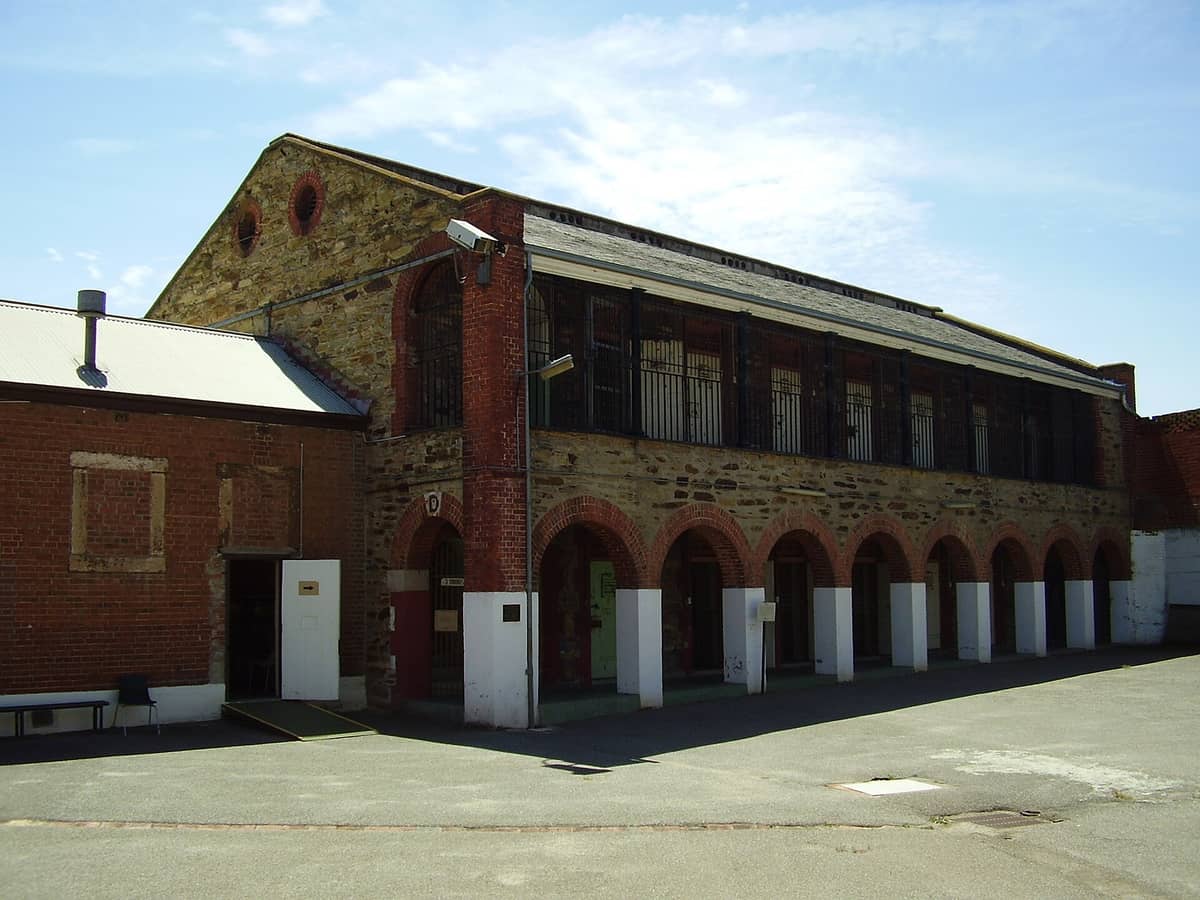
Adelaide Gaol is not a recreation or a theme park built to look old. It is the real thing: a working prison that housed inmates from 1841 until 1988, and has been open to the public ever since. That span of 147 years makes it one of the longest-operating prisons in Australian history, and the physical fabric reflects every decade of that use. Layers of lime wash cover original bluestone. Cell doors are scarred with years of locking and unlocking. The gallows, where 45 people were executed, still stand in the yard.
The site sits in Thebarton, close to the edge of Bonython Park and the River Torrens. From the outside it announces itself plainly: a high limestone perimeter wall with a colonial-era gatehouse. Inside, the scale is larger than most visitors expect. Multiple cell blocks, a women's division, exercise yards, and a range of interpretive displays spread across a site that takes a relaxed two hours to cover properly.
ℹ️ Good to know
Open daily 10 am–4 pm (closed Christmas Day). Last entry is one hour before closing. Access is currently through Bonython Park from Port Road due to nearby hospital construction — follow the directional signs from the park entrance.
The History Behind the Walls
Construction began on the Gaol in 1840, just four years after the proclamation of the Province of South Australia, and the first prisoners were admitted in 1841.and the first prisoners were admitted in 1841. The colony needed somewhere to house those convicted under its fledgling legal system, and this site on the western fringe of the planned city grid was chosen for that purpose. The original cell blocks were built from locally quarried limestone, a material that gives the interior its particular quality of cold, pale light.
Over the following century and a half, the Gaol expanded and contracted with the colony's changing needs. The women's division, originally a separate concern, was incorporated into the main complex. Conditions fluctuated with era and policy: periods of hard labour, periods of reform, periods of severe overcrowding. The last prisoner walked out in 1988, and heritage preservation work began almost immediately after.
The 45 executions carried out here are a significant part of the site's history, and the interpretive material does not shy away from this. Names, dates, and accounts of individual cases are presented throughout. This is not shock content for its own sake; it reflects the historical reality of capital punishment in colonial and twentieth-century South Australia. For visitors comfortable engaging with this material, the depth of context provided is genuinely impressive.
The Gaol sits a short distance from other heritage sites along the western edge of the CBD. If you are spending a day exploring the area's history, the Migration Museum and the South Australian Museum make natural companions, both dealing with different facets of the colony's social history.
Tickets & tours
Live prices and dates from our booking partner. If you book, we may earn a commission at no extra cost to you.
Ultimate Adelaide and Hahndorf full-day tour
From 94 €Instant confirmationFree cancellationAdelaide kayak tour with expert instructors
From 51 €Instant confirmationFree cancellationTrue Crime Tour in Adelaide
From 21 €Instant confirmationFree cancellationAdelaide city guided tour
From 37 €Instant confirmationFree cancellation
What the Visit Feels Like
Walking through the gatehouse into the main yard is the moment the experience clicks into place. The temperature drops noticeably inside the stone cell blocks, even on a warm Adelaide afternoon. The smell is particular: old limestone, cool air, and something faintly mineral that has no easy comparison. Cell doors open for visitors to step inside, and the dimensions are confronting. Single cells designed to hold one person were often used to hold more during periods of overcrowding.
The self-guided route is well marked and takes you through the men's cell blocks, the women's division, the exercise yards, and the gallows area. Audio guides and QR-code panels supplement the physical displays. The interpretive content is well-calibrated: serious enough to convey the weight of the history, readable enough to hold attention throughout. Children who are old enough to engage with difficult historical themes tend to find the site genuinely compelling rather than frightening.
Morning visits are generally quieter, particularly on weekdays. By midday on weekends, school groups and larger tour parties can make some sections feel crowded. If you prefer to linger in the cells and read the material without people queuing behind you, arriving at or just after 10 am on a weekday is the best approach. Afternoon light in the exercise yard, particularly in autumn and spring, is worth noting for photography — the low sun catches the texture of the limestone walls in a way that midday light does not.
💡 Local tip
Photography tip: The cell blocks face different directions, so light quality shifts through the day. The central yard gets good directional light in the morning; the gallows area is better in the afternoon when the shadows fall across the timber structure. A wide-angle lens handles the confined cell interiors better than a standard kit zoom.
Tours: Self-Guided, Guided, and After Dark
Standard admission covers self-guided access to all open areas of the Gaol. This is sufficient for most visitors and takes between 90 minutes and two and a half hours depending on how thoroughly you engage with the interpretive content. The layout is logical and the signage clear.
Guided tours are available and are worth considering if you have a particular interest in the history. Guides with detailed knowledge of individual cases, architectural changes, and the social context of the penal system add considerable depth to the experience. Check the official website for current tour times and whether pre-booking is required, as schedules can vary seasonally.
Ghost tours run on selected evenings and are consistently popular. These are separate ticketed events, generally running after the site closes to daytime visitors. The tours lean into the site's reputation for paranormal activity, which has been the subject of several investigations. Whether or not you believe in such things, the Gaol at night, lit only partially, with its history and its silence, is genuinely atmospheric. Bookings fill well in advance, especially during the cooler months and around events like the Adelaide Fringe.
The ghost tours in particular align with Adelaide's broader reputation for dark history and storytelling culture. If that interests you, the Adelaide Fringe season (February to March) often features additional events at heritage sites across the city.
Getting There and Practical Considerations
The Gaol's address is 18 Gaol Road, but access is currently via Bonython Park from Port Road due to The Gaol's address is 18 Gaol Road, but access is currently via Bonython Park from Port Road due to construction activity associated with the nearby Women's and Children's Hospital. Signage is in place, but allow a few extra minutes if it is your first visit. The walk through Bonython Park is pleasant and flat, and the park itself is part of the Adelaide Park Lands system that rings the CBD.
Bus services stop at Stop 2 on Port Road, from which it is a 5 to 10 minute walk. Free onsite parking is available for those arriving by car. The Adelaide Metro network connects most parts of the city to the Port Road corridor.
The Gaol is described as fully wheelchair accessible, with wheelchair hire available on site, along with accessible facilities and pram access. Baby-changing facilities are available nearby. The cell interiors that visitors can enter are level-access, though some of the older paved surfaces in the yard are uneven, as you would expect in a colonial-era building.
⚠️ What to skip
The content at Adelaide Gaol includes detailed accounts of executions, deaths in custody, and the treatment of prisoners including children. Parents should consider whether this is appropriate for young or sensitive children before visiting. The site does not sanitise this history.
Is It Worth Your Time?
Adelaide has a well-developed museum culture, and the Gaol competes for time against free or lower-cost institutions with significant collections. The honest answer is that the Gaol earns its admission price if you have a genuine interest in colonial history, penal history, or the architecture of the period. It is not the right stop for someone looking for a quick, feel-good cultural tick.
The site is sometimes described as Adelaide's most haunted building, and that framing can create misleading expectations. The ghost tour product is well-executed, but the daytime experience is primarily a serious historical attraction. Visitors who come expecting entertainment over substance may find the pacing deliberate. Visitors who come with curiosity about how a colonial city managed crime, punishment, and social order over 150 years will find the Gaol rewarding and unusually well-preserved.
For those putting together a full itinerary, the Gaol fits naturally alongside a visit to the Adelaide Park Lands or a walk along the River Torrens, both of which are immediately adjacent to the site.
Who should skip it: visitors with very young children, those who find confined spaces distressing, and anyone wanting a light afternoon out. The material is confronting by design, and the physical spaces are genuinely small and low-lit in sections.
Insider Tips
- Arrive at or just after 10 am on a weekday to have the cell blocks largely to yourself. Weekend afternoons are the busiest period by a significant margin.
- The self-guided experience is enhanced considerably by reading some background on South Australia's colonial penal history beforehand. The site's own website has a timeline that is worth reviewing the night before.
- Ghost tour bookings open well in advance and sell out quickly, particularly during Adelaide Fringe season (February to March) and around winter weekends. Book as soon as your dates are confirmed.
- Wear a layer regardless of the outside temperature. The stone cell blocks retain cold air even in Adelaide's hot summers, and the contrast can be sharper than you expect after a warm walk through the park.
- If you are driving, the Bonython Park car park off Port Road is the most practical option given the current construction-related access changes. Satnav to the Gaol Road address may route you incorrectly.
Who Is Adelaide Gaol For?
- History and heritage enthusiasts with an interest in colonial Australia
- Fans of dark tourism and honest, unvarnished historical interpretation
- Photographers drawn to textured stone, iron, and dramatic interior light
- Families with older children or teenagers who can engage with difficult historical content
- Anyone visiting Adelaide during ghost tour season looking for an evening experience beyond dining and bars
Nearby Attractions
Other things to see while in Adelaide CBD:
- Adelaide Arcade
Opened in December 1885, Adelaide Arcade is one of Australia's oldest and best-preserved Victorian-era shopping arcades. Free to enter and located opposite Rundle Mall's fountain, it offers a rare combination of architectural beauty, specialty retailers, and a genuine sense of Adelaide's commercial history.
- Adelaide Botanic Garden
Open daily and completely free, Adelaide Botanic Garden covers 50 hectares on the northern edge of the CBD. From a 19th-century palm house to a full-scale tropical rainforest glasshouse, it rewards a slow morning or a purposeful afternoon walk.
- Adelaide Central Market
Adelaide Central Market has operated continuously since 1869, making it one of the largest undercover fresh produce markets in the Southern Hemisphere. Spread across 5,720 square metres in the heart of the CBD, it draws locals, chefs, and curious visitors to its mix of produce stalls, specialty food traders, and casual eateries. This guide covers everything you need to plan a worthwhile visit.
- Adelaide Festival Centre
Opened in 1973, Adelaide Festival Centre is South Australia's flagship performing arts complex, anchoring the northern edge of the CBD along King William Road. From major theatre productions to intimate performances, it draws both locals and visitors year-round — and its riverside location makes it as much a place to linger as to attend a show.
Planning a trip? Discover personalized activities with the Nomado app.