Adelaide Central Market: What to Expect, When to Go, and What Not to Miss
Adelaide Central Market has operated continuously since 1869, making it one of the largest undercover fresh produce markets in the Southern Hemisphere. Spread across 5,720 square metres in the heart of the CBD, it draws locals, chefs, and curious visitors to its mix of produce stalls, specialty food traders, and casual eateries. This guide covers everything you need to plan a worthwhile visit.
Quick Facts
- Location
- 44–60 Gouger Street, Adelaide CBD SA 5000
- Getting There
- Tram to Victoria Square/Tarntanyangga; free City Connector bus stops nearby
- Time Needed
- 1–2 hours for a thorough visit; allow longer if eating on-site
- Cost
- Free entry; individual purchases priced by traders
- Best for
- Food lovers, produce shoppers, weekend morning visitors
- Official website
- adelaidecentralmarket.com.au
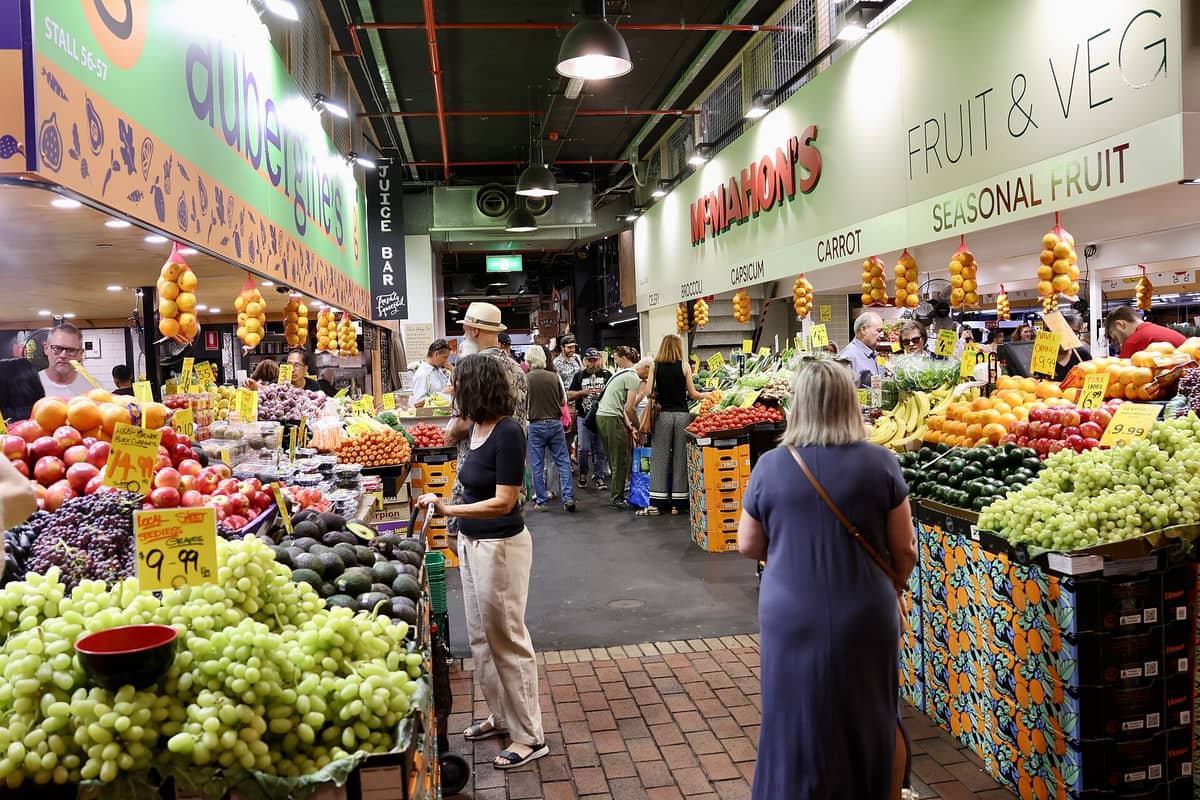
What Is Adelaide Central Market?
Adelaide Central Market is a covered fresh produce and specialty food market occupying 5,720 square metres in the CBD, between Gouger and Grote streets. It is one of the largest undercover fresh produce markets in the Southern Hemisphere, and it has been trading continuously since January 1869 — the City Market's official opening took place on 22 January 1870, cementing a presence that now spans more than 150 years. That longevity is not an accident: the market has adapted through several waves of Adelaide's food culture, absorbing waves of migration that brought Italian delis, Asian grocers, Middle Eastern spice merchants, and an evolving cast of artisan producers.
The market sits near CBDwestern edge of the Adelaide CBD, close enough to walk from Rundle Mall in about ten minutes, yet far enough from the tourist strip to feel genuinely local. The surrounding Gouger Street precinct is Adelaide's most concentrated dining street, so combining a market visit with lunch at one of its restaurants is an entirely natural half-day.
ℹ️ Good to know
Entry is free at all times. The market is closed on Sundays and Mondays. Wednesday trades as an optional day, meaning the range of traders may vary — if you want the full experience, visit Tuesday, Thursday, Friday, or Saturday.
Trading Hours: When to Go (and When to Arrive)
The official trading hours are: Tuesday 7:00 am–5:30 pm; Wednesday 9:00 am–5:30 pm (optional trading, reduced stallholder participation); Thursday 9:00 am–5:30 pm; Friday 7:00 am–9:00 pm; Saturday 7:00 am–3:00 pm. No seasonal schedule adjustments are listed on the official site, but hours for individual stalls can vary around public holidays.
Saturday morning is the market's loudest, most social session. By 8:00 am the main corridors are thick with locals doing their weekly shop: trolleys clatter, traders call out specials, and the smell of fresh bread and roasting coffee pushes through the cool morning air from multiple directions at once. If you want atmosphere and don't mind company, Saturday before 10:00 am is the visit to make. If you want to browse without being jostled, Thursday morning offers the same full range of stalls with a fraction of the crowd.
Friday evening trade runs until 9:00 pm, which makes the market unusually practical for workers who can't get there during the day. The energy shifts after 5:30 pm: the produce rush winds down, and the food stalls and eateries inside the market become the main draw. It is a quieter, more relaxed version of the daytime experience.
⚠️ What to skip
Arriving on Wednesday without checking ahead is risky. Some weeks the floor is well-stocked; others it is noticeably sparse. If Wednesday is your only option, arrive with adjusted expectations.
Tickets & tours
Live prices and dates from our booking partner. If you book, we may earn a commission at no extra cost to you.
Ultimate Adelaide and Hahndorf full-day tour
From 94 €Instant confirmationFree cancellationAdelaide kayak tour with expert instructors
From 51 €Instant confirmationFree cancellationTrue Crime Tour in Adelaide
From 21 €Instant confirmationFree cancellationAdelaide city guided tour
From 37 €Instant confirmationFree cancellation
The Layout: How to Navigate 5,720 Square Metres
The market is arranged in parallel rows of fixed stalls, with wider central aisles and narrower side corridors. There is no single 'entrance experience': the market has multiple access points from both Gouger Street (south) and Grote Street (north), and the layout is roughly symmetrical, so getting oriented on your first visit can take a few minutes. Grab a free map from The Market Stall at the central Gouger Street entrance — it lists stall numbers and trader names, which is genuinely useful given how densely the floor is packed.
Produce traders dominate the central floor: greengrocer stalls with fruit and vegetables stacked in tight, colourful displays, seafood counters, butchers, and poulterers. The specialty food traders, including cheese shops, continental delicatessens, nut and dried-fruit merchants, and coffee roasters, tend to cluster toward the edges. Ready-to-eat food stalls, bakeries, and cafes are scattered throughout, with some concentrated near the Sturt Street end.
The market connects internally to the Market Square, a retail development adjacent to the market. The arcade houses a mix of fashion, gift, and lifestyle shops alongside food outlets, and it is worth walking through even if shopping is not your priority — it gives the visit a sense of depth and lets you exit on the north side without backtracking.
What to Buy, Eat, and Drink
The honest answer to 'what should I buy?' is: whatever looks best on the day. Produce freshness varies by season, and the market's strength is exactly that variability. In late summer, stone fruit from South Australian growers is exceptional. In winter, citrus and root vegetables dominate. The seafood counters regularly stock King George whiting and blue swimmer crab, both emblematic of South Australian coastal waters.
For eating on-site, the market has genuine options beyond the generic. Several traders sell excellent coffee; the queue lengths are often a reliable guide to quality. Pie and pastry options appear at multiple stalls. If you want a more structured feed, the surrounding Gouger Street precinct has long been the engine room of Adelaide's restaurant scene — worth cross-referencing with our guide to what to eat in Adelaide before you visit.
Cheese counters at the market deserve specific mention: several carry Australian farmhouse varieties alongside imported European types, and the staff are generally willing to cut small samples. The same applies to some of the continental delis, which stock cured meats, olives, and preserved goods from South Australia's significant Italian and Greek communities. These traders carry produce that does not appear in supermarkets and represents one of the clearest reasons to come here rather than simply visiting a suburban grocery chain.
💡 Local tip
Bring a reusable shopping bag or a small backpack. Plastic bag availability varies by stall, and trying to carry multiple paper bags through a crowded Saturday floor gets uncomfortable quickly.
Getting There: Transit, Parking, and Access
The tram line connecting the CBD to Glenelg stops at Victoria Square/Tarntanyangga, about 180 metres from the closest market entrance. The free City Connector bus loop also passes through the area. If you are walking from the east end of the city — Rundle Mall, for instance — allow around ten to twelve minutes on foot heading southwest along Grenfell or Flinders Street.
Parking is available at UPark Central Market, a multi-storey car park situated directly above the market and accessed from Gouger and Grote streets. Fees apply. Parking can fill quickly on Friday evenings and Saturday mornings, so transit is the more reliable option on peak days.
Accessibility is handled reasonably well for a heritage-era market building. The Gouger Street and Grote Street entrances are step-free, and the market floor walkways are level. Accessible toilets are available on-site, and the market offers free short-term wheelchair hire. Individual stalls may have their own raised platforms or minor steps, so conditions vary across the floor, but general navigation of the main aisles presents no significant barrier.
Historical and Cultural Context
Trading at the site began on 23 January 1869, with the formal City Market opening following on 22 January 1870. The market predates most of Adelaide's existing civic architecture and has outlasted several waves of urban redevelopment. Its survival through the twentieth century, when covered markets in many Australian cities were demolished in favour of supermarkets, reflects both the loyalty of its trader base and the sustained preference of Adelaide residents for fresh produce shopping as a weekly ritual.
The market's cultural character shifted significantly from the mid-twentieth century onward, as migrants from southern Europe, Southeast Asia, and later the Middle East and South Asia established stalls and reshaped the produce and specialty goods on offer. That diversity is now a structural feature of the market, not an add-on. It also sits in the context of a city whose food culture is strongly shaped by regional South Australian produce, proximity to wine regions including the Barossa Valley and McLaren Vale, and a coastline that supplies fresh seafood. For a broader sense of how the market fits into Adelaide's culinary landscape, the Adelaide food market guide provides useful context.
The Kaurna people are the traditional custodians of the Adelaide Plains on which the city stands. The market site sits within that traditional Country, and acknowledging this context is appropriate when visiting any part of the city, including its major public spaces.
What to Know: Who This Is For, and Who Might Be Disappointed
Adelaide Central Market rewards visitors who actually want to shop, eat, or engage with food culture. If you are looking for a photogenic spectacle or a curated 'experience' in the tourist sense, the market delivers that in moments — particularly on a busy Saturday morning — but it is fundamentally a working market, and it operates on that basis. Stall holders are busy, the floor gets loud, and the layout is functional rather than scenic.
Visitors who expect the market to resemble a European Christmas market or a boutique food hall may find it more utilitarian than anticipated. The building itself has the feel of a practical trading floor: strip lighting, trolleys, cardboard boxes, and traders who are more focused on moving produce than on conversation. That is not a criticism — it is the character of the place — but it is worth knowing before you arrive.
Travellers with very limited time in Adelaide often ask whether the market is worth prioritising. The answer depends on what else is on the itinerary. If you are spending three or more days in the city, it fits naturally into a half-morning. If you are here for just one day, weigh it against other CBD priorities such as the Art Gallery of South Australia or the South Australian Museum, both of which are free and offer something the market cannot: quiet and depth.
Insider Tips
- Tuesday morning is the most underrated visit window: the market is fully stocked from the weekly delivery cycle, and crowds are thinner than Thursday or Saturday. It is the day many local chefs do their shopping.
- The market's official map, available free from The Market Stall at the central Gouger Street entrance, lists stall numbers alongside trader names. Download it from the official site before you arrive if you have specific traders in mind.
- Friday evening trade until 9:00 pm is one of the few chances in Adelaide to buy fresh produce after standard work hours. The atmosphere is noticeably calmer than daytime, and some traders reduce prices on perishables toward closing.
- Market Square, the retail development adjacent to the market, is worth walking end-to-end. Several small independent retailers inside are not listed on the market's main directory.
- If you are visiting in summer, note that the market is an indoor stop, which makes it a genuinely comfortable midday stop during Adelaide's hot dry summers when outdoor activity is uncomfortable from around 11:00 am onward.
Who Is Adelaide Central Market For?
- Food-focused travellers who want to shop for local produce, cheese, seafood, or specialty goods
- Self-catering visitors staying in CBD apartments
- Families looking for a low-cost, indoor morning activity with practical browsing and on-site food
- Visitors interested in the cultural diversity of Adelaide through the lens of its food traders
- Anyone visiting on a Friday who wants fresh produce access outside standard daytime hours
Nearby Attractions
Other things to see while in Adelaide CBD:
- Adelaide Arcade
Opened in December 1885, Adelaide Arcade is one of Australia's oldest and best-preserved Victorian-era shopping arcades. Free to enter and located opposite Rundle Mall's fountain, it offers a rare combination of architectural beauty, specialty retailers, and a genuine sense of Adelaide's commercial history.
- Adelaide Botanic Garden
Open daily and completely free, Adelaide Botanic Garden covers 50 hectares on the northern edge of the CBD. From a 19th-century palm house to a full-scale tropical rainforest glasshouse, it rewards a slow morning or a purposeful afternoon walk.
- Adelaide Festival Centre
Opened in 1973, Adelaide Festival Centre is South Australia's flagship performing arts complex, anchoring the northern edge of the CBD along King William Road. From major theatre productions to intimate performances, it draws both locals and visitors year-round — and its riverside location makes it as much a place to linger as to attend a show.
- Adelaide Gaol
Today it opens its stone walls, original cells, and gallows yard to the public as a sobering, fascinating window into colonial and modern penal history.
Planning a trip? Discover personalized activities with the Nomado app.