Adelaide Botanic Garden: What to Expect, When to Go, and Why It's Worth Your Time
Open daily and completely free, Adelaide Botanic Garden covers 50 hectares on the northern edge of the CBD. From a 19th-century palm house to a full-scale tropical rainforest glasshouse, it rewards a slow morning or a purposeful afternoon walk.
Quick Facts
- Location
- North Terrace, Adelaide SA 5000 (northern edge of the CBD)
- Getting There
- Botanic Gardens tram stop and free city connector bus stop nearby
- Time Needed
- 1.5 to 3 hours for a thorough visit; 45 minutes if you're passing through
- Cost
- Free entry; no ticket required
- Best for
- Picnics, quiet morning walks, plant enthusiasts, families with young children, photography
- Official website
- www.botanicgardens.sa.gov.au
What Adelaide Botanic Garden Actually Is
Adelaide Botanic Garden is a 50-hectare public garden that has been open since 4 October 1857, making it one of the oldest continuously operating botanic gardens in Australia. It sits at the northeastern corner of the CBD, separated from the university precinct and cultural institutions of North Terrace by a low fence and a world of sensory difference. Within minutes of leaving the pavement, the street noise fades and the temperature drops noticeably under the canopy.
The garden is not purely ornamental. It operates under the Botanic Gardens and State Herbarium of South Australia and holds genuine scientific collections: a living herbarium, significant palm specimens, an economic plants bed, and a working plant nursery. That scientific backbone gives it depth that purely decorative city gardens often lack. Visitors who look carefully will find interpretive labels on most specimens, including common names, scientific names, and country of origin.
💡 Local tip
Entry is free at all times. The Main Gate on North Terrace is the most direct entry point from the tram stop and the CBD. If you arrive by car, Plane Tree Drive and Hackney Road both have parking nearby.
The Highlights Worth Seeking Out
The Bicentennial Conservatory is the centrepiece and the detail most visitors remember. Opened in 1989 to mark the 200th anniversary of European settlement in Australia, it is one of the largest single-span glasshouses in the Southern Hemisphere. Inside, the climate is maintained to replicate a lowland tropical rainforest: warm, humid, and thick with the smell of damp earth and vegetation. The canopy walkway gives you an elevated view through the foliage that is rarely available in real tropical forests without considerable hiking. On cool Adelaide mornings, the warmth hits you immediately upon entering, and condensation runs down the glass walls.
The Museum of Economic Botany, housed in a beautifully restored 1881 building, is the kind of place most visitors walk past. That is a mistake. It contains thousands of specimens showing how plants have shaped human industry, medicine, and food production. The wooden display cases and natural light give it the atmosphere of a 19th-century curiosity cabinet. It is genuinely unusual and easy to spend 30 minutes inside.
The First Creek Wetland is a restored waterway running through the garden's eastern section. Tall paperbarks line the banks, and native waterfowl are present most mornings. The soundscape here is different from the rest of the garden: fewer echoes of the city, more birds. The waterlily pavilion nearby displays lotus and waterlily species on a shallow pond, most impressive in summer when they flower.
Tickets & tours
Live prices and dates from our booking partner. If you book, we may earn a commission at no extra cost to you.
Adelaide Botanic Garden guided tour
From 37 €Instant confirmationFree cancellationUltimate Adelaide and Hahndorf full-day tour
From 94 €Instant confirmationFree cancellationAdelaide kayak tour with expert instructors
From 51 €Instant confirmationFree cancellationTrue Crime Tour in Adelaide
From 21 €Instant confirmationFree cancellation
How the Experience Changes by Time of Day
Early weekday mornings, from around 7:30 to 9:00 am, are when the garden belongs to regular walkers, joggers, and the occasional birdwatcher. The light comes in low and angled through the tree canopy, which makes it the best window for photography. Dew on the lawns, near-empty paths, and birdsong from rosellas and honeyeaters overhead. If you want the garden to yourself, this is the time.
Midmornings on weekends shift the atmosphere considerably. School groups, families with strollers, and tourists from the nearby hotel strip all arrive after 9:00 am. The main lawn and the café terrace fill up. This is not unpleasant, but it is a different experience: more social, louder, and the paths around the conservatory can feel congested near the entrance.
Afternoons in summer require some planning. Adelaide's Mediterranean climate means December through February can produce days above 35°C. In that heat, the exposed central lawn is genuinely uncomfortable, but the canopy paths along the creek and the interior of the conservatory offer relief. Spring (September to November) and autumn (March to May) are the most comfortable seasons, with temperatures typically between 11°C and 25°C. Winter mornings can be brisk, but the garden stays green and the conservatory becomes particularly welcome.
⚠️ What to skip
The garden closes earlier in winter months: 5:30 pm daily from April through September. If you are planning a late afternoon visit, check the current hours at botanicgardens.sa.gov.au before you go, as seasonal times shift by about an hour.
Historical and Cultural Context
The garden was gazetted in 1855 and opened to the public on 4 October 1857, just over two decades after the founding of the Colony of South Australia. Its establishment reflected the Victorian-era belief that botanic gardens served a dual purpose: scientific advancement and civic improvement. The original layout followed the informal English landscape style, with sweeping lawns, specimen trees planted for long-term effect, and winding paths designed to create a series of framed views.
The land on which the garden sits is part of the traditional Country of the Kaurna people of the Adelaide Plains. For visitors interested in understanding the relationship between First Nations culture and the South Australian landscape, the Living Kaurna Cultural Centre at Warriparinga provides important context that the garden itself does not directly offer.
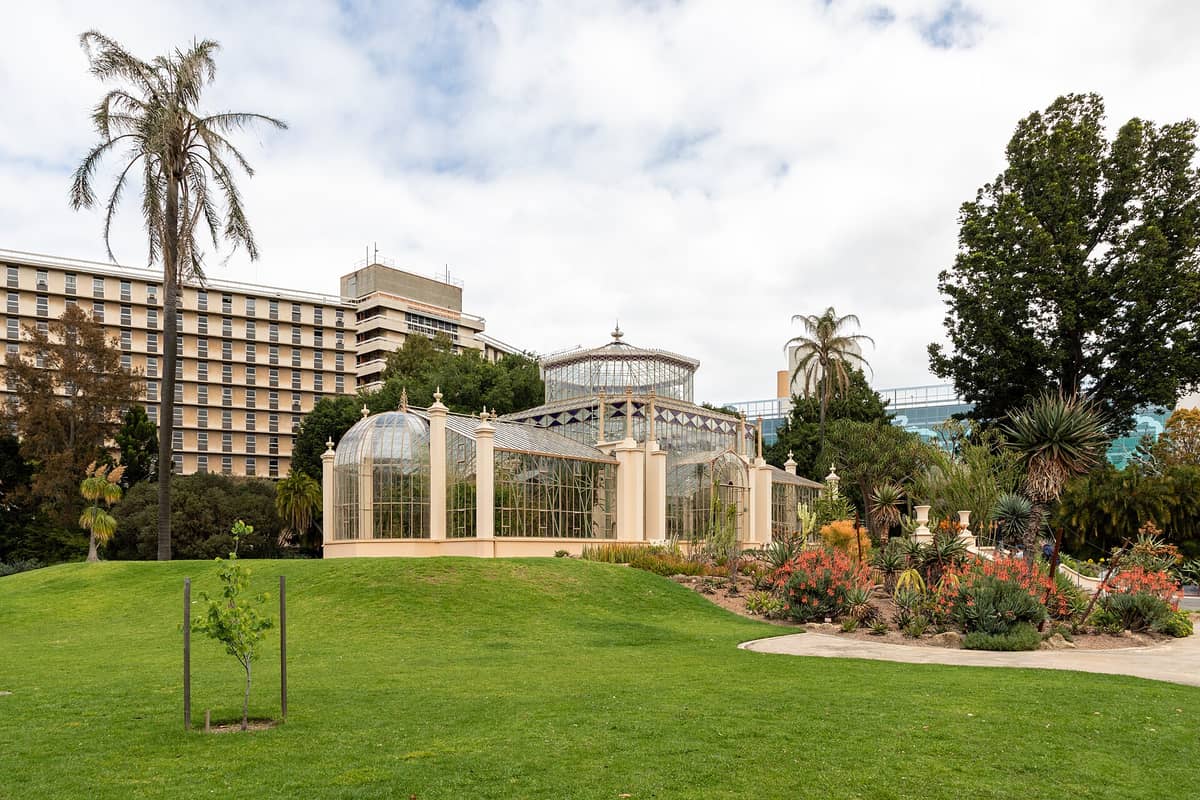
Several of the trees in the garden are heritage-listed. The Moreton Bay Fig near the Main Gate is particularly old and massive: its canopy spreads wide enough that visitors instinctively gather in its shade on hot days. The Palm House, constructed in 1877 from iron and glass, is one of the few surviving structures of its type in Australia and is used for rotating floral displays.
Getting There and Moving Around
The Botanic Gardens tram stop on North Terrace is nearby, making this one of the easiest major attractions in Adelaide to reach without a car. The tram runs from the city centre. If you are planning a day that combines the garden with the CBD's cultural strip, North Terrace itself is worth walking: the Art Gallery, South Australian Museum, and State Library are all within five minutes on foot.
Inside the garden, the main paths are paved or bitumen-sealed and suitable for strollers and wheelchairs. Some secondary routes use gravel or compacted sawdust, and a few paths in the eastern section have slopes that require some effort. Wheelchair users should note that the Hackney Gate entrance has a steep gradient and is not recommended; all other gates offer level or ramped access. Wheelchairs can be borrowed from the garden by advance booking through the official website.
For visitors combining the garden with broader city exploration, the guide to getting around Adelaide covers tram routes, the free city connector bus, and ticketing in detail.
The Café and Practical Amenities
The Botanic Garden Restaurant sits in a glass pavilion near the main lawn and is a legitimate dining destination in its own right, not just a convenience stop. Breakfast and lunch are served on the garden-facing terrace, and on warm mornings the setting is genuinely appealing. Expect café pricing rather than budget food; this is not the place for a quick AUD 5 coffee, but the quality is consistent with the surroundings.
Public toilets are located near the Main Gate and in several other spots throughout the grounds. Drinking fountains are available on the main paths. The garden does not allow pets, though assistance dogs are welcome; dogs are not permitted inside the glasshouses or the Museum of Economic Botany.
ℹ️ Good to know
Free guided tours of the garden are available on selected days and depart from the Main Gate. Check the official website for current tour schedules, as these change seasonally and are offered by volunteer guides with deep knowledge of individual specimens.
Photography, Seasonal Highlights, and What to Bring
The garden rewards patient photography. The Bicentennial Conservatory interior is challenging: the contrast between the bright glass ceiling and the dark undergrowth means automatic exposure settings often produce flat results. Manual or exposure-compensation adjustments help considerably. The waterlily pond photographs best in summer between 10:00 am and noon when the flowers are fully open. The formal rose garden, positioned in the southeastern section, peaks in November and again in April.
For visitors interested in combining garden photography with other scenic stops, the best views in Adelaide guide lists several complementary locations across the city and hills.
Bring water if you are visiting in summer; the exposed central areas get hot quickly. Comfortable walking shoes are adequate for the main paths, though the gravel sections in the east are easier with closed-toe shoes than sandals. The garden provides some shade but not continuously, so sunscreen matters from October through March.
Who Might Not Enjoy This
Visitors primarily motivated by wildlife encounters should temper expectations: the garden has birds and some native lizards, but it is not a wildlife sanctuary. For hands-on animal experiences, Cleland Wildlife Park in the Adelaide Hills is a far better option.
Those looking for dramatic or engineered spectacle may also find the garden understated. It does not have fountains, sculptures, or manicured topiary on the scale of some European botanical gardens. The appeal is quieter: old trees, careful plant collections, and the particular stillness that a well-maintained garden produces in the middle of a city. If that sounds like it requires patience you do not have, the garden will feel slow.
Insider Tips
- The free volunteer-guided tours are genuinely informative and depart from the Main Gate on selected mornings. Guides carry stories about individual trees that no sign communicates. Check the official website for the current schedule before your visit.
- The Museum of Economic Botany is easy to miss because it looks like an administrative building from outside. The door on the eastern side of the main path is usually open during garden hours. Give it 20 minutes minimum.
- If you want the conservatory's canopy walkway without a crowd, visit on a weekday morning before 10:00 am. Weekend afternoons see the most congestion near the entrance ramp.
- The garden's eastern boundary along Hackney Road gives access to the garden; the wetland section is also worth exploring.
- Adelaide's summer heat is significant. The conservatory and the creek-side canopy paths are the two best places to stay cool inside the garden on days above 32°C.
Who Is Adelaide Botanic Garden For?
- Travellers who want a free, low-effort morning that feels nothing like a typical tourist itinerary
- Families with children who need space to move around without spending money
- Plant and botany enthusiasts who will appreciate the labelled scientific collections
- Photographers working in natural light, especially in early morning or during spring flowering
- Solo travellers or couples who want a calm mid-day break from the CBD
Nearby Attractions
Other things to see while in Adelaide CBD:
- Adelaide Arcade
Opened in December 1885, Adelaide Arcade is one of Australia's oldest and best-preserved Victorian-era shopping arcades. Free to enter and located opposite Rundle Mall's fountain, it offers a rare combination of architectural beauty, specialty retailers, and a genuine sense of Adelaide's commercial history.
- Adelaide Central Market
Adelaide Central Market has operated continuously since 1869, making it one of the largest undercover fresh produce markets in the Southern Hemisphere. Spread across 5,720 square metres in the heart of the CBD, it draws locals, chefs, and curious visitors to its mix of produce stalls, specialty food traders, and casual eateries. This guide covers everything you need to plan a worthwhile visit.
- Adelaide Festival Centre
Opened in 1973, Adelaide Festival Centre is South Australia's flagship performing arts complex, anchoring the northern edge of the CBD along King William Road. From major theatre productions to intimate performances, it draws both locals and visitors year-round — and its riverside location makes it as much a place to linger as to attend a show.
- Adelaide Gaol
Today it opens its stone walls, original cells, and gallows yard to the public as a sobering, fascinating window into colonial and modern penal history.
Planning a trip? Discover personalized activities with the Nomado app.