Cleland Wildlife Park: Your Complete Guide to Adelaide's Best Wildlife Encounter
Cleland Wildlife Park sits within a 1,036-hectare national park in the Adelaide Hills, offering one of Australia's most intimate native wildlife experiences. Walk among free-roaming kangaroos, hand-feed wallabies, and get close to koalas — all within 20 minutes of the city centre.
Quick Facts
- Location
- 365 Mount Lofty Summit Road, Crafers, Adelaide Hills
- Getting There
- Public bus to Stop 27 – Cleland Wildlife Park; free on-site parking by car via South Eastern Freeway (Crafers exit)
- Time Needed
- 2–4 hours
- Cost
- Paid entry; check the official booking page for current prices before visiting
- Best for
- Families, first-time visitors to Australia, wildlife photographers, and anyone wanting hands-on native animal encounters
- Official website
- www.clelandwildlifepark.sa.gov.au
What Cleland Wildlife Park Actually Is
Cleland Wildlife Park is a managed wildlife sanctuary within Cleland National Park, proclaimed a National Park in 2021 after first being protected as a Conservation Park in 1978. The park covers 1,036 hectares of native bushland in the Mount Lofty Ranges, roughly 20 minutes from central Adelaide by car. Unlike a conventional zoo, large sections of Cleland are open-range, meaning kangaroos and wallabies move freely through the visitor areas and you walk among them, not around a fence looking in.
The experience is hands-on in a way that surprises many visitors. You can purchase a small bag of feed at the entrance and spend a good part of your visit crouching beside eastern grey kangaroos that are entirely unbothered by human presence. Koala encounters are also available, structured as ticketed sessions where you hold or stand beside a koala with a keeper present — a regulated activity that not every Australian park still permits.
ℹ️ Good to know
Cleland Wildlife Park is open daily 9:30 am–5:00 pm, except Christmas Day and days of catastrophic fire danger. Always check the official website before your visit, particularly in summer when fire risk can cause short-notice closures.
Arriving and Orienting Yourself
By car, the drive up from Adelaide follows the South Eastern Freeway to the Crafers exit, then winds up Summit Road through patches of eucalypt woodland. The change in atmosphere is immediate: the temperature drops a degree or two, the tree canopy closes in, and the suburban noise of the city disappears. Parking is free and the entrance is clearly signed.
If you are travelling without a car, a public bus route serves Stop 27 (Cleland Wildlife Park). Verify the current timetable with Adelaide Metro before your visit, as services to the Hills can be infrequent. A rideshare from the CBD is a practical alternative for groups.
At the gate, buy your animal feed straight away rather than waiting until you are inside. The kangaroos cluster near the main path not long after opening, and the feed goes quickly if you are visiting with children. The park is compact enough to navigate without a map, but a site plan is available at the entrance. The main loop takes about 90 minutes at a relaxed pace; budget extra time if you book a koala encounter session.
💡 Local tip
Arrive close to the 9:30 am opening if you want a quieter visit. The park is usually busier earlier in the day and around lunch, and quieter from mid-afternoon.
Tickets & tours
Live prices and dates from our booking partner. If you book, we may earn a commission at no extra cost to you.
Ultimate Adelaide and Hahndorf full-day tour
From 94 €Instant confirmationFree cancellationHalf-day Lofty Descents tour by bike
From 89 €Instant confirmationFree cancellationAdelaide kayak tour with expert instructors
From 51 €Instant confirmationFree cancellationTrue Crime Tour in Adelaide
From 21 €Instant confirmationFree cancellation
The Animals: What You Will See and How Close You Get
The open-range kangaroo and wallaby area is the centrepiece of Cleland, and it delivers. Eastern grey kangaroos graze in open clearings and lounge on grassy slopes; they are accustomed to visitors and will eat from your hand without prompting. If you crouch down to their level, they will sometimes rest a paw on your arm while eating, which tends to unsettle adults more than it does children. The smell is earthy and faintly musky, somewhere between a farm animal and a domestic dog, and the texture of their fur is coarser than most people expect.
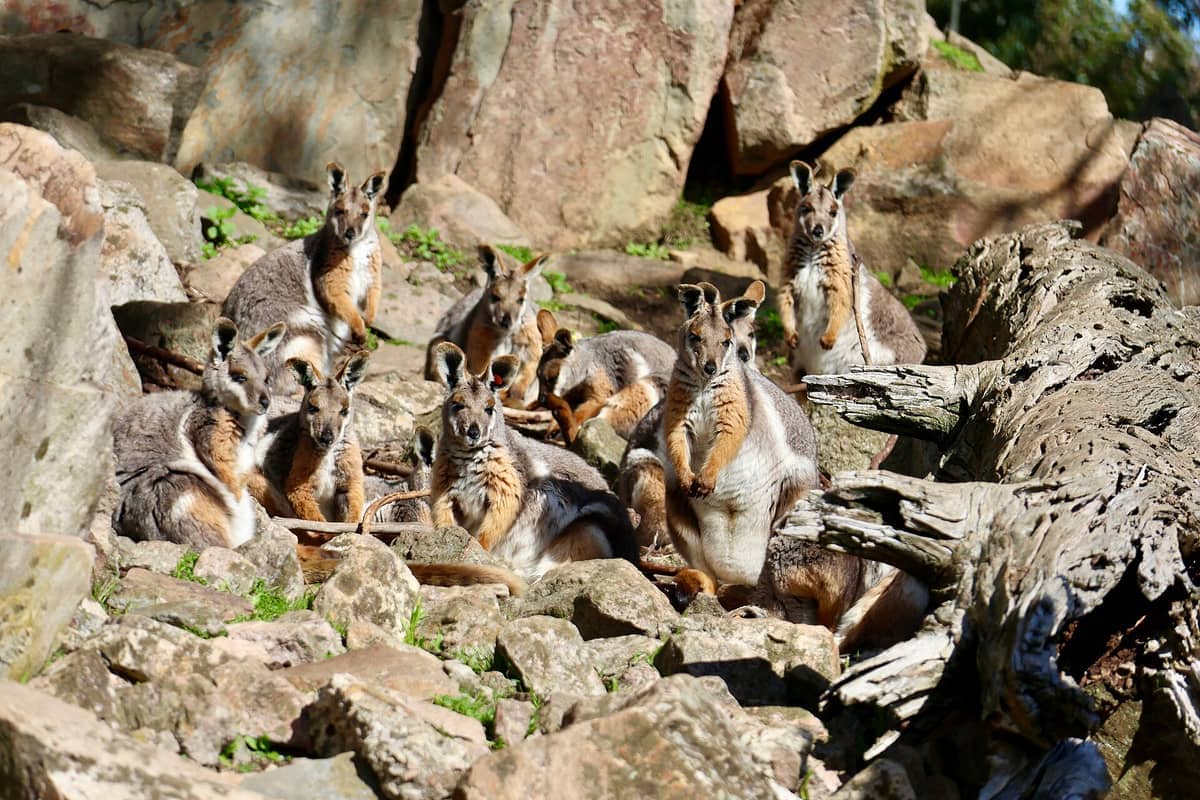
Beyond kangaroos, Cleland is home to wombats, Tasmanian devils, dingoes, emus, pelicans, and a range of native bird species in walk-through aviaries. Koalas are kept in dedicated areas and are not freely roaming. Koala encounter sessions are ticketed separately and should be booked in advance through the park's official booking system, particularly during school holidays when demand spikes significantly.
The Tasmanian devil enclosure rewards patience. Devils are often inactive during the middle of the day, retreating into shelters, but keepers sometimes bring them out during scheduled feeding presentations. Check the daily program at the entrance to time your visit to these.
⚠️ What to skip
Do not feed the animals anything other than the park-supplied feed pouches. Human food can make native animals seriously ill, and keepers are watching.
How the Experience Changes Through the Day
Morning visits, particularly on weekdays, offer something close to quiet immersion. The low angle of the sun filters through the eucalyptus canopy, the birds are most vocal, and the kangaroos are up and grazing before the heat sets in. The park smells of damp bark and eucalyptus oil, most strongly in the hour after opening. Photography is significantly easier in this light: the animals are active, the paths are uncrowded, and the dappled light through the trees creates naturally appealing backgrounds.
By late morning on weekends and during school holidays, the park fills with families and the kangaroo clearings become noisier. The animals remain approachable, but moving through the main areas requires more patience. If you are visiting on a weekend, the early opening slot is worth setting an alarm for. Afternoon visits from around 3:00 pm can see animal activity pick up again as temperatures moderate, though you should leave time to reach the exit well before the 5:00 pm close.
The setting in the Adelaide Hills means summer temperatures at Cleland are noticeably cooler than the city floor. On days when central Adelaide hits 38°C, the park might sit at 30–32°C with more shade. That said, South Australia's catastrophic fire danger days can trigger a closure with little notice. Check the best time to visit Adelaide guide if you are planning around weather.
Practical Walkthrough: Getting the Most from Your Visit
A few logistical details make a meaningful difference. Wear closed-toe shoes: the paths are a mix of sealed surfaces and compacted gravel, and kangaroos occasionally step on feet without warning. Bring sunscreen regardless of the season; the clearings are open to the sky and reflect significant UV.
The park has a cafe and a picnic area, making it a reasonable half-day outing rather than a rushed stop. Families with young children often treat lunch at Cleland as part of the visit rather than driving elsewhere. The accessible facilities are reasonably well-developed: designated parking, accessible toilets, and complimentary wheelchair hire (advance booking recommended, with a AUD 50 deposit). Several sealed main paths are step-free, though some secondary paths involve steeper gradients. If mobility is a concern, contact the park directly before visiting to confirm current access conditions.
Cleland sits at the edge of Mount Lofty Summit Road, which makes combining it with a visit to the Mount Lofty Summit a natural pairing. The Summit lookout is a short drive away and gives a sweeping view over Adelaide's coastal plain. The Waterfall Gully trailhead is also accessible from the same area for those who want to add some walking to the day.
Photography Tips and What Not to Miss
The kangaroo clearings are the prime photography location, but the best shots often come from getting low rather than shooting down. A wide-angle lens captures the animal in its environment; a short telephoto compresses the background and isolates the subject. Early morning light is the most flattering. The aviaries are challenging in bright midday light due to the wire mesh and harsh shadows, so visit them earlier in the day if bird photography matters to you.
Koala encounters are photographed by a park staff member during the session, with images available for purchase. You may also use your own camera during designated moments, though the keeper's instructions take precedence. The koalas are calm, often sleepy, and hold position well, making the session reasonably photographer-friendly even with a basic phone camera.
Who Should Think Twice
Travellers with a strong preference for wilderness over managed environments may find Cleland underwhelming compared to a genuine national park bushwalk. The animals are habituated to humans, the infrastructure is clearly visible, and the overall setting is curated rather than wild. For those wanting unmanaged native wildlife encounters or serious hiking, the Morialta Conservation Park or the Adelaide Hills hiking trails offer a more rugged alternative.
Visitors travelling without a car who are uncomfortable with infrequent bus services should plan transport carefully. Relying on public transit to Cleland takes more planning than most Adelaide CBD attractions, and a missed return bus can mean a long wait. Rideshare is available but coverage in the Hills area is less consistent than in the inner suburbs.
If international wildlife parks with more controlled presentation are what you are after, the Monarto Safari Park at Murray Bridge (about 75 km from Adelaide) offers a very different scale of experience, with African species and open-vehicle safaris. Both are worth considering depending on what you want from a wildlife day.
Insider Tips
- Book koala encounter sessions well in advance, especially during South Australian school holidays (late September to mid-October, and July). They sell out faster than most visitors expect.
- The animal feed pouches sold at the entrance give you more control over the kangaroo experience than bringing anything of your own — and they ensure you are not accidentally feeding something harmful.
- Check the park's daily keeper talk schedule at the entrance booth. Tasmanian devil and dingo presentations happen at set times and are far more engaging than watching the enclosures on your own.
- If you are driving up from Adelaide, keep an eye on the CFS (Country Fire Service) website on summer days before you leave. Closures due to catastrophic fire danger can happen with a few hours' notice.
- The picnic area near the entrance has tables in the shade; bringing your own lunch and eating here is significantly cheaper than the cafe and lets you extend your stay into the quieter early afternoon.
Who Is Cleland Wildlife Park For?
- First-time visitors to Australia wanting a concentrated native wildlife experience without travelling far from Adelaide
- Families with children aged 4 to 12, for whom feeding kangaroos by hand is a genuine highlight
- Wildlife photographers looking for approachable subjects in naturalistic bush settings
- Travellers combining the visit with nearby Adelaide Hills destinations like Mount Lofty Summit
- Visitors with limited mobility who want accessible native wildlife encounters, given the park's sealed paths and wheelchair hire service
Nearby Attractions
Other things to see while in Adelaide Hills:
- Belair National Park
Proclaimed in 1891, Belair National Park covers 840 hectares of native bushland in the Adelaide Hills, just 11 kilometres from the city centre. It offers walking trails, open grass areas, wildlife watching, and a genuine sense of space without requiring a full-day commitment.
- Carrick Hill
Carrick Hill is a beautifully preserved 1930s Arts and Crafts estate in Springfield, about 8 kilometres from the Adelaide CBD. The property combines a fully furnished house museum, a heritage garden designed to complement the architecture, and a contemporary gallery space — all set within a 100-acre estate in the Adelaide foothills.
- Gorge Wildlife Park
Set on 14 acres of Adelaide Hills bushland near Cudlee Creek, Gorge Wildlife Park has been introducing visitors to Australian native animals since 1965. It is one of the few places near Adelaide where you can hold a koala, hand-feed kangaroos, and observe over 150 species of Australian and exotic animals, birds, and reptiles in an unhurried, genuinely personal atmosphere.
- Hahndorf
Founded in 1839 by Prussian Lutheran settlers, Hahndorf is Australia's oldest surviving German settlement and a State Heritage Area in the Adelaide Hills. Expect a well-preserved heritage streetscape, independent food producers, cellar doors, and a relaxed pace that rewards a half-day at minimum.
Planning a trip? Discover personalized activities with the Nomado app.