Morialta Conservation Park: Waterfalls, Gorge Trails and Wildlife on Adelaide's Doorstep
Morialta Conservation Park sits 12 kilometres from the Adelaide CBD yet delivers a proper wilderness feel: a steep sandstone gorge, three named waterfalls, and trails ranging from a flat 20-minute stroll to a challenging half-day circuit. Entry is free, the wildlife is genuinely wild, and the park has been drawing Adelaideans outdoors for more than a century.
Quick Facts
- Location
- Morialta Falls Road, Woodforde SA — Morialta Falls Road, Woodforde SA — approx. 12 km northeast of Adelaide CBD
- Getting There
- Adelaide Metro bus to the park; check Adelaide Metro for current route and stop information
- Time Needed
- 1 hour (First Falls only) to 4+ hours (full trail circuit)
- Cost
- Free entry; no ticket required
- Best for
- Hikers, families with older children, photographers, and anyone wanting nature close to the city
- Official website
- www.parks.sa.gov.au/parks/morialta-conservation-park
What Morialta Actually Is
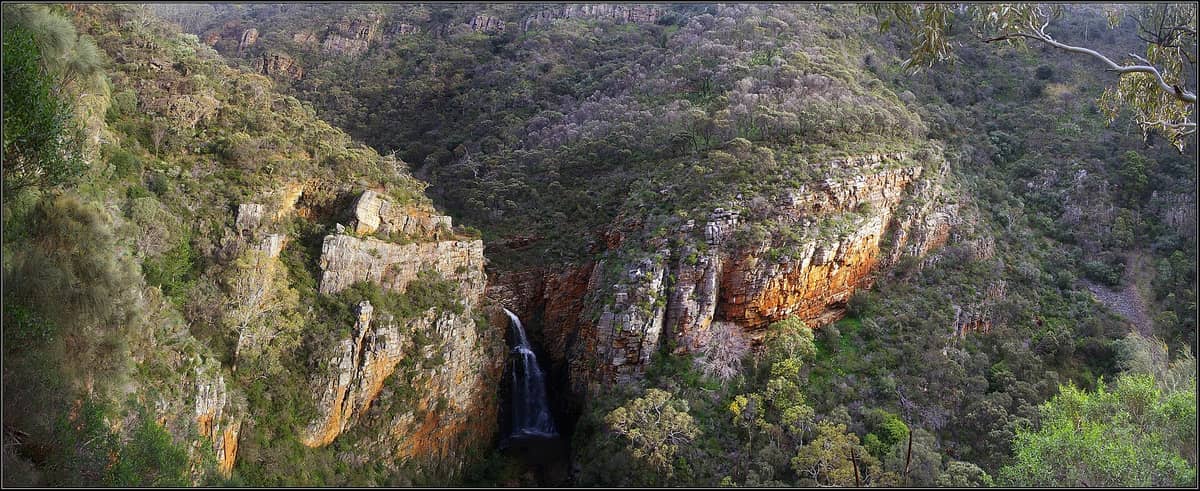
Morialta Conservation Park is a protected gorge landscape on the edge of the Adelaide Hills, gazetted as a park for over a century and still one of the most-visited natural areas in South Australia. The name comes from the Kaurna word moriatta, meaning 'ever-flowing,' a reference to the creek that cuts through the park and feeds its three waterfalls. First Falls, Second Falls, and Third Falls each occupy a different tier of the gorge, and reaching all three on the same walk means earning the views through genuine elevation gain.
What surprises most first-time visitors is how quickly the city disappears. Within ten minutes of leaving the car park you are walking through dry eucalyptus scrub, the gorge walls rising on either side, the only sounds being wind, water when the creek is running, and the persistent calls of Australian birds. It does not feel like an urban fringe park, which is precisely why it pulls such a loyal local following.
ℹ️ Good to know
Morialta is open daily. Vehicle gates open at 6:30 am and close at 7:00 pm, extending to 9:00 pm during daylight saving time. The park is closed on Christmas Day. Admission is free.
The Trails: What to Expect at Each Level
The trail network fans out from the main car park on Morialta Falls Road. A path leads to First Falls on a 1.6 km return walk from the trailhead; the incline rises gently, and the final section is a short boardwalk to just below the falls. First Falls itself is a narrow curtain of water dropping into a shallow pool framed by rock walls draped in fern; after rain it thunders, in dry summer months it thins to a silver thread.
The climb to Second Falls involves a steeper, rougher track with some rock steps and exposed sections. The gorge view opens up here, and the payoff is a broader waterfall with a deeper plunge pool. Third Falls requires the most effort: the track gains significant elevation and the terrain is uneven. The reward is relative solitude even on busy weekends, because most casual visitors turn back at Second Falls. Allow around 4 hours for the Third Falls Hike, wear proper footwear, and carry more water than you think you need.
Beyond the waterfall route, the park has a longer circuit trail system that traverses the ridge tops and offers views across the Adelaide Plains. These upper trails are less frequented and give a different perspective on the park: drier, more exposed, with the city laid out to the west on clear days. Signage is generally adequate but the official Parks SA map is worth downloading before you go.
⚠️ What to skip
Trails to Second and Third Falls are uneven and rocky. Sandals and thongs (flip-flops) are genuinely dangerous here. Closed-toe shoes with grip are necessary, not optional. In summer heat above 35°C, consider whether the walk is safe — the gorge retains heat and shade is limited above First Falls.
Tickets & tours
Live prices and dates from our booking partner. If you book, we may earn a commission at no extra cost to you.
Ultimate Adelaide and Hahndorf full-day tour
From 94 €Instant confirmationFree cancellationHalf-day Lofty Descents tour by bike
From 89 €Instant confirmationFree cancellationAdelaide kayak tour with expert instructors
From 51 €Instant confirmationFree cancellationTrue Crime Tour in Adelaide
From 21 €Instant confirmationFree cancellation
Wildlife and Ecology
Morialta sits within a larger belt of native vegetation running through the Adelaide Hills, and its position as a long-protected corridor means wildlife density is noticeably higher than in surrounding suburban areas. Koalas are among the park’s celebrated residents: look for them in the trees along the First Falls trail. Seeing one clinging to a vertical sandstone wall at close range is one of those experiences that reframes how you think about Australian animals.
The bird list is extensive. Kookaburras call from the eucalypts at first light, Adelaide rosellas flash green and red through the canopy, and patient observers around the creek might pick out grey fantails flicking through low scrub. Echidnas forage across the walking trails, and it is not unusual to almost step on one before noticing it. If you spot one, give it space and time; they are slow but move on if left undisturbed.
The park's vegetation is predominantly dry sclerophyll forest: stringybarks, sugar gums, and native grasses that shift from green to straw-gold across the seasons. If you want to understand the broader natural landscape around Adelaide, this park pairs well with a visit to the Mount Lofty Botanic Garden, where many of the same native plant families are labeled and presented for comparison.
How the Experience Changes by Time of Day
Early morning, from opening until about 9 am, is when the park is at its best. The light is soft and low, filtering through the canopy at an angle that turns the sandstone gorge walls amber. Wildlife activity peaks in this window: wallabies are feeding rather than sheltering, birds are calling from every direction, and the creek sounds clearer without the background noise of other visitors. Weekday mornings between 7 and 9 am see very few people.
By mid-morning on weekends, particularly during spring and autumn, the main trail to First Falls fills quickly. Families with prams, school groups, and day-trippers cluster around the first waterfall platform. The atmosphere is social and cheerful, but if you came for solitude it is worth either pushing on to Second Falls or arriving earlier. The upper trails and ridge circuits stay quiet even on busy days.
Afternoon visits in summer require caution. The gorge walls absorb and hold heat, and the return climb from the lower falls can feel significantly harder at 2 pm than it did at 9 am. On days of total fire ban, the park may close entirely; always check the South Australian Country Fire Service website or the Parks SA page before driving out in hot weather. Late afternoon in autumn and spring, when the sun drops behind the western ridge, brings pleasant temperatures and golden light on the eastern gorge walls.
Getting There and Practical Logistics
The park is located on Morialta Falls Road, Woodforde, approximately 10 kilometres northeast of the Adelaide CBD. By car, the drive takes around 20 minutes from the city in normal traffic. Parking is available at the main trailhead and at several additional car parks including the Natural Resource Centre and Stradbroke Road facilities; these fill early on warm weekend mornings, particularly in spring.
Adelaide Metro public transport serves the park; check the Adelaide Metro journey planner for current routes and stops as services can change. If you are unfamiliar with getting around Adelaide by bus, the guide to getting around Adelaide covers the Metro network clearly and is worth reading before your visit.
Accessible parking bays are available at the Natural Resource Centre, Stradbroke Road, and First Falls car parks. The park map, available on the Parks SA website, marks accessible toilets. The First Falls path is the gentlest route in the park; trails beyond this point are not suitable for wheelchairs or mobility aids.; trails beyond this point are not suitable for wheelchairs or mobility aids.
💡 Local tip
Download the official Morialta Conservation Park map from Parks SA before you arrive. Mobile signal is unreliable inside the gorge, and the map covers all trail junctions clearly. It is a PDF available free on the Parks SA website.
Photography: What Works and What Doesn't
The gorge and waterfalls photograph best in the first two hours after sunrise and in the 90 minutes before sunset. Midday light is harsh and washes out the subtle colour variation in the sandstone walls. First Falls, because it sits in a narrow slot, stays in shade much of the day, which makes it workable even at noon if you use a tripod and a slow shutter speed to smooth the water.
Wildlife around the falls offers a genuine photography opportunity, but it requires patience. Arrive early, move quietly, and resist the urge to approach them. A short telephoto lens in the 85 to 200mm range is more useful here than a wide angle. The ridge-top sections of trail offer wide composition opportunities looking west across Adelaide, particularly effective at golden hour when the city catches warm light against the darker hills.
Placing Morialta in the Wider Adelaide Hills Context
Morialta sits at the northern end of a natural corridor that runs south through the Adelaide Hills, connecting several conservation areas and parks. It pairs logically with Waterfall Gully for a day of hill walking: the two parks are distinct in character, with Waterfall Gully offering the more heavily used trail up to Mount Lofty Summit, while Morialta tends to reward those who go further into its trail system.
If you are planning a broader day in the Hills, the historic German-heritage village of Hahndorf is about 30 kilometres south and makes a comfortable afternoon addition after a morning walk at Morialta. Alternatively, hikers with serious ambitions should look at the Heysen Trail, the long-distance walking route that passes through the Adelaide Hills and represents the serious end of South Australian bushwalking.
For the full picture of what the Adelaide Hills region offers, the Adelaide hiking guide covers Morialta alongside the other major walking destinations within reach of the city, with practical difficulty ratings and seasonal advice for each.
Who Should Probably Skip It
Morialta is not the right choice for visitors who want waterfalls without effort. First Falls is accessible, but it is a small waterfall by any international standard, and in dry summer months the flow can be modest. If you have seen significant waterfalls elsewhere and are hoping for something dramatic, be realistic: Morialta's appeal is the gorge environment and native ecology as a whole, not a single spectacular cascade.
It is also a poor choice on days of extreme heat, high fire danger, or after significant recent rainfall when trails can become slippery and creek crossings dangerous. Families with toddlers in prams should stick to the First Falls path and not attempt the rougher sections. Anyone with significant mobility limitations will find the park largely inaccessible beyond the first car park area.
Insider Tips
- Koalas may be spotted in the trees along the First Falls trail; move quietly and give wildlife space.
- In winter and after heavy rain, First Falls runs with genuine force and the gorge fills with the sound of water. This is the best time to photograph the falls, but pack a waterproof layer — the spray carries.
- The longer hikes offer views across the park and Adelaide; check the official map for current access and routes.
- Parking at the First Falls car park fills first. If you arrive after 9 am on a warm weekend, try the Stradbroke Road car park and walk in from there — it adds only a few minutes to the approach.
- The park is on Kaurna Country. The name Morialta derives from the Kaurna word for 'ever-flowing water,' and understanding this context adds something to the experience. The Living Kaurna Cultural Centre in the city is worth visiting alongside any trip into the Hills.
Who Is Morialta Conservation Park For?
- Hikers of all levels wanting varied terrain close to the city
- Wildlife enthusiasts hoping to see koalas and native birds in their natural habitat
- Families with older children who can manage uneven trails
- Photographers working in natural light during the golden hours
- Travellers with a single free morning who want genuine nature without a long drive
Nearby Attractions
Other things to see while in Adelaide Hills:
- Belair National Park
Proclaimed in 1891, Belair National Park covers 840 hectares of native bushland in the Adelaide Hills, just 11 kilometres from the city centre. It offers walking trails, open grass areas, wildlife watching, and a genuine sense of space without requiring a full-day commitment.
- Carrick Hill
Carrick Hill is a beautifully preserved 1930s Arts and Crafts estate in Springfield, about 8 kilometres from the Adelaide CBD. The property combines a fully furnished house museum, a heritage garden designed to complement the architecture, and a contemporary gallery space — all set within a 100-acre estate in the Adelaide foothills.
- Cleland Wildlife Park
Cleland Wildlife Park sits within a 1,036-hectare national park in the Adelaide Hills, offering one of Australia's most intimate native wildlife experiences. Walk among free-roaming kangaroos, hand-feed wallabies, and get close to koalas — all within 20 minutes of the city centre.
- Gorge Wildlife Park
Set on 14 acres of Adelaide Hills bushland near Cudlee Creek, Gorge Wildlife Park has been introducing visitors to Australian native animals since 1965. It is one of the few places near Adelaide where you can hold a koala, hand-feed kangaroos, and observe over 150 species of Australian and exotic animals, birds, and reptiles in an unhurried, genuinely personal atmosphere.
Planning a trip? Discover personalized activities with the Nomado app.