Gorge Wildlife Park: Up Close with Australian Wildlife in the Adelaide Hills
Set on 14 acres of Adelaide Hills bushland near Cudlee Creek, Gorge Wildlife Park has been introducing visitors to Australian native animals since 1965. It is one of the few places near Adelaide where you can hold a koala, hand-feed kangaroos, and observe over 150 species of Australian and exotic animals, birds, and reptiles in an unhurried, genuinely personal atmosphere.
Quick Facts
- Location
- 30 Redden Drive, Cudlee Creek SA 5232 — approx. 25 km from Adelaide CBD (about 40 minutes by car)
- Getting There
- Drive recommended. By public transit: Adelaide Metro bus to Tea Tree Plaza, then LinkSA bus (Drive recommended. By public transit: Adelaide Metro bus to Tea Tree Plaza, then LinkSA bus (no Sunday or public holiday services). The bus stop is approx. 300 m from the entrance, up a hill.). The bus stop is approx. 300 m from the entrance, up a hill.
- Time Needed
- 2 to 3 hours for a relaxed visit; allow extra time if you plan to hold a koala
- Cost
- Adults A$26 | Students/Concession A$23 | Children (3–15) A$15 | Family (2 adults + 2 children) A$72 | Koala holding A$20 extra
- Best for
- Families with children, first-time visitors to Australia, wildlife photographers, animal lovers of all ages
- Official website
- gorgewildlifepark.com.au
What Gorge Wildlife Park Actually Is
Gorge Wildlife Park is a privately owned, family-operated wildlife park that opened in 1965, making it one of the longest-running attractions of its kind in South Australia. Spread across 14 acres of native bushland in the small township of Cudlee Creek, in the Adelaide Hills, it sits at a noticeably different elevation from the city, and the air is correspondingly cooler and greener. More than 150 species of Australian and exotic animals, birds, and reptiles live here, from familiar faces like kangaroos and wombats to a broad collection of reptiles, birds, and nocturnal animals.
This is not a theme park or a zoological institution with a research mandate. It operates on a smaller, more personal scale, and that is genuinely one of its advantages. Paths wind through shaded enclosures where animals have space to behave naturally, and the pace of the whole place encourages you to slow down and actually observe, rather than simply tick off species.
ℹ️ Good to know
The park closes on Christmas Day and on days when a Catastrophic Fire Warning is in effect for the Mount Lofty Ranges. If you are visiting in summer, check the Bureau of Meteorology's fire danger rating before setting out. Opening hours are 9:00 a.m. to 4:30 p.m. daily.
The Animals: What You Will Actually See
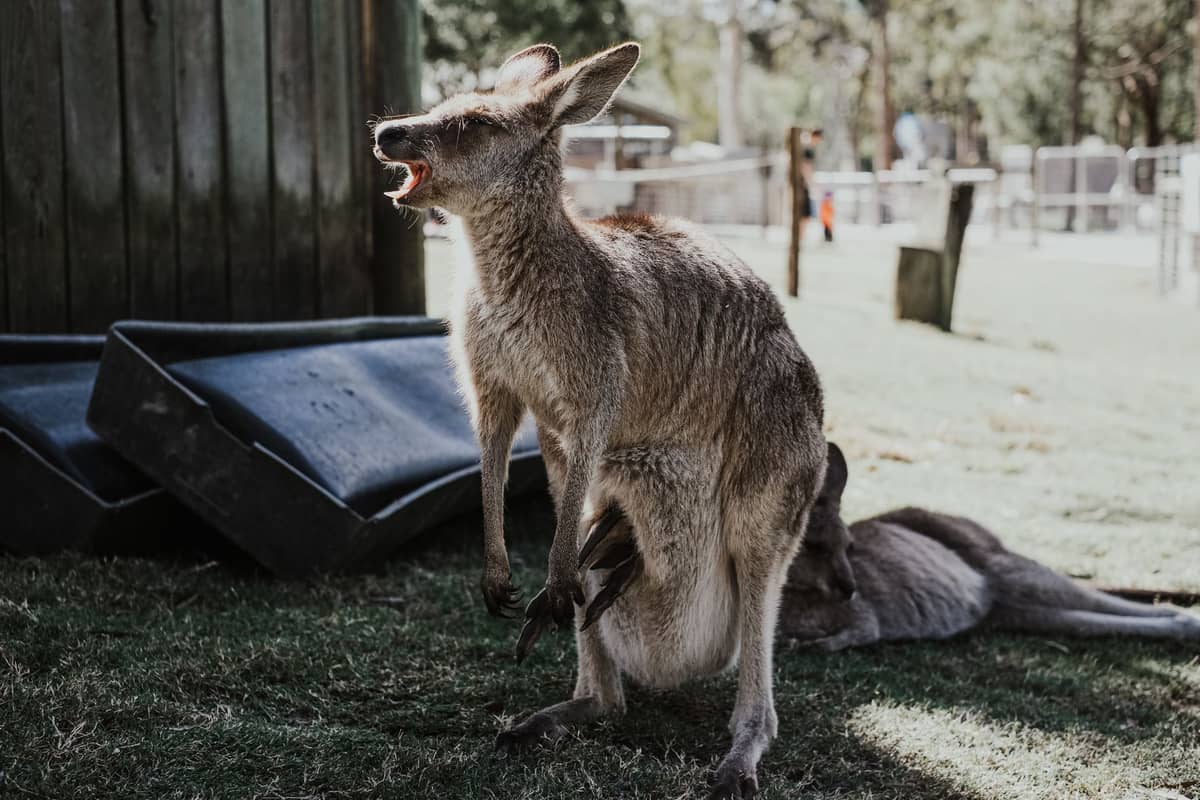
Kangaroos and wallabies occupy open areas where you can walk among them and, in many cases, feed them by hand. The experience is more intimate than at larger parks because the enclosures are compact and the animals are accustomed to close human presence. Watch for the difference in temperament between the more confident kangaroos near the path and the quieter wallabies that tend to settle in shaded corners during the middle of the day.
Wombats are among the more memorable encounters. They are solid, deliberate animals that tend to ignore visitors with admirable confidence, and seeing one up close clarifies just how substantial they are compared to their usual photographic depictions. The bird collection is broad, covering parrots, cockatoos, owls, and emus, and some enclosures are walk-through, which makes for excellent photography if you are patient.
The reptile section houses snakes, lizards, and other species that many visitors have never encountered outside a glass case. Staff handle and present some animals at various points during the day. Check with the gate on arrival for any scheduled keeper talks or feeding sessions, as the timing varies.
Tickets & tours
Live prices and dates from our booking partner. If you book, we may earn a commission at no extra cost to you.
Ultimate Adelaide and Hahndorf full-day tour
From 94 €Instant confirmationFree cancellationHalf-day Lofty Descents tour by bike
From 89 €Instant confirmationFree cancellationAdelaide kayak tour with expert instructors
From 51 €Instant confirmationFree cancellationTrue Crime Tour in Adelaide
From 21 €Instant confirmationFree cancellation
Holding a Koala: What to Know Before You Pay
Gorge Wildlife Park is one of a relatively small number of places in South Australia where visitors can hold a koala, rather than simply photograph one at a distance. The experience costs A$20 per person on top of the standard entry fee. The experience costs A$20 per person on top of the standard entry fee and is offered at scheduled sessions, 11:30 a.m. and 2:30 p.m. Koala holding is unavailable when the forecast temperature for Adelaide is 32°C or higher, so check the park’s conditions before visiting.
Worth being honest about: koalas held this way are calm partly because they are genuinely drowsy most of the time. The encounter is brief and supervised. For children who have never touched a native animal outside a petting zoo context, it is often a profound moment. For adult visitors primarily drawn by the koala holding, the rest of the park may feel modest by comparison, and that is worth knowing in advance.
💡 Local tip
Check the park’s koala holding sessions before your visit: they are scheduled for 11:30 a.m. and 2:30 p.m. subject to availability and temperature conditions.
Getting There and the Drive Through the Hills
Driving is by far the most practical option. The route from Adelaide takes you through the Adelaide Hills, and the approach road via Gorge Road itself follows the Torrens River gorge, with native bush on either side and occasional views down into the valley. It is genuinely worth driving slowly on this stretch. For context on what surrounds the park geographically, the Adelaide Hills is one of the most scenic regions within easy reach of the city, and Cudlee Creek sits at its more rural edge.
Public transport is possible using an Adelaide Metro bus to Tea Tree Plaza Interchange, followed by a LinkSA bus service. There is no public transport connection on Sundays or public holidays, and the bus stop is approximately 300 metres from the park entrance up a hill. Visitors with mobility concerns should contact LinkSA directly to ask about drop-off arrangements closer to the gate. If you are planning a car-free Adelaide Hills day, driving with a car hire or joining a small group tour is a significantly easier option.
If you are organising a broader itinerary in the hills, consider combining Gorge Wildlife Park with a visit to Cleland Wildlife Park, which is another wildlife encounter option in the same region, or with the walking trails at Morialta Conservation Park to add some landscape to your day.
Timing Your Visit: Morning, Midday, and Afternoon
Morning visits, between 9:00 and 11:00 a.m. tend to deliver the best experience on almost every measure. Animals are more active in cooler temperatures, the park is quieter, and keepers are often beginning their routines, which means you may encounter them in enclosures and can ask questions. The light at this time is also softer and more useful for photography through wire enclosures.
Midday in summer can be quite warm at Cudlee Creek, and many animals retreat to shade. The park is hilly enough that you will do a reasonable amount of walking, so this matters practically as well as for animal activity. Carry water and wear sun protection regardless of the season. The Adelaide Hills can feel deceptively mild on overcast days and then turn hot quickly when the sky clears.
Afternoon visits, from around 2:00 p.m. onward, leave less time to explore before the 4:30 p.m. close. If you prefer a shorter visit, check the closing time before setting out and allow enough time for the areas you want to see.
Practical Details for Families
Gorge Wildlife Park works especially well for families with children, and children aged 3–15 have a separate ticket price. Paths are not all paved and some sections involve gentle slopes, so prams can be managed but may require effort on gravel sections. Younger children tend to respond most strongly to the kangaroo interaction areas and the birds, both of which are immediate and tactile. For broader context on planning a family trip to the region, the Adelaide with kids guide covers additional family-appropriate options around the city and hills.
There are basic facilities on site including toilets and a small picnic area. The park does not have a large cafe or restaurant. Bring snacks and drinks, especially if you are arriving with children who may not want to cut the visit short in search of food. Some visitors pack a proper picnic and eat on site before or after the animal sections.
⚠️ What to skip
The park closes on days when a Catastrophic Fire Warning is in effect for the Mount Lofty Ranges. In summer, check the South Australian Country Fire Service website or the official park site on the morning of your visit before making the drive.
Photography and Wildlife Observation Tips
Shooting through wire mesh is the main challenge at any enclosed wildlife park. A wide aperture lens helps throw the wire out of focus when pressed close to the fence. For enclosures where wire gaps are larger, a standard zoom between 24mm and 70mm is often more useful than a telephoto. The morning light enters many of the enclosures from the east, so plan your route accordingly if light direction matters to you.
The open kangaroo areas are the easiest for clean shots and also the most approachable for non-photographers who simply want to spend time with animals. Patience is the key variable across the whole park. Animals here are not performing; they operate on their own schedule, and the visitors who get the best from the experience are generally those who pause and wait rather than move quickly from one enclosure to the next.
Insider Tips
- Check the park’s koala holding sessions before visiting: they are scheduled for 11:30 a.m. and 2:30 p.m. subject to availability and temperature conditions.
- The drive along Gorge Road to reach the park is scenic enough to build into your itinerary deliberately. Allow an extra 15 minutes each way rather than using a highway bypass route.
- Wear closed-toe shoes. Parts of the path are gravel and some enclosure areas have uneven ground. Sandals work in the main areas but become uncomfortable quickly on the hillier sections.
- Bring your own snacks and water, particularly in warmer months. The on-site facilities are basic, and the Adelaide Hills can be warmer or cooler than the city depending on the day, so pack layers as well.
- Ask staff about animal presentations when you arrive; the park lists daily koala sessions at 11:30 a.m. and 2:30 p.m.
Who Is Gorge Wildlife Park For?
- Families with children who want hands-on contact with native Australian animals
- First-time visitors to Australia wanting a genuine koala-holding experience near Adelaide
- Wildlife photographers looking for patient, close-range opportunities with native species
- Travellers combining the park with a broader Adelaide Hills day drive
- Travellers with older children or teenagers who find large commercial zoos impersonal
Nearby Attractions
Other things to see while in Adelaide Hills:
- Belair National Park
Proclaimed in 1891, Belair National Park covers 840 hectares of native bushland in the Adelaide Hills, just 11 kilometres from the city centre. It offers walking trails, open grass areas, wildlife watching, and a genuine sense of space without requiring a full-day commitment.
- Carrick Hill
Carrick Hill is a beautifully preserved 1930s Arts and Crafts estate in Springfield, about 8 kilometres from the Adelaide CBD. The property combines a fully furnished house museum, a heritage garden designed to complement the architecture, and a contemporary gallery space — all set within a 100-acre estate in the Adelaide foothills.
- Cleland Wildlife Park
Cleland Wildlife Park sits within a 1,036-hectare national park in the Adelaide Hills, offering one of Australia's most intimate native wildlife experiences. Walk among free-roaming kangaroos, hand-feed wallabies, and get close to koalas — all within 20 minutes of the city centre.
- Hahndorf
Founded in 1839 by Prussian Lutheran settlers, Hahndorf is Australia's oldest surviving German settlement and a State Heritage Area in the Adelaide Hills. Expect a well-preserved heritage streetscape, independent food producers, cellar doors, and a relaxed pace that rewards a half-day at minimum.
Planning a trip? Discover personalized activities with the Nomado app.