Hahndorf: Australia's Oldest German Settlement in the Adelaide Hills
Founded in 1839 by Prussian Lutheran settlers, Hahndorf is Australia's oldest surviving German settlement and a State Heritage Area in the Adelaide Hills. Expect a well-preserved heritage streetscape, independent food producers, cellar doors, and a relaxed pace that rewards a half-day at minimum.
Quick Facts
- Location
- Hahndorf, South Australia 5245 — Adelaide Hills, approx. 30 km southeast of Adelaide CBD
- Getting There
- Route 801 bus from Adelaide city connects to Hahndorf in under an hour. By car, take the South Eastern Freeway.
- Time Needed
- Half a day minimum; a full day if you plan to dine, visit galleries, and explore surrounding hills
- Cost
- Free to walk the township; individual shops, galleries, and eateries charge their own prices
- Best for
- History enthusiasts, food and wine lovers, day-trippers from Adelaide, families, photographers
- Official website
- hahndorfsa.org.au
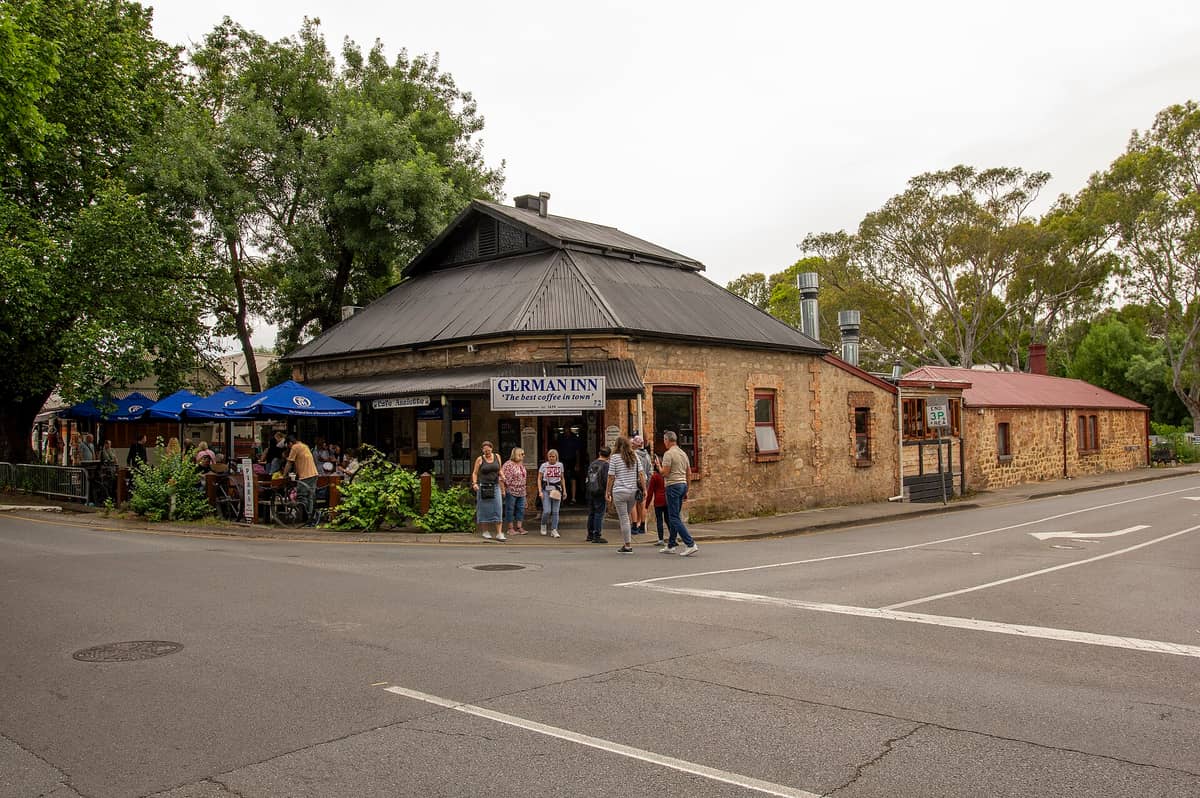
What Hahndorf Actually Is
Hahndorf is not a theme park recreation of a German village. It is a working South Australian town with genuine 19th-century bones, where Lutheran church buildings, stone cottages, and timber-framed shopfronts have been continuously occupied for nearly two centuries. Declared a State Heritage Area in 1988, it is recognized as Australia's oldest surviving German settlement, and the original village plan was laid out in 1839.
The town takes its name from Captain Dirk Hahn, whose ship Zebra brought Prussian Lutheran refugees to South Australia. These settlers were fleeing religious persecution under Prussian King Frederick William III, and they arrived in a young colony that offered both land and freedom of worship. What they built reflects that earnest ambition: solid stone structures, a Lutheran church, a school, and an ordered streetscape that has outlasted most of what was built around it in the same era.
ℹ️ Good to know
There is no entry fee to visit Hahndorf. The public streets and heritage streetscape are accessible year-round. Budget for food, drink, and any museum or gallery admissions you choose.
The Streetscape: What You Are Actually Looking At
Main Street is the obvious anchor, and it earns its reputation. The street is wide by colonial standards, flanked by a mix of original stone buildings and later 19th-century additions, most of them single- or double-story, with verandas and pitched roofs that respond to the Adelaide Hills climate rather than any imported European blueprint. The effect is distinctly South Australian with a German organizational logic underneath.
Look above the shop-front signage and you start to see the real architecture: brick corbelling, sandstone lintels, timber joinery in original window frames, and ironwork details that speak to a period when local craftsmen were building to last. The Hahndorf Academy on Main Street is among the most visited individual sites, occupying a building that dates to 1857 and housing both an art gallery and exhibitions on the German migration story.
Victoria Street, running parallel to Main Street, is quieter and gives a better sense of how the residential settlement was laid out. Walking a block off Main Street significantly reduces the foot traffic and changes the atmosphere completely. If you have any interest in vernacular architecture, budget time for this detour.
💡 Local tip
Photography tip: The best light on Main Street falls in the morning when the eastern sun catches the stone facades directly. By early afternoon the street is often in partial shade and weekend crowds make clean architectural shots difficult.
Tickets & tours
Live prices and dates from our booking partner. If you book, we may earn a commission at no extra cost to you.
Ultimate Adelaide and Hahndorf full-day tour
From 94 €Instant confirmationFree cancellationAdelaide Hills and Hahndorf half-day tour
From 55 €Instant confirmationFree cancellationHalf-day Lofty Descents tour by bike
From 89 €Instant confirmationFree cancellationAdelaide kayak tour with expert instructors
From 51 €Instant confirmationFree cancellation
Time of Day: How the Experience Changes
Weekday mornings before 10 am offer the most authentic read of the town. Shopkeepers are setting up, the cafes are doing quiet trade, and you can actually hear the magpies in the large European trees that line the street. Arriving early also gives you time to walk the full length of Main Street before it gets busy, which is the only way to form a coherent mental picture of its layout.
By mid-morning on weekends, particularly between October and April, Hahndorf draws significant visitor numbers from Adelaide. The footpaths become congested, parking fills quickly, and the experience shifts from leisurely to managed. This is not a reason to avoid it, but it does affect how you navigate. If you arrive on a Saturday morning, park early and head straight for the quieter end of Main Street or walk up to Victoria Street first.
Late afternoons, especially in autumn and spring, bring a different quality of light and a marked drop in visitor numbers as day-trippers return to Adelaide. Several of the food and wine businesses remain open into the evening, making a late-afternoon arrival followed by dinner a genuinely pleasant option that most visitors overlook.
Food, Drink, and What to Actually Eat Here
The German culinary heritage is real but unevenly represented. At its best, you will find genuine smallgoods: mettwurst, kransky, and bratwurst made by producers who have been operating for generations. At its worst, the tourist trade has diluted some offerings into approximations. The practical approach is to look for producers who make things on-site or who can tell you exactly where their product comes from.
The Adelaide Hills wine region surrounds Hahndorf, and several cellar doors and wine-focused venues operate within or close to the township. This is a cool-climate growing region relative to the rest of South Australia, known for Pinot Noir, Chardonnay, and Riesling alongside the Shiraz varieties that dominate elsewhere in the state. If wine is part of your reason for visiting the region, Hahndorf works well as a base for a broader exploration of the Hills.
The Adelaide Hills fits naturally into a broader South Australian food and wine itinerary. For more context on the region's culinary identity, the Adelaide food guide covers regional producers and market culture in detail, and the Adelaide wine guide explains the Hills growing region and how it compares to Barossa and McLaren Vale.
Historical Context: Why This Town Survived When Others Did Not
Hundreds of small colonial settlements across South Australia were established in the 19th century and subsequently abandoned, absorbed, or simply erased. Hahndorf survived because of a combination of factors: its location on a reliable route into the Hills, the cohesion of its founding community, and a built environment substantial enough to justify maintenance across multiple generations. The Lutheran church community maintained institutional continuity long after the original settlers had passed.
During World War One, anti-German sentiment led to the town being renamed Ambleside in 1918, a name it carried until 1935 when it was restored to Hahndorf. This history, which affected German-Australian communities across South Australia and the country, is part of the town's honest story and is documented at the Hahndorf Academy. It is one of the more instructive aspects of visiting: the town's survival across that period of hostility and name suppression says something about the depth of community investment in place.
Hahndorf's story connects to the broader history of migration and settlement in South Australia. The Migration Museum in Adelaide CBD covers this territory in more depth and pairs well with a Hahndorf visit if the history angle is your primary interest.
Getting There and Practical Logistics
By car from Adelaide, take the South Eastern Freeway and allow around 30 minutes from the CBD in normal traffic. The freeway approach through the Hills is scenic in itself, particularly in spring and autumn. Parking in Hahndorf itself can be tight on weekends; there are public car parks near Main Street but they fill by mid-morning during busy periods.
By public transport, Route 801 buses run from Adelaide's central bus station to Hahndorf on weekdays and take under an hour. Adelaide Metro fares and timetables apply; check the Adelaide Metro website or the SA Government transport pages for current schedules before you travel, as service frequency varies by day and time.
The township is walkable, but note that some footpaths and heritage building entrances may present access challenges. Specific accessibility conditions vary by venue and are not uniformly documented, so it is worth contacting individual businesses in advance if this is a consideration. Public toilets are available near Main Street.
⚠️ What to skip
Adelaide Hills summers can be hot and dry. On days forecast above 35°C, the experience of walking an exposed main street becomes genuinely uncomfortable. Spring (September to November) and autumn (March to May) offer the most pleasant conditions for an on-foot visit.
Hahndorf sits within the Adelaide Hills, which rewards further exploration beyond the township itself. For day-trip planning context, day trips from Adelaide covers how to combine Hahndorf with other Hills destinations efficiently.
Who Will Not Get Much From This Visit
Travelers looking for wild landscapes, beaches, or significant natural attractions will find Hahndorf largely irrelevant to their interests. The town is a heritage streetscape, not a natural site, and the surrounding Hills scenery, while pleasant, requires deliberate exploration beyond the township to fully appreciate.
Visitors who come expecting an immersive German cultural experience may find the reality more diluted than anticipated. The German heritage is historically genuine and architecturally documented, but modern Hahndorf is a South Australian tourist town that happens to have German roots, not a living German-language community. Adjust expectations accordingly and the visit becomes more satisfying.
Insider Tips
- Walk Victoria Street as well as Main Street. One block away from the main tourist drag, the residential scale of the original settlement becomes clear and the crowds thin substantially.
- If you are driving, consider arriving before 9:30 am on weekends to secure parking and experience the street before tour coaches arrive. The early calm is a different experience entirely.
- The large European deciduous trees along Main Street are at their most photogenic in autumn (April to May), when the canopy turns and the stone buildings behind them catch the lower-angle sun.
- Several food producers in and around Hahndorf operate farm shops or small-batch outlets that are worth seeking out rather than defaulting to the main-street retail options. Ask locals or check the town's visitor website for current producers.
- Combine a Hahndorf visit with a stop at one of the nearby Hills cellar doors to get a full read on why this region draws food and wine visitors. The town alone is an incomplete picture of what the Adelaide Hills offers.
Who Is Hahndorf For?
- History and heritage travelers who want to understand South Australian colonial settlement
- Food and wine visitors exploring the Adelaide Hills region
- Families looking for a structured, walkable day trip from Adelaide with clear anchor points
- Photographers interested in 19th-century Australian vernacular architecture in good condition
- Travelers pairing a Hills drive with a specific dining or cellar-door destination
Nearby Attractions
Other things to see while in Adelaide Hills:
- Belair National Park
Proclaimed in 1891, Belair National Park covers 840 hectares of native bushland in the Adelaide Hills, just 11 kilometres from the city centre. It offers walking trails, open grass areas, wildlife watching, and a genuine sense of space without requiring a full-day commitment.
- Carrick Hill
Carrick Hill is a beautifully preserved 1930s Arts and Crafts estate in Springfield, about 8 kilometres from the Adelaide CBD. The property combines a fully furnished house museum, a heritage garden designed to complement the architecture, and a contemporary gallery space — all set within a 100-acre estate in the Adelaide foothills.
- Cleland Wildlife Park
Cleland Wildlife Park sits within a 1,036-hectare national park in the Adelaide Hills, offering one of Australia's most intimate native wildlife experiences. Walk among free-roaming kangaroos, hand-feed wallabies, and get close to koalas — all within 20 minutes of the city centre.
- Gorge Wildlife Park
Set on 14 acres of Adelaide Hills bushland near Cudlee Creek, Gorge Wildlife Park has been introducing visitors to Australian native animals since 1965. It is one of the few places near Adelaide where you can hold a koala, hand-feed kangaroos, and observe over 150 species of Australian and exotic animals, birds, and reptiles in an unhurried, genuinely personal atmosphere.
Planning a trip? Discover personalized activities with the Nomado app.