Mount Lofty Botanic Garden: A Cool-Climate Escape Above Adelaide
Spread across 97 hectares of the Adelaide Hills, Mount Lofty Botanic Garden is one of South Australia's most rewarding outdoor spaces. Free to enter and open daily, it offers seasonal colour, quiet forest trails, and a lakeside walk that suits visitors of all ages and fitness levels.
Quick Facts
- Location
- Crafers SA 5152, Adelaide Hills — upper entrance on Mount Lofty Summit Road, lower entrance on Lampert Road off Piccadilly Road
- Getting There
- No direct public transport. By car, approximately 25 minutes from Adelaide CBD. Bus stop 30E on Piccadilly Road is about 1 km from the lower entrance.
- Time Needed
- 1.5 to 3 hours depending on trails chosen
- Cost
- Free entry. Parking A$2.50/hr or A$6.50/day Mon–Sat; free Sundays and public holidays.
- Best for
- Autumn foliage, peaceful walks, garden photography, family outings, and spring blooms
- Official website
- www.botanicgardens.sa.gov.au/visit/mount-lofty-botanic-garden
What Mount Lofty Botanic Garden Actually Is
Mount Lofty Botanic Garden sits in the hills above Adelaide at an elevation that delivers a noticeably cooler, moister microclimate than the city below. That difference in climate is the whole point. The garden was established specifically to grow plant collections that would not survive on Adelaide's flat, sun-baked plains: cool-temperate species from Europe, North America, China, and Japan that need cold winters and reliable rainfall.
Land acquisition began in 1952, and the garden opened to the public in 1977. Today it covers 97 hectares of former farmland and remnant native bush, administered by the Botanic Gardens and State Herbarium of South Australia. It is a working scientific and conservation collection, not a manicured pleasure garden, which explains why parts of it feel more like a quiet forest walk than a formal horticultural display.
ℹ️ Good to know
Entry is free. The only cost is parking: A$2.50 per hour or A$6.50 for the day Monday to Saturday. Parking is free on Sundays and public holidays, making those the most popular days for local families.
The Experience by Season
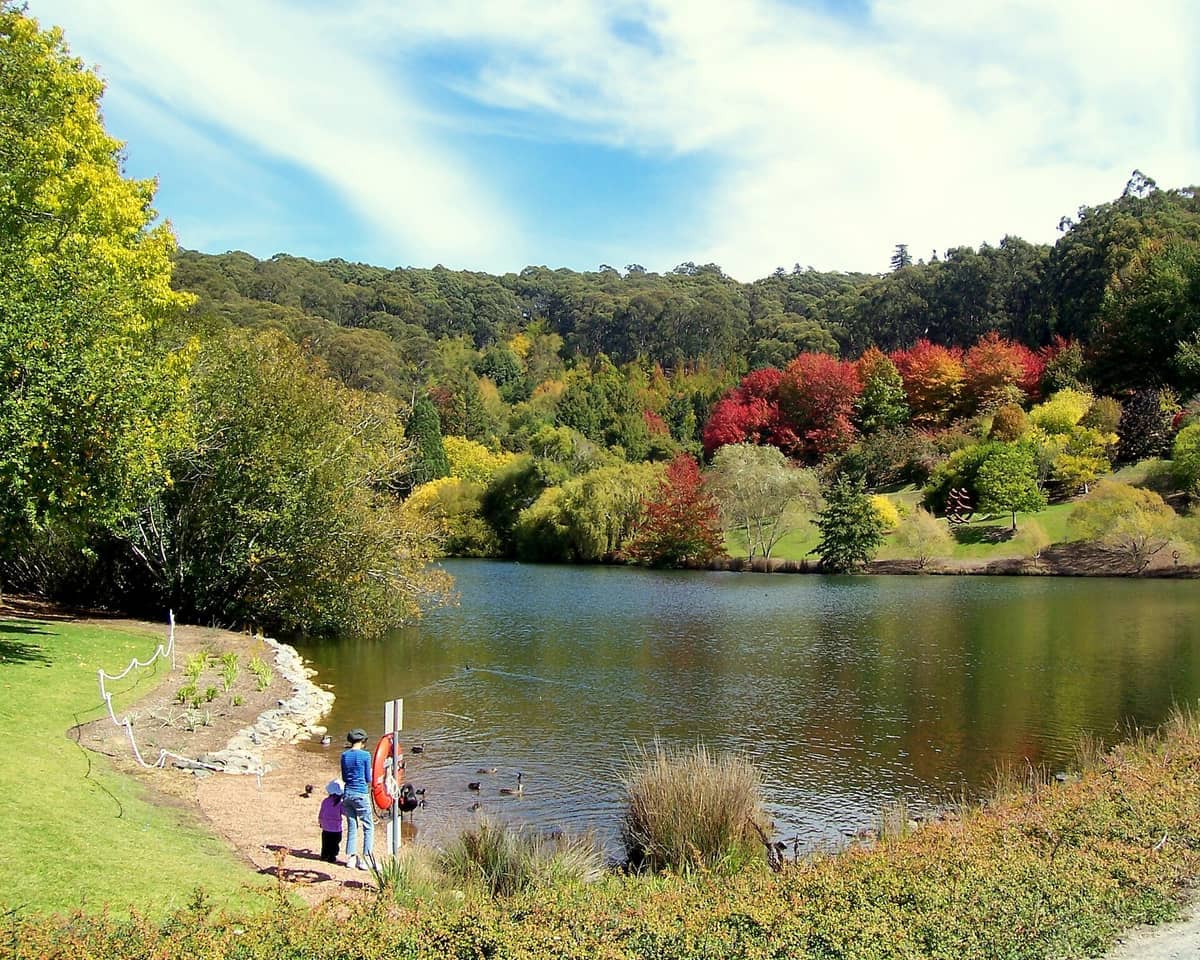
Autumn is the season most visitors target, and for good reason. From late March through May, the garden's deciduous collection turns in a long, unhurried performance of red, orange, and yellow. The mix of liquidambars, maples, and oaks means the colour does not peak all at once. Different corners of the garden are at their best across different weeks, which rewards more than one visit if you are local.
Spring brings a softer show. Rhododendrons, magnolias, and flowering cherries come through from August onwards, and the ground layer fills with bulbs. The light is gentler in spring than in summer, and the soil smell after winter rain is one of those small sensory rewards that makes an early-morning visit worthwhile. By mid-morning on weekends, the lower car park fills quickly during peak spring weekends.
Winter is genuinely cold here. The Adelaide Hills receive frost, and on foggy mornings the garden takes on a grey, muffled quality that some visitors love and others find dreary. Summer is the least dramatic season for the collections, though the shade canopy makes it far more comfortable than the city, and the Rose Garden holds into early autumn.
⚠️ What to skip
The garden may close without notice on days of extreme or catastrophic fire danger. If visiting in summer, check the Botanic Gardens and State Herbarium website or the SA fire danger rating before you drive out.
Tickets & tours
Live prices and dates from our booking partner. If you book, we may earn a commission at no extra cost to you.
Adelaide Botanic Garden guided tour
From 37 €Instant confirmationFree cancellationHalf-day Lofty Descents tour by bike
From 89 €Instant confirmationFree cancellationUltimate Adelaide and Hahndorf full-day tour
From 94 €Instant confirmationFree cancellationAdelaide kayak tour with expert instructors
From 51 €Instant confirmationFree cancellation
Key Areas and What to Expect
The garden has two entrances, and the choice between them shapes your experience significantly. The upper entrance on Mount Lofty Summit Road drops you into the upper sections of the garden and involves walking downhill through the collections before you need to come back up. The lower entrance on Lampert Road, off Piccadilly Road, gives direct access to the lake and the flat Lakeside Trail.
The Lakeside Trail is the most accessible path in the garden: a flat, bitumen surface that circles the lake and suits prams, wheelchairs, and anyone who wants a gentle loop without negotiating the garden's steeper slopes. The lake itself is a quiet spot. Ducks and waterbirds are reliably present, and the reflections of the surrounding deciduous trees in autumn are among the most photographed images the garden produces.
Beyond the lake, the terrain gets hilly. Trails wind through themed collections including the Conifer Garden, the Rhododendron Dell, and areas of remnant native scrub where the planting gives way to natural Adelaide Hills vegetation. Footwear matters here: some paths are uneven and can be slippery after rain. Sturdy shoes rather than sandals are the sensible choice on any trail beyond the Lakeside circuit.
If you plan to combine the garden with other nearby highlights, the Mount Lofty Summit is about a five-minute drive from the upper entrance and gives panoramic views back over Adelaide. The two work well together as a half-day itinerary in the hills.
Getting There and Practical Access
The honest reality is that Mount Lofty Botanic Garden is difficult to reach without a car. There is no direct bus service to either entrance. The closest public transport stop is bus stop 30E on Piccadilly Road, approximately 1 kilometre from the lower entrance on Lampert Road, but this is a walk along a road without a footpath and is not comfortable or safe for families with small children. A rideshare from the city is the practical alternative if you do not have a vehicle.
Driving from Adelaide CBD takes roughly 25 minutes in normal traffic, via the South Eastern Freeway. The route is well-signed. Both car parks have accessible bays and accessible toilet facilities. The Lampert Road lower car park is generally more convenient for families and anyone prioritising the lake.
💡 Local tip
Arrive before 9:30 am on autumn or spring weekends to secure a lower car park space without waiting. By mid-morning the lower car park can fill, pushing visitors to the upper entrance.
For a broader plan of the area, the Adelaide Hills are well suited to a full day out combining the garden with towns like Hahndorf or a winery stop. See the day trips from Adelaide guide for itinerary ideas.
Opening Hours and Seasonal Variations
Hours shift across the year to account for daylight changes. From May through September, the garden is open daily from 8:30 am to 4:00 pm. In April, weekend and public holiday hours extend to 5:00 pm; from October to March, they extend to 6:00 pm, while weekday hours remain 8:30 am to 4:00 pm. These details are confirmed on the official Botanic Gardens and State Herbarium website, which is the best source for any last-minute changes.
Photography Tips
The soft, diffused light of an overcast morning suits the garden well. Direct midday sun creates harsh contrasts under the canopy and flattens the colour in the deciduous collections. Overcast autumn days, which are common in the Adelaide Hills from April onward, are genuinely the best conditions for photographing foliage.
The lake provides reflections that work best in the first hour after opening, before any wind disturbs the surface. If you are shooting the rhododendron collections in spring, the Rhododendron Dell is most productive in the morning light that filters through from the east. Wide paths through the deciduous plantings allow good mid-range compositions without needing to leave marked trails.
If photography is a priority and you want to compare Adelaide's green spaces, the Adelaide Botanic Garden in the city centre offers a very different atmosphere: formal, flat, and built around the heritage glasshouse architecture rather than natural terrain.
What to Know: Who This Garden Suits and Who It Doesn't
Mount Lofty Botanic Garden is not a destination for everyone. Visitors who want a short, photogenic walk and then move on to lunch may find 97 hectares more than they bargained for. The garden rewards patience and a willingness to wander without a fixed plan. It is not a theme park or a ticketed experience with a clear circuit. There are no cafes inside the garden, so bring water and food if you plan to stay for more than an hour.
People with limited mobility can enjoy the Lakeside Trail comfortably, but the wider garden is steep in places and not suitable for all wheelchair users beyond that circuit. The steep terrain also means it is a challenging outing with a pram on anything other than the lake path.
Those travelling with children who need more structured wildlife encounters may find Cleland Wildlife Park a better use of time in the hills. It is nearby and provides hands-on native animal experiences that a botanical garden cannot replicate.
If walking in natural landscapes is what draws you, the hills offer more than one option. The Waterfall Gully trail and the broader Adelaide hiking guide cover trails that combine well with a visit to the garden on the same day.
Insider Tips
- Sunday parking is free at both car parks. If you live locally or are flexible on timing, Sunday morning is the best combination of value, quiet, and good light.
- The lower car park on Lampert Road is less known to first-time visitors, who tend to default to the upper entrance. Starting from the lower car park and walking up through the collections means you finish near your car rather than having to climb back.
- Bring a picnic. There is no food service inside the garden, and the grounds have pleasant areas to sit. The area near the lake is sheltered from the prevailing westerly wind that can pick up in the afternoons.
- In winter, check for frost before deciding on footwear. Paths that look dry can be icy in shaded sections early in the morning, particularly on south-facing slopes.
- The garden does not have mobile phone reception in all areas. Download an offline map or the garden's trail map from the official website before you arrive.
Who Is Mount Lofty Botanic Garden For?
- Autumn foliage seekers visiting in April and May
- Photographers looking for seasonal colour and reflective lake shots
- Families with older children who can manage hilly terrain
- Locals wanting a quiet weekday walk without crowds
- Travellers combining a hills day trip with Mount Lofty Summit or Hahndorf
Nearby Attractions
Other things to see while in Adelaide Hills:
- Belair National Park
Proclaimed in 1891, Belair National Park covers 840 hectares of native bushland in the Adelaide Hills, just 11 kilometres from the city centre. It offers walking trails, open grass areas, wildlife watching, and a genuine sense of space without requiring a full-day commitment.
- Carrick Hill
Carrick Hill is a beautifully preserved 1930s Arts and Crafts estate in Springfield, about 8 kilometres from the Adelaide CBD. The property combines a fully furnished house museum, a heritage garden designed to complement the architecture, and a contemporary gallery space — all set within a 100-acre estate in the Adelaide foothills.
- Cleland Wildlife Park
Cleland Wildlife Park sits within a 1,036-hectare national park in the Adelaide Hills, offering one of Australia's most intimate native wildlife experiences. Walk among free-roaming kangaroos, hand-feed wallabies, and get close to koalas — all within 20 minutes of the city centre.
- Gorge Wildlife Park
Set on 14 acres of Adelaide Hills bushland near Cudlee Creek, Gorge Wildlife Park has been introducing visitors to Australian native animals since 1965. It is one of the few places near Adelaide where you can hold a koala, hand-feed kangaroos, and observe over 150 species of Australian and exotic animals, birds, and reptiles in an unhurried, genuinely personal atmosphere.
Planning a trip? Discover personalized activities with the Nomado app.