Mount Lofty Summit: Adelaide's Highest Viewpoint and What to Expect
Rising more than 710 metres above sea level in the Adelaide Hills, Mount Lofty Summit is the high point of the Mount Lofty Ranges and the city's most accessible elevated viewpoint. From the lookout, the Adelaide Plains stretch west all the way to Gulf St Vincent, with the city grid visible below. Entry to the summit is free, and the site suits everyone from quick-stop drivers to serious hikers.
Quick Facts
- Location
- Mount Lofty Summit Road, Cleland, South Australia — about 15 km east of Adelaide CBD
- Getting There
- Adelaide Metro bus 823 is a short Crafers Park ’n’ Ride shuttle to the summit and Cleland; it does not run from the city — verify current timetables with Adelaide Metro
- Time Needed
- 30 minutes for a lookout visit; 2–4 hours if combining with a walking trail
- Cost
- Summit entry is free; paid parking applies at the summit car park
- Best for
- Panoramic city views, sunrise and sunset photography, Adelaide Hills day trips, family outings
- Official website
- www.parks.sa.gov.au/parks/mount-lofty-summit
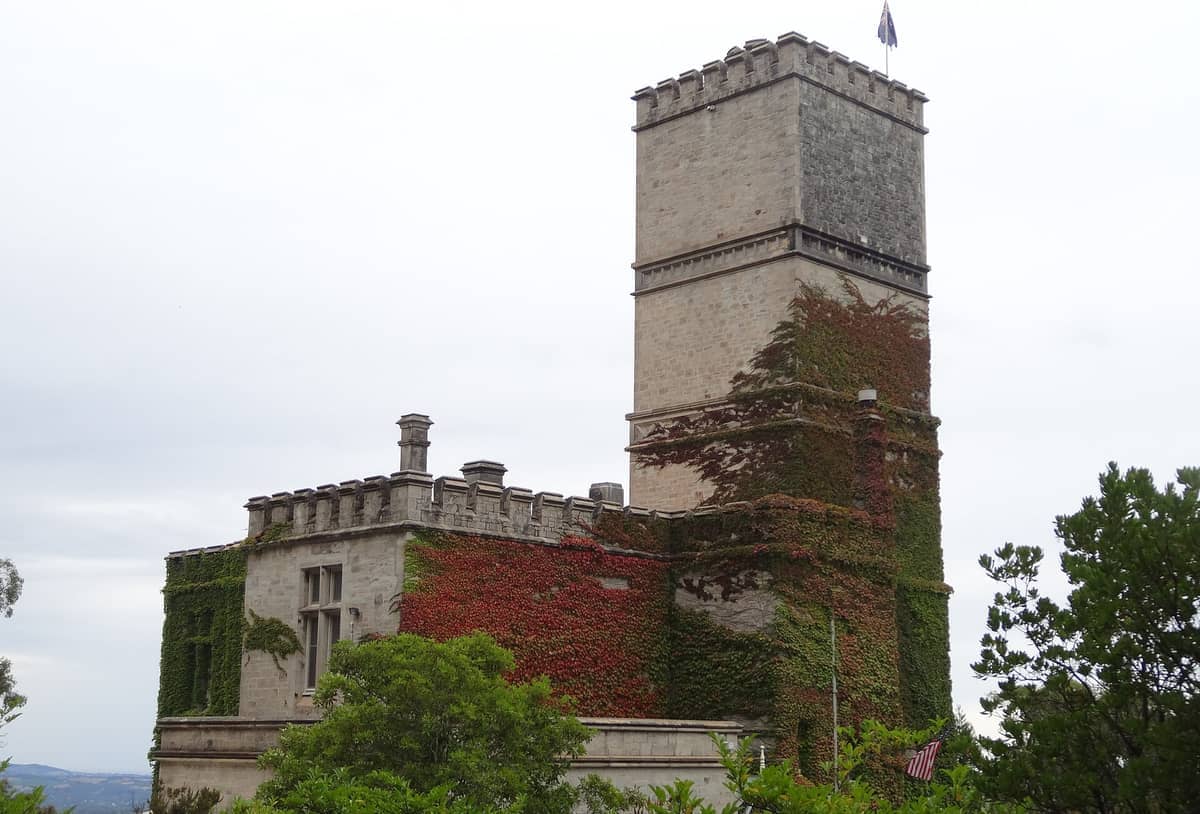
What Mount Lofty Summit Actually Is
Mount Lofty Summit is the highest point in the Mount Lofty Ranges south of Burra, standing at more than 710 metres above sea level. It sits within the Cleland Conservation Park area of the Adelaide Hills, roughly 15 kilometres east of the city centre by road. The summit is managed by the South Australian National Parks and Wildlife Service, and the site includes a sealed lookout platform, accessible toilets, a café and function centre, and trailheads for several walking routes.
The summit is significant for both its views and its history. The British navigator Matthew Flinders named Mount Lofty on 23 March 1802, sighting the prominent hill from his ship in Gulf St Vincent. Later settlers recognised the peak as a natural landmark and triangulation point for early surveys of the colony. In 1885 a stone obelisk was erected at the summit, replacing an earlier cairn, and that obelisk still stands at the viewpoint today.
ℹ️ Good to know
Vehicle gates at the summit car park open at 6:00 a.m. and close at 11:00 p.m. (October to March) or 9:00 p.m. (April to September). If you arrive by car, note the closing time before you visit — particularly relevant for sunset visits in the shorter days of winter.
The View: What You See and How It Changes
From the lookout platform, the Adelaide Plains unfold below in a way that puts the city's unusual geography into clear perspective. The CBD grid sits roughly 15 kilometres to the west, flanked by the thin line of North Adelaide. Beyond that, the suburbs fan out across the flat coastal plain until they dissolve into the mangrove-fringed shore of Gulf St Vincent. On a clear day the horizon appears impossibly far away, and the sheer flatness of the plain against the rugged hills behind you becomes the defining visual contrast.
Morning visits reward you with low, angled light that picks out the city's street grid and the silver thread of the River Torrens. The air is usually cooler and clearer before midday, and the colours shift quickly in the first hour after sunrise. By mid-morning in summer, heat haze begins to soften distant detail, particularly the coastline and the far northern suburbs. Late afternoon in autumn and winter often produces the sharpest long-distance views, with scrubbed air after front passages.
Sunset from the summit is popular, and with good reason: the western sky turns above a city already silhouetted against the darkening plain. However, this popularity has a practical implication. In summer, sunset falls well after 8:00 p.m. leaving visitors with ample time before gates close. In winter, the combination of earlier sunsets and 9:00 p.m. gate closures means you are unlikely to be cut off, but it is always worth checking current gate times against the sunset forecast for your date.
💡 Local tip
Photography tip: The lookout faces almost due west, which means sunrise light falls on the hills behind you rather than the city. Come at sunset or in the hour before for the best front-lit cityscape. A wide-angle lens or phone panorama mode handles the full sweep of the plain well.
Tickets & tours
Live prices and dates from our booking partner. If you book, we may earn a commission at no extra cost to you.
Half-day Lofty Descents tour by bike
From 89 €Instant confirmationFree cancellationUltimate Adelaide and Hahndorf full-day tour
From 94 €Instant confirmationFree cancellationAdelaide kayak tour with expert instructors
From 51 €Instant confirmationFree cancellationTrue Crime Tour in Adelaide
From 21 €Instant confirmationFree cancellation
Getting There: Car, Bus, and on Foot
The vast majority of visitors arrive by car via the Mount Lofty Summit Road, which connects to the Mount Barker Road (South Eastern Freeway corridor) through Crafers. The drive from the CBD takes around 25 to 35 minutes depending on traffic, and the road is sealed and well signposted. Paid parking is available in the summit car park; check current rates with the National Parks and Wildlife Service before you go, as fees are not fixed in this guide.
Adelaide Metro bus 823 is a short shuttle from Crafers Park ’n’ Ride to the summit and Cleland, not a direct city service. Check schedules directly with Adelaide Metro before planning your trip, as frequency is limited and timetables change seasonally. This route is genuinely useful if you want to avoid parking costs or if you plan to walk one way and return by bus.
For walkers and hikers, the summit is a destination on several trails that climb through the surrounding conservation parks. The Waterfall Gully to Mount Lofty trail is the most frequently used, ascending roughly 370 metres over about 3.7 kilometres each way through native bush. It connects the Waterfall Gully reserve near Stirling with the summit and is graded as a moderate to hard walk depending on pace and conditions. Expect a workout on the upper sections.
⚠️ What to skip
The Waterfall Gully trail can be slippery after rain, and parts of the upper section are exposed in high summer heat. Carry water, wear sun protection, and check trail conditions with the National Parks and Wildlife Service if recent weather has been extreme.
On the Ground: The Summit Area Itself
The lookout platform is a paved, railed area around the 1885 obelisk. It is compact rather than grand — you are not walking an extended boardwalk here. The viewing area accommodates perhaps 30 to 40 people comfortably before it begins to feel crowded. On popular weekends, particularly in the hour before sunset in summer, the platform can fill quickly, with groups pressing toward the railings and camera arms extended in all directions.
The Summit Café sits just below the lookout and operates as both a daytime café and a function venue. It is a reasonable place for a coffee or a light meal after a walk, with indoor seating and a terrace that shares some of the view. The café operates its own hours separate from the lookout, so check current times if you are counting on it being open.
Accessible parking bays are located close to the lookout, and accessible toilets are available on site. The path from the accessible car park to the lookout platform is paved and manageable for wheelchair users and pushers, which makes this one of the more genuinely accessible hilltop viewpoints in South Australia. Families with young children in strollers can reach the lookout without carrying the stroller up stairs.
The Adelaide Hills Context
The summit sits at the western escarpment of the Mount Lofty Ranges, the range that provides Adelaide with its distinctive eastern backdrop and much of the city's water catchment. The ranges are part of the traditional lands of the Kaurna people, the First Nations people of the Adelaide Plains. For a deeper understanding of this country's Indigenous significance, the Living Kaurna Cultural Centre in the city offers important context that a summit lookout alone cannot provide.
The drive to and from Mount Lofty passes through the Adelaide Hills, one of South Australia's most scenic and productive rural regions. The villages of Crafers, Stirling and Aldgate are all within a few kilometres and worth exploring before or after your summit visit. The Hills are also the gateway to the Barossa Valley and other wine regions, making the summit a practical first stop on a longer day trip east of Adelaide.
What to Know: Is It Worth the Trip?
Mount Lofty Summit is not a spectacular natural wilderness experience. The lookout is a paved platform next to a café and a car park. What it does offer — and does well — is an immediate, clear, high-altitude view of Adelaide that takes the city's geography from something you know abstractly on a map to something you understand visually. That shift in perspective is genuinely useful for a first-time visitor, and the view at sunset or in early morning light is legitimately memorable.
Visitors expecting dramatic mountain scenery or solitude will be disappointed, particularly on summer weekend afternoons when the car park fills and the platform becomes crowded. The summit is best understood as an accessible urban viewpoint that happens to be in the hills, not a remote natural landmark. If your time is limited and you have to choose between the summit and a longer walk through the surrounding conservation parks, the walk will give you more of the landscape. If you want the city view with minimal effort, this is the right choice.
Travellers with a full week can combine the summit with a broader exploration of the Adelaide Hills, including the German heritage village of Hahndorf and the Cleland Wildlife Park — both within a short drive.
Insider Tips
- Arrive within the first hour after the car park opens (6:00 a.m.) in summer for near-empty conditions and the sharpest pre-haze views of the city. You will often have the platform to yourself.
- In winter, come in the 90 minutes before sunset on a day after a cold front has cleared. The combination of scrubbed air and low golden light produces the clearest long-distance views of the year, often reaching far across Gulf St Vincent.
- If you are driving, the approach road from Crafers via the Mount Barker Road is the fastest and most reliable route. Avoid the narrower back roads through Eagle-on-the-Hill during busy weekend periods.
- The 1885 obelisk at the summit is not signposted in detail on site. It marks the location of early survey triangulation work and replaced a cairn placed by colonial surveyors. Worth a closer look before you focus on the view.
- Bus 823 is a short weekday shuttle between Crafers Park ’n’ Ride, Cleland, and the summit — not a city-to-summit route. Pair a one-way walk down the Waterfall Gully trail with a rideshare or a pre-planned Crafers connection if you want to avoid retracing your steps.
Who Is Mount Lofty Summit For?
- First-time visitors to Adelaide wanting immediate geographic orientation
- Photographers targeting sunset or pre-dawn city panoramas
- Families with young children needing an accessible hilltop outing
- Day-trippers combining the summit with a broader Adelaide Hills loop
- Hikers finishing or starting the Waterfall Gully to Mount Lofty trail
Nearby Attractions
Other things to see while in Adelaide Hills:
- Belair National Park
Proclaimed in 1891, Belair National Park covers 840 hectares of native bushland in the Adelaide Hills, just 11 kilometres from the city centre. It offers walking trails, open grass areas, wildlife watching, and a genuine sense of space without requiring a full-day commitment.
- Carrick Hill
Carrick Hill is a beautifully preserved 1930s Arts and Crafts estate in Springfield, about 8 kilometres from the Adelaide CBD. The property combines a fully furnished house museum, a heritage garden designed to complement the architecture, and a contemporary gallery space — all set within a 100-acre estate in the Adelaide foothills.
- Cleland Wildlife Park
Cleland Wildlife Park sits within a 1,036-hectare national park in the Adelaide Hills, offering one of Australia's most intimate native wildlife experiences. Walk among free-roaming kangaroos, hand-feed wallabies, and get close to koalas — all within 20 minutes of the city centre.
- Gorge Wildlife Park
Set on 14 acres of Adelaide Hills bushland near Cudlee Creek, Gorge Wildlife Park has been introducing visitors to Australian native animals since 1965. It is one of the few places near Adelaide where you can hold a koala, hand-feed kangaroos, and observe over 150 species of Australian and exotic animals, birds, and reptiles in an unhurried, genuinely personal atmosphere.
Planning a trip? Discover personalized activities with the Nomado app.