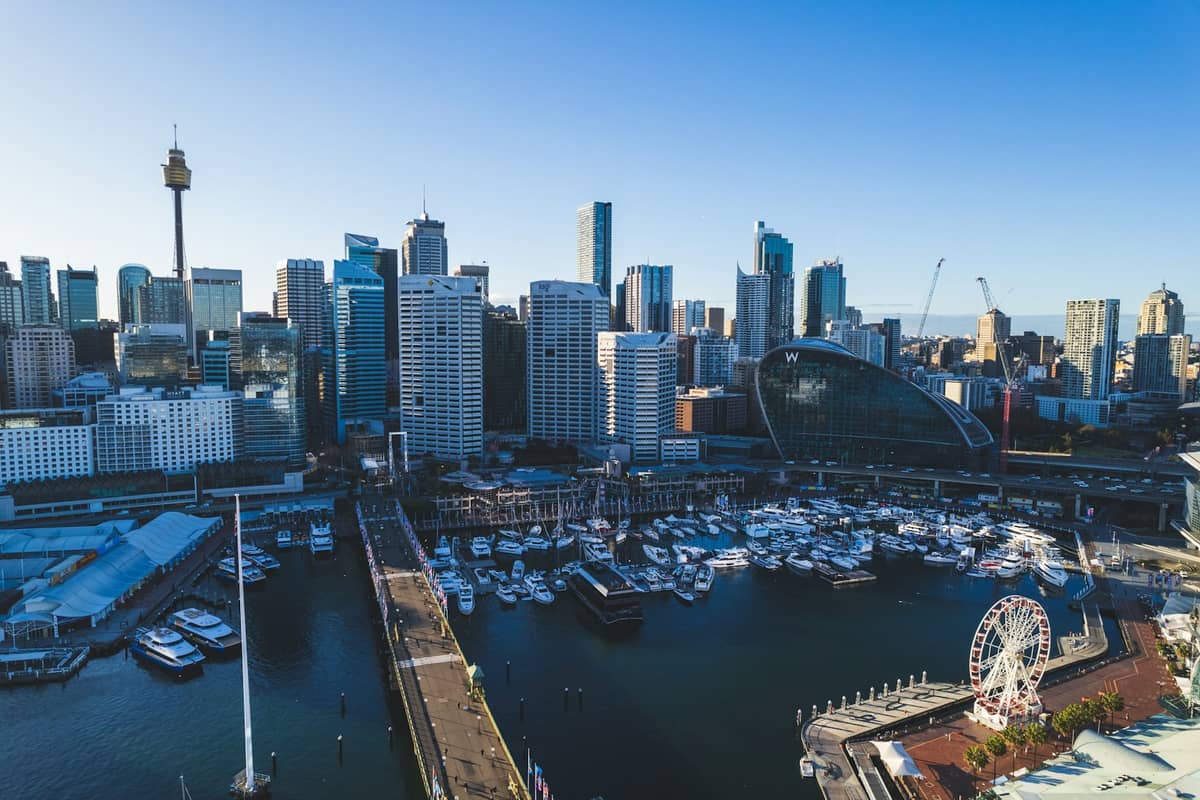
Darling Harbour is Sydney's purpose-built waterfront leisure precinct, sitting immediately west of the CBD along Cockle Bay. It draws families, conference-goers, and first-time visitors with a concentrated run of major attractions, restaurants, and event venues stretching from King Street Wharf south to Tumbalong Park.
Darling Harbour occupies a former industrial waterfront less than a kilometre from Sydney's Town Hall, transformed over recent decades into the city's most visitor-focused precinct. It is unashamedly geared toward tourists and families, which is both its greatest strength and its most honest limitation.
Orientation
Darling Harbour wraps around the western side of Cockle Bay, separated from the Sydney CBD by a low escarpment and a short walk through Bathurst or Market streets. The precinct runs roughly north to south: King Street Wharf sits at the northern end, closest to the CBD and Barangaroo; Cockle Bay Wharf and the Pyrmont Bridge sit in the middle; and Darling Quarter, Tumbalong Park, the ICC Sydney convention centre, and the Chinese Garden of Friendship anchor the southern end near the Haymarket and Chinatown. Darling Square, a newer mixed-use development, sits just inland from the southern end.
Pyrmont Bridge, a heritage-listed bridge open to pedestrians, connects the eastern waterfront strip to the Pyrmont peninsula on the western bank, where the Australian National Maritime Museum stands. This western side of Cockle Bay is technically Pyrmont, though most visitors treat it as part of the same continuous precinct. Walking from the Town Hall end of the CBD to the middle of the waterfront takes around ten to twelve minutes on flat ground.
To the south, Darling Harbour blurs into Chinatown and Haymarket around Hay Street. To the north, it meets Barangaroo, Sydney's newer waterfront development. The nearby Surry Hills and Darlinghurst neighbourhoods lie to the east, while the inner west begins just across the water in Pyrmont and Ultimo.
Character & Atmosphere
Early mornings in Darling Harbour belong to joggers and hotel guests doing laps of the waterfront boardwalk. The light is soft and flat off the water, the restaurant chairs are still stacked, and Tumbalong Park is quiet except for pigeons. It is one of the rare times the precinct feels like it belongs to the city rather than to its visitors.
By mid-morning, school groups are queuing outside SEA LIFE Sydney Aquarium and WILD LIFE Sydney Zoo on Wheat Road. Prams multiply. The attractions open their doors and the waterfront fills with a mix of interstate families, international tourists, and the occasional office worker cutting through from the CBD. On weekends and public holidays, the boardwalk along Cockle Bay becomes genuinely crowded by noon, and finding a cafe table without a wait requires either patience or an early arrival.
Afternoons can feel intense in summer when the western-facing waterfront gets full afternoon sun and the stone and concrete surfaces radiate heat. Winter afternoons are more pleasant, with cool light reflecting off the water and the outdoor dining terraces filling with post-work crowds. After dark, Darling Harbour shifts gear: the illuminated water features and light installations around Tumbalong Park make for easy evening walks, and the restaurant strips along Cockle Bay Wharf get genuinely lively on Friday and Saturday nights.
The honest assessment is that Darling Harbour does not have the layered, residential street life of a neighbourhood like Newtown or Paddington. It is a purpose-built leisure zone, and it reads as one. The architecture is large-scale and event-venue practical. The retail is chain-oriented. But within those limits it does what it does efficiently: it is accessible, well-maintained, and genuinely entertaining if you approach it on those terms.
⚠️ What to skip
Darling Harbour is one of Sydney's busiest precincts during school holidays, long weekends, and major events at ICC Sydney. If you're visiting with children and want shorter queues at the aquarium or zoo, aim for a weekday morning outside of school holiday periods.
What to See & Do
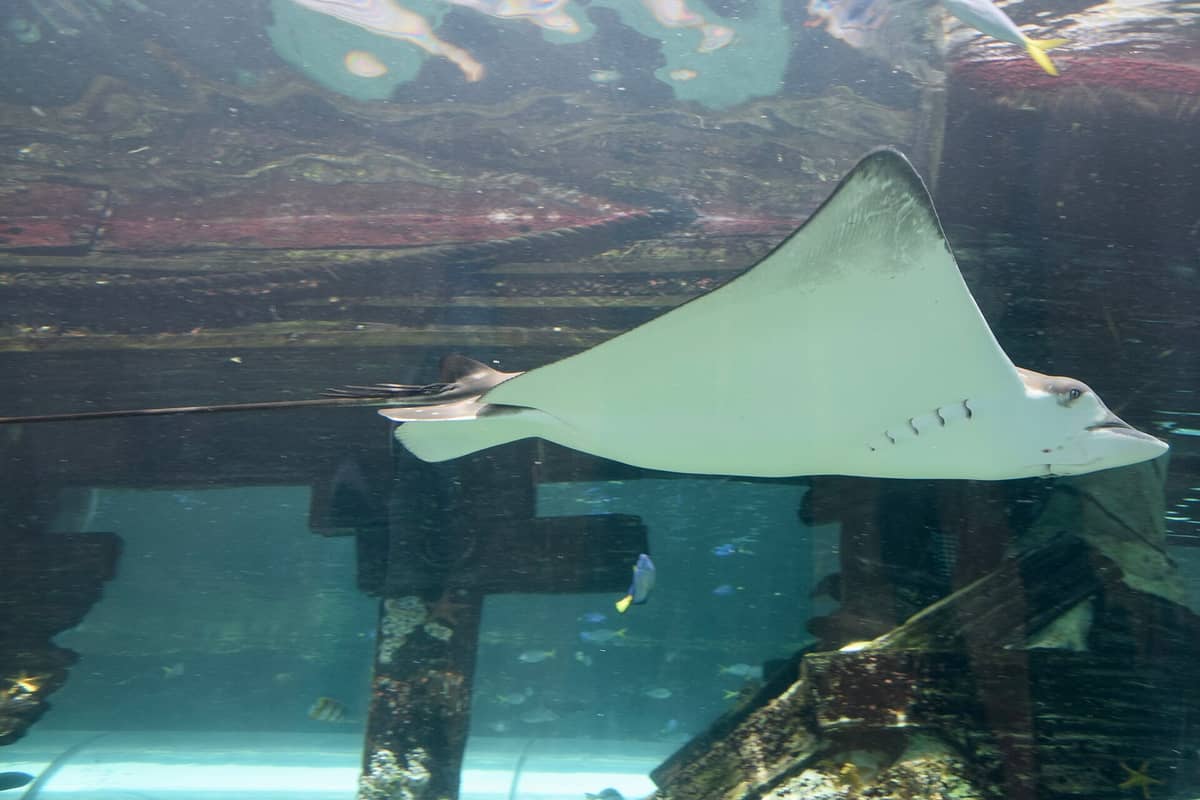
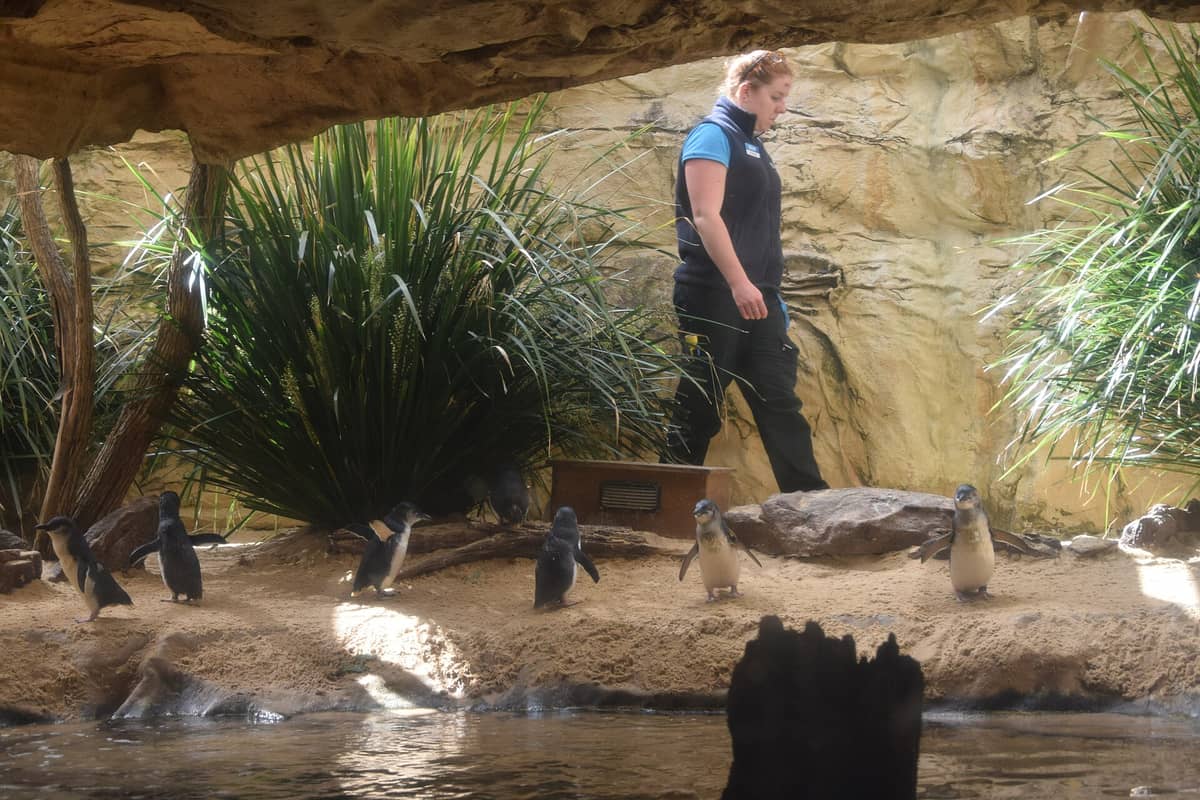
The two headline paid attractions sit side by side on Wheat Road. SEA LIFE Sydney Aquarium is one of Australia's largest aquariums, featuring underwater tunnels through shark and ray tanks, a dugong display, and Great Barrier Reef recreations. Adjacent to it, WILD LIFE Sydney Zoo houses koalas, wombats, saltwater crocodiles, and eastern grey kangaroos in a compact multi-level format. Neither can compete with a full day at Taronga Zoo for sheer scale, but both are substantial half-day experiences for families or first-time visitors.
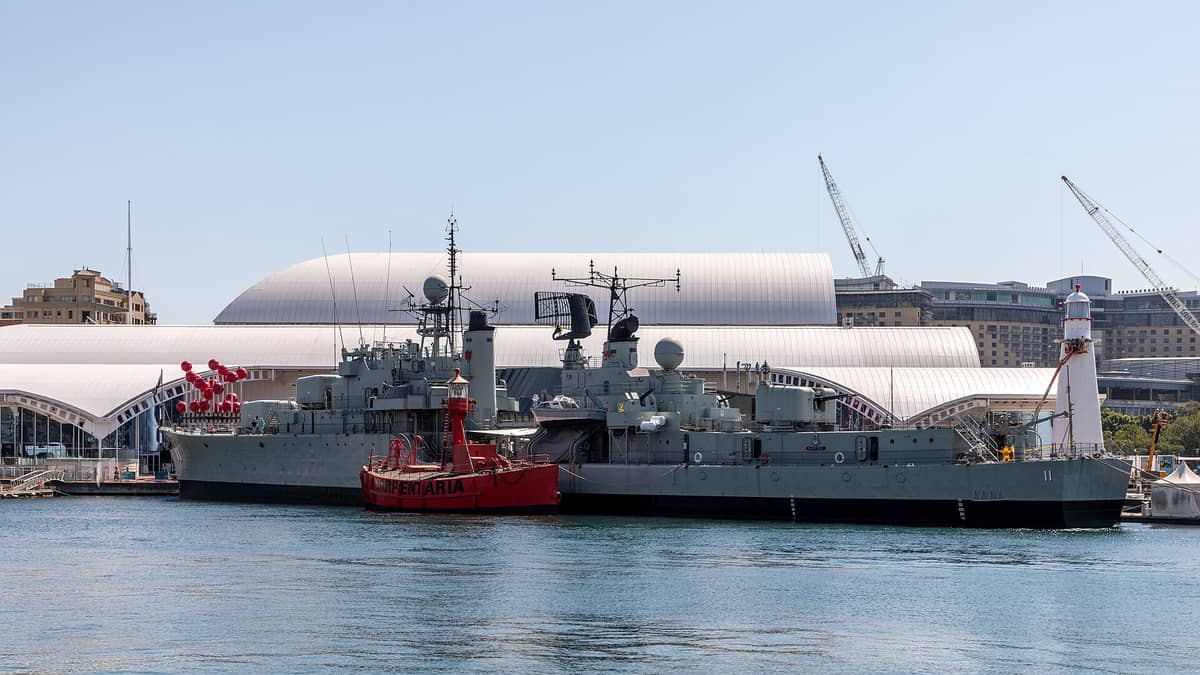
On the western bank, across Pyrmont Bridge, the Australian National Maritime Museum is a more rewarding and underrated stop. The museum covers Indigenous watercraft, convict transportation, naval history, and Australia's immigration story, with several historic vessels moored alongside that you can board. Entry to the main building is free for parts of the permanent collection, with charges for special exhibitions and vessel access.
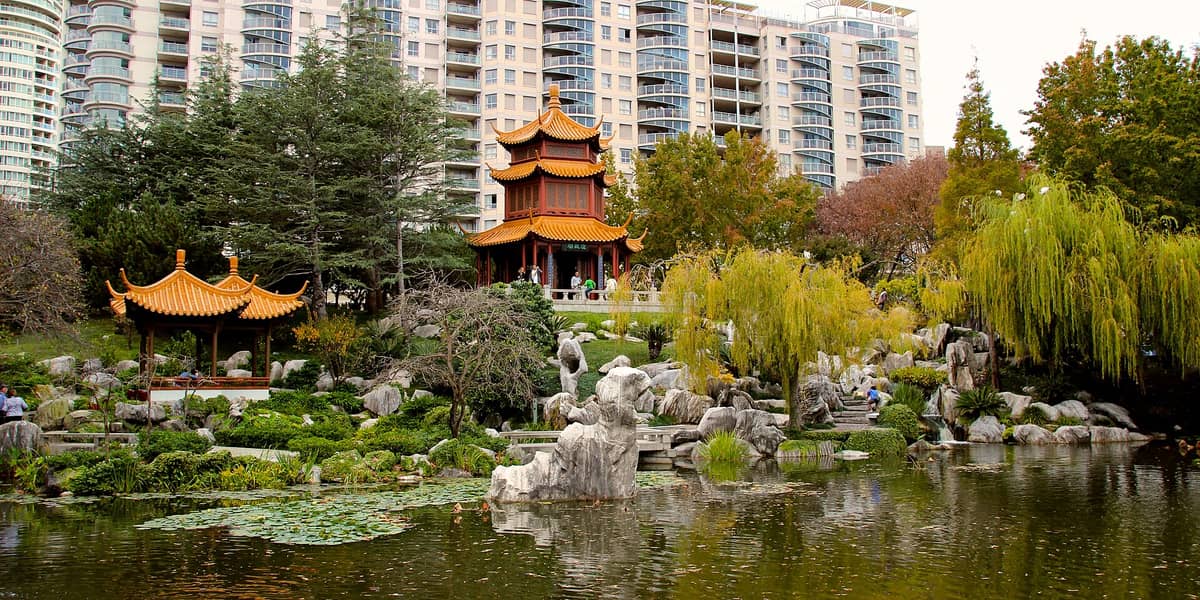
At the southern end of the precinct, the Chinese Garden of Friendship offers a genuine counterpoint to the rest of Darling Harbour's scale. Designed by Chinese landscape architects and gifted to Sydney by the Guangzhou government to mark the 1988 bicentenary, the garden is compact but carefully detailed, with pavilions, a lake, willow trees, and a teahouse. It is one of the quieter corners of the precinct. Visitors should wear flat, non-slip footwear as some paths and surfaces near the water's edge are uneven.
Pyrmont Bridge: a heritage-listed swing bridge from 1902, free to cross, with good views back toward the CBD skyline
Tumbalong Park: open lawn space used for free public events, festivals, and the annual Christmas decorations
ICC Sydney: the International Convention Centre hosts major consumer shows, exhibitions, and concerts that are occasionally open to the public
Darling Quarter playground: a large free outdoor play structure near the southern boardwalk, popular with families
💡 Local tip
Booking aquarium and zoo tickets online in advance is almost always cheaper than paying at the door, and it lets you skip the ticket queue. Combination passes covering multiple Merlin attractions (SEA LIFE, WILD LIFE, Sydney Tower Eye, Madame Tussauds) are available and can represent good value if you plan to visit more than one.
Eating & Drinking
The food and drink scene in Darling Harbour is built around volume and convenience rather than culinary depth. Cockle Bay Wharf runs a long strip of mid-range restaurants with waterfront terraces, covering Japanese, Thai, Italian, steak, and modern Australian formats. The setting is good, particularly in the evening when the city lights reflect off the water. The cooking is reliable but rarely exceptional, and prices reflect the location premium.
King Street Wharf, at the northern end of the precinct, is pitched slightly more at the after-work CBD crowd, with bars and casual dining venues that fill up on Thursday and Friday evenings. The atmosphere is lively in a straightforward sense: outdoor seating, cold drinks, waterfront views. It is not the city's most interesting bar strip, but it is pleasant enough on a warm evening.
For better value and more interesting eating, walk five minutes south into Chinatown and Haymarket, or ten minutes east into Surry Hills. The streets around Dixon Street and Thomas Street in Chinatown offer significantly cheaper and often better Chinese, Vietnamese, and pan-Asian food than anything inside the Darling Harbour precinct. Paddy's Markets at Haymarket is also nearby for a different kind of browse.
Darling Square, the newer development on the inland side of the southern precinct, has a more curated food and coffee offering, with independent cafes, a food hall format, and some of the precinct's better options for a quick lunch. Prices here are more moderate than on the waterfront itself.
ℹ️ Good to know
Tipping is not expected at Sydney restaurants and cafes. Service charges are not generally added to bills. Rounding up or leaving a small tip for table service is appreciated but entirely discretionary.
Getting There & Around
Darling Harbour is well served by the L1 light rail line, which runs from Central Station through the southern end of the city to Dulwich Hill. The most useful stops for Darling Harbour are Exhibition (for Tumbalong Park and the ICC Sydney Exhibition halls), Convention (for the ICC Sydney Convention Centre), and Pyrmont Bay (for the Maritime Museum on the western bank). Trams run frequently and the journey from Central takes only a few minutes.
From the CBD, Town Hall Station is the most practical train connection, with the official precinct guide placing it approximately 600 metres from Cockle Bay. Walking west along Market Street or Bathurst Street brings you directly to the waterfront in around ten to twelve minutes. Central Station is also walkable, though the southern approach involves more of a gradient. For general transit planning across Sydney, the Transport for NSW trip planner is the most reliable resource for current routes and fares.
Several bus routes serving the CBD stop on Market, Park, Druitt, Bathurst, and Liverpool streets, all within a short walk of the precinct's eastern edge. Within Darling Harbour itself, the boardwalk is entirely pedestrian and flat for most of its length, making it straightforward to walk from one end to the other in under twenty minutes. The main exceptions are the ramps and bridges connecting the boardwalk to street level, which are generally accessible but worth noting if you have mobility considerations.
Taxis and rideshare services can drop off on Darling Drive along the eastern edge of the precinct. Parking is available in several commercial car parks in the area, but driving into this part of the city during peak times adds significant complexity and cost. Public transport is strongly preferable for most visits.
Where to Stay
Darling Harbour and its immediate surrounds have a solid concentration of hotels, including large international brands, making it a practical base for families or visitors prioritising proximity to the main attractions. The trade-off is that you are staying in one of the more commercially orientated parts of the city, rather than in a neighbourhood with genuine street life. For a broader look at where to base yourself across Sydney, the Sydney accommodation guide covers the main options and trade-offs.
Hotels on or near the waterfront offer the obvious draw of immediate precinct access and harbour views from upper floors. Hotels slightly set back toward the CBD or in Pyrmont tend to offer slightly lower rates for comparable quality, with the precinct still walkable in under ten minutes. Families doing multiple days of aquarium, zoo, and WILD LIFE-style attractions will find the convenience genuinely useful. Couples or solo travellers looking for more character in their surroundings might prefer basing themselves in Surry Hills, Potts Point, or the Rocks area instead, and treating Darling Harbour as a day visit.
Nearby Neighbourhoods Worth Combining
Darling Harbour is most naturally combined with a visit to Chinatown to the south, which adds better food options and a different kind of street energy to what is otherwise a fairly contained precinct. Walking north along the waterfront toward Barangaroo Reserve takes around fifteen minutes and connects to the Barangaroo headland park, one of Sydney's more interesting recent public spaces, with views toward the Harbour Bridge.
The Circular Quay and The Rocks precinct is about twenty minutes on foot going north through the CBD, or a short taxi or bus ride. Combining Darling Harbour with a morning at the Sydney Opera House and The Rocks makes for a full day covering Sydney's two most visitor-heavy areas in a single loop. For families specifically, adding the Sydney with kids guide will help sequence the day most efficiently.
TL;DR
Darling Harbour is Sydney's most concentrated family-friendly precinct, with SEA LIFE Aquarium, WILD LIFE Zoo, and the Australian National Maritime Museum all within easy walking distance of each other.
The L1 light rail (Exhibition Centre, Convention, Pyrmont Bay stops) and a ten-minute walk from Town Hall Station make it one of the most transit-accessible parts of the city.
Food and drink on the waterfront leans toward tourist pricing and reliable rather than memorable cooking; walk five minutes south into Chinatown for significantly better value.
It is not a neighbourhood with residential character or local street life, and visitors seeking that kind of atmosphere will find more in Surry Hills, Newtown, or Paddington.
Best approached as a half-day or full-day destination for families and first-time visitors, ideally combined with Barangaroo to the north or Chinatown to the south to round out the experience.
Three days is enough to experience Sydney's iconic harbour, golden beaches, historic laneways, and world-class food scene — if you plan well. This itinerary is built for efficiency without sacrificing depth, moving logically between neighbourhoods to save time and maximise what you actually see.
Sydney has more than 100 beaches within the greater metropolitan area, ranging from world-famous surf breaks to calm harbour coves perfect for families. This guide covers the best of them, from Bondi's golden crescent to the white-sand solitude of Palm Beach.
Sydney's museum scene spans 200 years of collecting, from Australia's oldest natural history institution to a world-class gallery of 21st-century Chinese art. This guide covers the city's finest collections, with practical details on free entry, opening hours, and how to plan your visits.
Sydney rewards visitors year-round, but the right timing depends on what you want to do. This guide breaks down Sydney's four seasons by weather, crowds, costs, and major events so you can plan a trip that actually matches your priorities.
Sydney rewards those who seek elevation. Whether you want the classic Opera House and Harbour Bridge framed together, vast ocean panoramas, or Blue Mountains escarpments stretching to the horizon, the city and its surrounds deliver some of the most dramatic viewpoints in the Southern Hemisphere. This guide covers the finest lookouts, from free hilltop perches to ticketed sky-high platforms.
The Blue Mountains is Sydney's most popular day trip, and for good reason: dramatic sandstone escarpments, ancient rainforest valleys, and a train ride straight from Central Station. This guide covers exactly how to get there, what to prioritise, what Scenic World actually costs, and the planning details most visitors overlook.
Sydney's surroundings are as rewarding as the city itself. Within two to three hours you can reach ancient rainforests, world-class wine country, remote surf beaches, and wildlife-filled national parks. This guide covers the best day trips from Sydney, with practical advice on how to get there and what to do when you arrive.
Sydney is one of the world's great cities, and you don't need a big budget to experience it at its best. From free-entry museums and galleries to iconic coastal walks and harbour lookouts, this guide covers 22 of the best free things to do in Sydney.
Sydney's public transport network covers nearly every corner of the city, but it has quirks that trip up first-time visitors. This guide breaks down every option, from the Opal card fare system to ferry routes and airport transfers, so you can move around confidently from day one.
Sydney rewards travellers who spend well. From harbour-view suites at Park Hyatt to degustation menus overlooking the Opera House, this guide breaks down exactly where to stay, eat, and what to do when budget is not the deciding factor.
Seven days is enough time to cover Sydney's iconic landmarks, explore its best neighbourhoods, and still squeeze in a day trip or two. This itinerary is structured around geography to minimise transit time, with honest notes on what to skip and what to prioritise.
Sydney sits on the Country of the Eora Nation, home to Aboriginal peoples whose connection to this land stretches back tens of thousands of years. This guide covers the key heritage sites, cultural tours, museums, and ceremonies that offer genuine insight into First Nations history and living culture across the city.
Sydney's coastline is one of its defining features, and walking it is the best way to understand the city. This guide covers the top coastal walks in Sydney, with clear assessments of difficulty, logistics, and what each route actually delivers.
Sydney has one of the most serious coffee cultures in the world, anchored by the flat white and driven by a generation of specialty roasters and technically obsessed baristas. This guide covers where to drink, what to order, how much to pay, and which neighbourhoods to explore cup by cup.
Sydney's ferry network is one of the most practical and scenic ways to move around the city. This guide covers every route, how to pay, fare caps, seasonal changes, and which journeys are worth doing for their own sake.
Sydney is one of the world's great cities for romance, with a harbour that practically does the work for you. This guide covers the most memorable experiences for couples — from iconic landmarks to quieter corners most visitors never find — with practical details on timing, cost, and what to actually expect.
Sydney's famous icons are worth every visit, but the city's real character lives in its quieter corners. From a free Chinese art gallery in Chippendale to a convict island you can camp on, these are the experiences most visitors overlook.
Sydney Mardi Gras is one of the world's largest LGBTQIA+ celebrations, running across several weeks each late summer. This guide covers the full festival program, parade logistics, neighbourhood highlights, transport tips, and everything visitors need to plan a trip with confidence.
Sydney's market scene covers serious ground, from heritage-listed weekend stalls in The Rocks to one of the Southern Hemisphere's biggest fish markets. This guide breaks down the best markets in Sydney by type, location, and what you actually get for your time.
Sydney New Year's Eve is one of the world's great spectacles, but the difference between a memorable night and a frustrating one comes down to planning. This guide covers the best free and ticketed vantage points around Sydney Harbour, the fireworks schedule, transport logistics, and the practical details that most guides skip.
Sydney's nightlife runs deeper than the Opera House forecourt and a few cocktail bars with harbour views. From the craft-beer pubs of Newtown to late-night rooftops in the CBD and live music venues in Surry Hills, this guide breaks down where to go, what to expect, and what to avoid on a night out in Sydney.
Sydney has a reputation for being expensive, and it's not entirely undeserved. But with the right approach to transport, food, and sightseeing, you can experience the best of this city without spending a fortune. This guide breaks down exactly where to save and where it's worth spending a little more.
Sydney's shopping scene runs deeper than most visitors expect. This guide breaks down the best shopping in Sydney by precinct and purpose, covering everything from grand Victorian arcades in the CBD to independent boutiques in Newtown and Saturday markets in Paddington.
Sydney sits within reach of some of Australia's most accessible wildlife experiences, from koalas and kangaroos at dedicated wildlife parks to humpback whales off the coast. This guide covers the best options, clear trade-offs, and practical logistics for every budget.
Sydney is one of Australia's most family-friendly cities, with a mix of free attractions, world-class wildlife encounters, and outdoor adventures that suit kids of all ages. This guide covers the best activities, honest cost breakdowns, seasonal tips, and transport advice to help you plan a stress-free family visit.
Sydney rewards exploration far beyond the postcard shots. This guide covers the best things to do in Sydney Australia — iconic landmarks, great beaches, cultural highlights, and neighbourhood experiences — with practical detail on timing, costs, and getting around.
Vivid Sydney is one of the Southern Hemisphere's largest light, music, and ideas festivals, turning Sydney Harbour into an annual winter spectacle. This guide covers the Light Walk route, ticketed events, transport logistics, crowd strategy, and what first-timers consistently get wrong.
Sydney's food scene is one of the most diverse and seriously good in the world, shaped by decades of immigration, exceptional local produce, and a coastal geography that puts extraordinary seafood at the centre of the table. This guide covers the dishes, markets, neighbourhoods, and practical tips you actually need.
Choosing where to stay in Sydney shapes your entire trip. This guide breaks down the city's key neighbourhoods by location, vibe, price range, and transport access, so you can pick the right base before you book.