Where to Stay in Sydney: The Best Neighbourhoods for Every Traveler
Choosing where to stay in Sydney shapes your entire trip. This guide breaks down the city's key neighbourhoods by location, vibe, price range, and transport access, so you can pick the right base before you book.
Tickets & tours
Live prices and dates from our booking partner. If you book, we may earn a commission at no extra cost to you.
TL;DR
- Sydney's best neighbourhoods for visitors are the CBD, The Rocks, Darling Harbour, Surry Hills, Bondi, and Manly, each suiting different priorities.
- The CBD and The Rocks offer the best transport access, including the Airport Link train, which costs around AUD 22-23 to city stations. See our guide to getting around Sydney for full public transport details.
- Hotel rates fluctuate significantly: expect higher prices in December-February and lower rates from May to July. Always check the total price including taxes and fees before booking.
- Bondi and Manly are great if beach access matters more than central convenience, but factor in extra travel time to major sights.
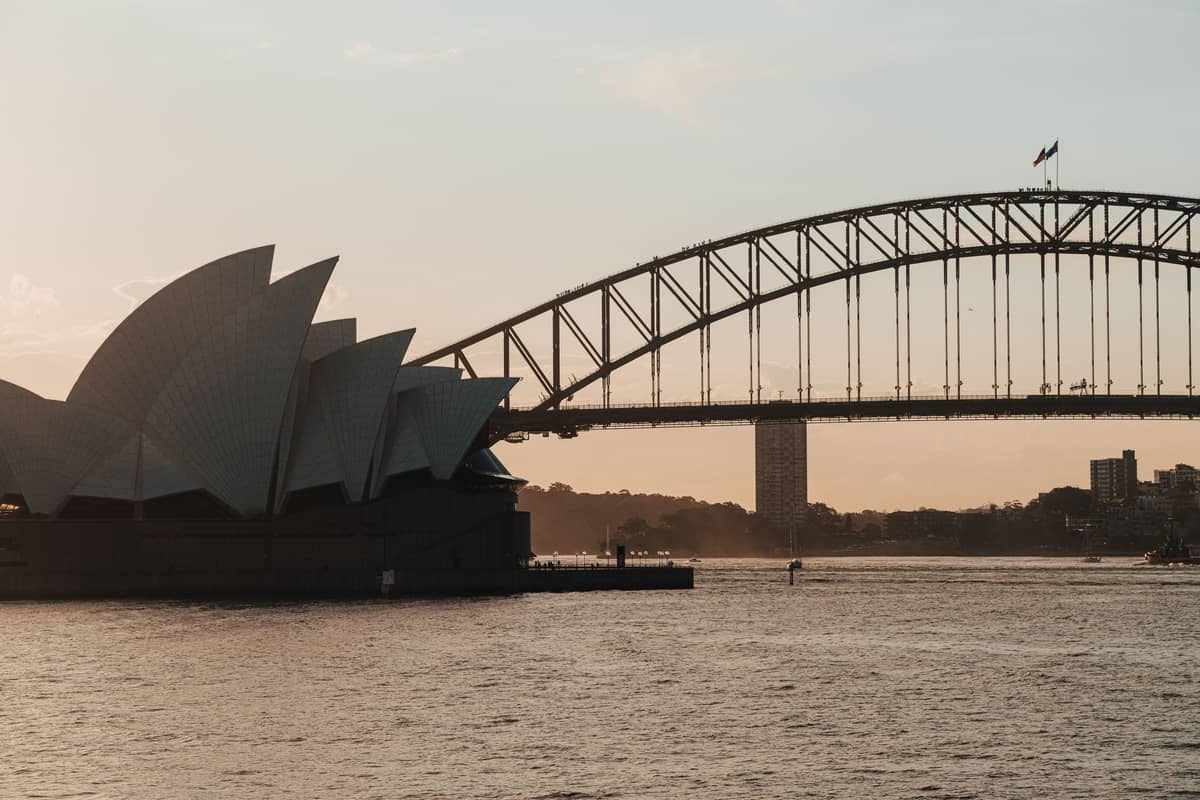
- First-timers spending fewer than five nights should prioritize proximity to the Sydney Opera House and harbour, which means the CBD or The Rocks.
How to Think About Location in Sydney

Sydney is a sprawling city, and where you stay has real consequences for how much time you spend commuting. The harbour divides the city into north and south, and many attractions cluster around Circular Quay on the southern shore. If you only have a few days, staying more than 30 minutes from that area means you'll burn significant time just getting to the iconic sights.
Sydney's public transport network covers metro, metro, trains, buses, ferries, and light rail. Both Opal cards and contactless bank cards work across all modes, making it relatively straightforward to move around. The most useful train lines for visitors run from the CBD through to Bondi Junction in the east, and the Airport Link connects Sydney Kingsford Smith Airport (SYD, roughly 8-9 km from the city centre) directly to central stations. Note that the airport station access fee applies separately and is not covered by Opal travel caps. For a full breakdown, check the Sydney ferry guide if you're considering a waterfront base like Manly or Watson's Bay.
⚠️ What to skip
Advertised nightly hotel rates in Sydney frequently exclude taxes, resort fees, and booking charges. Always check the final total before comparing properties. Prices also spike sharply around New Year's Eve, the Sydney Festival in January, and major sporting events. Book these periods at least 2-3 months in advance.
The Sydney CBD: Best for First-Timers and Business Travellers
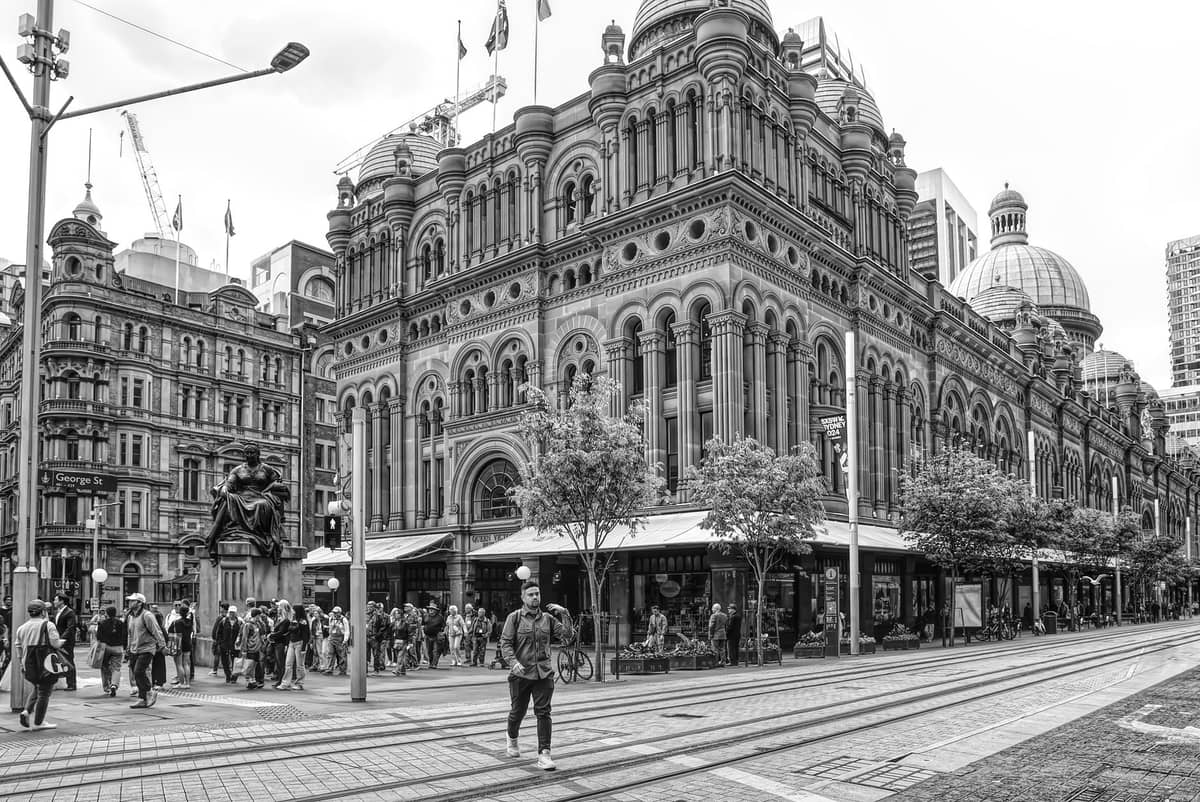
The central business district is the most practical base for a first visit. You're within walking distance of Central Station, which connects to every major train line, and a short trip from Circular Quay's ferry and train connections. The city's main shopping strips, the Queen Victoria Building, and most major museums are here, and you're never far from a bus or metro stop.
The CBD offers the widest range of accommodation, from budget-friendly options near Central Station to five-star properties overlooking Hyde Park or the harbour. The trade-off is that parts of the CBD, particularly around George Street and the mid-town area, feel commercial and lose their energy after business hours. If atmosphere matters, Surry Hills or Darlinghurst just to the south offer more character without sacrificing convenience.
- Best for First-time visitors, business travellers, conference attendees, anyone relying on public transport
- Transport score Excellent. Central Station and multiple bus corridors; Airport Link access
- Price range AUD 150-400+ per night for mid-range to luxury hotels; budget options exist near Central
- Walking distance to harbour 15-25 minutes on foot to Circular Quay, depending on exact location
The Rocks and Circular Quay: Best for Harbour Views and Atmosphere
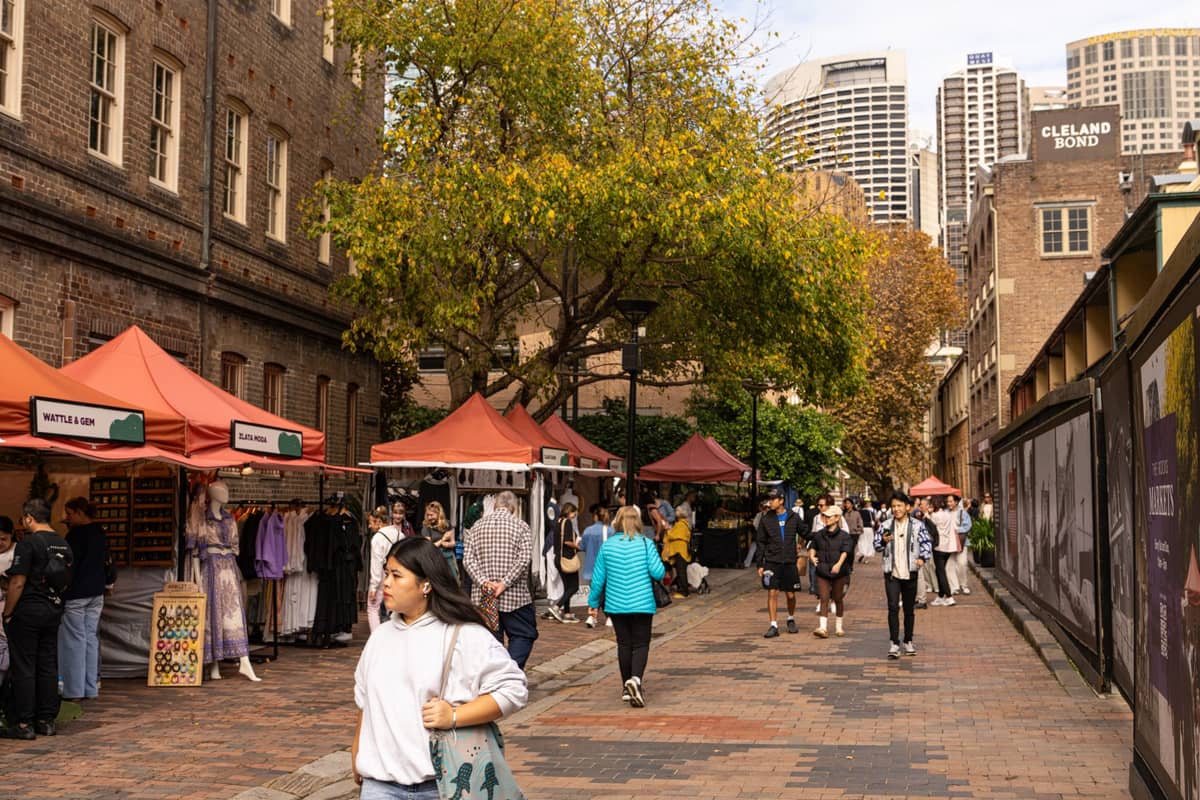
If you want to wake up close to the Sydney Harbour Bridge and Opera House, The Rocks is the address to aim for. It's Sydney's oldest European-settled neighbourhood, with sandstone laneways, weekend markets, and the kind of pub culture that's been around since the 1800s. Hotels here sit at the premium end of the market, and you're paying for location more than room size.
Circular Quay itself is less a neighbourhood than a transport and cultural hub, but properties right on the waterfront command some of the highest rates in the city. The advantage is unbeatable: you can walk to the Opera House in under five minutes, catch a ferry to Manly or Taronga Zoo without planning, and reach the CBD by train in two stops. The disadvantage is cost, and the fact that this area draws very high tourist density, especially on weekends.
💡 Local tip
If harbour-view rooms at The Rocks are outside your budget, consider a CBD hotel just two to three blocks south. You'll save AUD 50-100 per night and still reach Circular Quay on foot in 15 minutes.
Darling Harbour and Pyrmont: Best for Families and Attraction-Seekers
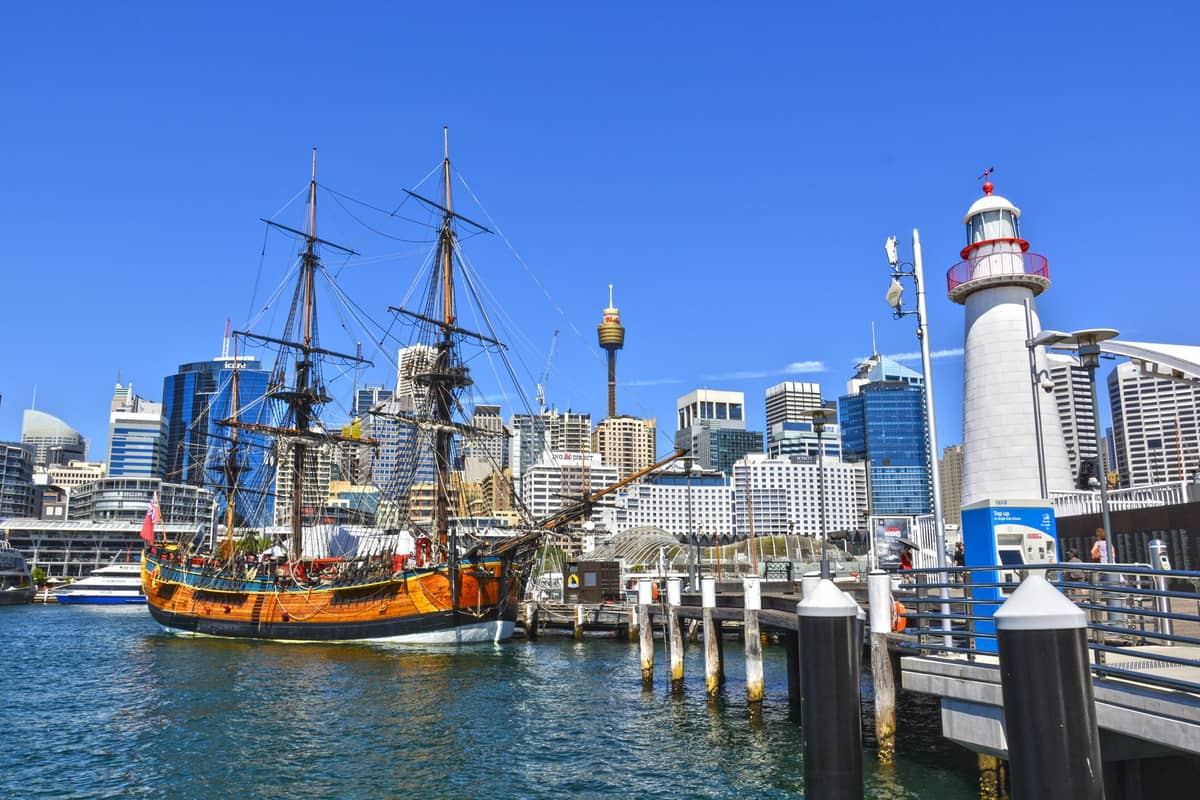
Darling Harbour sits on the western edge of the CBD and packs in a high concentration of family-friendly attractions: SEA LIFE Sydney Aquarium, Wild Life Sydney Zoo, the Australian National Maritime Museum, and the Chinese Garden of Friendship are all within easy walking distance. The area has undergone significant redevelopment and now hosts a mix of convention facilities, waterfront restaurants, and mid-to-upper-range hotels.
Staying here makes sense if you're travelling with children or attending an event at the ICC Sydney convention centre. The light rail connects Darling Harbour to the CBD and Central Station quickly, and the foreshore walk to the CBD takes around 15-20 minutes. The downside: outside event hours, parts of Darling Harbour feel engineered for tourism rather than lived-in, and dining options skew toward large, average-quality restaurants catering to convention crowds. Push east into the CBD or south toward Surry Hills for better food.
Surry Hills and Darlinghurst: Best for Food, Nightlife, and Local Character
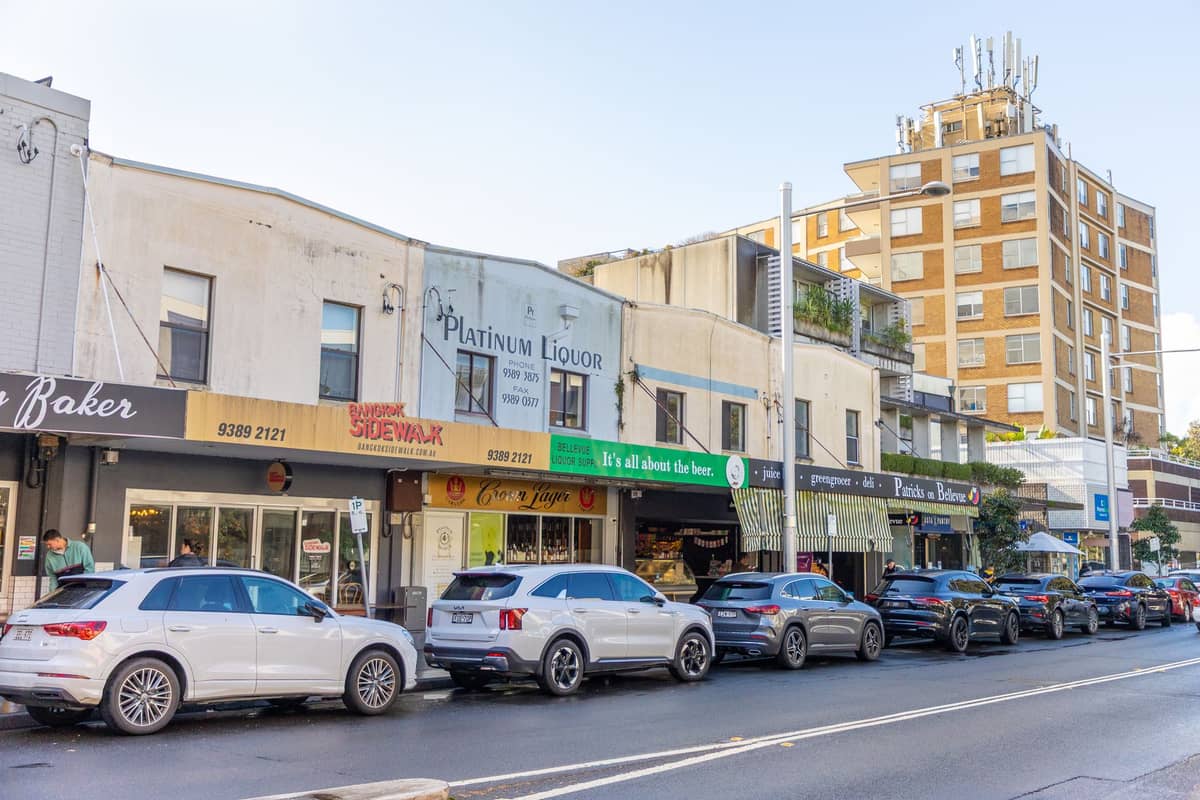
Surry Hills is where Sydney's food scene concentrates. The neighbourhood runs south from Oxford Street through a grid of terrace houses and converted warehouses, with an unusually high density of good cafes, wine bars, and restaurants per block. For travellers who want to eat well without commuting to a separate area, staying here is a strong choice. It also puts you within easy reach of the Sydney nightlife along Oxford Street and Crown Street.
Accommodation options in Surry Hills tend toward boutique hotels and guesthouses rather than large chain properties. That means fewer rooms and prices that can be uncompetitive with the CBD for equivalent quality, but if atmosphere and walkability to good food are priorities, the trade-off is worth making. The area is well-served by buses and a short walk from Central Station.
✨ Pro tip
Surry Hills and adjacent Darlinghurst have some of Sydney's best coffee. If you're following the specialty coffee scene, staying in this precinct means excellent options within a 5-minute walk every morning. The Sydney coffee culture guide covers the best spots by neighbourhood.
Bondi Beach: Best for Beach Access, Worst for Getting Around
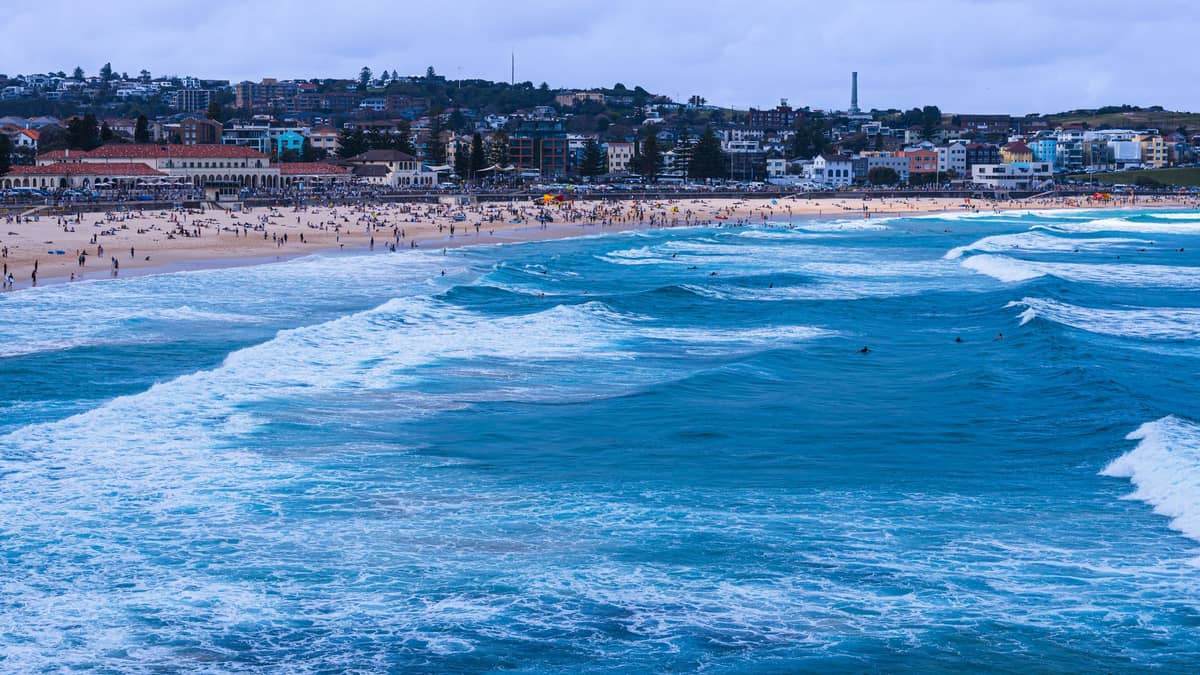
Bondi is Sydney's most famous beach suburb, and staying here has obvious appeal if catching waves or walking the Bondi to Coogee coastal walk is your primary goal. The beach itself is impressive: a curved bay of consistent surf flanked by a grassy park, with the Bondi Icebergs Pool at the southern headland. The strip of hotels and apartments along Campbell Parade puts you steps from the sand.
The honest reality of staying at Bondi: the CBD is 8 km away, and the public transport connection is inconvenient. There's no direct train to Bondi Beach; you either take a train to Bondi Junction and then a bus, or take a bus the whole way. In traffic, which is frequent, the journey to Circular Quay can take 40-60 minutes. If you plan to spend most of your time beach-side and don't need to cross the city often, Bondi works. For anyone with a varied itinerary across multiple Sydney neighbourhoods, the commute will become frustrating by day two.
- Bondi hotels along Campbell Parade range from surf-oriented budget hostels to boutique mid-range properties; true luxury options are limited compared to the CBD
- Parking is notoriously difficult, especially on weekends and in summer
- Summer crowds (December-February) are intense; the beach itself is very popular and hotel prices spike accordingly
- Shoulder seasons (March-May, September-November) offer better value and manageable crowds without losing the beach appeal
Manly: The Relaxed Alternative Across the Harbour
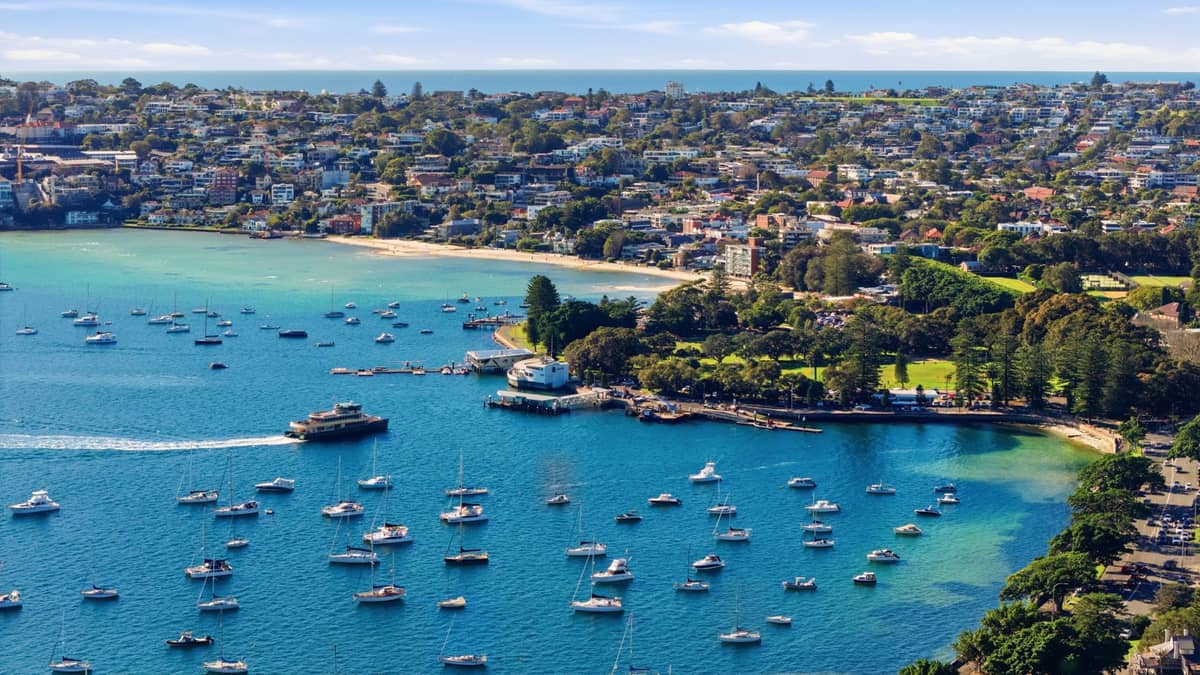
Manly sits on a narrow peninsula on Sydney's North Shore, and the fastest way to reach it from the CBD is the Manly Ferry from Circular Quay, a 30-minute crossing that counts as one of the best harbour experiences in the city. Staying in Manly means committing to that ferry journey every time you want to visit central Sydney, but many visitors find it worthwhile. The beach is wide and clean, the waterfront corso is lower-key than Bondi, and Shelly Beach just around the headland is genuinely calm and good for snorkelling.
Manly suits couples or families who want a relaxed beach-town feel with the option to dip into the city. Hotel options are more limited than in the CBD but reasonable in the mid-range bracket. The fast ferry (roughly 18 minutes) is a convenient alternative to the scenic but slower regular service. Keep in mind that the last ferries run to a schedule; missing one late at night means either a very long bus journey or a costly rideshare.
Seasonal Pricing and When to Book
Sydney's hotel rates follow a clear pattern. December through February is high season: the New Year's Eve fireworks, the Sydney Festival in January, and summer beach demand all compress supply and push prices up. February and March can be especially expensive. Conversely, May through July typically brings the lowest average rates, coinciding with mild but pleasant winter weather where daytime temperatures hover around 17-19°C.
Shoulder seasons, roughly March-May and September-November, offer a balance: lower rates than peak summer, comfortable temperatures for exploring on foot, and fewer crowds at major attractions. If flexibility exists in your travel dates, these windows are worth targeting. For timing advice aligned to events and weather, the best time to visit Sydney guide covers this in detail.
ℹ️ Good to know
Sydney's currency is the Australian dollar (AUD). Tipping is not compulsory in Australia and is genuinely discretionary rather than socially expected. Tap water from Sydney mains supply is safe to drink. Australia uses Type I electrical plugs with 230V/50Hz current; bring an adapter if needed.
- Peak season (Dec-Feb) Highest rates, book 2-3 months ahead for NYE and January event periods
- Shoulder season (Mar-May, Sep-Nov) Best value-to-experience ratio; pleasant temperatures for sightseeing
- Off-peak (Jun-Aug) Lowest average rates; mild winter weather, some rainy days, fewer crowds
Quick Comparison: Which Neighbourhood Suits You?
For a structured itinerary covering the Opera House, harbour, and major museums, the CBD or The Rocks wins on convenience. For food-focused travel, Surry Hills. For beach immersion with minimal city time, Bondi. For a slower pace with excellent harbour access, Manly. Families with young children will find Darling Harbour or the CBD easiest to navigate. Budget travellers should look at the area around Central Station in the CBD, or consider inner-west options in Newtown, which offers cheaper accommodation and good transport connections via the T3 train line.
Whatever neighbourhood you choose, use the total booking price including taxes and fees for comparisons, not the headline nightly rate. And check cancellation terms carefully: Sydney hotel demand can shift quickly around events, and flexible bookings give you options if plans change. For inspiration on what to actually do once you've chosen a base, the things to do in Sydney guide is the place to start.
FAQ
What is the best area to stay in Sydney for first-time visitors?
The CBD or The Rocks area near Circular Quay. Both put you within walking distance of the Sydney Opera House and Harbour Bridge, with excellent transport links to the rest of the city. The Rocks is more atmospheric but pricier; the CBD gives you more choice across all price points.
How far is Sydney Airport from the city hotels?
Sydney Kingsford Smith Airport (SYD) is approximately 8-9 km from the CBD, depending on the hotel's location. The Airport Link train connects the airport to city stations in around 13 minutes, with an adult fare of approximately AUD 22-23 (including the airport access fee). Rank taxis from Sydney Airport to the designated CBD area are a fixed AUD 60 for a standard taxi (AUD 80 for a requested maxi); confirm current rules before travel.
Is Bondi Beach a good base for visiting Sydney?
Only if the beach is your main priority. There's no direct train to Bondi Beach; you need a train to Bondi Junction plus a bus connection, and the round trip to central Sydney can take 40-60 minutes each way. If you're planning to explore multiple parts of the city, a CBD base is more efficient.
When are Sydney hotel prices cheapest?
May through July generally sees the lowest average hotel rates, coinciding with Sydney's mild winter. December through February is the most expensive period, with rates spiking around New Year's Eve and the January festival season. Always check the total price including taxes and fees, as advertised rates often exclude these.
Is Manly worth staying at, or is it too far from Sydney's main attractions?
Manly works well for a relaxed trip where you prioritize beach time and the harbour ferry experience. The 30-minute ferry to Circular Quay is scenic and relatively straightforward, but every trip into central Sydney adds an hour of travel. It's best suited to visitors staying 5+ nights who want a quieter pace, not those trying to cover lots of ground quickly.
Tickets & tours
Live prices and dates from our booking partner. If you book, we may earn a commission at no extra cost to you.
Planning a trip? Discover personalized activities with the Nomado app.