SEA LIFE Sydney Aquarium: What to Know Before You Visit
SEA LIFE Sydney Aquarium sits on the edge of Darling Harbour and packs an enormous range of marine life into one compact building. From dugongs and sharks to sea dragons and penguins, it offers a solid half-day of genuinely impressive exhibits, particularly for families and first-time visitors to Sydney.
Quick Facts
- Location
- 1–5 Wheat Road, Sydney NSW 2000
- Getting There
- Town Hall or Wynyard Station (short walk); Light Rail to Convention Centre or Pyrmont Bay
- Time Needed
- 2.5 to 4 hours
- Cost
- From A$39 (adult, weekday advance). On-the-day adult tickets A$57. Book online to save.
- Best for
- Families, rainy-day visits, marine life enthusiasts, first-time Sydney visitors
- Official website
- www.visitsealife.com/sydney
What SEA LIFE Sydney Aquarium Actually Is
SEA LIFE Sydney Aquarium is one of Australia's earliest large-scale public aquariums. It sits directly on the Darling Harbour waterfront, its glass facade looking out toward the water on one side and into the hive of the precinct on the other. The building is purpose-built, multi-level, and entirely indoors, which makes it uniquely useful on a Sydney day when the weather hasn't cooperated. It sits directly on the Darling Harbour waterfront, its glass facade looking out toward the water on one side and into the hive of the precinct on the other. The building is purpose-built, multi-level, and entirely indoors, which makes it uniquely useful on a Sydney day when the weather hasn't cooperated.
The aquarium is part of the global Merlin Entertainments group, which also operates the nearby Wild Life Sydney Zoo. Both attractions share a ticketing precinct, and combination tickets are available. SEA LIFE sits in the southern section of Darling Harbour, within walking distance of the CBD and easily reached on foot from Town Hall or Wynyard stations.
💡 Local tip
Always book tickets online in advance. Adult tickets start from A$39 on weekdays and A$45 on weekends when booked ahead, compared to A$57 at the door. Prices vary by date and capacity, so check the official price table before you visit.
The Exhibits: What You'll Actually See
The aquarium flows through a sequence of themed zones, each focusing on a distinct marine environment or species group. The layout is deliberately linear so you don't backtrack or miss sections, though with children the pace varies considerably.
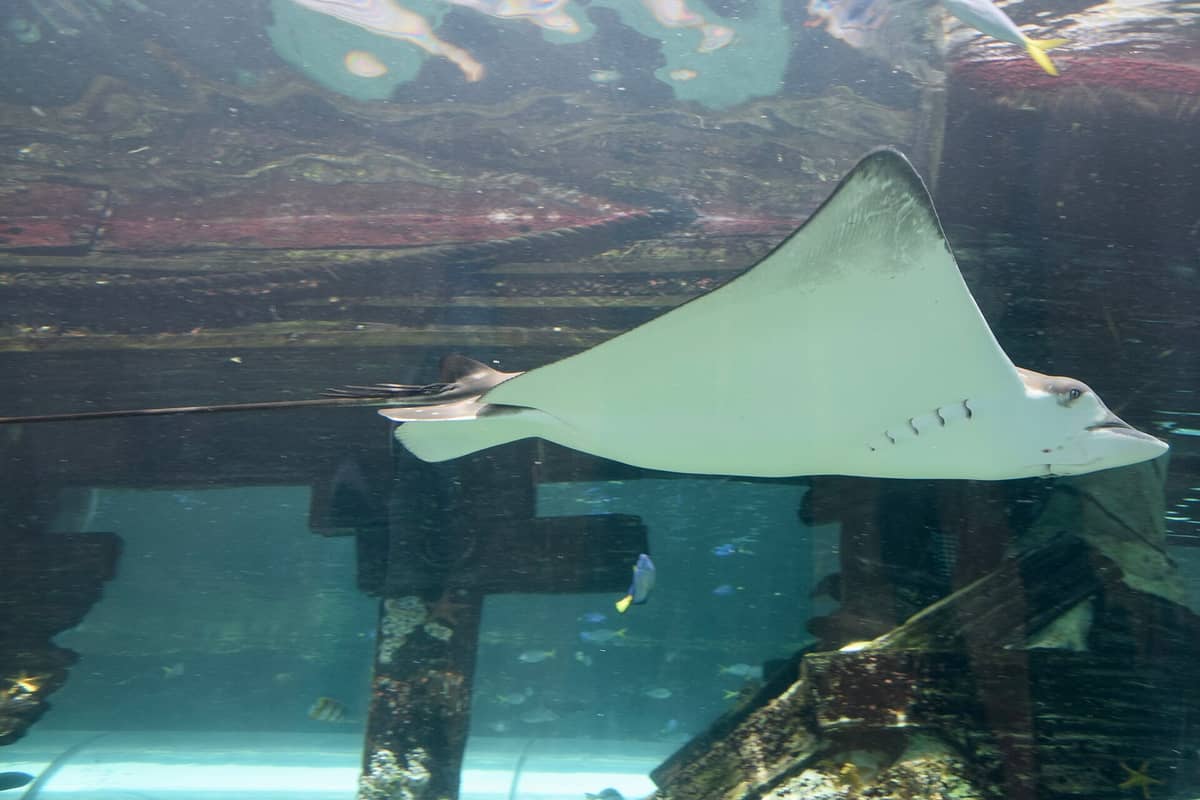
The Great Barrier Reef exhibit is typically the visual centrepiece: a recreation of tropical reef ecosystems with dense coral displays and schools of reef fish moving in loose formation. The colour here, especially under artificial UV-enhanced lighting, is striking even for visitors who have seen the real reef. Nearby, the dugong habitat houses one of the few captive dugong displays in the world, which is a genuine rarity and worth time spent at the viewing window.
The shark tank, a large open-water display visible through a curved acrylic tunnel you walk through, creates the sensation of being beneath the surface. Grey nurse sharks and larger species move overhead at close range. The tunnel is one of the moments that genuinely impresses adult visitors who arrive expecting something primarily aimed at children.
The Antarctic section houses Little (Fairy) Penguins and includes a cold-air observation area. The penguins are noticeably more active during scheduled feeding times, which are posted at the entrance to the zone and change daily. Arriving just before a feed transforms what would otherwise be a viewing of motionless birds into something much more engaging.
ℹ️ Good to know
Check the daily feeding schedule displayed at the aquarium entrance or on the official website before you arrive. Timing your visit to catch the penguin or shark feed adds real value to the experience.
Tickets & tours
Live prices and dates from our booking partner. If you book, we may earn a commission at no extra cost to you.
How the Experience Changes by Time of Day
The aquarium opens daily, with hours varying by season and selected dates. Last entry is one hour before closing. The official hours calendar on the website is the only reliable source for specific times on a given date.
Morning sessions, particularly on weekdays, are noticeably quieter. School groups sometimes arrive mid-morning, so arriving right at opening gives you the best conditions: low crowd density, no queues at the tunnel exhibits, and calmer viewing at the dugong habitat. By midday on weekends, the most popular zones, especially the shark tunnel and the penguin viewing gallery, fill considerably. The noise level rises sharply, which is fine for young children but less comfortable if you're trying to read interpretive panels or spend extended time at individual displays.
Afternoon visits after 2:30 pm on weekdays tend to clear out again. If you're visiting without children and want a more considered experience, a late weekday afternoon is the optimal window. On weekends, peak crowds tend to stay until closing.
⚠️ What to skip
Avoid visiting on public holiday weekends or during NSW school holiday periods without booking tickets well in advance. Timed entry slots can sell out, and the building can feel crowded in the central exhibits.
Getting There and Moving Around
Town Hall Station is a practical entry point for most visitors arriving from the CBD or by train. The aquarium’s directions recommend heading west from Town Hall toward Darling Harbour. The Sydney Light Rail stops at Convention Centre or Pyrmont Bay, both serving the precinct.
Ferries arrive at King Street Wharf, a short walk north of the aquarium. If you're combining this visit with other Darling Harbour attractions such as the Chinese Garden of Friendship or the Australian National Maritime Museum, the precinct is compact enough to cover on foot in a single outing.
The aquarium is fully wheelchair accessible, with ramps between levels and manual wheelchairs available to borrow at no charge. Companion Cards are accepted, and assistance animals are welcome throughout the public areas. Some behind-the-scenes or special experiences may have additional requirements, so check the accessibility guide on the official website if this is relevant to your visit.
Photography Inside the Aquarium
Most exhibits are low-light environments with moving subjects behind glass or acrylic, which creates real challenges for smartphone cameras. The shark tunnel is the most photogenic area if you can manage exposure correctly: position yourself to let the ambient blue light dominate rather than triggering your flash, which will produce glare on the acrylic.
The penguin enclosure is brighter and more forgiving, but the birds move unpredictably. Burst mode on any phone camera helps. The tropical reef sections work reasonably well because the exhibit lighting is stronger. Tripods are generally not practical given the crowd flow through the linear layout.
Flash photography is prohibited in most zones, and the interpretive signage makes this clear. Staff enforce it in the penguin area in particular.
Who This Attraction Suits — and Who It Doesn't
SEA LIFE Sydney Aquarium is genuinely well-suited to families with children under twelve, first-time visitors to Sydney looking for an indoor, self-contained experience, and anyone with a specific interest in Australian marine species. The dugong display, in particular, is not widely replicated elsewhere and represents a credible reason for adult visitors to make the trip.
For travellers with a strong interest in marine biology or who have spent meaningful time at world-class aquariums in Osaka, Monterey, or Lisbon, the Sydney aquarium will feel competent but not exceptional. It's well-maintained and informative, but it is not a destination aquarium in the same category as the largest facilities in Asia or North America. If you're travelling with a tight schedule and limited days, weigh it against outdoor options like the Bondi to Coogee coastal walk or a morning at the Royal Botanic Garden, which offer no-cost alternatives with their own natural appeal.
Visitors who dislike crowds and sensory-heavy environments should plan carefully around timing. The aquarium can be loud and densely packed on busy weekend days. The building's interior acoustics amplify noise from large groups, which can make the experience tiring if you're sensitive to that.
Insider Tips
- Book weekday morning tickets for the quietest conditions. The difference in crowd density between a 9:30 am weekday visit and a Saturday afternoon is significant enough to change the entire experience.
- Check the daily feeding schedule on the official website before you go, not just when you arrive. Penguin and shark feeds are the two most engaging scheduled moments, and they're easy to miss if you don't plan your route accordingly.
- If you have children and are also considering Wild Life Sydney Zoo next door, combination tickets purchased online cost less than two separate door prices. Build in at least 4 to 5 hours total if you plan to do both properly.
- The dugong exhibit tends to be quietest in the first 45 minutes after opening. These animals move slowly and are easy to observe, but the viewing window gets crowded quickly once school groups or tour buses arrive.
- Sensory-sensitive visitors should note that the shark tunnel and some reef zones use low ambient lighting with moving projections or sound elements. The aquarium's accessibility guide addresses sensory considerations; review it before arriving with children who may find those environments difficult.
Who Is SEA LIFE Sydney Aquarium For?
- Families with young children looking for a contained, all-weather activity
- First-time Sydney visitors wanting an introduction to Australian marine life
- Travellers with a specific interest in dugongs, grey nurse sharks, or Little Penguins
- Rainy days or summer afternoons when outdoor attractions are less appealing
- Visitors combining multiple Darling Harbour attractions into a single day
Nearby Attractions
Other things to see while in Darling Harbour:
- Australian National Maritime Museum
Sitting on the waterfront at Darling Harbour, the Australian National Maritime Museum is one of Sydney's most substantial cultural institutions. Permanent galleries are free to enter, and several historic vessels moored at the wharf, including a destroyer and a submarine, can be explored for an additional fee.
- Chinese Garden of Friendship
The Chinese Garden of Friendship is a 1.03-hectare classical Chinese garden in Darling Harbour, opened in 1988 as a symbol of the sister-city relationship between New South Wales and Guangdong Province. With ornate pavilions, willow-edged ponds, and a deliberate quietness that contrasts sharply with the surrounding precinct, it offers one of Sydney's most distinctive cultural experiences.
- WILD LIFE Sydney Zoo
WILD LIFE Sydney Zoo brings together some of Australia's most iconic animals under one roof in Darling Harbour. It is compact, well-organised, and designed for visitors who want an authentic encounter with Australian wildlife without travelling far from the city centre. Whether it earns its ticket price depends largely on how you approach it.
Planning a trip? Discover personalized activities with the Nomado app.