Australian National Maritime Museum: Sydney's Window onto the Sea
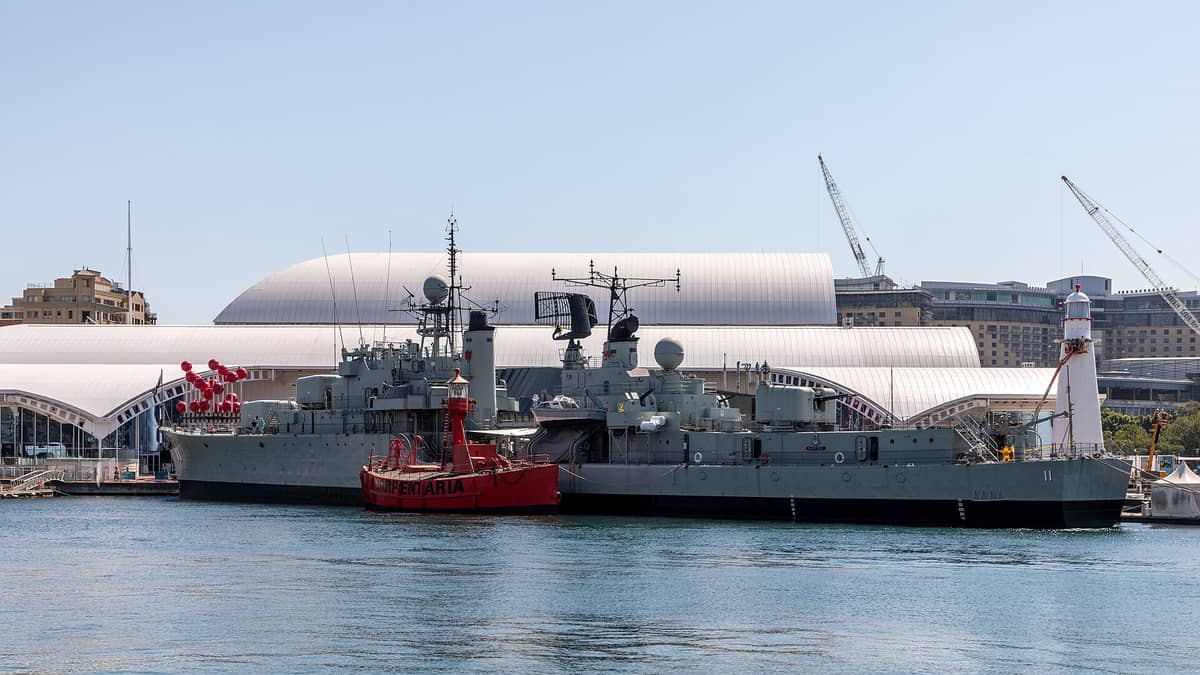
Sitting on the waterfront at Darling Harbour, the Australian National Maritime Museum is one of Sydney's most substantial cultural institutions. Permanent galleries are free to enter, and several historic vessels moored at the wharf, including a destroyer and a submarine, can be explored for an additional fee.
Quick Facts
- Location
- 2 Murray Street, Darling Harbour, Sydney NSW 2000 (beside Pyrmont Bridge)
- Getting There
- Light rail to Convention or Pyrmont Bay; ferry to Darling Harbour; a 10-15 min walk from Town Hall Station
- Time Needed
- 2 to 4 hours depending on vessel access and exhibitions
- Cost
- Permanent galleries: free. Vessel access and special exhibitions: paid (check sea.museum for current prices)
- Best for
- Families, history buffs, nautical enthusiasts, budget-conscious visitors
- Official website
- www.sea.museum/en/home
What Is the Australian National Maritime Museum?
The Australian National Maritime Museum is a federally funded cultural institution that opened its purpose-built waterfront home in Darling Harbour in 1991. It tells the story of a continent whose entire history, from the arrival of First Nations peoples tens of thousands of years ago to modern naval operations, has been shaped by the sea. The building itself sits on Gadigal land at the edge of Sydney Harbour, and the museum acknowledges this connection at the entrance.
The collection spans decorated bark canoes, convict-era transport records, surfing culture, immigration voyages, and contemporary naval hardware. This breadth can feel scattered on a first visit, but it reflects something real: Australia's relationship with the ocean is not just military or commercial. It is personal, recreational, and deeply tied to identity.
ℹ️ Good to know
Permanent galleries are free of charge. Entry fees apply for the historic vessels moored at the wharf and for ticketed temporary exhibitions. Hours are 10 am to 4 pm daily (9:30 am to 5 pm during school holidays), closed Christmas Day. Last vessel boarding is 3:10 pm on standard days.
The Fleet: What You Can Actually Board
The outdoor wharf is where the museum earns its most vivid impressions. Moored alongside the dock are several historic vessels that visitors can board for an additional ticket price. The HMAS Vampire, a 1950s destroyer, is the largest surviving vessel from the Royal Australian Navy's destroyer era. Stepping onto its deck, you immediately feel the scale of life at sea: cramped gangways, exposed metal, and the constant awareness of how much open water surrounds something this large.
The HMAS Onslow, an Oberon-class submarine, is the more disorienting experience. The interior is extraordinarily tight, with pipes and dials within inches of your face in the control room. It communicates what submariners actually endured far more effectively than any panel text could. Tall adults may find some sections uncomfortable, but most visitors manage the passage. Children tend to find it thrilling.
Other vessels in the fleet have varied over time, so check the current lineup at sea.museum before your visit. Boarding times matter: the last vessel boarding on a standard day is 3:10 pm, so arriving after 3 pm means missing this part of the experience entirely.
⚠️ What to skip
If boarding the vessels is a priority, arrive by 2 pm at the latest. The 3:10 pm cutoff (4:10 pm during school holidays) is strictly observed, and the queue for the submarine can slow things down significantly on busy weekend mornings.
Tickets & tours
Live prices and dates from our booking partner. If you book, we may earn a commission at no extra cost to you.
Inside the Galleries: Free and Worth Your Time
The permanent galleries occupy the main building and require no ticket. The USA Gallery, a permanent exhibition developed in partnership with the Smithsonian Institution's National Museum of American History, explores the long maritime relationship between Australia and the United States. The USA Gallery covers the America's Cup story, including Australia II's 1983 win. The winged-keel yacht itself is now in Fremantle; seeing the related displays that caused so much controversy looks almost delicate.
The First Australians gallery is quieter in tone and slower in pace. It covers Indigenous seafaring traditions, the significance of water to Country, and the impact of European maritime arrival. The bark canoes on display are among the most carefully presented objects in the building. This section rewards visitors who read rather than skim.
The immigration and passenger-travel sections document the journeys that brought millions of people to Australia by sea, covering everything from the convict fleets to post-war migration under the Assisted Passage scheme. For visitors exploring Sydney's layered cultural history, these galleries pair well with a later visit to the Museum of Sydney, which covers the colonial period from a land-based perspective.
How the Experience Changes Through the Day
Weekday mornings, particularly between 10 am and noon, are the calmest time to visit. The galleries are almost empty, the light through the waterfront windows is soft, and you can take time with individual exhibits. School groups arrive in waves after 10:30 am, mainly on weekdays, so if you are sensitive to noise or want a more contemplative visit, aim for mid-morning on a Tuesday or Wednesday.
Weekend afternoons bring families with children, and the vessel boarding queues can stretch 20 to 30 minutes. This is not necessarily a problem: the outdoor wharf is pleasant to wait on, the harbour views from the dock are good, and you can watch water taxis and ferries moving across Darling Harbour. In summer (December to February), temperatures can reach 26 to 27 degrees Celsius, and the outdoor sections of the wharf have little shade, so bring water and wear sunscreen.
The building sits directly beside Pyrmont Bridge, a working swing bridge.. In the late afternoon, the angle of light across the harbour creates strong reflections on the water, making the outdoor areas genuinely photogenic for around 30 minutes before the museum closes.
Getting There and Practical Logistics
The museum is easiest to reach by light rail (stop: Convention or Pyrmont Bay) or by ferry to Darling Harbour. From the city centre, it is a 10 to 15 minute walk via Pyrmont Bridge. Darling Harbour is a major precinct covered in detail in the Darling Harbour neighbourhood guide, which also covers parking and dining options nearby.
Accessibility is well considered. The main entrance has ramp access, lifts and ramps connect exhibition levels and outdoor wharves, and courtesy wheelchairs are available with photo ID (pre-booking required). Two accessible parking spaces are provided on site. Accessible toilets are available throughout the building.
The museum has a cafe on site, which is convenient given the time most visits take. For a wider range of food, Darling Harbour's waterfront restaurants are a short walk. If you are combining the museum with other Darling Harbour attractions, plan the Maritime Museum first so the 3:10 pm vessel boarding cutoff does not catch you out.
Who Gets the Most Out of This Museum
Families with children over five get substantial value here. The vessels are hands-on enough to hold attention without requiring much reading, and the scale of the destroyer and submarine creates the kind of sensory impression that sticks with children. For broader family activity planning in Sydney, the Sydney with kids guide covers how to sequence a visit with nearby options like the Sea Life Sydney Aquarium.
History-focused visitors, particularly those interested in Australian immigration, colonial-era navigation, or naval history, will find the permanent galleries genuinely informative rather than superficial. The museum's depth of collection is underappreciated. If your interest extends to Aboriginal and Torres Strait Islander maritime traditions, the Sydney Aboriginal culture guide provides broader context for what the First Australians gallery introduces.
Budget-conscious visitors who want a few hours of quality indoor time without paying for entry will find the free galleries more than adequate. This is not a situation where the free content feels like a sample designed to push you toward a purchase: the permanent galleries stand on their own.
Who Might Not Enjoy It
Visitors with limited mobility should know that the vessel interiors, particularly the submarine, involve steep ladders and extremely narrow passages. These sections are not accessible. The outdoor wharf is flat and accessible, but the vessels themselves are not. If you are visiting solely for the vessel experience and have mobility limitations, check with the museum before purchasing vessel tickets. Visitors looking for a purely visual or art-focused experience may find the collection dense with technical information that requires a baseline of interest in maritime history to appreciate fully.
Pairing the Museum with the Wider Darling Harbour Area
The museum sits at the northern end of Darling Harbour, which makes it a natural starting point for a half-day in the precinct. The Sea Life Sydney Aquarium and the Wild Life Sydney Zoo are a short walk south along the waterfront. The Chinese Garden of Friendship is nearby for those who want a calm outdoor space between attractions.
If you are spending a full day in Sydney, the Maritime Museum works particularly well in combination with a morning at The Rocks and an afternoon ferry across to Taronga Zoo or Manly. Sydney's ferry network is one of the most enjoyable ways to move between precincts, and the Sydney ferry guide explains routes and ticketing clearly.
Insider Tips
- The HMAS Onslow submarine interior is popular for a reason, but go there first if it is on your list. By early afternoon on weekends, the queue can absorb 30 minutes of your boarding window.
- The museum building's upper level has unobstructed views across Darling Harbour toward the city skyline. This vantage point is free to access and is one of the better waterfront viewpoints in the precinct, yet most visitors overlook it entirely.
- During school holidays, hours extend to 9:30 am to 5 pm and last vessel boarding moves to 4:10 pm. If you are visiting during term time, the earlier closing is easy to misjudge if you start at the free galleries and lose track of time.
- Photography inside the vessels is generally permitted without a flash. The control room of the Onslow submarine photographs well in available light, but bring a phone or camera that handles low-light conditions reasonably, as the interior is dim.
- The museum's on-site cafe can get crowded at midday. If you plan to eat there, go before noon or after 1:30 pm. Alternatively, the waterfront restaurants along Darling Harbour's eastern edge are a five-minute walk.
Who Is Australian National Maritime Museum For?
- Families with school-age children who want an engaging, hands-on experience without spending heavily on entry
- History enthusiasts with an interest in naval, immigration, or Indigenous maritime history
- Budget-conscious travellers: the permanent galleries are free and genuinely substantial
- Visitors combining several Darling Harbour attractions into a single day itinerary
- Anyone who wants a few hours indoors on a hot or rainy Sydney day without sacrificing cultural depth
Nearby Attractions
Other things to see while in Darling Harbour:
- Chinese Garden of Friendship
The Chinese Garden of Friendship is a 1.03-hectare classical Chinese garden in Darling Harbour, opened in 1988 as a symbol of the sister-city relationship between New South Wales and Guangdong Province. With ornate pavilions, willow-edged ponds, and a deliberate quietness that contrasts sharply with the surrounding precinct, it offers one of Sydney's most distinctive cultural experiences.
- SEA LIFE Sydney Aquarium
SEA LIFE Sydney Aquarium sits on the edge of Darling Harbour and packs an enormous range of marine life into one compact building. From dugongs and sharks to sea dragons and penguins, it offers a solid half-day of genuinely impressive exhibits, particularly for families and first-time visitors to Sydney.
- WILD LIFE Sydney Zoo
WILD LIFE Sydney Zoo brings together some of Australia's most iconic animals under one roof in Darling Harbour. It is compact, well-organised, and designed for visitors who want an authentic encounter with Australian wildlife without travelling far from the city centre. Whether it earns its ticket price depends largely on how you approach it.
Planning a trip? Discover personalized activities with the Nomado app.