The Rocks: Sydney's Oldest Precinct, Stone by Stone
The Rocks is Sydney's most historically layered neighbourhood, occupying the western shore of Sydney Cove where the first colonial fleet landed in January 1788. Free to explore and walkable in an afternoon, it combines sandstone architecture, weekend markets, small museums and harbour views in a compact area most visitors only scratch the surface of.
Quick Facts
- Location
- Western shore of Sydney Cove, between Circular Quay and the Harbour Bridge
- Getting There
- Circular Quay Train, Ferry & Light Rail (2-min walk); Wynyard Station (10-min walk)
- Time Needed
- 2–4 hours for the precinct; half a day if visiting markets and museums
- Cost
- Free to enter the precinct; individual venues and museums charge separately
- Best for
- History enthusiasts, architecture lovers, weekend market-goers, first-time Sydney visitors
- Official website
- www.therocks.com
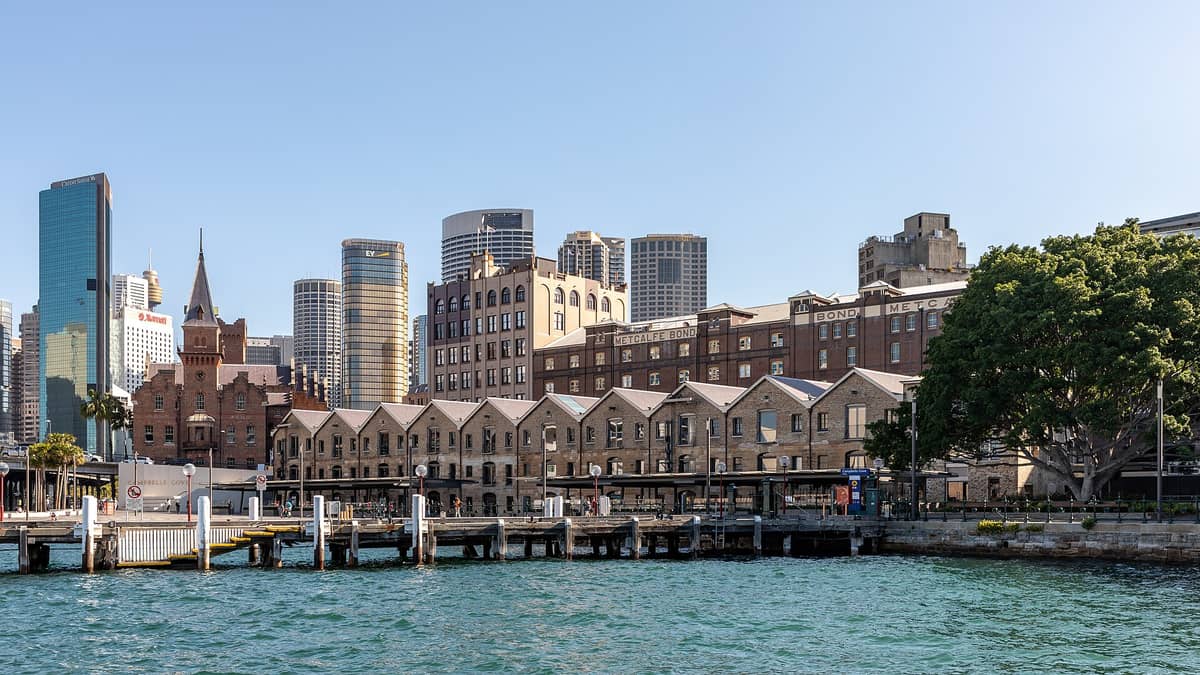
What The Rocks Actually Is
The Rocks is a heritage precinct on the western edge of Sydney Cove, directly behind the ferry wharves of Circular Quay and within sight of the southern pylon of the Harbour Bridge. It is named for the sandstone outcrops that characterised this shoreline before European settlement. According to the precinct's own historical account, the area takes its name from descriptions used by the first colonial fleet, which landed on this western shore on 26 January 1788.
Unlike many 'historic districts' that are largely cosmetic, The Rocks contains genuine layers: some of the oldest standing buildings in Australia, former convict stonemason workshops, nineteenth-century sailors' pubs that survived demolition campaigns, and narrow laneways that predate town planning entirely. It is a public precinct, not a ticketed attraction, so entry costs nothing and you can move through it at whatever pace suits you.
💡 Local tip
The main entry point is George Street, which runs through the heart of the precinct from Circular Quay. If you arrive by train or ferry, walk west from the station concourse for about two minutes and you will reach the sandstone streetscape.
The History Behind the Stones
Before 1788, this land was part of the Country of the Cadigal people, one of the groups of the Eora Nation who had occupied the Sydney Cove area for tens of thousands of years. The colonial settlement that rapidly followed the fleet's arrival displaced those communities with devastating speed. That dimension of the precinct's history is not always foregrounded in the heritage interpretation you encounter on street level, and it is worth holding alongside the architectural story.
The built fabric that survives today dates largely from the mid to late 1800s, when The Rocks was a working waterfront neighbourhood: sailors, wharfies, merchants and craftspeople packed into narrow streets. The area had a reputation for roughness well into the twentieth century. A bubonic plague outbreak in 1900 prompted the government to demolish large sections of the precinct. Then, in the 1970s, a planned freeway would have erased much of what remained. It was the famous Green Bans movement, where construction unions refused to work on the demolition, that saved the precinct. You can read more about that history at the The Rocks Discovery Museum, which is free to enter and one of the more thoughtfully curated small museums in Sydney.
Tickets & tours
Live prices and dates from our booking partner. If you book, we may earn a commission at no extra cost to you.
The Rocks historic walking tour
From 20 €Instant confirmationFree cancellationThe Rocks Pub tour
From 58 €Instant confirmationFull-day abseiling and rock climbing combo at Blue Mountains
From 190 €Instant confirmationFree cancellationFull-day rock climbing adventure at Blue Mountains
From 208 €Instant confirmationFree cancellation
What You See Walking Through the Precinct
George Street is the spine. Walking north from Circular Quay, the streetscape shifts fairly quickly from modern glass to two and three-storey sandstone terraces. The stone itself is worth looking at closely: the rough-cut blocks were quarried from the very ridge the street climbs, giving the buildings a geological honesty you do not find in places that imported their materials.
Branch left into Playfair Street or Nurses Walk and the scale drops further. Nurses Walk is particularly atmospheric: a narrow passage between old stone walls, cool even on warm afternoons, where the sounds of the harbour recede and you can hear your own footsteps. Early in the morning, before the cafes open, it is almost completely quiet.
Walk along Argyle Street and you reach the Argyle Cut, a tunnel blasted through solid sandstone by convict labour between 1843 and 1859. The chisel marks are still visible in the rock face. On the far side is Millers Point, a residential area that blends into The Rocks and retains an older, quieter character that most visitors never reach. For a broader sense of how the foreshore connects from here, the Barangaroo Reserve is a ten-minute walk south and offers a very different kind of Sydney harbour experience.
How the Precinct Changes Through the Day
Early mornings, before 9am, belong to commuters cutting through George Street and a handful of visitors staying in the precinct hotels. The sandstone glows particularly well in low morning light, and the harbour is usually calm. This is the best time to photograph the streetscape without crowds in the frame.
By mid-morning on weekends, the Saturday and Sunday markets set up in the square between George Street and Jack Mundey Place. Stalls sell art, jewellery, leather goods, food, and a variable mix of crafts. Quality ranges considerably, so approach with low expectations and occasional pleasant surprises. The food section tends to be the most reliably worthwhile.
Midday through mid-afternoon on weekdays, the precinct fills with office workers from the CBD nearby and tour groups moving between the Opera House and the Bridge. This is the most congested window. If you have flexibility, arriving before 10am or after 3pm on a weekday gives you a noticeably quieter experience. Weekend afternoons shift toward bar trade; several of the older pubs fill with a local and tourist mix by 4pm.
ℹ️ Good to know
The Rocks markets operate on Saturdays and Sundays. Hours can vary; check the official site at therocks.com before visiting, as individual market dates and stall compositions change.
Practical Walkthrough: Where to Go and in What Order
A logical loop starts at Circular Quay, walking west toward The Rocks along Hickson Road to get the harbour views first. From there, head up George Street, branch into Nurses Walk, continue to the Argyle Cut, and loop back via Argyle Street to the precinct centre. The whole loop takes about 90 minutes at a relaxed pace, not counting time inside any venues. The The Rocks Discovery Museum on Kendall Lane sits close to this loop and is worth 45 minutes if history is your focus.
The Museum of SydneyMuseum of Sydney is at the southern edge of the precinct on Bridge Street, built over the archaeological remains of the first Government House. It covers the deeper pre-colonial and early colonial history of the site and charges an entry fee; check current prices at the venue before visiting.
For the Harbour Bridge itself, the pedestrian walkway entrance is at Cumberland Street, about a five-minute walk from the heart of The Rocks. Walking across the bridge is free and gives a perspective on the harbour that no lookout fully replicates.
Accessibility, Terrain and What to Wear
The Rocks is not flat. George Street rises steadily from Circular Quay, and many of the side lanes involve steps. The official precinct site provides an accessibility map indicating which paths are accessible and where lifts exist; this is worth checking in advance if mobility is a consideration. Several laneways are stone-paved and uneven, which rules out narrow-wheeled strollers and makes heels impractical.
Wear comfortable shoes. The sandstone pavement is attractive but irregular. In summer (December to February), afternoon sun on west-facing stone walls can be intense; bring water and a hat. The cool, shadowed laneways offer relief, which is one practical reason to explore them rather than staying on the main street.
⚠️ What to skip
The Rocks sits within Greater Sydney, which has a temperate coastal climate. Rain is possible in all months, with higher average rainfall in late summer and autumn. The sandstone laneways become slippery when wet. A light rain layer is worth carrying on any visit.
Who This Precinct Suits — and Who It Does Not
The Rocks works well as a standalone half-day visit or as part of a broader Circular Quay loop that includes the Sydney Opera House and Royal Botanic Garden. It is particularly well-suited to first-time visitors who want to understand how the city began, and to architecture and photography enthusiasts who reward themselves with detail.
It is less suited to visitors whose primary interest is beaches, nature, or contemporary art, all of which are better served by other parts of Sydney. The commercial side of the precinct, souvenir shops and tourist-oriented restaurants, can feel formulaic if that is all you engage with. The substance is in the laneways, the stone, and the smaller museums rather than on the surface of George Street.
Families with children can make it work, particularly if the day includes the weekend markets and a walk to the Harbour Bridge pylon. For a broader sense of what to do across the city with children, the Sydney with kids guide covers a range of options across the city.
Insider Tips
- The Argyle Cut is best experienced early in the morning when the angled light catches the chisel marks in the sandstone walls. Most visitors walk through without stopping; spend a few minutes looking at the rock face itself.
- If you want a pub with genuine age, look for venues that predate the 1900 plague demolitions. Several pubs on George Street claim to be among the oldest in Australia; verify dates locally, as the claims vary, but the buildings themselves are worth comparing.
- Nurses Walk and the surrounding laneways are not well-signed from George Street. Look for the narrow gap between buildings just north of the market square. Many visitors walk past it entirely.
- The Saturday market draws larger crowds than the Sunday market, which tends to have fewer stalls but a calmer atmosphere. If buying rather than browsing is the goal, Sunday gives you more time with vendors.
- Photography of the streetscape is considerably easier on a weekday morning before 10am or on a rainy afternoon, when foot traffic drops and the wet stone surfaces add depth to images.
Who Is The Rocks For?
- First-time Sydney visitors wanting historical context for the city
- Architecture and urban photography enthusiasts
- Weekend market browsers and artisan craft shoppers
- History and heritage travellers with an interest in colonial and pre-colonial Australian history
- Travellers combining a half-day loop with the Opera House, Harbour Bridge and Circular Quay
Nearby Attractions
Other things to see while in Circular Quay & The Rocks:
- Barangaroo Reserve
Once a concrete wharf, Barangaroo Reserve is now a six-hectare sandstone headland park hugging Sydney's western harbour foreshore. Open around the clock and free to enter, it offers coastal walking paths, sweeping views of the harbour bridge and North Shore, and a quietly powerful connection to the Gadigal and Cammeraygal peoples whose Country this has always been.
- Cockatoo Island
Cockatoo Island sits in the middle of Sydney Harbour, free to enter and reachable by public ferry. It holds 150 years of convict and industrial history across shipyards, sandstone buildings and water-level dockworks — and the views back toward the CBD are quietly spectacular.
- Justice and Police Museum
Housed in a 19th-century court complex one block from Circular Quay, the Justice & Police Museum unpacks colonial Sydney's criminal underbelly through real evidence, mugshots, and courtroom drama. Entry is free, the building is atmospheric, and the exhibits are far more confronting than most museum visitors expect.
- Museum of Contemporary Art Australia (MCA)
The Museum of Contemporary Art Australia sits at the edge of Sydney Harbour in The Rocks, offering rotating exhibitions of Australian and international contemporary art, a rooftop cafe with Opera House views, and free admission for under-18s. It rewards a few hours of unhurried looking, especially on a Thursday evening when the crowds thin and the harbour light shifts.
Planning a trip? Discover personalized activities with the Nomado app.