Cockatoo Island (Wareamah): Sydney Harbour's Most Layered Day Out
Cockatoo Island sits in the middle of Sydney Harbour, free to enter and reachable by public ferry. It holds 150 years of convict and industrial history across shipyards, sandstone buildings and water-level dockworks — and the views back toward the CBD are quietly spectacular.
Quick Facts
- Location
- Sydney Harbour, NSW 2000 — also known as Wareamah
- Getting There
- Ferry F3 or F8 from Circular Quay or Barangaroo; check Transport for NSW for current schedules
- Time Needed
- 2–4 hours for self-guided exploration; allow a full day if you plan to camp or join a tour
- Cost
- Free entry to the island (AUD); ferry fare applies. Tours and some activities cost extra
- Best for
- History lovers, photographers, families, architecture enthusiasts, campers
- Official website
- www.cockatooisland.gov.au/en
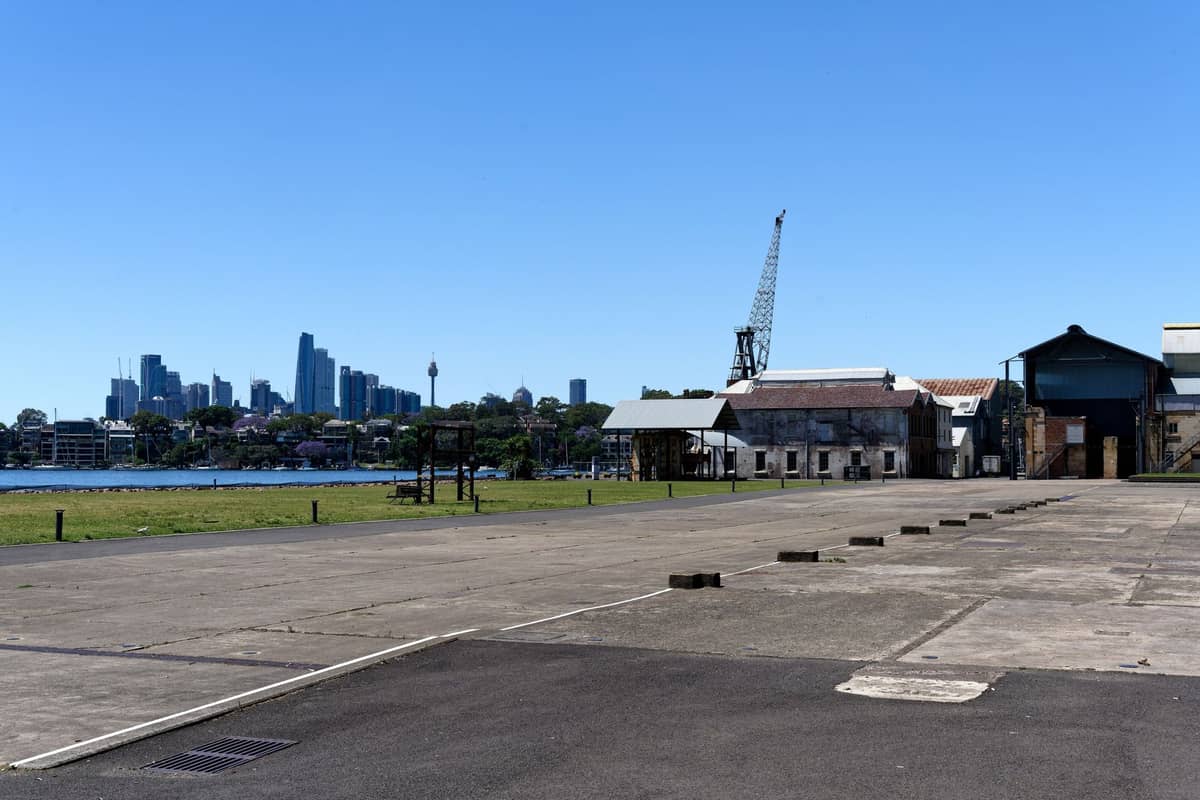
What Cockatoo Island Actually Is
Cockatoo Island, known to Sydney's First Nations peoples as Wareamah, is the largest island in Sydney Harbour and one of the most historically dense sites in Australia. It is listed on the UNESCO World Heritage register as part of the Australian Convict Sites inscription. Yet it receives a fraction of the visitors who queue for the Opera House or Harbour Bridge — which makes it, hour for hour, one of the most rewarding places you can spend time in this city.
The island functioned as a convict gaol from 1839 to 1869, then as a shipbuilding and repair facility from 1857 to 1992. Those two histories didn't replace each other — they stacked. Convict-built sandstone structures still stand alongside enormous dry docks, slipways and industrial sheds. Walking through the site, you move between centuries within the space of a few steps.
Entry to the island is free, which sets it apart from many of Sydney's major draws. To understand the ferry network that gets you there, the Sydney ferry guide covers routes, Opal card use and timing in detail.
💡 Local tip
The Visitor Centre opens daily with an aim of 10 am–4 pm, but hours can vary. Check the official website before you go rather than assuming it will be open on arrival.
Getting There: Ferry Routes and Timing
Public ferries F3 and F8 serve Cockatoo Island from Circular Quay and Barangaroo, with some services continuing along the Parramatta River. The crossing takes roughly 20–30 minutes from Circular Quay, depending on whether you take the F3 or F8. You pay a standard ferry fare using an Opal card or contactless payment — the island itself charges nothing to enter.
The ferry timetable dictates your day more than any opening hours will. Services are less frequent than city-centre routes, so check the live timetable on the Transport for NSW website before you leave. Missing the last ferry is not a disaster if you have a tent booked, but it will be if you don't.
Water taxis and private boats can also reach the island, and kayak arrival is permitted. For most visitors, the public ferry is the simplest and most atmospheric approach — arriving by water, with the island's sandstone escarpments rising directly above the wharf, gives the visit a sense of arrival that a car park never could.
Tickets & tours
Live prices and dates from our booking partner. If you book, we may earn a commission at no extra cost to you.
The Rocks historic walking tour
From 20 €Instant confirmationFree cancellationBeginner surf lesson at Bondi Beach
From 79 €Instant confirmationFree cancellationSydney whale-watching cruise with breakfast or lunch
From 62 €Instant confirmationFree cancellationBlue Mountains Waterfalls Full-Day Tour with Lunch and Dinner
From 171 €Instant confirmationFree cancellation
The Landscape: Two Islands in One
Physically, Cockatoo Island divides into two levels. The lower island holds the industrial infrastructure: the massive Sutherland and Fitzroy dry docks, the slipway workshops, the dock machinery. These structures are open to walk through and around. The scale of the dry docks in particular is arresting — they were cut from rock by convict labor, and standing at the bottom of one, with walls rising several metres on either side, gives you a concrete sense of what the colonial enterprise actually looked like in practice.
The upper island is reached either by stairs or by Burma Road, a steep slope with a gradient of up to 40 degrees. Up top, the mood shifts. Convict-era sandstone buildings cluster around the former gaol precinct, including a guardhouse, solitary confinement cells and overseers' quarters. The stonework is rough and thick-walled, built for containment rather than comfort. Interpretive signage throughout the upper precinct is detailed and, unusually for this type of site, doesn't soften the historical record.
The upper terrace also provides some of the best unobstructed views of Sydney Harbour in any direction. On a clear morning, the light on the water is exceptional, and the sight lines to the CBD, the Bridge and the upper harbour are uncluttered by crowds or glass balustrades.
⚠️ What to skip
Accessibility note: The lower island is largely wheelchair-accessible with accessible toilets. Getting to the upper island requires navigating either stairs or Burma Road, a steep incline with a 40-degree gradient. Surfaces throughout can be uneven, and closed-toe shoes are strongly recommended.
How the Island Changes Through the Day
Early arrivals, particularly on weekdays, get the island largely to themselves. The dry docks are quiet except for gulls and the occasional thud of the ferry against the wharf. The light is low and directional at this hour, and the industrial structures cast long shadows across the dock floors. Photographers working with natural light should note that the lower island faces south and west: morning light is flat and even, afternoon light is more dramatic.
By late morning on weekends, families and school groups arrive. The island handles this well — it's large enough that it rarely feels crowded — but the sense of solitude dissipates. The café operates during peak periods, and the lawns around the campsite fill with picnickers.
Late afternoon is arguably the best time to be on the upper island. The harbour light turns golden across the sandstone, and the last ferries back give you a natural endpoint. If you're staying overnight in the campsite or glamping tents, the evening hours are genuinely special: the city lights reflect across the water, and the island's own industrial spaces take on a different character in the dark.
History That Doesn't Need Dramatizing
The convict period here ran from 1839 to 1869. During that time, the island held male prisoners who were considered difficult to manage in other facilities. Some worked on the dry docks and building projects that shaped the island's lower precinct. The solitary confinement cells in the upper gaol — small, dark, with minimal ventilation — communicate the conditions more directly than any text panel.
From 1857, the island became a major naval shipbuilding and repair site, a function that expanded significantly during both World Wars. HMAS Sydney and other famous vessels were serviced here. The dockyard officially shut down toward the end of 1992, ending 135 years of industrial operation. What remains is an extraordinarily intact working shipyard, preserved not as a reconstruction but as an actual industrial site that simply stopped. Machinery, dock fittings and overhead cranes remain in place.
For visitors interested in how colonial infrastructure shaped Sydney, the Museum of Sydney pairs well with a visit here — it provides context for the urban and governmental structures that the island's convict labor helped build.
Tours, Camping and Events
Self-guided exploration using the free map available at the Visitor Centre covers most of the major structures and takes two to three hours at a relaxed pace. Guided tours run periodically and are worth booking if you want deeper context on the convict or naval history — the tour guides tend to know details that aren't captured on the signage.
Cockatoo Island is one of very few places in Sydney where you can camp directly on a heritage site. Powered and unpowered campsites, as well as glamping tent options, are bookable through the official site. Waking up on the island before the first ferry arrives, with the harbour entirely to yourself, is an experience with no real equivalent in the city. Pricing and availability change seasonally, so book well in advance for summer weekends.
The island also hosts major art and cultural events, most notably as a venue during the Sydney Biennale. If your visit coincides with a large event, the atmosphere is electric but the access to quiet industrial spaces is significantly reduced. Check the events calendar on the official website before planning. The island has also hosted installations during Vivid Sydney, which transforms harbour precincts each winter.
Photography and Practical Details
The island rewards slow, deliberate photography. The dry docks are remarkable subjects at any time of day, but the overhead industrial cranes and the combination of rusted machinery against sandstone walls photograph best in overcast light, which diffuses harsh shadows in the deep dock spaces. Wide-angle lenses are useful in the dock interiors; longer focal lengths work well from the upper terrace looking toward the city.
There is a café on the island, but its hours correspond roughly to peak visitor periods. Bringing your own food and water is sensible, particularly outside summer. The island has toilets, including accessible facilities on the lower level. Phone reception is generally reliable, but the heritage buildings and tunnels can interrupt it briefly.
If you're building a broader harbour day, the island pairs naturally with other Circular Quay-area stops. Barangaroo Reserve is a short ferry ride away and offers a very different register — contemporary landscape design over a reclaimed industrial foreshore — which provides an interesting contrast to Cockatoo Island's preserved industrial character.
ℹ️ Good to know
Weather matters more here than at most city attractions. The island is exposed, with little shelter on the upper terrace. In summer, sun protection is essential; in winter, winds off the harbour can be sharp. Check the forecast before you go and pack accordingly.
Who Should Skip It
Cockatoo Island is not for everyone. If your Sydney visit is short and you're prioritising iconic landmarks, the time cost of the ferry crossing plus two hours on the island may not fit your itinerary. The site is also largely outdoors, which means poor weather will significantly affect the experience — unlike a museum, you can't retreat indoors when it rains. Visitors with significant mobility limitations may find the upper island inaccessible, and the lower island alone, while interesting, doesn't represent the full site.
Those expecting a polished museum experience with climate-controlled galleries and curated lighting will find the rawness of the site initially disorienting. That rawness is precisely the point for many visitors, but it's worth knowing what you're walking into.
Insider Tips
- The tunnel connecting the lower dock area to parts of the upper island is easy to miss but worth finding — it's a convict-built passage through the rock and gives a sense of scale that the open spaces don't.
- If you're visiting on a weekday, the island often has an almost contemplative quiet. Weekend mornings before 11 am offer a similar experience without requiring you to take a day off.
- The campsite lawn is a good lunch spot even if you're not camping — it's sheltered from the harbour wind and faces north, so it catches sun through most of the day.
- Download the ferry timetable before you leave, not when you're on the island. Data coverage near the wharf can be inconsistent during busy periods.
- The Biennale of Sydney uses the island as a major venue every two years. If the event is running during your visit, book island access and tours early — it draws large crowds and some industrial spaces may be reconfigured for installations.
Who Is Cockatoo Island For?
- History and heritage enthusiasts who want depth over spectacle
- Photographers looking for industrial textures, harbour light and minimal crowds
- Families with curious older children who engage well with open, exploratory sites
- Couples or solo travellers considering a harbour camping experience unlike anything else in Sydney
- Architecture and urban history researchers interested in convict-era construction and 20th-century industrial infrastructure
Nearby Attractions
Other things to see while in Circular Quay & The Rocks:
- Barangaroo Reserve
Once a concrete wharf, Barangaroo Reserve is now a six-hectare sandstone headland park hugging Sydney's western harbour foreshore. Open around the clock and free to enter, it offers coastal walking paths, sweeping views of the harbour bridge and North Shore, and a quietly powerful connection to the Gadigal and Cammeraygal peoples whose Country this has always been.
- Justice and Police Museum
Housed in a 19th-century court complex one block from Circular Quay, the Justice & Police Museum unpacks colonial Sydney's criminal underbelly through real evidence, mugshots, and courtroom drama. Entry is free, the building is atmospheric, and the exhibits are far more confronting than most museum visitors expect.
- Museum of Contemporary Art Australia (MCA)
The Museum of Contemporary Art Australia sits at the edge of Sydney Harbour in The Rocks, offering rotating exhibitions of Australian and international contemporary art, a rooftop cafe with Opera House views, and free admission for under-18s. It rewards a few hours of unhurried looking, especially on a Thursday evening when the crowds thin and the harbour light shifts.
- Sydney Harbour Bridge
Sydney Harbour Bridge is one of the world's great pieces of civil engineering and the most recognisable landmark on the Australian skyline. Whether you cross it on foot, climb to the pylon museum, or simply photograph it from below, this guide covers everything you need to plan your visit.
Planning a trip? Discover personalized activities with the Nomado app.