Museum of Contemporary Art Australia (MCA): What to Know Before You Visit
The Museum of Contemporary Art Australia sits at the edge of Sydney Harbour in The Rocks, offering rotating exhibitions of Australian and international contemporary art, a rooftop cafe with Opera House views, and free admission for under-18s. It rewards a few hours of unhurried looking, especially on a Thursday evening when the crowds thin and the harbour light shifts.
Quick Facts
- Location
- 140 George Street, The Rocks, Sydney NSW 2000 (Tallawoladah, Gadigal Country)
- Getting There
- Circular Quay train station and ferry wharves, a 3-minute walk
- Time Needed
- 1.5 to 3 hours for the permanent collection and one major exhibition
- Cost
- Adult general admission is paid (about A$25; concession A$20; under-18s free); confirm current prices on mca.com.au. Check the MCA website for current prices and concessions.
- Best for
- Art lovers, curious adults, families with older children, and anyone wanting a cultural anchor to a Circular Quay afternoon
- Official website
- www.mca.com.au
What the MCA Actually Is
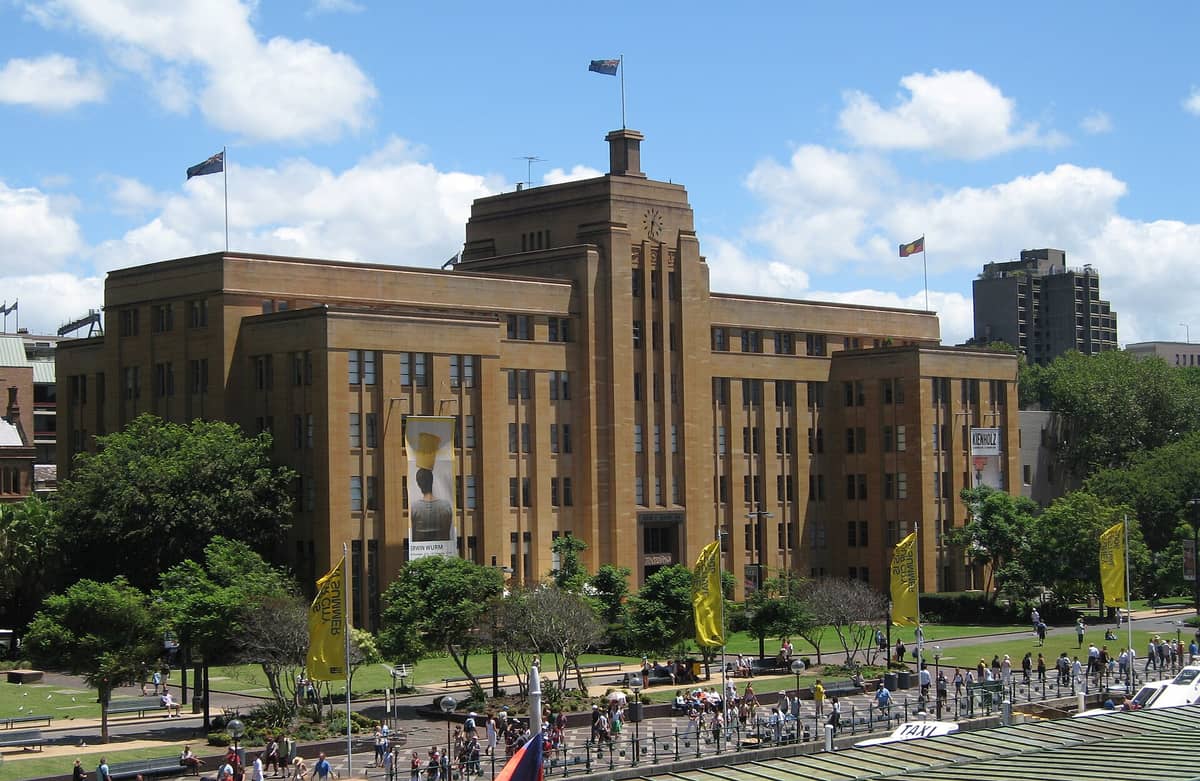
The Museum of Contemporary Art Australia is one of the country's dedicated public institutions for living art. It opened in its current form in November 1991 inside a 1952 Maritime Services Board building, a solid modernist structure facing Circular Quay. In 2012, a major renovation added a six-storey contemporary wing on the western side, giving the museum significantly more gallery space and a rooftop terrace that became one of the better vantage points in the precinct.
The permanent collection contains over 4,000 works across painting, sculpture, works on paper, photography, and moving image. The emphasis leans heavily toward Australian artists, with strong representation of First Nations work, but international acquisitions and touring exhibitions regularly shift the balance. The programming is genuinely ambitious by international museum standards: the MCA has hosted major retrospectives and commissions that wouldn't look out of place in London or New York.
The museum sits on Tallawoladah, Gadigal Country of the Eora Nation. If you want to understand more about what that means for Sydney's cultural landscape, the Sydney Aboriginal culture guide offers useful context before or after your visit.
ℹ️ Good to know
Hours: Wednesday to Monday, 10am to 5pm. Closed Tuesdays. Thursday evenings may extend to 9pm for MCA Late events. Always check the official website before visiting as hours and exhibition schedules change.
The Building and What You'll See Inside
Walking through the main entrance on George Street, the first thing you notice is the scale of the interior. The heritage wing has high ceilings and wide corridors that suit large-format works well. Signage is clear without being over-explanatory, which is a relief. Wall texts tend to be concise, giving you the conceptual hook without a full lecture.
Gallery lighting varies significantly between spaces. The permanent collection rooms tend toward warm, controlled light that makes paintings read well. Video and installation works often occupy darker rooms off the main path. If you have limited mobility or are travelling with a stroller, the lifts are accessible and clearly marked, though some installation spaces can be physically awkward in design. Contact the museum before visiting for specific accessibility requirements.
The contemporary wing on the western side houses the larger touring exhibitions. These spaces have a more neutral, white-cube feel that suits international loans. When a major ticketed exhibition is in residence, it tends to concentrate visitor traffic on one or two floors, leaving the rest of the museum relatively quiet. That is worth knowing if you prefer to move at your own pace.
Tickets & tours
Live prices and dates from our booking partner. If you book, we may earn a commission at no extra cost to you.
Australian Reptile Park entrance tickets
From 50 €Instant confirmationThe Rocks historic walking tour
From 20 €Instant confirmationFree cancellationBeginner surf lesson at Bondi Beach
From 79 €Instant confirmationFree cancellationSydney whale-watching cruise with breakfast or lunch
From 62 €Instant confirmationFree cancellation
How the Experience Changes by Time of Day
Weekday mornings between 10am and noon are the most consistently calm. School groups do visit, particularly Tuesday to Thursday, though on Tuesdays the museum is closed to the public. When a group is in, you'll hear them well before you see them. If you prefer quiet galleries, arriving just after 10am on a Wednesday or Friday gives you a real chance of near-solitude in the permanent collection.
Saturday afternoons bring a noticeably different crowd: couples, tourists from nearby hotels, people treating the museum as a comfortable air-conditioned pause in a day around the harbour. The ground floor cafe gets busy. The upper floors remain more manageable. Sunday mornings can be surprisingly quiet given the MCA's central location.
Thursday evenings stand apart. MCA Late extends opening to 9pm and the character of the museum shifts considerably. The lighting is softer, and some evenings include live performances or DJ sets in the foyer, while the crowd often skews younger and more social. It is not the visit for focused looking but it is an excellent way to experience the building in a different register. The rooftop cafe stays open and the harbour view at dusk is worth the effort on its own.
💡 Local tip
Photography tip: The rooftop terrace looks east toward the Sydney Opera House, with the Harbour Bridge to the north. Late afternoon sun creates strong shadows but the 20 minutes around sunset offer the best light for harbour photography without direct glare.
The Rooftop and the Practical Walkthrough
The MCA Cafe is on Level 4 in the contemporary wing. Check the museum’s current dining information for access and opening details before relying on it as a rooftop-cafe stop. Seating fills quickly on fine weekend afternoons. The exposed terrace is pleasant in mild weather but uncomfortable on hot summer days, when the stone surfaces retain heat and the sun reflects hard off the harbour.
If you are planning a longer afternoon around the precinct, the MCA pairs well with a walk through The Rocks before entry, or a ferry ride afterward. The Sydney ferry guide explains the wharf layout at Circular Quay, which is directly across the road.
Inside, allow at least 30 minutes for the permanent collection and a similar amount for any major touring exhibition. The museum shop near the exit is better than average: it stocks publications, artist editions, and design objects that are genuinely connected to the collection rather than generic souvenir merchandise.
Cultural Weight and Critical Honesty
The MCA takes its programming seriously, particularly its commitment to First Nations Australian art. This is not a token gesture. First Nations works regularly appear across all floors and are given substantial interpretive space, with artists named and context provided. Several major acquisitions over the years have come directly from communities rather than commercial galleries.
That said, the museum's location creates an odd tension. It sits in one of Sydney's most photographed tourist precincts, steps from cruise ship arrivals and souvenir shops. Some visitors wander in expecting something closer to a tourist attraction than a contemporary art institution, and the challenging or cerebral nature of some exhibitions can land awkwardly for those without prior interest in the field. If abstract video installation or politically engaged conceptual work sounds unappealing, the MCA may not hold your attention for long.
Travellers whose interest sits more with historical collections might find the Art Gallery of New South Wales or the Australian Museum a better fit.
Getting There and Practical Logistics
Circular Quay train station is a short walk from the museum entrance. The station connects to Sydney's metropolitan rail network, and ferries from Manly, Balmain, Parramatta, and several other destinations dock at Circular Quay wharves directly across the road. Light rail also serves Circular Quay. There is no dedicated museum parking; paid parking is available nearby in The Rocks but is expensive by Sydney standards. Arriving by public transport is significantly easier.
The surrounding area around the museum on George Street is pedestrianised in parts and can be crowded on weekends and during cruise ship days. If a large ship is docked at the overseas passenger terminal nearby, expect extra foot traffic in the late morning. This rarely affects the museum interior but makes the approach feel hectic.
⚠️ What to skip
Admission prices and opening hours are subject to change. Major ticketed exhibitions carry separate pricing not included in general admission. Verify current details at mca.com.au before your visit.
Insider Tips
- Adult general admission is paid (about A$25; concession A$20); under-18s enter free. Check the MCA website for current prices and major-exhibition fees before visiting.
- If you plan to visit both the MCA and another major ticketed institution on the same day, start at the MCA when it opens and move on by midday. The walk from the MCA to the Art Gallery of NSW through the Royal Botanic Garden takes about 20 minutes and is worth doing.
- Thursday MCA Late events are rarely advertised heavily outside the museum's own channels. Check the website a week in advance: some Late evenings feature ticketed performances or artist talks that book out.
- The museum shop sells a small selection of limited-edition prints and artist publications at prices significantly below commercial gallery equivalents. Worth a slow look even if you buy nothing.
- Check the MCA’s current visitor information about bag storage before arriving with luggage; if you are moving between accommodation, confirm in advance whether the museum can accommodate it.
Who Is Museum of Contemporary Art Australia (MCA) For?
- Art enthusiasts who want a serious contemporary collection without the crowds of larger international museums
- Families with teenagers or older children who can engage with conceptual or installation-based work
- Visitors combining a Circular Quay afternoon with The Rocks and a harbour ferry
- Travellers looking for air-conditioned, thoughtful shelter on a hot Sydney afternoon
- Anyone interested in First Nations Australian art presented with genuine interpretive depth
Nearby Attractions
Other things to see while in Circular Quay & The Rocks:
- Barangaroo Reserve
Once a concrete wharf, Barangaroo Reserve is now a six-hectare sandstone headland park hugging Sydney's western harbour foreshore. Open around the clock and free to enter, it offers coastal walking paths, sweeping views of the harbour bridge and North Shore, and a quietly powerful connection to the Gadigal and Cammeraygal peoples whose Country this has always been.
- Cockatoo Island
Cockatoo Island sits in the middle of Sydney Harbour, free to enter and reachable by public ferry. It holds 150 years of convict and industrial history across shipyards, sandstone buildings and water-level dockworks — and the views back toward the CBD are quietly spectacular.
- Justice and Police Museum
Housed in a 19th-century court complex one block from Circular Quay, the Justice & Police Museum unpacks colonial Sydney's criminal underbelly through real evidence, mugshots, and courtroom drama. Entry is free, the building is atmospheric, and the exhibits are far more confronting than most museum visitors expect.
- Sydney Harbour Bridge
Sydney Harbour Bridge is one of the world's great pieces of civil engineering and the most recognisable landmark on the Australian skyline. Whether you cross it on foot, climb to the pylon museum, or simply photograph it from below, this guide covers everything you need to plan your visit.
Planning a trip? Discover personalized activities with the Nomado app.