Australian Museum Sydney: Natural History, First Nations Culture, and Free General Entry
The Australian Museum is Sydney's oldest museum, founded in 1827, with free general admission and collections spanning science, culture, and nature. Located opposite Hyde Park in the CBD, it suits curious travellers with two to three hours to spend indoors.
Quick Facts
- Location
- 1 William Street, Sydney NSW 2010 (corner of College and William Streets, opposite Hyde Park)
- Getting There
- Gadigal Metro (approx. 5 min walk); Museum, St James or Town Hall train stations (approx. 7 min walk)
- Time Needed
- 2–3 hours for key permanent galleries; half a day if including major exhibitions
- Cost
- General entry is free (AUD $0); fees apply to some major exhibitions — check current listings before visiting
- Best for
- Families with children, history enthusiasts, First Nations culture, rainy-day visits
- Official website
- australian.museum
What the Australian Museum Actually Is
The Australian Museum is the oldest museum in Australia, established in 1827 and formally named in 1836. Its first permanent gallery opened in 1857, and the sandstone building on William Street has expanded considerably since then. Today it holds more than 22 million objects and specimens across natural history, anthropology, geology, and Pacific and First Nations cultures — a collection scale that puts it alongside major institutions internationally, even if its profile outside Australia is understated.
General admission is free, which makes it genuinely accessible rather than nominally so. Major temporary exhibitions often carry a ticket fee, so check the museum's current listings before arriving. The building underwent a significant renovation completed in 2020, and the interior now feels considerably more contemporary than the Victorian-era sandstone facade suggests from the street.
💡 Local tip
General entry is free every day, but some major exhibitions require a separate ticket. Check australian.museum/visit before you go to avoid surprises at the door.
The Building and Arrival Experience
The museum sits on the eastern edge of the Sydney CBD, at the corner of College and William Streets, directly opposite Hyde Park. The main sandstone facade on College Street is the one most visitors photograph, but the entrance is on William Street. Walking up from the park, the building reads as institutional and substantial — which it is — but not imposing. Step-free access is available, with accessible entry and facilities; check the museum’s accessibility information for current arrangements.
The location is well-served by public transport. Gadigal Metro station is a short walk, and Museum, St James, and Town Hall train stations are each about seven minutes on foot. If you are already spending time in Hyde Park, the museum is an easy extension, particularly useful when afternoon heat or rain makes outdoor time less appealing.
Tickets & tours
Live prices and dates from our booking partner. If you book, we may earn a commission at no extra cost to you.
Australian Reptile Park entrance tickets
From 50 €Instant confirmationThe Rocks historic walking tour
From 20 €Instant confirmationFree cancellationBeginner surf lesson at Bondi Beach
From 79 €Instant confirmationFree cancellationSydney whale-watching cruise with breakfast or lunch
From 62 €Instant confirmationFree cancellation
What You'll Find Inside: The Permanent Galleries
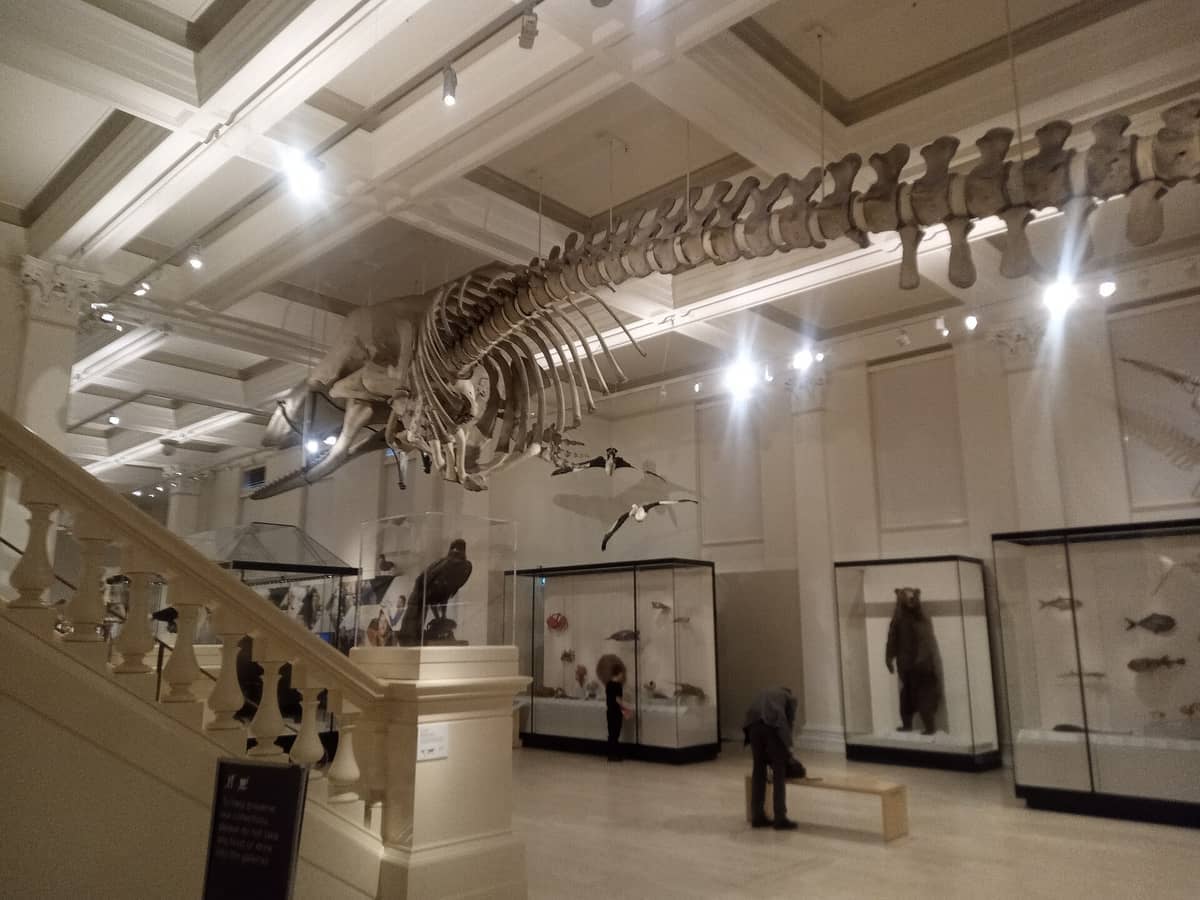
The permanent collection is where the museum earns its reputation. The natural history floors cover paleontology, minerals, and Australian wildlife, with the dinosaur skeletons drawing an immediate crowd from children and adults alike. The specimens are real, not replicas, and the labelling is thorough without being academic to the point of inaccessibility.
The First Nations collection is among the most significant in the country. The museum holds a substantial number of objects and cultural materials connected to Aboriginal and Torres Strait Islander peoples, and the programming around repatriation and community engagement is ongoing. The galleries in this section reward slower, attentive visits rather than a quick walk-through. Context panels are detailed, and the curatorial approach reflects active relationships with communities rather than a static ethnographic framing.
The Pacific cultures galleries contain objects from across Melanesia, Polynesia, and Micronesia. For visitors interested in the broader cultural geography of the region, this collection complements what you might encounter elsewhere in the city. The Aboriginal and First Nations cultural experiences in Sydney gain considerably more context after spending an hour in these rooms.
How Visits Change by Time of Day
The museum opens at 10 am and closes at 5 pm daily, except Christmas Day. Early morning, from opening until around 11 am, is the calmest window. School groups typically arrive mid-morning on weekdays, which concentrates noise and movement around the dinosaur halls and the children-focused sections. If you are visiting on a weekday without children and prefer quieter conditions, arriving before 10:30 am or after 2 pm makes a noticeable difference.
Weekends bring a different rhythm: families dominate from late morning onwards, particularly on Saturdays. The building is large enough that the ground floor can feel crowded while upper galleries remain genuinely quiet. The First Nations and Pacific galleries, in particular, tend to be less trafficked throughout the day, making them good choices if the main halls feel busy.
ℹ️ Good to know
If you're visiting with children under 10, the dinosaur and minerals galleries are the strongest draw. If you're a solo traveller or couple, head directly to the First Nations galleries first — they see far less foot traffic and repay careful attention.
Cultural and Historical Significance
Founded in 1827, decades before Australian federation, the Australian Museum's collection developed alongside — and in some cases as a direct consequence of — the colonial period. Understanding that history matters when engaging with the ethnographic and First Nations holdings. The museum has been transparent in recent years about the provenance of certain objects and the ongoing repatriation process, which gives the institution a layer of seriousness that purely commercial attractions don't have.
The museum's geological and paleontological collections are also substantive beyond what casual visitors usually expect. Australia's ancient geological record is distinct from most of the northern hemisphere, and the specimens here reflect that. If natural history or Earth science interests you, this warrants more time than a single visit. It fits naturally into a broader museum itinerary across Sydney, which spans natural history, contemporary art, and maritime heritage.
Practical Walkthrough: Getting the Most from a Visit
There is no single prescribed route through the building, and the floor plan is layered across multiple levels. Pick up a map at the entrance — the signage inside is clear, but the building's footprint is larger than it appears, and some galleries require backtracking if you follow a linear approach.
The on-site cafe provides a practical midpoint stop for longer visits. The museum shop near the exit stocks a reasonable selection of books, natural history items, and children's educational materials — above-average in quality for a museum retail space.
Photography is generally permitted in the permanent galleries without flash. Some objects in the First Nations section may have restrictions; signage indicates where photography is not appropriate, and these should be respected. Bags larger than a standard daypack may need to be left in lockers near the entrance. The surrounding area, including Hyde Park and St Mary's Cathedral immediately to the south, provides a natural extension to a half-day in this part of the CBD.
Who Should Consider Skipping It
Travellers with very limited time in Sydney and a specific focus on harbour experiences, beaches, or outdoor activities may find the museum less compelling than it is on paper. The collection is genuinely impressive in scale, but without a specific interest in natural history, anthropology, or First Nations cultures, two to three hours can feel like a long commitment for those working through a packed itinerary.
Similarly, visitors already planning a deep dive into contemporary art at the Museum of Contemporary Art Australia or maritime history at the Australian National Maritime Museum may need to be selective about museum time. The Australian Museum rewards curiosity rather than ticking boxes.
Insider Tips
- The mineral and gem gallery is quieter than the dinosaur halls and often overlooked — the fluorescent mineral display, viewed under ultraviolet light, is genuinely striking and takes under ten minutes.
- Free public programming, including talks and guided tours, runs regularly and is listed on the museum's website. Some are included in general admission; checking in advance can significantly add to the visit without extra cost.
- The main entrance is at Crystal Hall on the corner of College and William Streets; the William Street side also provides access, so follow the museum’s entrance signage.
- If you're visiting with primary school-age children, the museum's education team runs structured sessions during school holidays — book in advance through the website as spaces fill quickly.
- Weekday afternoons from around 2:30 pm onwards are typically the calmest window for adult visitors, after school groups have left and before the after-work crowd arrives.
Who Is Australian Museum For?
- Families with children aged 5 and older, particularly those drawn to dinosaurs, animals, and hands-on discovery
- Travellers interested in First Nations and Pacific Island cultures seeking depth beyond introductory overviews
- Rainy or extremely hot days when an indoor, free, and substantive option is preferable to outdoor alternatives
- Natural history enthusiasts, geology and paleontology specialists, or anyone curious about Australia's deep evolutionary record
- Budget-conscious visitors who want more than a superficial afternoon without spending on entry fees
Nearby Attractions
Other things to see while in Sydney CBD:
- ANZAC Memorial
Standing at the southern end of Hyde Park, the ANZAC Memorial is one of Sydney's most significant commemorative sites. Free to enter and open daily, it combines powerful Art Deco architecture with thoughtful exhibitions tracing Australia's wartime history from the First World War to recent conflicts.
- Art Gallery of New South Wales
The Art Gallery of New South Wales spans two architecturally distinct buildings on The Domain, offering free access to one of Australia's most significant art collections. From colonial-era Australian works to contemporary Pacific and Aboriginal art, the gallery rewards visitors who know where to look.
- Sydney Chinatown
Sydney Chinatown occupies the Haymarket precinct around Dixon Street, a pedestrianised mall bookended by ornate gates and lined with restaurants, bakeries, and produce shops. Free to enter and accessible by train, it rewards visitors who know when to go and what to look for.
- Government House Sydney
Government House Sydney is the official residence of the Governor of New South Wales, set inside the Royal Botanic Gardens on Macquarie Street. Free guided tours run on Fridays and weekends through State Rooms filled with colonial-era furniture, portraits, and silverware. It is one of the few active vice-regal residences in Australia that regularly opens its doors to the public at no cost.
Planning a trip? Discover personalized activities with the Nomado app.