Hyde Park Sydney: The CBD's Living Room, Two Centuries in the Making
Hyde Park is Sydney's oldest public parkland, a 16-hectare reserve in the heart of the CBD that has served as a gathering place since Governor Phillip reserved the land in 1792. Free to enter and accessible from St James and Museum train stations, it anchors one of the city's most historically layered precincts.
Quick Facts
- Location
- Elizabeth Street, Sydney NSW 2000 (Sydney CBD)
- Getting There
- St James Station (north end) and Museum Station (south end), Sydney Trains
- Time Needed
- 30 minutes to 1.5 hours depending on pace
- Cost
- Free entry
- Best for
- History, quiet walks, lunchtime escape from the CBD, monument photography
- Official website
- www.cityofsydney.nsw.gov.au/parks/hyde-park
What Hyde Park Actually Is
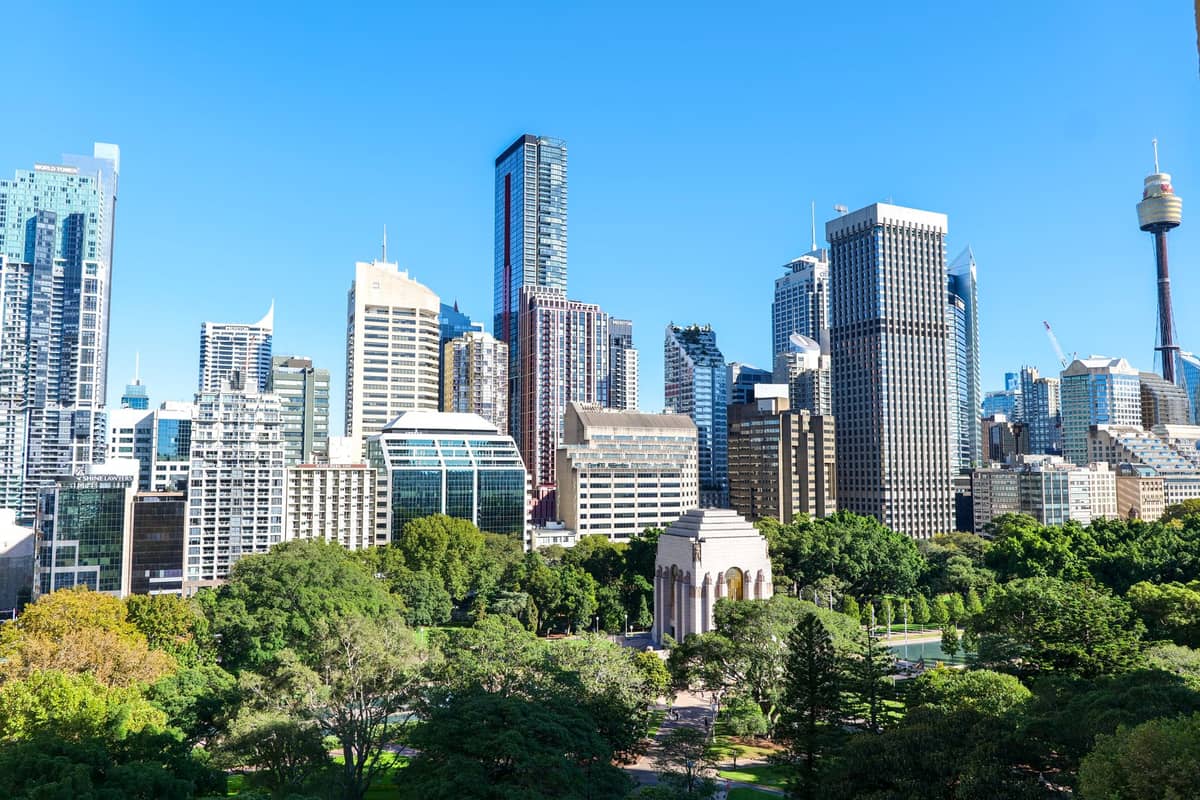
Hyde Park is a formal public garden running north to south through the eastern edge of Sydney's central business district, covering approximately 16 hectares across two sections divided by Park Street. It is Australia’s oldest public park, with the land first set aside as a common by Governor Arthur Phillip in 1792. Governor Lachlan Macquarie formally named it Hyde Park on 6 October 1810, borrowing the name from London's famous royal park. Over two centuries it has absorbed horse racing, cricket, an expo site, and wartime fundraising before settling into its current role: a tree-lined sanctuary where office workers eat lunch, tourists cut across from Museum Station toward the city's museums, and the occasional chess player occupies a bench for most of the afternoon.
The park is not wild or rugged. It is deliberately, unapologetically ornamental: wide gravel-edged paths, manicured lawns, rows of towering fig trees that form cathedral-like canopies along the central promenades, and two major monuments that draw visitors with a specific interest in Australian history and memorial culture. For a city park in the middle of a dense financial district, its sense of calm is genuine rather than cosmetic.
ℹ️ Good to know
Hyde Park sits between St James Station (northern end) and Museum Station (southern end) on the T4 Eastern Suburbs & Illawarra line. Both stations are a short walk from the park's main entrances, making it easy to integrate into a walking day through the CBD.
The Layout: North and South Sections
The park divides at Park Street into two distinct zones with different characters. The northern section, running from St James Road down to Park Street, is the more active half. The Archibald Fountain sits at its centre, a large bronze and granite work installed in 1932 as a gift from JF Archibald (of the Archibald Prize) to mark the association between Australia and France during World War One. The fountain features Apollo at its apex surrounded by Diana, Pan, the Minotaur and other classical figures. In the morning, the sound of the water carries across the lawns while the shadows of the fig trees are still long. By midday, office workers are sitting on every available bench within earshot of it.
The southern section, from Park Street to Liverpool Street, is quieter and slightly more reflective in mood. It culminates at the Anzac Memorial, a 1934 Art Deco building included in the State Heritage Register listing for Hyde Park. The memorial houses a museum dedicated to the service and sacrifice of New South Wales men and women in conflict. The Pool of Reflection stretches in front of it, lined with bare soil and the occasional bird, and it is genuinely striking at the southern entry point, particularly in early morning light when the memorial's sandstone facade catches a low angle of sun.
The Anzac Memorial is worth entering separately from the park visit. It is free, and the interior contains displays that go well beyond a typical war memorial's scope. For broader context on Sydney's heritage sites, the Anzac Memorial guide covers the interior experience in detail.
Tickets & tours
Live prices and dates from our booking partner. If you book, we may earn a commission at no extra cost to you.
Sydney whale-watching cruise with breakfast or lunch
From 62 €Instant confirmationFree cancellationBlue Mountains guided tour with Sydney Zoo and Scenic World visit
From 134 €Instant confirmationFree cancellationSydney Harbour scenic flight - private 20 minutes tour
From 404 €Instant confirmationFree cancellationSydney's Razor Gangs true crime tour
From 21 €Instant confirmationFree cancellation
How the Park Changes Through the Day
Early morning, roughly 6:30 to 8:30, is the park at its most peaceful. Joggers move through the fig-tree promenades, the lawn holds a faint dampness from overnight dew, and the city noise from Elizabeth Street and College Street is at its lowest point. The light filters through the canopy unevenly, creating patches of strong contrast that photographers working with natural light tend to appreciate.
The midday hour is when the park shows its CBD character most clearly. The benches fill with people eating takeaway food from nearby spots on Liverpool Street or from the lunch options around St James Station. On warmer days the lawn itself fills in, with jackets folded into makeshift pillows. The park does not feel crowded in the way that a tourist attraction does, but it is rarely empty from about 11:30 to 2:00. If you want the Archibald Fountain to yourself for a photograph, aim for before 8:00 or after 4:30.
Late afternoon brings a different rhythm: the office crowd thins, dog walkers appear, and the southern section near the Anzac Memorial becomes noticeably quieter. On evenings before major events at the nearby Sydney Town Hall or the Australian Museum, the park sees a brief spike in pedestrian traffic, but it is not a place with an active nightlife scene. The fig tree canopy, unlit except along the main paths, makes the interior dark enough that most visitors move through rather than linger after sunset.
The Trees and the Sensory Environment
The Moreton Bay fig trees that line the central promenades are the park's defining physical feature. Their root systems push up through the ground in large, exposed structures at the base of the trunks, and their canopies spread wide enough to shade a significant portion of the lawn below. In summer, these trees make an enormous difference to the experience of walking through the park versus walking on the adjacent Elizabeth Street footpath: the temperature under the canopy can feel several degrees cooler, and the noise from the street drops noticeably.
The overall sensory experience of Hyde Park is moderate rather than extreme in any direction. It smells of cut grass and damp soil in the morning, of food from nearby lunch spots at midday, and of nothing in particular in the evening. The sound of the Archibald Fountain is audible from most of the northern section. In October and November, when the jacaranda trees in and around the area are flowering, the colour shows up in corners of the park and along College Street, which runs along the eastern edge.
Historical and Cultural Context
The land Hyde Park occupies sits on the Country of the Gadigal people of the Eora Nation. The area around the park remains significant to Aboriginal and Torres Strait Islander communities in Sydney, and the City of Sydney acknowledges this in its management of the space. The park's official recorded history under colonial administration begins with Governor Phillip's reservation of the land in 1792, though the site had been a place of significance long before European settlement.
By the early nineteenth century the land had served as a racecourse, a cricket ground, and a general common before Macquarie's formal naming in 1810. The design went through multiple iterations as the city grew around it. The current formal layout with its central promenades and defined planting zones reflects landscaping decisions made across the late nineteenth and early twentieth centuries. The Archibald Fountain and the Anzac Memorial, both installed during the 1930s, gave the park its current monumental anchors.
The park sits within easy walking distance of several major cultural institutions. The Australian Museum is directly adjacent on College Street, and the Art Gallery of New South Wales is a short walk north through The Domain. For visitors interested in Sydney's layers of colonial and pre-colonial history, this southeastern corner of the CBD is one of the most concentrated areas in the city.
Practical Walkthrough: Getting There and Moving Through
Hyde Park is freely accessible and open at all hours, though the City of Sydney does not publish specific opening hours for the park itself. The two train stations flanking it, St James to the north and Museum to the south, make it one of the most transit-accessible parks in the city. Both stations are on the City Circle (T2/T3/T8), a short ride from Town Hall or Central Station.
The most logical entry points are the northern gate near St James Station for visitors coming from Circular Quay or the CBD core, and the southern end on Liverpool Street for those coming from Central Station or heading to Museum Station. The park is flat throughout, with sealed paths and no significant terrain variation, which makes it fully accessible for most mobility needs. The City of Sydney provides information for visitors with access needs and recommends contacting the venue for specific requirements.
💡 Local tip
Photography tip: The Archibald Fountain photographs best in the early morning when the sun comes from the east over College Street. The Pool of Reflection in front of the Anzac Memorial produces clean mirror-like reflections on still mornings before the wind picks up.
Hyde Park connects naturally into a half-day walk through the CBD's southeastern precincts. From the park, it is a short walk to St Mary's Cathedral on College Street, and the free things to do in Sydney guide outlines how to build a full day around this area without spending money on entry fees.
Who Should Visit and Who Might Be Disappointed
Hyde Park works best as part of a broader CBD itinerary rather than as a standalone destination requiring significant travel. If you are already near the city centre, it earns its time easily, especially if you plan to visit the Anzac Memorial or use it as a green connector between the CBD and the Australian Museum. For travellers specifically seeking nature, the scale here is modest. Sydney has larger, wilder options.
Visitors primarily interested in dramatic scenery or harbour views will not find them here. The park is inland, surrounded by city buildings, and the visual drama is urban and historical rather than coastal or panoramic. Those expecting the kind of open, sprawling experience offered by Sydney's harbour foreshore parks may find Hyde Park underwhelming. If you have limited time in Sydney and need to choose between this and one of the foreshore walks, the walks will generally offer more visual variety.
For context on Sydney's broader range of outdoor options, the Sydney coastal walks guide covers the alternatives for visitors who want green space with water views.
Insider Tips
- The fig tree promenades on a rainy day are worth experiencing: the canopy provides reasonable shelter, and the park empties out almost entirely, giving you the space and the sound of rain through the leaves without getting soaked.
- The chess tables at the northern end of the park attract regular players on weekday afternoons. If you know the game, it is a legitimate way to spend an hour and meet locals who use the park regularly.
- College Street runs along the eastern edge of the park and is worth walking rather than cutting across the interior if you want to look up at the building facades: the architectural sequence from the Australian Museum down toward the Anzac Memorial includes some of Sydney's better civic stonework.
- The Anzac Memorial museum is free and often far less visited than the park itself. Allow 30 to 45 minutes for the interior if you have any interest in Australian military history or Art Deco design.
- For the cleanest reflection shot of the Anzac Memorial in the Pool of Reflection, arrive before 8:00 on a weekday. By mid-morning, foot traffic around the pool disturbs the water surface and the background begins to include more pedestrians.
Who Is Hyde Park For?
- CBD workers and visitors wanting a midday break with green space and shade
- History and memorial culture enthusiasts visiting the Anzac Memorial and Archibald Fountain
- Photographers working with architectural subjects and early morning natural light
- Families or couples linking the Australian Museum with other CBD sites on foot
- Budget-conscious travellers building a free half-day itinerary in the city centre
Nearby Attractions
Other things to see while in Sydney CBD:
- ANZAC Memorial
Standing at the southern end of Hyde Park, the ANZAC Memorial is one of Sydney's most significant commemorative sites. Free to enter and open daily, it combines powerful Art Deco architecture with thoughtful exhibitions tracing Australia's wartime history from the First World War to recent conflicts.
- Art Gallery of New South Wales
The Art Gallery of New South Wales spans two architecturally distinct buildings on The Domain, offering free access to one of Australia's most significant art collections. From colonial-era Australian works to contemporary Pacific and Aboriginal art, the gallery rewards visitors who know where to look.
- Australian Museum
The Australian Museum is Sydney's oldest museum, founded in 1827, with free general admission and collections spanning science, culture, and nature. Located opposite Hyde Park in the CBD, it suits curious travellers with two to three hours to spend indoors.
- Sydney Chinatown
Sydney Chinatown occupies the Haymarket precinct around Dixon Street, a pedestrianised mall bookended by ornate gates and lined with restaurants, bakeries, and produce shops. Free to enter and accessible by train, it rewards visitors who know when to go and what to look for.
Planning a trip? Discover personalized activities with the Nomado app.