Barangaroo Reserve: Sydney's Harbourfront Headland, Rebuilt from Scratch
Once a concrete wharf, Barangaroo Reserve is now a six-hectare sandstone headland park hugging Sydney's western harbour foreshore. Open around the clock and free to enter, it offers coastal walking paths, sweeping views of the harbour bridge and North Shore, and a quietly powerful connection to the Gadigal and Cammeraygal peoples whose Country this has always been.
Quick Facts
- Location
- Hickson Road, Barangaroo NSW 2000
- Getting There
- Barangaroo Wharf; Wynyard or Circular Quay stations; buses 252, 254, 261, 288, 290, 292
- Time Needed
- 45–90 minutes for a full walk; longer if you linger at the viewpoints
- Cost
- Free. Open 24 hours.
- Best for
- Sunset walks, morning joggers, picnics, harbour photography, quiet harbour escapes near the CBD
- Official website
- www.barangaroo.com/precincts/barangaroo-reserve
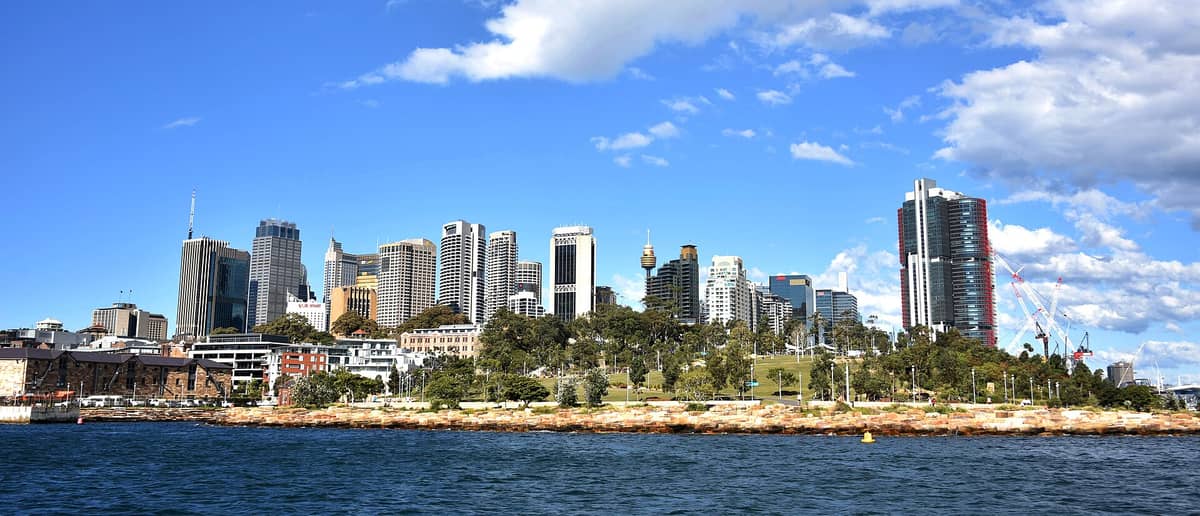
What Barangaroo Reserve Actually Is
Barangaroo Reserve is a six-hectare public headland park on Sydney's western harbour foreshore, opened in 2015 after one of the most ambitious urban ecological restoration projects in Australian history. The site was a working container terminal for decades, its original sandstone foreshore buried under concrete. The restoration stripped that back, reinstating the headland's natural profile and planting more than 75,000 native trees, shrubs, and groundcovers sourced from the Sydney Basin.
The result is something you do not expect to find minutes from a CBD: a park that smells of warm sandstone and coastal scrub rather than car exhaust, where the sound of ferry wakes lapping against rock outcrops competes with kookaburras in the casuarinas. It is not a manicured garden in the Royal Botanic tradition. The planting is deliberately rough at the edges, built to feel like the harbour headlands Sydney would have had before European colonisation altered the shoreline.
ℹ️ Good to know
Barangaroo Reserve is open 24 hours a day and has no admission charge. Ferries via Barangaroo Wharf drop you on Wulugul Walk, minutes from the reserve; check current services before travelling.
The Walk: What You See and How It Unfolds
The main route through the reserve is Wulugul Walk, a relatively level path that traces the water's edge along the western side of the headland. From the southern entrance near the Barangaroo commercial precinct, the path opens almost immediately onto unobstructed harbour views. The Sydney Harbour Bridge sits directly north, and on clear days you can see as far as the heads at the harbour entrance.
As you move north, the vegetation thickens and the concrete city falls further behind. Sandstone ledges drop toward the water at several points, and there are grassy terraces above the path where groups spread out blankets for picnics. The higher paths on the headland ridge offer elevated views back across the city, including some of the few angles in central Sydney where the high-rise cluster of Barangaroo South does not dominate the frame.
The northern tip of the reserve, near the cove, is the quietest section and the one most people miss. It is worth reaching. The rock shelves here are large and flat, and at low tide the water is transparent green over pale sandstone. This is where you are most likely to see the reserve feel genuinely removed from the surrounding city, which is a significant claim for a park this close to Wynyard station.
💡 Local tip
The reserve's northern cove is the least crowded section at most hours. If you enter from the southern end near the casino tower, keep walking past the main viewing terraces to find it.
Tickets & tours
Live prices and dates from our booking partner. If you book, we may earn a commission at no extra cost to you.
The Rocks historic walking tour
From 20 €Instant confirmationFree cancellationBeginner surf lesson at Bondi Beach
From 79 €Instant confirmationFree cancellationSydney whale-watching cruise with breakfast or lunch
From 62 €Instant confirmationFree cancellationBlue Mountains Waterfalls Full-Day Tour with Lunch and Dinner
From 171 €Instant confirmationFree cancellation
How the Experience Changes by Time of Day
Early morning, particularly between 6:30 and 8:30am, the reserve belongs to local joggers and dog walkers. The light at this hour hits the harbour from the east, turning the water copper and throwing long shadows across the sandstone ledges. There is a stillness to the place that is hard to reconcile with its CBD adjacency.
Midday in summer brings heat and brightness that can make the exposed headland paths uncomfortable. The sandstone absorbs warmth and radiates it back. Shade is limited in the upper sections, so if you are visiting in December through February, earlier or later in the day is strongly preferable. Bring water regardless of season.
Sunset is when the reserve performs best for most visitors. The western harbour aspect means the sky behind the North Shore hills lights up in sequence, and the bridge silhouette sharpens against the colour. These conditions draw photographers and couples, and the main viewing terraces become noticeably crowded from about 30 minutes before sunset. Arriving early to claim a rock ledge is worthwhile.
At night the park is lit at key points and genuinely used by locals, particularly along Wulugul Walk. The headland paths above are darker and require more care underfoot. Security lighting at the southern end means the border with the commercial precinct stays active, but the northern cove is dim. Comfortable footwear matters here after dark.
Cultural and Historical Context
The reserve takes its name from Barangaroo, a Cammeraygal woman who was a significant figure in early colonial Sydney and the partner of Bennelong, the Eora man after whom Bennelong Point (the Sydney Opera House site) is named. The Gadigal people are the Traditional Custodians of the land on which the reserve sits, part of the broader Eora Nation whose sea Country extends across Sydney Harbour and its foreshores.
The naming of the precinct and the design of the reserve were intended to acknowledge this connection, though the development of the broader Barangaroo precinct has also been the subject of debate about scale, heritage, and community benefit. For visitors wanting to understand more about Aboriginal culture and place in Sydney, the Sydney Aboriginal culture guide provides useful context that goes well beyond what a single park visit can convey.
The restoration itself is ecologically significant in a way that is easy to underestimate. The foreshore here was completely hardened by the twentieth century. Reinstating it required The foreshore here was completely hardened by the twentieth century. Reinstating it required reshaping the headland contours to something approximating their pre-industrial form, and sourcing plant material with documented genetic connection to the Sydney Basin. The project used seeds and cuttings rather than nursery stock where possible.
Getting There and Getting Around the Reserve
The most satisfying way to arrive is by ferry. Barangaroo Wharf is served by the F3 (Parramatta River) and F4 (Homebush) services, and stepping off a ferry directly onto the reserve's southern foreshore gives the approach an arrival quality that train or bus simply does not. If you are building a harbour day, the Sydney ferry guide covers the network well and explains how to integrate ferry travel into a broader itinerary.
From Wynyard station, the walk to the southern entrance takes roughly 10 minutes via Barangaroo Avenue, passing through the commercial precinct. From Circular Quay station or wharf, allow around 15 minutes on foot along the foreshore path. Buses 252, 254, 261, 288, 290 and 292 serve King Street Wharf near the reserve; check Transport for NSW for current stop locations, as the precinct's street layout has changed with ongoing development.
Accessibility within the reserve is reasonable. Wulugul Walk is relatively level and well-surfaced. Accessibility within the reserve is reasonable. Wulugul Walk is relatively level and well-surfaced. Lifts connect Nawi Cove, Waranara Terrace and Stargazer Lawn to the car park. The northern end of Wulugul Walk provides stair-free access to Waranara Terrace and Stargazer Lawn; consult the official Barangaroo accessibility page for current route details. The official Barangaroo accessibility page has the most current detail on which paths are accessible. The upper headland paths involve steps and uneven sandstone in places, which limits their suitability for prams and wheelchairs. The official Barangaroo accessibility page has the most current detail on which paths are accessible.
Photography: What Works and What Doesn't
The reserve's west-facing foreshore makes it one of the better CBD-adjacent spots for golden hour photography of the harbour and bridge. Sunset shooters should position on the rock ledges on the mid-section of Wulugul Walk for the cleanest foreground and the widest harbour frame. The northern cove gives a low, intimate angle on the water but loses the bridge as a compositional element.
Midday light on the sandstone is harsh and washes out the texture that makes the headland interesting. Overcast days actually work well for the vegetation, softening the contrast between pale rock and the darker green of the coastal scrub. Drone use is regulated in this area; check CASA rules and local restrictions before flying.
⚠️ What to skip
The Barangaroo South commercial towers are visible from much of the reserve and will appear in wide-angle compositions facing south. If you want clean natural shots, focus north and northwest, or use a longer focal length to isolate the harbour and headland rock.
Honest Assessment: Who Will Love It, Who Won't
Barangaroo Reserve delivers something specific: a free, uncrowded-in-daylight-hours coastal walk with genuine ecological character, excellent harbour views, and a sense of remove from the city that is disproportionate to the distance. For anyone combining it with a walk through The Rocks or a ferry crossing, it fits naturally into a harbour-focused day.
Visitors expecting a lush garden, café culture, or interpretive heritage signage will find the reserve lean on all three. There are no cafés within the park itself, and food options require heading back to the commercial precinct or further toward Circular Quay. The indigenous cultural presence in the naming and design is real but quiet; you need to come with background knowledge or seek out additional context to appreciate it fully.
For families with young children, the grassy terraces and open rock shelves work well for informal play. The paths are manageable for older children. There are no playgrounds. For travellers whose time in Sydney is very short and who need maximum landmark density per hour, the reserve may feel like a diversion from higher-yield attractions. For anyone willing to slow down, it offers something harder to find than a landmark: the harbour at a human scale, without a ticket price.
Insider Tips
- The northern cove at the tip of the headland is the least visited section of the reserve. Most visitors turn back at the main viewing terraces. Keep walking for the best rock-ledge access and the quietest harbour outlook.
- Arrive by ferry if you can. Stepping off a ferry at Barangaroo Wharf onto Wulugul Walk is a better introduction to the park than approaching through the Barangaroo South commercial precinct; check current services before travelling.
- The sandstone ledges hold heat well into the evening in summer. If you want a warm place to sit after sunset without restaurant prices, the mid-section rock shelves stay comfortable well past dusk.
- Wulugul Walk connects south toward the Barangaroo commercial area, and the path can be continued north and then west to link into a longer foreshore walk. This makes it easy to chain the reserve into a walk that eventually reaches King Street Wharf and Darling Harbour without backtracking.
- Bring water. Bring water. Drinking fountains are provided in the reserve, but it is a good idea to bring bottled water; the commercial precinct cafés are also nearby.
Who Is Barangaroo Reserve For?
- Travellers who want harbour views without paying entry fees or joining tour groups
- Runners and walkers looking for a scenic foreshore circuit that avoids the Circular Quay tourist crowds
- Photographers targeting golden hour bridge and harbour compositions from the western shore
- Visitors interested in urban ecological restoration and indigenous place-naming in Sydney
- Families wanting open, low-maintenance outdoor space close to the CBD
Nearby Attractions
Other things to see while in Circular Quay & The Rocks:
- Cockatoo Island
Cockatoo Island sits in the middle of Sydney Harbour, free to enter and reachable by public ferry. It holds 150 years of convict and industrial history across shipyards, sandstone buildings and water-level dockworks — and the views back toward the CBD are quietly spectacular.
- Justice and Police Museum
Housed in a 19th-century court complex one block from Circular Quay, the Justice & Police Museum unpacks colonial Sydney's criminal underbelly through real evidence, mugshots, and courtroom drama. Entry is free, the building is atmospheric, and the exhibits are far more confronting than most museum visitors expect.
- Museum of Contemporary Art Australia (MCA)
The Museum of Contemporary Art Australia sits at the edge of Sydney Harbour in The Rocks, offering rotating exhibitions of Australian and international contemporary art, a rooftop cafe with Opera House views, and free admission for under-18s. It rewards a few hours of unhurried looking, especially on a Thursday evening when the crowds thin and the harbour light shifts.
- Sydney Harbour Bridge
Sydney Harbour Bridge is one of the world's great pieces of civil engineering and the most recognisable landmark on the Australian skyline. Whether you cross it on foot, climb to the pylon museum, or simply photograph it from below, this guide covers everything you need to plan your visit.
Planning a trip? Discover personalized activities with the Nomado app.