The Rocks Discovery Museum: Sydney's Free Window Into 55,000 Years of History
Housed in three sandstone buildings dating from 1844 to 1854, The Rocks Discovery Museum is one of Sydney's most underrated cultural stops. Free to enter and open daily, it traces the area's history from First Nations occupation through convict settlement to the waterfront precinct visitors walk through today.
Quick Facts
- Location
- 2–8 Kendall Lane, The Rocks NSW 2000
- Getting There
- Circular Quay Train Station & Ferry Wharf (5–10 min walk)
- Time Needed
- 45–90 minutes
- Cost
- Free
- Best for
- History lovers, families, rainy-day visits, solo explorers
- Official website
- rocksdiscoverymuseum.com
What Is the Rocks Discovery Museum?
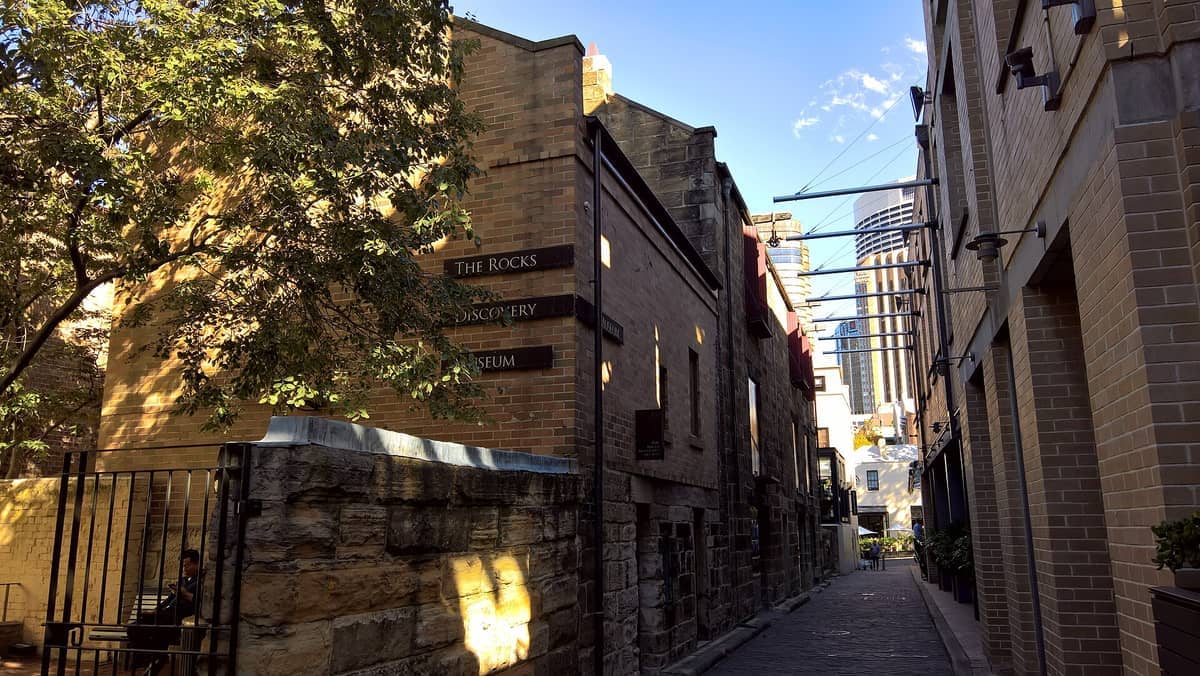
The Rocks Discovery Museum sits at the end of Kendall Lane, a narrow sandstone-paved alley that already feels like a piece of the 19th century before you even step inside. The museum occupies three connected buildings constructed between 1844 and 1854, and the bones of those structures, thick stone walls, low ceilings, uneven floors, are as much a part of the experience as the exhibits themselves. Opened in 2005, it is free to enter every day of the year except Good Friday and Christmas Day.
The collection is organised chronologically across four themed galleries: Warrane (the Gadigal name for Sydney Cove), Colony, Port, and Rocks. Together they trace roughly 55,000 years of human activity on this small patch of harbour headland, from the deep pre-contact history of the Gadigal people through the trauma of convict settlement, the commercial explosion of the 19th-century port, and the preservation battles of the 20th century that saved The Rocks from wholesale demolition.
💡 Local tip
The museum is small enough to complete in under an hour if you move quickly, but allow 90 minutes if you want to read the object labels and watch the short video installations. It is an excellent first stop before exploring the wider precinct.
The Buildings Themselves: History You Can Touch
Before the exhibits draw your attention, pause in the doorway and look at the walls. The sandstone blocks were quarried locally, likely from the same ridge the precinct sits on, and the mortar joints are wide and imperfect in the way that early colonial construction tends to be. The buildings predate the gold rush that transformed Sydney into a prosperous commercial city, which means they were put up during one of the colony's leaner, rougher periods.
The interiors have been carefully adapted rather than gutted. Steel and glass insertions carry display cases and lighting rigs without destroying the original fabric. The result is an atmosphere that feels archival rather than theatrical: cool, slightly dim, with the smell of old stone in the lower spaces. On a hot Sydney summer afternoon, that coolness is a genuine relief.
Tickets & tours
Live prices and dates from our booking partner. If you book, we may earn a commission at no extra cost to you.
The Rocks historic walking tour
From 20 €Instant confirmationFree cancellationThe Rocks Pub tour
From 58 €Instant confirmationSydney Harbour discovery lunch cruise
From 42 €Instant confirmationFree cancellationFull-day abseiling and rock climbing combo at Blue Mountains
From 190 €Instant confirmationFree cancellation
The Galleries: What You Actually See
Warrane: 55,000 Years of Country
The first gallery addresses the deep history of the Gadigal people, the Traditional Custodians of the land around Sydney Cove, known in their language as Warrane. The exhibits here handle a difficult task with reasonable care: presenting an ancient and ongoing culture to a predominantly non-Indigenous audience without flattening it into a prelude for European arrival. Artefacts, recordings, and interpretive text are used to communicate how the harbour foreshore was used and understood long before 1788.
For visitors wanting to go deeper into First Nations history and culture in Sydney, the Sydney Aboriginal culture guide covers additional sites, experiences, and context across the city.
Colony and Port: The Convict and Commercial Eras
The Colony gallery moves through the convict period with physical evidence rather than dramatisation. Objects recovered from archaeological excavations in The Rocks, clay pipes, ceramic fragments, personal items, appear alongside documentary records that put names and lives to the people who used them. It is the kind of history that resists easy romanticisation: the conditions were harsh, the social hierarchy rigid, and the displacement of the Gadigal people swift and violent.
The Port gallery covers the 19th and early 20th centuries, when The Rocks was a working waterfront neighbourhood: sailors, merchants, labourers, and sex workers living in close quarters in buildings that are now tourist accommodation. The display cases here include maritime instruments, trade goods, and photographs that show how densely occupied these few streets once were.
Rocks: Demolition, Protest, and Preservation
The final gallery covers the 20th century, including the 1900 bubonic plague outbreak and the 1970s Green Bans, a coordinated union action by the Builders Labourers Federation that halted further demolition and ultimately preserved what remains today. This is not widely known outside Australia, and the museum tells it clearly. Understanding this episode changes how you see the precinct outside: what you are walking through is what survived, not a representative sample of what was.
When to Visit and How It Changes Through the Day
The museum is open daily from 10 am to 5 pm. Kendall Lane itself can be busy on weekend afternoons, particularly when the nearby weekend markets are running, and the lane fills with foot traffic passing between George Street and the lower precinct. If you prefer a quieter experience inside, weekday mornings between opening and around noon tend to see the lightest attendance. The museum's size means that even a moderate crowd of visitors can make the galleries feel full.
School groups visit regularly during term time, typically arriving mid-morning. If a group is present in one gallery, the other rooms are usually quieter. The staff are present and engaged, and it is genuinely worth asking questions: the collection has layers that the labels alone do not always surface.
ℹ️ Good to know
The museum is closed on Good Friday and Christmas Day. No seasonal or extended hours are listed on official sources, so the 10 am–5 pm daily window is consistent year-round. Verify hours before visiting on public holidays.
Getting There: Location and Access
Kendall Lane is not always easy to find on a first visit. From Circular Quay, walk west along Alfred Street, then turn right onto George Street heading north into The Rocks. After passing under the Cahill Expressway overpass, turn left onto Argyle Street and then right into Kendall Lane. The museum entrance is at 2–8 Kendall Lane, marked by a modest sign. The walk from Circular Quay takes around 10 minutes at a relaxed pace.
Circular Quay is Sydney's central ferry and rail hub, served by trains, buses, and ferries from across the harbour. If you are arriving from Manly or the northern suburbs by water, the Sydney ferry guide has route and ticketing details. The Rocks precinct is then a short walk west from the wharves.
Accessibility
Entry to the museum is at ground level and step-free from Kendall Lane. However, the first floor of the building is currently inaccessible to visitors using a wheelchair or stroller. If the upper level contains exhibits you want to see, it is worth contacting the museum in advance to ask about current display arrangements. The lane itself has a slightly uneven surface typical of heritage precincts.
Photography and Practical Notes
The interior lighting is low and warm, which suits the atmosphere but challenges phone cameras in the lower galleries. A slightly slower shutter speed or switching to your camera's portrait or night mode will produce better results than the standard automatic setting. Flash is generally unwelcome in museum environments and will flatten the texture of the sandstone walls anyway.
Kendall Lane itself photographs well in the late afternoon when light enters from the western end of the alley. The lane's stone paving, low archways, and old building facades make it one of the more photogenic streets in the precinct, and worth a few minutes before or after your museum visit.
If you are building a broader itinerary around The Rocks and Circular Quay, the Circular Quay and The Rocks neighbourhood guide covers the precinct's other key stops and walking routes.
Is It Worth Your Time? An Honest Assessment
The Rocks Discovery Museum is not a grand institution. It does not have the scale of the Australian Museum or the Art Gallery of NSW. What it offers instead is precision: a focused, well-curated account of a specific place over a very long span of time, housed in buildings that are themselves artefacts. For that purpose, it does its job well.
Visitors who are primarily interested in contemporary art, natural history, or maritime collections will find more to engage with at other Sydney institutions. The Museum of Contemporary Art Australia is a five-minute walk away at Circular Quay, and the Australian National Maritime Museum at Darling Harbour covers the port history angle with much greater depth and physical collection.
But if you are spending any time in The Rocks and want to understand what you are actually looking at, this museum provides that grounding efficiently and for free. It is particularly valuable for visitors with children old enough to engage with historical narrative, and for anyone who wants context before wandering the precinct's lanes and laneways.
⚠️ What to skip
Who should skip it: Visitors with very limited time in Sydney who are prioritising harbour views, beaches, or major gallery collections may find the 45–90 minutes better spent elsewhere. The museum rewards curiosity about local history specifically; it is not a broad introduction to Australian history or culture.
Insider Tips
- Pick up a free precinct map from the museum desk before leaving. The staff are knowledgeable about what is currently open in The Rocks and can point you toward archaeological sites and historic markers nearby that most visitors walk past without noticing.
- The archaeological excavation findings on display came from digs carried out in The Rocks itself during the 1990s and 2000s. Looking at the objects, and then walking the streets outside where they were found, gives the collection a spatial reality that reading about it does not.
- If you visit on a weekend when The Rocks Markets are running on George Street, combine the two: start with the museum for context, then browse the markets with a better sense of what the precinct looked like at different points in its history.
- The ground-floor gallery is the most accessible and the quietest. If the upper level is inaccessible to you or your group, ask staff whether the key exhibits from that floor have been reproduced or summarised at ground level.
- Kendall Lane gets afternoon shade from the surrounding buildings, making it a comfortable spot to sit and read the museum's free exhibition brochure after your visit, especially in summer when George Street is full sun.
Who Is The Rocks Discovery Museum For?
- History and heritage travellers wanting context before exploring The Rocks precinct
- Families with older children interested in colonial and First Nations history
- Budget-conscious visitors looking for quality cultural experiences at no cost
- Travellers seeking shelter from rain or midday heat without paying entry fees
- Anyone curious about the Green Bans movement and how Sydney's heritage survived the 20th century
Nearby Attractions
Other things to see while in Circular Quay & The Rocks:
- Barangaroo Reserve
Once a concrete wharf, Barangaroo Reserve is now a six-hectare sandstone headland park hugging Sydney's western harbour foreshore. Open around the clock and free to enter, it offers coastal walking paths, sweeping views of the harbour bridge and North Shore, and a quietly powerful connection to the Gadigal and Cammeraygal peoples whose Country this has always been.
- Cockatoo Island
Cockatoo Island sits in the middle of Sydney Harbour, free to enter and reachable by public ferry. It holds 150 years of convict and industrial history across shipyards, sandstone buildings and water-level dockworks — and the views back toward the CBD are quietly spectacular.
- Justice and Police Museum
Housed in a 19th-century court complex one block from Circular Quay, the Justice & Police Museum unpacks colonial Sydney's criminal underbelly through real evidence, mugshots, and courtroom drama. Entry is free, the building is atmospheric, and the exhibits are far more confronting than most museum visitors expect.
- Museum of Contemporary Art Australia (MCA)
The Museum of Contemporary Art Australia sits at the edge of Sydney Harbour in The Rocks, offering rotating exhibitions of Australian and international contemporary art, a rooftop cafe with Opera House views, and free admission for under-18s. It rewards a few hours of unhurried looking, especially on a Thursday evening when the crowds thin and the harbour light shifts.
Planning a trip? Discover personalized activities with the Nomado app.