Royal Botanic Garden Sydney: The Complete Visitor's Guide
Established in 1816 and spread across 30 hectares of prime Sydney Harbour foreshore, the Royal Botanic Garden Sydney is one of the city's most rewarding places to spend a few hours. Entry is free, the grounds stay open daily, and the garden sits within a comfortable walk of Circular Quay, making it a natural complement to almost any CBD itinerary.
Quick Facts
- Location
- Mrs Macquaries Road, Sydney CBD NSW 2000
- Getting There
- Circular Quay, St James or Martin Place stations (~10 min walk each); Circular Quay ferry wharves (~10 min walk)
- Time Needed
- 1.5–3 hours for a full loop; 45 minutes for a targeted stroll
- Cost
- Free general entry; some ticketed events may apply
- Best for
- Harbour views, picnics, photography, families, and escaping the CBD noise
- Official website
- www.botanicgardens.org.au/royal-botanic-garden-sydney
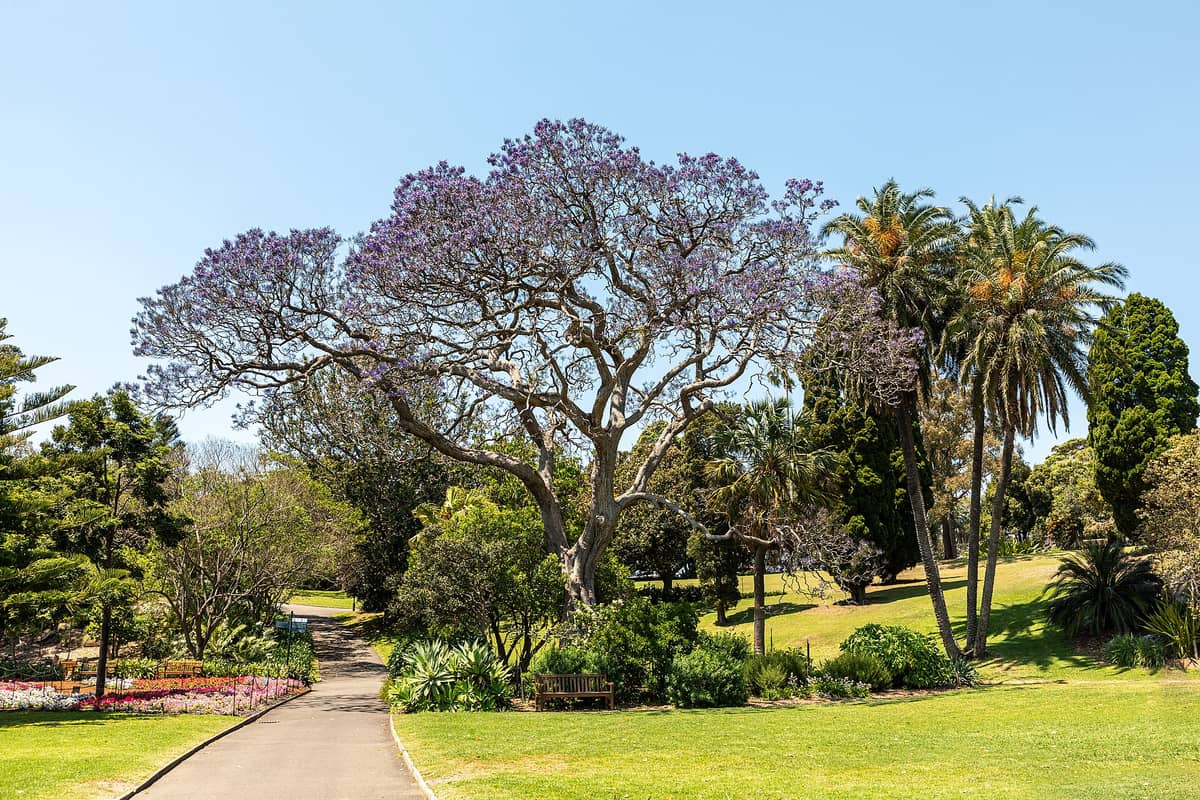
What the Royal Botanic Garden Sydney Actually Is
The Royal Botanic Garden Sydney is a 30-hectare public garden occupying the eastern edge of Sydney Harbour, directly adjacent to the CBD. It sits on land of the Gadigal people of the Eora Nation, and the site holds deep cultural significance that predates European settlement by thousands of years. Formally established in 1816, it is the oldest scientific institution in Australia and continues to operate as a living plant collection, a research centre, and an open public park.
What makes the garden unusual is not any single feature but the combination: free access, a genuine harbourfront position with unobstructed sight lines to the Sydney Opera House, and enough variety in its collections and walking routes that two visitors can spend the same afternoon here and have entirely different experiences. One might sit on the lawn overlooking Farm Cove; another might spend an hour inside The Calyx glasshouse watching a curated botanical display unfold.
ℹ️ Good to know
Opening hours change seasonally. The garden opens at 7am year-round but closes as early as 5pm in June and July, and as late as 8pm in November through February. Check the official site before planning an evening visit.
How the Garden Changes Through the Day
Early mornings are the most rewarding time to visit. By 7:30am on a weekday, the paths are occupied mainly by joggers, photographers positioned along the waterfront to catch the Opera House in soft light. The air carries a faint saltiness from the harbour and the damp smell of irrigated lawn. Cockatoos, rainbow lorikeets, and ibis move through the canopy above; the volume of birdsong at this hour is genuinely striking.
By mid-morning, school groups begin to arrive and the Visitor Centre fills with families picking up maps. The central lawns become popular picnic spots through the lunch hour, when office workers from the nearby CBD cut through with takeaway coffee. This is still a pleasant time to visit, but the garden's quieter northern paths, closer to Mrs Macquaries Chair, stay relatively uncrowded even during peak hours.
Late afternoon in summer (October through February), with the garden open until 8pm, offers something the morning cannot: warm golden light across the harbour and the Opera House sails catching the last of the sun. This is the single best photography window if you want to avoid the flat midday light that makes the harbour look washed out in photos. Arrive by 5pm to settle in before the light shifts.
Tickets & tours
Live prices and dates from our booking partner. If you book, we may earn a commission at no extra cost to you.
Sydney whale-watching cruise with breakfast or lunch
From 62 €Instant confirmationFree cancellationBlue Mountains guided tour with Sydney Zoo and Scenic World visit
From 134 €Instant confirmationFree cancellationSydney Harbour scenic flight - private 20 minutes tour
From 404 €Instant confirmationFree cancellationSydney's Razor Gangs true crime tour
From 21 €Instant confirmationFree cancellation
Navigating the Garden: A Practical Walkthrough
Most visitors enter from Circular Quay by walking south along the foreshore under the Cahill Expressway, then turning into the garden at the main gate near the Opera House forecourt. This route deposits you directly into the most photographed corner of the grounds, with Farm Cove ahead and the Opera House to your left. It is a strong opening, but it means you are walking against the grain of the garden's natural layout.
A more considered approach is to enter from the St James station side via the Art Gallery Road gate, walk through the Rose Garden and past the Herb Garden, then work your way east toward the waterfront. This lets the harbour view build gradually rather than hitting you all at once, and you pass through several distinct horticultural zones along the way: formal beds, the fernery, the succulent and palm collections.
💡 Local tip
Free printed maps are available at the Visitor Centre near the main entrance. The garden's path network is not always intuitive; the map saves time, especially if you want to find The Calyx or the Fernery without backtracking.
The Calyx, located in the western section of the garden, is worth a specific mention. It is a contemporary glasshouse that hosts rotating large-scale botanical installations, typically with a ticketed special exhibition alongside a free viewing area. The structure itself is architecturally notable, its curved green roof visible from some distance. For a deeper look at what's currently showing, check the official site before you go. It connects well with a visit to the Art Gallery of New South Wales, which sits a short walk to the south along Art Gallery Road.
History and Cultural Context
The land on which the garden sits was used by the Gadigal people for tens of thousands of years before European colonisation. The area around Farm Cove was one of the first sites the British attempted to cultivate after the 1788 settlement, with early government farms struggling in the unfamiliar soil and climate. The site transitioned from failed farmland to an ornamental government domain, and the Royal Botanic Garden was formally established under Governor Macquarie in 1816.
Its role as a scientific institution is easy to underestimate when you are walking through what looks like a pleasant urban park. The garden holds significant plant collections used in ongoing research, maintains a herbarium with millions of specimens, and operates as part of the Botanic Gardens of Sydney, which also manages the Australian Botanic Garden at Mount Annan and the Blue Mountains Botanic Garden at Mount Tomah. The 30-hectare site you can walk through represents only the public face of a much larger scientific operation.
Visitors with a specific interest in Sydney's Indigenous history can complement a garden visit with a broader exploration using the Sydney Aboriginal culture guide, which covers cultural sites and experiences across the city.
Getting There and Moving Around
The garden sits about one kilometre from the centre of the CBD and is genuinely walkable from several major transit points. Circular Quay station (trains and light rail), St James station, and Martin Place station are all within walking distance. The Circular Quay ferry wharves are also nearby on foot, making the garden a logical stop if you are arriving from Manly, Parramatta, or any of Sydney's other ferry destinations.
The 441 bus serves Mrs Macquaries Road directly. If you are travelling by ferry and want to understand the full network, the Sydney ferry guide covers routes, fares, and which wharf to use for different destinations across the harbour.
Inside the garden, most paths are sealed and relatively flat, which makes the space manageable for strollers and most mobility aids. The official accessibility information notes that wheelchairs are available to borrow free of charge from Reception, Monday through Sunday between 10am and 4pm; booking ahead is requested. Accessible toilets are located at the Visitor Centre, the Mare and Foal Lawn area, and The Calyx.
Photography, Weather, and What to Bring
Photography here divides naturally into two subjects: the plant collections and the harbour views. For the harbour, the light is at its best in the early morning (soft and directional from the east) and in the late afternoon when it falls warm across the water. Midday light between November and March can be intensely harsh and flattens the texture of both the gardens and the water.
Sydney's climate means the garden is genuinely enjoyable in every season, though with different character. Summer (December to February) brings heat and full foliage but also the longest opening hours, with the garden staying open until 8pm. Autumn (March to May) sees the deciduous plantings turn colour and crowds thin noticeably. Winter mornings can be cold by Sydney standards, dipping toward 7 to 9 degrees Celsius, and the shorter hours (closing at 5pm in June and July) limit late visits. Spring (September to November) brings flowering and relatively mild temperatures, making it a strong season for plant photography.
⚠️ What to skip
The garden has very little shade in its open sections during summer. If you are visiting between 11am and 3pm from December to February, carry water, wear sunscreen, and bring a hat. Sun exposure here can be severe.
What to Pair With Your Visit
The garden shares a boundary with some of Sydney's most significant cultural and heritage sites. The Sydney Opera House is effectively adjacent, and walking from the garden's northern edge to the Opera House forecourt takes under five minutes. The Mrs Macquaries Chair lookout sits at the garden's eastern tip and gives one of Sydney's most-reproduced views of the Opera House and Harbour Bridge together.
For a longer day out, the garden connects naturally with a walk along the foreshore toward Circular Quay and The Rocks, where you can find the Museum of Sydney and the historic precinct. Alternatively, the Art Gallery of New South Wales is a 10-minute walk south, offering a cultural counterpoint to the outdoor experience. The garden also appears in most curated itineraries for the city; if you are planning a broader trip, the things to do in Sydney guide gives useful context for building a full itinerary around it.
Who Should Think Twice
Visitors who primarily want a manicured, intensively curated garden experience on the level of Singapore's Gardens by the Bay or Kew in London may find the Royal Botanic Garden Sydney more informal than expected. The grounds are well maintained but have an open, parklike quality in places rather than a tightly controlled aesthetic throughout. Similarly, anyone visiting solely for the harbour views should know that the foreshore walking path, while beautiful, can be windier and more exposed than it looks on maps, particularly in winter.
Insider Tips
- The northern path closest to the waterfront between the Opera House and Mrs Macquaries Chair carries significantly less foot traffic than the main interior paths, even on busy weekend mornings. Walk it in both directions if you have time.
- The garden's ibis population is large, bold, and completely unbothered by humans. Do not leave food unattended at picnic areas; they will investigate immediately and without hesitation.
- The Calyx often has a free-access viewing area in addition to any ticketed exhibition. Check what is currently showing before you visit so you are not surprised if a donation is requested if you want to go inside fully.
- Wheelchairs are available to borrow at no cost from Reception between 10am and 4pm daily. Phone ahead to book one rather than risking a wait on arrival, particularly on weekends.
- If you are interested in botany specifically, the garden runs regular free guided walks and events. Check the official events calendar before your visit, as many of these go unannounced on general tourism sites.
Who Is Royal Botanic Garden Sydney For?
- Travellers wanting a genuine break from the CBD without leaving the city centre
- Photographers targeting the Opera House and Harbour Bridge together at golden hour
- Families with young children looking for free, open outdoor space with accessible paths
- Visitors with limited mobility, given the flat paths and free wheelchair loan service
- Anyone pairing a cultural day with the Art Gallery of New South Wales or the Sydney Opera House
Nearby Attractions
Other things to see while in Sydney CBD:
- ANZAC Memorial
Standing at the southern end of Hyde Park, the ANZAC Memorial is one of Sydney's most significant commemorative sites. Free to enter and open daily, it combines powerful Art Deco architecture with thoughtful exhibitions tracing Australia's wartime history from the First World War to recent conflicts.
- Art Gallery of New South Wales
The Art Gallery of New South Wales spans two architecturally distinct buildings on The Domain, offering free access to one of Australia's most significant art collections. From colonial-era Australian works to contemporary Pacific and Aboriginal art, the gallery rewards visitors who know where to look.
- Australian Museum
The Australian Museum is Sydney's oldest museum, founded in 1827, with free general admission and collections spanning science, culture, and nature. Located opposite Hyde Park in the CBD, it suits curious travellers with two to three hours to spend indoors.
- Sydney Chinatown
Sydney Chinatown occupies the Haymarket precinct around Dixon Street, a pedestrianised mall bookended by ornate gates and lined with restaurants, bakeries, and produce shops. Free to enter and accessible by train, it rewards visitors who know when to go and what to look for.
Planning a trip? Discover personalized activities with the Nomado app.