Mrs Macquarie's Chair: Sydney's Best Free Harbour Panorama
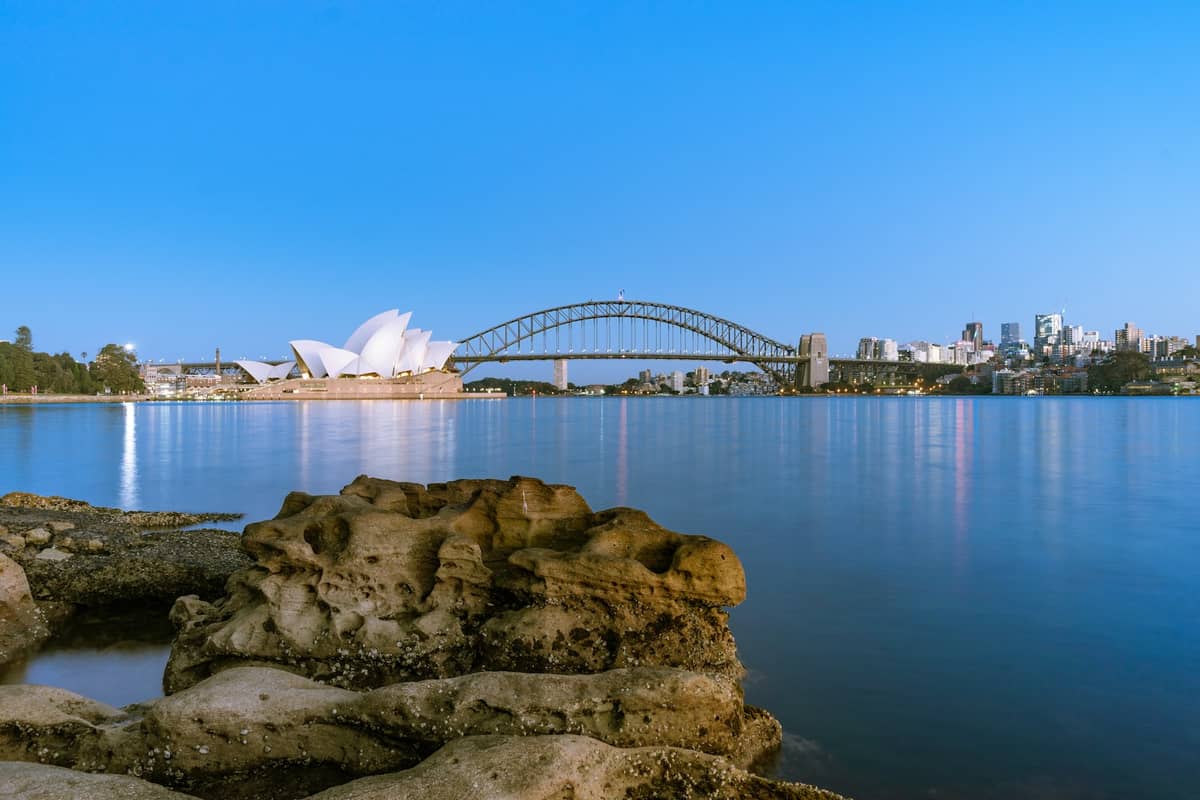
Carved from sandstone by convicts in 1810, Mrs Macquarie's Chair sits at the tip of a peninsula in the Royal Botanic Garden Sydney. The viewpoint frames the Opera House and Harbour Bridge in the same sightline, making it one of the most photographed spots in the country. Entry is free, and the walk through the gardens is half the experience.
Quick Facts
- Location
- Mrs Macquaries Road, Royal Botanic Garden Sydney, NSW 2000
- Getting There
- Approx. 20-min walk from Circular Quay station or Circular Quay ferry wharves; St James station is farther
- Time Needed
- 30–60 minutes at the chair; allow 90+ minutes if walking through the full garden
- Cost
- Free (Royal Botanic Garden entry is free; special events may require tickets)
- Best for
- Sunrise photography, picnics with a harbour view, an easy walk from the CBD
- Official website
- www.botanicgardens.org.au/facility/mrs-macquaries-chair
What Mrs Macquarie's Chair Actually Is
Mrs Macquarie's Chair is a sandstone bench carved directly into a rock ledge at the eastern tip of Farm Cove, inside the Royal Botanic Garden Sydney. It was cut by convicts in 1810 on the orders of Governor Lachlan Macquarie, reportedly so his wife Elizabeth could sit here and watch ships entering the harbour. The seat itself is modest: a shallow curved recess in a low rock face, worn smooth by two centuries of visitors. What surrounds it is anything but modest.
Standing at the point, you face west across the harbour. The Sydney Opera House sits to your right, its shell-like roof forms catching the light differently depending on the hour. The Sydney Harbour Bridge arcs behind it to the left. On a clear morning, both icons appear in a single, unobstructed frame. This is one of very few land-based positions in the city where that alignment works without a zoom lens.
ℹ️ Good to know
Garden opening hours vary seasonally: 7am to 5pm in June and July, extending to 7am to 8pm in November through February. Check the Botanic Gardens of Sydney website before an early morning or evening visit.
The View, by Time of Day
Timing genuinely changes what you experience here. At sunrise, the light comes from behind you and hits the Opera House tiles directly, turning them from grey to a warm cream. The water is often still at that hour, and the harbour reflects both bridge and sails with minimal chop. Crowds at this time are thin: a handful of photographers with tripods, occasional joggers passing through, and ibis picking through the grass nearby. The garden gates open at 7am, which aligns neatly with many shoulder-season sunrises.
By mid-morning on weekends, tour groups and cruise ship passengers begin arriving in waves. The path along Mrs Macquaries Road narrows at the tip, and the rock ledge around the chair becomes genuinely congested between roughly 9am and noon. If you want a photograph without strangers in frame, either come at or just after opening time, or wait until the late afternoon when tour operators have largely wrapped up.
The late afternoon and evening hours offer a different kind of reward. As the sun descends over the western suburbs, it backlights the bridge and casts long shadows across Farm Cove. The water takes on deeper blues and occasional orange tones. In summer, the garden stays open until 8pm, meaning you can watch the harbour transition from afternoon glare to dusk without any rush. Bring a layer: the breeze off the water picks up noticeably after 5pm.
💡 Local tip
For the best photography, arrive at garden opening time (7am) on a clear morning. Shoot looking west-northwest to capture both the Opera House and Harbour Bridge in the same frame with the light behind you.
Tickets & tours
Live prices and dates from our booking partner. If you book, we may earn a commission at no extra cost to you.
The Rocks historic walking tour
From 20 €Instant confirmationFree cancellationBeginner surf lesson at Bondi Beach
From 79 €Instant confirmationFree cancellationSydney whale-watching cruise with breakfast or lunch
From 62 €Instant confirmationFree cancellationBlue Mountains Waterfalls Full-Day Tour with Lunch and Dinner
From 171 €Instant confirmationFree cancellation
History and Context: More Than a Photo Stop
The carved seat dates to 1810, making it an early European-made structure still in place in Sydney. The peninsula it occupies was, long before the garden was established, part of the Country of the Gadigal people of the Eora Nation. The foreshore around Farm Cove and the broader harbour was a place of fishing, ceremony and movement for Gadigal communities for tens of thousands of years before British colonisation in 1788.
Governor Macquarie's decision to have convicts carve the bench for his wife was a personal gesture that also signalled something about how colonial authorities thought of public space: as something to be shaped and named. The Royal Botanic Garden itself was established in 1816, making it Australia's oldest botanic garden. Today the garden surrounds the chair in all directions, filled with Moreton Bay figs, flying foxes hanging in the canopy at dusk, and ibis that have long abandoned any shyness around humans. For more on the garden itself, see the Royal Botanic Garden Sydney guide.
The rock itself is Hawkesbury sandstone, the same warm, iron-stained stone used in the colonial buildings of The Rocks and in the base courses of the Hyde Park Barracks. Up close, you can see tool marks from the convict labour. The inscription carved beside the seat is worn but still legible in certain light conditions, typically in the low-angle light of early morning or late afternoon.
The Walk In: Getting There on Foot
Most visitors approach from Circular Quay, which is about a 20-minute walk along the waterfront and through the garden gates. The route follows the harbour edge past the Opera House forecourt, then enters the garden near the Macquarie Street gates. It is a genuinely pleasant walk at any hour, and worth taking slowly. The Sydney Opera House sits directly on this path, so the approach to Mrs Macquarie's Chair naturally passes one of the city's most recognisable buildings.
An alternative approach comes from the south, via the Art Gallery of NSW and The Domain. This adds about 15 minutes but passes through quieter, more shaded parts of the park. If you are combining the chair with a visit to the Art Gallery of New South Wales, the southern approach connects both stops naturally.
Cyclists can ride to the garden perimeter but should note that cycling is not permitted on all internal paths. Ferries and trains both stop at Circular Quay, making it one of the most accessible green spaces in the CBD. There is no dedicated car park at the chair itself; street parking near the garden is limited and often metered.
Accessibility and Practical Walkthrough
The Royal Botanic Garden describes most of its areas as accessible by wheelchair or walker, and publishes a dedicated accessible pathways map on its website. The main path along Mrs Macquaries Road to the chair is paved and largely flat. The final approach to the rock ledge itself involves some uneven ground, and the sandstone surface immediately around the carved seat is not level. Visitors using mobility aids should check the garden's current accessibility map for the most accurate route.
Toilets are located within the garden but not immediately at the chair; plan accordingly. There are no food or drink vendors at the viewpoint itself, though a cafe operates within the garden closer to the main gates. Bring water, especially in summer when the sandstone and open sky can make the tip feel several degrees warmer than the shaded garden paths.
⚠️ What to skip
In summer (December to February), the open rock ledge at the chair has no shade. Temperatures can feel significantly higher than the shade-adjusted forecast. Sun protection and water are essential, not optional.
Is It Worth the Detour?
For anyone spending time near Circular Quay, the answer is straightforwardly yes, because the detour is minor. The chair is about a 20-minute walk from the main tourist hub, admission is free, and the view is legitimately excellent. It earns its reputation. The question is more about when you go and what you expect from the experience.
As a standalone destination, the chair occupies you for perhaps 20 minutes unless you are doing serious photography. Pair it with a walk through the botanic garden, a visit to the Opera House forecourt, or continue south through The Domain toward Hyde Park for a half-day route that requires no transport and almost no spending. This is also one of the better-positioned spots for watching Sydney's New Year's Eve fireworks, though public access to the area is managed and can require an early arrival to secure a position.
Who might skip it: travellers with very limited time who are choosing between this and paying attractions nearby would be better served by the chair than by many options, given the price. But visitors who are not interested in photography or harbour scenery, and who find the botanic garden uninspiring, may find the walk unrewarding. The chair itself is not architecturally spectacular; the context is everything.
If you are trying to decide how to spend a first day in Sydney, the chair fits naturally into the best free things to do in Sydney without any compromise on quality. It is not a consolation-prize free attraction; it is genuinely one of the better viewpoints in the city.
Insider Tips
- Arrive at 7am on a weekday and you will often have the rock ledge to yourself for 20 to 30 minutes before other visitors arrive. Weekend mornings are busier even at opening time.
- The inscription carved beside the seat is easiest to read in low, raking light: early morning or late afternoon work best for seeing the letters clearly.
- Flying foxes roost in the Moreton Bay figs along the path to the chair. At dusk they depart noisily for the night in large numbers, which is an unexpected and impressive sight if you are there at the right time in summer.
- If you want to sit in the actual carved chair, visit on a weekday morning. On busy weekend mornings, a queue of people waiting to sit for photographs is not uncommon, and the wait can be longer than you expect.
- The viewpoint is one of the few free public spots with a clear sightline to the Harbour Bridge for New Year's Eve fireworks, but the area fills extremely early; many regulars arrive hours before dark to secure a position along Mrs Macquaries Road.
Who Is Mrs Macquarie's Chair For?
- Photographers seeking the classic Opera House and Harbour Bridge dual-frame shot from land
- Travellers who want a genuine Sydney harbour view without paying for a ticketed attraction
- Morning walkers and joggers combining exercise with one of the city's better outlooks
- Couples looking for a quiet, scenic spot that works at multiple times of day
- History-minded visitors interested in early colonial Sydney and convict-era stonework
Nearby Attractions
Other things to see while in Sydney CBD:
- ANZAC Memorial
Standing at the southern end of Hyde Park, the ANZAC Memorial is one of Sydney's most significant commemorative sites. Free to enter and open daily, it combines powerful Art Deco architecture with thoughtful exhibitions tracing Australia's wartime history from the First World War to recent conflicts.
- Art Gallery of New South Wales
The Art Gallery of New South Wales spans two architecturally distinct buildings on The Domain, offering free access to one of Australia's most significant art collections. From colonial-era Australian works to contemporary Pacific and Aboriginal art, the gallery rewards visitors who know where to look.
- Australian Museum
The Australian Museum is Sydney's oldest museum, founded in 1827, with free general admission and collections spanning science, culture, and nature. Located opposite Hyde Park in the CBD, it suits curious travellers with two to three hours to spend indoors.
- Sydney Chinatown
Sydney Chinatown occupies the Haymarket precinct around Dixon Street, a pedestrianised mall bookended by ornate gates and lined with restaurants, bakeries, and produce shops. Free to enter and accessible by train, it rewards visitors who know when to go and what to look for.
Planning a trip? Discover personalized activities with the Nomado app.